

Ex-Transport Chief's Disclosures Highlight Secrecy Surrounding Victoria's Suburban Rail Loop
Revelations that former Victorian transport secretary Richard Bolt was sidelined from early planning on the Suburban Rail Loop underscore ongoing concerns over infrastructure governance.
By The Global Wire Newsroom · Reported from Unconventional Economist
Link preview · horizonglobalnews.com
Ex-Transport Chief's Disclosures Highlight Secrecy Surrounding Victoria's Suburban Rail Loop
Revelations that former Victorian transport secretary Richard Bolt was sidelined from early planning on the Suburban Rail Loop underscore ongoing concerns over infrastructure governance.
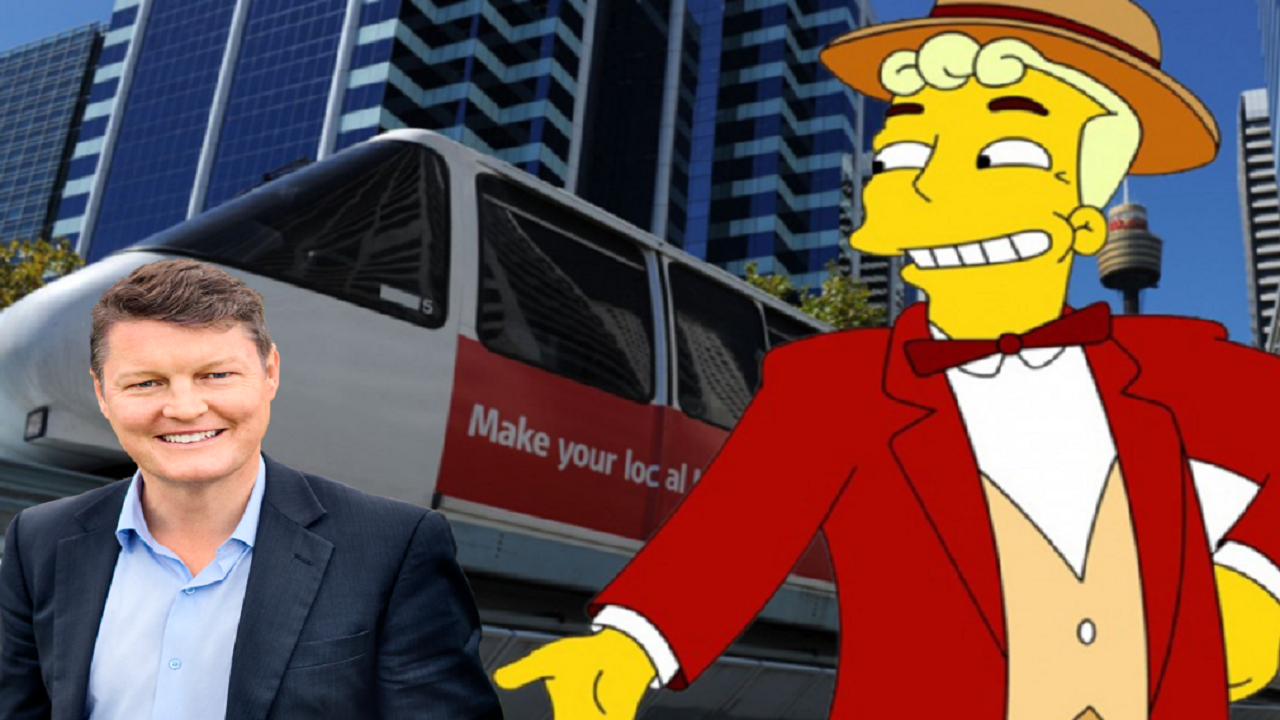
In Victoria, Australia, ongoing scrutiny surrounding the governance and financial administration of the state's largest infrastructure project, the Suburban Rail Loop, has underscored systemic issues in how major capital projects are developed and executed. Reports detailing disclosures made by Richard Bolt, who served as secretary of the Victorian Department of Transport between 2015 and 2018, reveal that senior transport officials were deliberately bypassed during the conceptual phase of the multi-billion-dollar transit network. According to disclosures provided to former Victorian Ombudsman Deborah Glass in late 2023 and highlighted in reporting by Unconventional Economist, Bolt testified that he was kept out of initial planning sessions for the rail line and explicitly cautioned oversight authorities that proceeding without rigorous departmental review risked wasting tens of billions of dollars in taxpayer funds.
Key facts
What happened
The formulation of Victoria's Suburban Rail Loop took place behind closed doors between 2015 and 2018, operating outside the standard institutional framework established for public infrastructure assessment. During this period, the Victorian Department of Transport was headed by Secretary Richard Bolt. However, rather than tasking the state's primary transport planning agency with evaluating orbital transit demand and conducting rigorous cost-benefit analyses, the project's preliminary design and strategy were developed within central governmental bodies, including Development Victoria and the Department of Premier and Cabinet, alongside private consultancy firms.
As detailed in reporting by Unconventional Economist, information revealed in late 2023 showed that Bolt formally outlined these procedural irregularities to Victorian Ombudsman Deborah Glass. Bolt informed the Ombudsman that top transport officials were systematically marginalized from early decision-making processes. During these early stages, Bolt raised explicit warnings regarding the project’s viability, advising that initiating an infrastructure undertaking of such magnitude without preliminary departmental evaluation and thorough economic vetting created severe financial risks for the state.
Despite these internal warnings from the chief transport bureaucrat, the Victorian Government publicly unveiled the Suburban Rail Loop in August 2018, shortly before the state election held later that November. The project was presented as an integrated 90-kilometer orbital rail line designed to connect Melbourne’s middle suburbs from Cheltenham in the southeast to Werribee in the west, bypassing the central business district. At the time of its public launch, the project lacked a finalized business case or formal review from statutory advisory bodies such as Infrastructure Victoria or Infrastructure Australia.
In subsequent years, as preliminary works commenced on the project's first leg, known as SRL East between Cheltenham and Box Hill, independent oversight authorities began investigating the governance mechanisms utilized during the planning phase. The disclosures made to Ombudsman Deborah Glass formed part of a broader examination into public sector administration, cabinet governance, and the influence of central agencies over line departments in Victoria.
Why it matters
The revelations regarding the intentional exclusion of Victoria’s top transport official during the formative stages of the Suburban Rail Loop carry major implications for public administration, state fiscal health, and infrastructure policy across Australia. Mega-projects funded by taxpayers require transparent economic evaluation to ensure that public capital is allocated to projects yielding the highest net social and financial benefits. When standard statutory reviews and public sector expertise are bypassed in favor of closed-door planning, the likelihood of substantial cost overruns, misaligned operational objectives, and long-term fiscal distortion increases significantly.
From an economic perspective, Victoria faces rising state debt levels, which international credit rating agencies have cited when adjusting the jurisdiction's fiscal outlook. Committing tens of billions of dollars to a single capital project without early, independent departmental validation constrains the state's capacity to fund competing priorities, such as healthcare, education, regional transport upgrades, and public debt servicing. Furthermore, the practice of side-stepping line departments sets a troubling precedent for public service neutrality and institutional governance, signaling that central governments can bypass established statutory safeguards to advance politically sensitive infrastructure commitments.
The background
Historically, transport planning in Victoria adhered to a structured process wherein the Department of Transport, in consultation with regional transit authorities and independent statutory bodies, conducted long-term corridor studies and modal comparisons. Following the establishment of Infrastructure Victoria in 2015 and Infrastructure Australia at the federal level in 2008, major public works exceeding specific financial thresholds were expected to undergo detailed business case development, peer-reviewed economic modelling, and public benefit-cost ratio determinations prior to formal government commitment.
The development of the Suburban Rail Loop marked a notable departure from this established protocol. Between 2015 and 2018, the Labor administration under Premier Daniel Andrews prioritized large-scale capital works, including the Metro Tunnel project and the extensive Level Crossing Removal Program. However, while those initiatives underwent varying degrees of public departmental planning, the Suburban Rail Loop was crafted under strict confidentiality agreements within Development Victoria and central executive offices.
When the project was announced in 2018, initial capital cost estimates provided by the government hovered around AUD $50 billion for the entire network. However, subsequent independent evaluations presented a starkly different financial picture. In 2022, the Victorian Parliamentary Budget Office published an independent cost assessment indicating that the first two stages alone—SRL East and SRL North—could cost up to AUD $125 billion in capital expenditure, with total operational and capital costs over a 50-year lifecycle potentially exceeding AUD $200 billion. The Victorian Auditor-General’s Office has similarly issued reports highlighting gaps in early business case justifications, noting that key financial models omitted critical integration costs and overstated economic benefits.
The disclosure in late 2023 of Richard Bolt’s evidence to Ombudsman Deborah Glass confirmed long-standing suspicions among policy analysts and opposition parliamentarians that the public service’s primary experts had been kept in the dark while multi-billion-dollar policy decisions were finalized.
Reaction
The findings reported by Unconventional Economist regarding Richard Bolt's testimony have drawn significant commentary from infrastructure policy specialists, public governance experts, and political representatives in Victoria. Public administration analysts have noted that excluding a department secretary from major policy formulation within their direct portfolio represents a breakdown in traditional Westminster governance conventions, where ministers rely on frank and fearless advice from the professional public service.
In state parliamentary forums, opposition representatives have frequently cited Bolt’s statements as evidence that executive decision-making was overly centralized and shielded from public scrutiny. Critics argue that the government prioritized political announcements over sound public financial management. Conversely, Victorian Government representatives have defended the Suburban Rail Loop, maintaining that the project is essential to accommodate Melbourne's projected population growth toward 9 million residents by the mid-21st century. Government ministers have asserted that subsequent business cases, released in 2021, provided the requisite economic justification and that dedicated delivery authorities possess the specialized technical expertise needed to execute the project efficiently.
What we don't know yet
Despite extensive public debate and multiple parliamentary inquiries, several critical aspects of the Suburban Rail Loop's long-term trajectory and financial commitments remain unconfirmed. First, the total, final cost of the full 90-kilometer loop from Cheltenham to Werribee remains uncertain, as official government estimates have focused primarily on the initial SRL East segment, leaving future phases subject to inflationary pressures and market fluctuations.
Second, the exact extent of federal financial participation remains unresolved. While the Australian Commonwealth Government has made preliminary funding contributions toward early works on SRL East, federal infrastructure authorities have consistently required full, updated business cases before committing tens of billions in long-term federal matching grants. Third, the specific risk-sharing arrangements contained within confidential private contracts awarded for tunneling and station development have not been fully disclosed to the public, leaving open questions regarding taxpayer liability in the event of construction delays or unexpected geological complications.
What to watch
Several key milestones and oversight events will determine the governance and financial viability of the Suburban Rail Loop in the coming years:
This report is based on original reporting published by Unconventional Economist.
How this story was produced
This report was written by The Global Wire newsroom from reporting first published by Unconventional Economist. We verify the core facts against the original report, write our own account, and add the background and consequences a short wire item leaves out. Drafting is AI-assisted inside an editor-supervised pipeline, and every story is checked for accuracy of attribution, structure and duplication before it appears — full detail in our AI and funding disclosure.
Spotted an error? Tell us at corrections@horizonglobalnews.com and read our corrections policy or editorial standards.




Reader comments
Loading comments…