

Bosnia Holds General Elections Amid Persistent Ethnic Rifts and Stalled EU Ambitions
Around 3.4 million Bosnian voters are electing a tripartite presidency and legislative bodies as political paralysis and slow European Union integration continue to shape the Balkan nation.
By The Global Wire Newsroom · Reported from Jeremiah Fisayo-Bambi
Link preview · horizonglobalnews.com
Bosnia Holds General Elections Amid Persistent Ethnic Rifts and Stalled EU Ambitions
Around 3.4 million Bosnian voters are electing a tripartite presidency and legislative bodies as political paralysis and slow European Union integration continue to shape the Balkan nation.
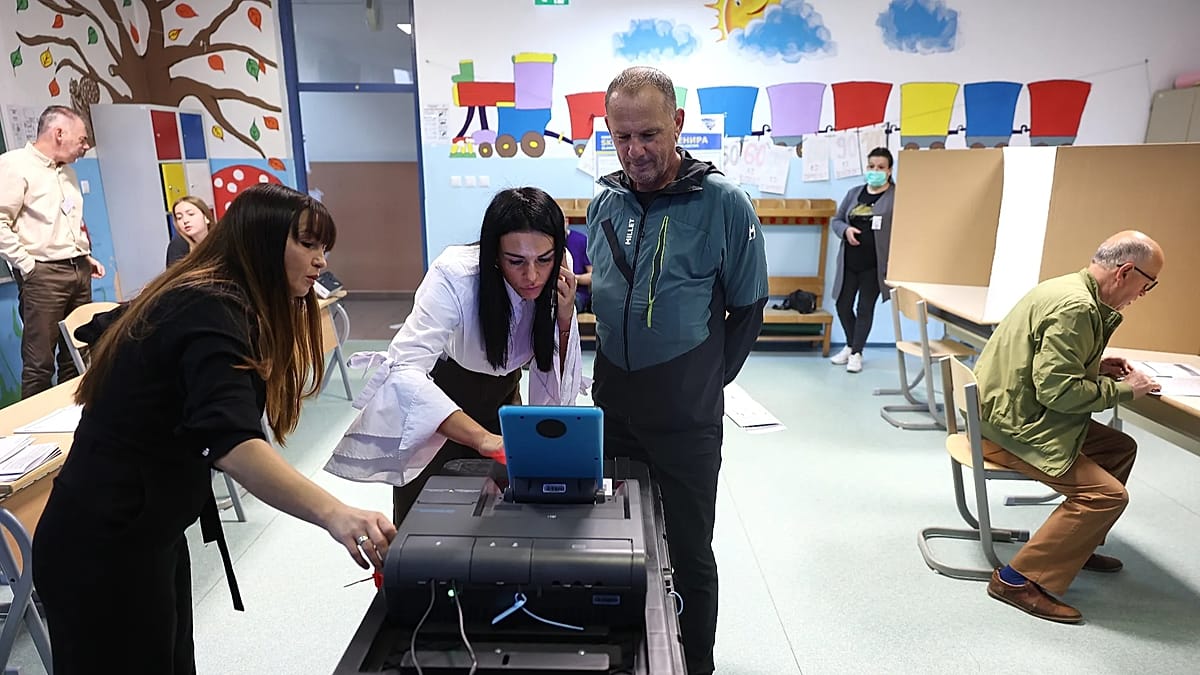
SARAJEVO — Voters across Bosnia and Herzegovina went to the polls on Sunday, Oct. 4, 2026, in a critical general election defined by deep-seated ethnic divisions and stalled efforts to advance the country’s European Union integration. Approximately 3.4 million registered citizens are eligible to cast ballots to elect the three members of Bosnia’s multi-ethnic presidency, members of the national Parliamentary Assembly, and leaders and legislators for the country’s two administrative entities. The nationwide vote comes at a juncture when institutional paralysis and secessionist rhetoric threaten the constitutional framework established more than three decades ago to end the violent conflict of the 1990s.
Key facts
What happened
Polling stations opened across Bosnia and Herzegovina on the morning of Oct. 4, 2026, launching a complex electoral exercise that spans multiple tiers of government, according to reporting by Jeremiah Fisayo-Bambi. Electorate members are selecting representatives for the highest levels of executive and legislative governance in a process overseen by the Central Election Commission.
The ballot encompasses several concurrent contests. At the state level, voters are choosing the three members of the joint presidency—one Bosniak, one Croat, and one Serb—who together form the collective head of state responsible for foreign policy and national defense. Concurrently, voters are determining the composition of the national House of Representatives, the lower chamber of the Parliamentary Assembly of Bosnia and Herzegovina.
Beyond national offices, the election determines the governance of Bosnia’s two highly autonomous administrative entities. Voters residing in Republika Srpska are casting ballots for the entity’s president and vice presidents, as well as members of the National Assembly of Republika Srpska. In the Federation of Bosnia and Herzegovina, citizens are electing representatives to the entity's Parliament and to the ten cantonal assemblies that manage local governance across the federation.
Election day operations involve thousands of polling locations across urban centers like Sarajevo, Banja Luka, and Mostar, as well as rural communities nationwide. International and domestic election observers were deployed to monitor voting procedures, voter identification protocols, and ballot counting to ensure compliance with electoral standards in a country where political disputes frequently spill over into electoral administration.
Why it matters
The general election carries severe consequences for the stability of the Western Balkans and the future trajectory of Bosnia and Herzegovina's statehood. Operating under one of the world's most decentralized and bureaucratic governance frameworks, the nation relies heavily on consensus among its three main ethnic groups. When executive power is fragmented or held by factions with opposing views on the state's legitimacy, public administration can grind to a halt.
For the country's citizens, political stagnation directly affects economic conditions, public services, and standard of living. Brain drain has accelerated across Bosnia in recent years, with skilled professionals and young people emigrating to Western Europe due to limited economic opportunities, widespread patronage networks, and perpetual political instability. The outcome of the parliamentary elections will dictate whether the incoming government can enact essential anti-corruption measures, judicial reforms, and economic policies needed to curb emigration and attract foreign investment.
On the geopolitical stage, the elections serve as a referendum on Bosnia’s European path. The European Union granted Bosnia candidate status in late 2022 and agreed in early 2024 to open accession negotiations, subject to the implementation of structural reforms regarding the rule of law, anti-corruption, and institutional transparency. However, internal polarization has slowed the adoption of required legislation. A continuing deadlock or the election of leaders opposed to central state functionality threatens to stall EU negotiations indefinitely, leaving Bosnia isolated while neighboring Balkan states advance their own integration efforts.
Furthermore, the results carry security implications for Eastern Europe. Rising secessionist rhetoric from Serb leaders in Republika Srpska and demands for institutional restructuring from Croat political parties have raised concerns among international guarantors of the peace agreement. The political orientation of the elected presidential council will determine whether the state can maintain a coherent foreign policy or remain susceptible to external geopolitical influences.
The background
Bosnia and Herzegovina's present political architecture was forged by the 1995 Dayton Peace Agreement, which ended three and a half years of war following the dissolution of Yugoslavia. The peace accord created a complex, multi-layered governance system designed to balance power among the three primary ethnic communities: Bosniaks, Croats, and Serbs.
Under the constitution set forth in Annex 4 of the Dayton Agreement, the country was divided into two semi-autonomous entities: the Bosniak- and Croat-majority Federation of Bosnia and Herzegovina, and the Serb-majority Republika Srpska. The self-governing Brčko District was later formally established under state sovereignty to resolve territorial overlap. A central government with limited authority was created to oversee foreign policy, defense, fiscal policy, and monetary policy, while extensive administrative powers were reserved for the entities and cantons.
The central executive authority is vested in a three-member presidency. According to the constitutional rules, the Bosniak and Croat members are elected directly from the territory of the Federation of Bosnia and Herzegovina, while the Serb member is elected directly from Republika Srpska. This structure has been the subject of long-standing legal challenges before the European Court of Human Rights, notably in cases such as Sejdić-Finci, which ruled that restricting presidential candidacy to the three constituent ethnic groups discriminates against citizens of other backgrounds or those who refuse to declare an ethnic affiliation.
Over the past three decades, efforts to reform the constitution and streamline decision-making have repeatedly faltered. Political dynamics in Republika Srpska have frequently been dominated by calls for greater autonomy or outright secession, alongside opposition to state-level judicial and security institutions. In the Federation, tensions between Bosniak and Croat political leaders over electoral law reform have periodically blocked the formation of entity-level governments.
Efforts to join international blocs have yielded mixed results. While Bosnia joined NATO's Action Plan process, internal disagreement prevents consensus on full membership. European integration was formally initiated with the signing of the Stabilization and Association Agreement, leading to candidate status in December 2022 and the decision by the European Council in March 2024 to initiate accession talks once baseline conditions are met. However, the lack of progress on foundational reforms has kept the accession timeline uncertain.
Reaction
Following the opening of polls, political figures across the country expressed contrasting visions for the nation's future. Candidates representing nationalist parties emphasized sovereignty and entity rights, while pro-reform and multi-ethnic coalitions stressed institutional stability, economic development, and accelerated EU integration.
International oversight bodies and diplomatic missions closely watched the conduct of the vote. Representatives from the European Union, the Office of the High Representative (OHR)—the international body tasked with overseeing the civilian implementation of the Dayton Agreement—and the Organization for Security and Co-operation in Europe (OSCE) monitored voting operations across all cantons and entities.
Diplomats from EU member states and the United States have repeatedly called on Bosnian leaders to conduct free and fair elections and to swiftly implement reform agendas post-election. European officials are expected to assess the election outcomes in upcoming evaluations of Bosnia’s readiness for formal EU accession negotiations, emphasizing that structural reforms must follow the establishment of new executive bodies.
What we don't know yet
Several critical elements of the election outcome and its aftermath remain uncertain in the immediate post-voting period:
What to watch
In the days and weeks following the vote, several milestones will indicate the trajectory of Bosnia and Herzegovina's political environment:
This report relies on original news coverage published by Jeremiah Fisayo-Bambi.
How this story was produced
This report was written by The Global Wire newsroom from reporting first published by Jeremiah Fisayo-Bambi. We verify the core facts against the original report, write our own account, and add the background and consequences a short wire item leaves out. Drafting is AI-assisted inside an editor-supervised pipeline, and every story is checked for accuracy of attribution, structure and duplication before it appears — full detail in our AI and funding disclosure.
Spotted an error? Tell us at corrections@horizonglobalnews.com and read our corrections policy or editorial standards.



Reader comments
Loading comments…