

CBS Partners With Prediction Market Kalshi for Election Odds, Prompting Media Ethics Debate
CBS News has partnered with prediction market platform Kalshi to feature real-time election odds on air, sparking intense criticism over blending financial speculation with broadcast journalism.
By The Global Wire Newsroom · Reported from Victor Tangermann
Link preview · horizonglobalnews.com
CBS Partners With Prediction Market Kalshi for Election Odds, Prompting Media Ethics Debate
CBS News has partnered with prediction market platform Kalshi to feature real-time election odds on air, sparking intense criticism over blending financial speculation with broadcast journalism.
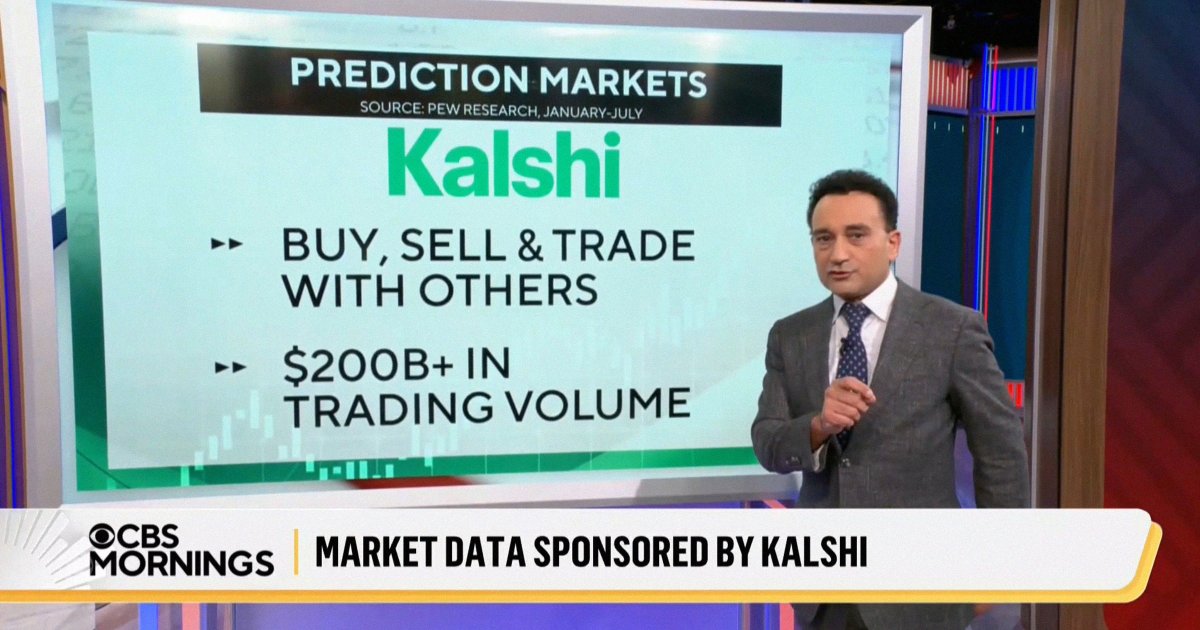
CBS News has established a formal partnership with the prediction market platform Kalshi to incorporate real-time probability data into its election coverage, according to reporting by media commentator Victor Tangermann published on October 3, 2026. The deal brings financial event trading directly into mainstream broadcast television, allowing the network to display live market odds on political outcomes alongside traditional polling data and commentary. The integration represents a significant shift in how national news outlets present political forecasting, drawing sharp criticism from ethics commentators who argue that blending financial speculation with news reporting undermines journalistic integrity and distorts public understanding of elections.
Key facts
What happened
According to reporting by Victor Tangermann, CBS News has formally agreed to collaborate with Kalshi, a financial exchange that allows retail traders to buy and sell contracts based on predicted outcomes of political elections and policy events. Under the partnership, CBS will utilize data generated by Kalshi’s trading order books to display real-time win probabilities and market sentiment during its political broadcasts and across its digital platforms.
Kalshi operates by listing binary option contracts—typically priced between 1 cent and 99 cents—where the price reflects the aggregate probability that market participants assign to a specific event occurring. For instance, a contract trading at 60 cents implies a 60 percent likelihood of that outcome, paying out $1.00 if the outcome occurs and $0.00 if it does not. By presenting these figures on air, CBS aims to offer viewers dynamic, constantly updating odds on candidate victories, congressional control, and key legislative races.
However, the arrangement has drawn strong pushback. Tangermann characterized the partnership as an abandonment of fundamental journalistic standards, arguing that presenting financial wagering metrics under the banner of news reporting misleads the public. Critics highlight that prediction markets are driven by financial capital rather than representative demographic sampling, meaning that market prices can be swayed by high-volume traders, speculative swings, or coordinated capital flows.
Why it matters
The adoption of prediction market metrics by legacy news organizations fundamentally alters the role of broadcast journalism in democratic processes. Historically, broadcast news organizations relied on rigorous, methodology-driven public opinion polling conducted by academic institutions or professional survey organizations. These traditional polls rely on random sampling techniques designed to capture representative cross-sections of the voting populace. In contrast, prediction markets aggregate the financial bets of market participants who are self-selected, financially motivated, and often unrepresentative of the general voting public.
When a major broadcaster like CBS presents market odds as authoritative indicators of an election's trajectory, it risks creating a self-reinforcing feedback loop. Financial traders aware of CBS's reach may place large orders specifically to alter displayed probabilities, thereby influencing public perception, media narratives, donor behavior, and voter enthusiasm. This vulnerability raises serious concerns about market manipulation, particularly in thin or illiquid markets where a modest infusion of capital can move prices dramatically.
Furthermore, integrating commercial trading platforms into news programming creates significant institutional conflicts of interest. News outlets report on breaking developments that directly move market prices. If a network holds a commercial relationship with a trading venue, questions inevitably arise regarding whether news reporting, graphic selection, or editorial tone could artificially stimulate trading volume or market volatility, generating financial returns for the platform partner at the expense of journalistic distance.
The background
Prediction markets have operated on the fringes of political forecasting for decades. The Iowa Electronic Markets, established by the University of Iowa in 1988, served as an early academic experiment demonstrating that market-based aggregation could rival traditional polling in predicting election outcomes. Over the subsequent decades, platforms such as PredictIt and international exchange Polymarket expanded the scope of political betting, although US regulators strictly limited their operations within domestic jurisdictions.
In the United States, financial prediction markets operate under the oversight of the Commodity Futures Trading Commission (CFTC). The regulatory environment surrounding political event contracts has historically been highly contentious. Under federal law, the CFTC is mandated to prohibit contracts involving gaming, unlawful activity, or operations contrary to the public interest. For years, the agency resisted approving binary contracts tied to US election outcomes, arguing that political wagering poses risks to election integrity and falls outside the core mission of derivatives exchanges, which exist primarily for commercial risk hedging.
Kalshi, founded in 2018 by Tarek Mansour and Luana Lopes Lara, sought federal approval as a designated contract market to legalize event trading in the United States. Following prolonged legal battles with the CFTC regarding whether election-based binary options constitute illegal gambling or permissible financial derivatives, court decisions eventually paved the way for expanded exchange operations. This regulatory opening allowed Kalshi to aggressively pursue commercial partnerships with mainstream media companies seeking novel ways to engage viewers.
At the same time, traditional broadcast journalism has faced structural declines in viewership and public trust, leading networks to seek visually engaging, interactive, and data-driven graphics to capture viewer attention. Guidelines such as the Society of Professional Journalists Code of Ethics explicitly urge journalists to avoid conflicts of interest, resist commercial pressures, and distinguish clear factual reporting from commercial promotion. The convergence of financial exchange technologies with prime-time political reporting tests these traditional ethical boundaries.
Reaction
The partnership between CBS and Kalshi has drawn sharp condemnation from media critics and ethical commentators. In his commentary, Victor Tangermann characterized the move as a severe failure of journalistic ethics, asserting that mainstream news outlets degrade their credibility when they equate financial speculation with news reporting.
While formal public statements from competing news networks remain pending, media ethics scholars and watchdog groups are expected to challenge the practice in public forums and academic publications. Industry observers anticipate that regulatory agencies, including the CFTC, will closely monitor how exchange data is presented to broadcast audiences to ensure compliance with federal disclosures and consumer protection standards. Additionally, political campaign managers and election integrity advocates are likely to scrutinize the arrangement for potential impacts on voter behavior and narrative framing during crucial campaign windows.
What we don't know yet
Several critical operational and financial details regarding the CBS-Kalshi partnership remain undisclosed in initial reports:
Understanding these factors is essential to evaluating whether the network can maintain journalistic independence while featuring commercial trading data.
What to watch
In the coming months, several key milestones will demonstrate the broader impact of integrating prediction markets into national television news:
This report is based on original reporting by Victor Tangermann.
How this story was produced
This report was written by The Global Wire newsroom from reporting first published by Victor Tangermann. We verify the core facts against the original report, write our own account, and add the background and consequences a short wire item leaves out. Drafting is AI-assisted inside an editor-supervised pipeline, and every story is checked for accuracy of attribution, structure and duplication before it appears — full detail in our AI and funding disclosure.
Spotted an error? Tell us at corrections@horizonglobalnews.com and read our corrections policy or editorial standards.



Reader comments
Loading comments…