

Brazilian Student Engineers Bio-Based Tyre Prototype From Orange Peels to Cut Microplastics
Isabela Silvério's Orantire project uses cellulose and limonene from citrus waste to tackle tyre wear pollution alongside an environmental literacy initiative.
By The Global Wire Newsroom · Reported from TOI Science Desk
Link preview · horizonglobalnews.com
Brazilian Student Engineers Bio-Based Tyre Prototype From Orange Peels to Cut Microplastics
Isabela Silvério's Orantire project uses cellulose and limonene from citrus waste to tackle tyre wear pollution alongside an environmental literacy initiative.
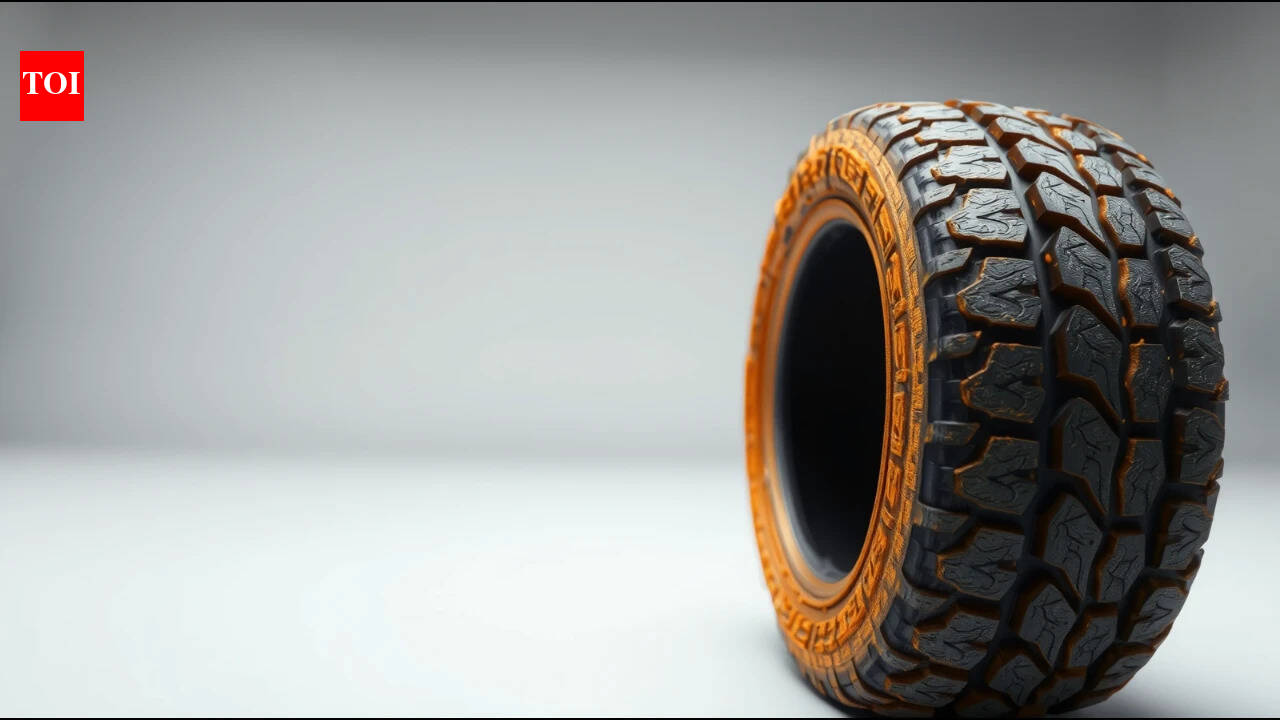
A teenage researcher from Brazil, Isabela Silvério, has developed a prototype bio-based vehicle tyre engineered from citrus agricultural waste in an effort to reduce microplastic emissions from road transportation. The project, named Orantire, isolates cellulose and d-limonene extracted from discarded orange peels to synthesize an alternative elastomer compound capable of substituting conventional synthetic rubber. Alongside the material engineering prototype, Silvério's initiative incorporates an environmental education framework designed to promote scientific literacy and sustainability awareness across schools and local communities, according to reporting by TOI Science Desk published on October 4, 2026.
Key facts
What happened
Isabela Silvério developed the Orantire project as a multi-disciplinary solution to address two connected environmental challenges: the massive generation of organic agricultural waste and the global accumulation of microplastics shed by road transport. According to reporting by TOI Science Desk, Silvério focused her material research on citrus processing byproducts, which are generated in immense quantities across Brazil's agricultural heartland.
To construct the Orantire prototype, Silvério devised an extraction process to isolate two key organic compounds from discarded orange peels: structural cellulose and d-limonene. Cellulose, a natural plant polysaccharide, was separated to function as a reinforcing structural filler within the elastomeric matrix, providing mechanical strength and physical durability. Limonene, a naturally occurring terpene compound present in citrus rinds, was extracted for use as a green solvent and reactive monomer capable of cross-linking during the synthesis of the bio-based rubber compound. By combining these bio-derived inputs, Silvério created a flexible, resilient polymer material suitable for molding into a prototype tyre tread.
Beyond laboratory material development, Silvério constructed the Orantire project to feature a dedicated environmental literacy initiative. Recognizing that technological innovations achieve greater impact when paired with community awareness, the initiative delivers educational workshops for primary and secondary school students. These interactive sessions explain the complete lifecycle of synthetic materials, the physical mechanics of tyre degradation, and practical applications of green chemistry, inspiring young people to investigate local waste stream upcycling and environmental science within their own schools.
Why it matters
The development of bio-based tyre alternatives addresses one of the most significant yet underreported vectors of global environmental contamination: tyre and road wear particles (TRWP). While public ecological concern often centers on single-use plastics, packaging materials, and synthetic textiles, physical abrasion from vehicular travel represents one of the single largest contributors to aquatic and atmospheric microplastics worldwide.
As motor vehicles travel, continuous friction between tyres and asphalt sheds microscopic particles into the environment. Commercial vehicle tyres are not manufactured solely from natural latex; they consist of complex synthetic polymer blends—primarily polybutadiene and styrene-butadiene rubber derived from crude oil—blended with carbon black fillers, processing oils, and synthetic chemical additives. Industry studies indicate that tyre wear generates between 1 and 2 kilograms of microparticles per passenger vehicle annually, amounting to more than 6 million metric tons of tyre dust entering global ecosystems every year.
These microparticles wash into streams, rivers, and ocean waters through stormwater runoff, where aquatic organisms ingest them, causing toxic additives to accumulate throughout marine food webs. Environmental toxicologists have identified specific chemical additives in standard tyres, such as the anti-degradant 6PPD, as direct drivers of mass mortality events in salmon and other freshwater fish species after reacting with ozone to form highly toxic 6PPD-quinone.
By substituting petroleum-derived synthetic polymers with organic agricultural inputs like citrus cellulose and limonene, research initiatives like Orantire illustrate viable paths toward lower-impact materials. If bio-based elastomers can achieve mechanical durability comparable to standard compounds, they could significantly lower reliance on fossil fuels and reduce the long-term accumulation of toxic microparticles in natural ecosystems. Furthermore, integrating scientific education ensures that rising generations of researchers are trained to apply circular economy principles to industrial design challenges.
The background
Brazil is the world's leading orange producer, accounting for roughly 30 percent of global output and more than 70 percent of international orange juice exports. The state of São Paulo forms the centerpiece of the nation's citrus belt, processing tens of millions of metric tons of fruit each year. However, industrial orange juice processing generates substantial organic waste: approximately 50 percent of an orange's total weight consists of peels, pulp, and seeds. While a fraction of this residue is converted into livestock feed pellets or essential oils, hundreds of thousands of tons of wet peel waste remain underutilized, often ending up in landfills where organic decomposition releases methane, a potent greenhouse gas.
From a chemical perspective, citrus waste provides valuable natural precursors for green material engineering. Cellulose comprises 15 to 25 percent of dry citrus peel mass, offering high-aspect-ratio natural fibers that possess excellent tensile strength and thermal stability. Limonene (C10H16), which makes up over 90 percent of the essential oil found in citrus rinds, features a molecular structure containing double bonds that allow for chemical modification and polymerization into bio-derived polymers, offering an alternative to petroleum feedstocks.
The automotive and tyre sectors face intensifying regulatory scrutiny regarding their overall lifecycle impact. Traditional tyres shifted from natural rubber to petroleum-based synthetic elastomers during the mid-20th century to meet surging global vehicle demand. Today, a typical passenger car tyre contains approximately 40 to 50 percent rubber polymers by weight, alongside 30 percent carbon black or silica filler, and various vulcanizing agents.
Regulatory bodies have begun establishing strict non-exhaust emission limits. For example, the European Union's Euro 7 standards include proposed regulations targeting tyre wear abrasion rates and microplastic particle shedding. In response, major global tyre manufacturers have announced strategic targets to incorporate up to 100 percent renewable or recycled materials into their product lines by 2050, accelerating commercial interest in bio-fillers and plant-derived elastomers.
Reaction
The reporting from TOI Science Desk highlights positive reception for student-led innovation in green technology, particularly within academic and environmental education circles.
Within the global tyre manufacturing industry, interest in incorporating agricultural waste into polymer compounding has steadily grown. Major tyre producers have previously conducted commercial trials utilizing natural oils—such as soybean, sunflower, and citrus oils—to replace petroleum-derived processing softeners in tread formulations, noting that natural oils can enhance cold-weather rubber flexibility and lower rolling resistance.
Educational specialists and environmental advocates note that combining technical material engineering with community literacy modules provides an effective model for STEM education. By linking regional agricultural waste management with global microplastic pollution, projects like Orantire demonstrate how localized research can raise awareness regarding non-exhaust vehicle emissions among the public.
What we don't know yet
Several critical technical and operational aspects of the Orantire project remain unconfirmed in the reporting by TOI Science Desk.
First, comprehensive mechanical performance metrics for the citrus-based prototype have not been disclosed. Detailed data on tensile strength, wear resistance, rolling resistance, wet grip performance, and heat tolerance under high-speed friction conditions are essential to evaluate whether the bio-material can satisfy rigorous automotive safety standards.
Second, the industrial scalability and energy balance of extracting cellulose and d-limonene from agricultural waste remain open questions. The capital costs, energy consumption, and chemical processing inputs required for large-scale extraction must be evaluated against existing synthetic and natural rubber supply chains.
Third, the environmental degradation profile of the Orantire material requires empirical validation to confirm that particles shed during vehicle operation degrade safely without producing harmful secondary ecological impacts.
What to watch
Key milestones in the coming months will determine whether the Orantire prototype can progress from an initial student research project to scalable application.
Watch for independent laboratory testing data and peer-reviewed scientific publications detailing physical property testing and abrasion rates of the Orantire compound under standardized test conditions.
Track whether Silvério files patent applications or establishes partnerships with academic research institutions, agricultural technology incubators, or tyre manufacturers in Brazil to scale up extraction and material processing.
Monitor the regional expansion of the project's environmental literacy curriculum to see whether educational boards or environmental organizations integrate the modules into broader school curricula.
Finally, observe global regulatory developments, including the formal implementation of Euro 7 tyre wear standards, which could increase industrial demand for bio-based tyre alternatives across international markets.
This report is based on original reporting published by TOI Science Desk on October 4, 2026.
How this story was produced
This report was written by The Global Wire newsroom from reporting first published by TOI Science Desk. We verify the core facts against the original report, write our own account, and add the background and consequences a short wire item leaves out. Drafting is AI-assisted inside an editor-supervised pipeline, and every story is checked for accuracy of attribution, structure and duplication before it appears — full detail in our AI and funding disclosure.
Spotted an error? Tell us at corrections@horizonglobalnews.com and read our corrections policy or editorial standards.

Reader comments
Loading comments…