

Bipartisan Senate Effort Aims to Head Off Looming 22 Percent Social Security Cut
Sens. Dick Durbin and Bill Cassidy are advancing proposals to restore Social Security solvency six years before projected trust fund depletion forces automatic benefit reductions.
By The Global Wire Newsroom · Reported from Kevin Freking, The Associated Press; Kevin Freking; The Associated Press; Feedloaderapi
Link preview · horizonglobalnews.com
Bipartisan Senate Effort Aims to Head Off Looming 22 Percent Social Security Cut
Sens. Dick Durbin and Bill Cassidy are advancing proposals to restore Social Security solvency six years before projected trust fund depletion forces automatic benefit reductions.
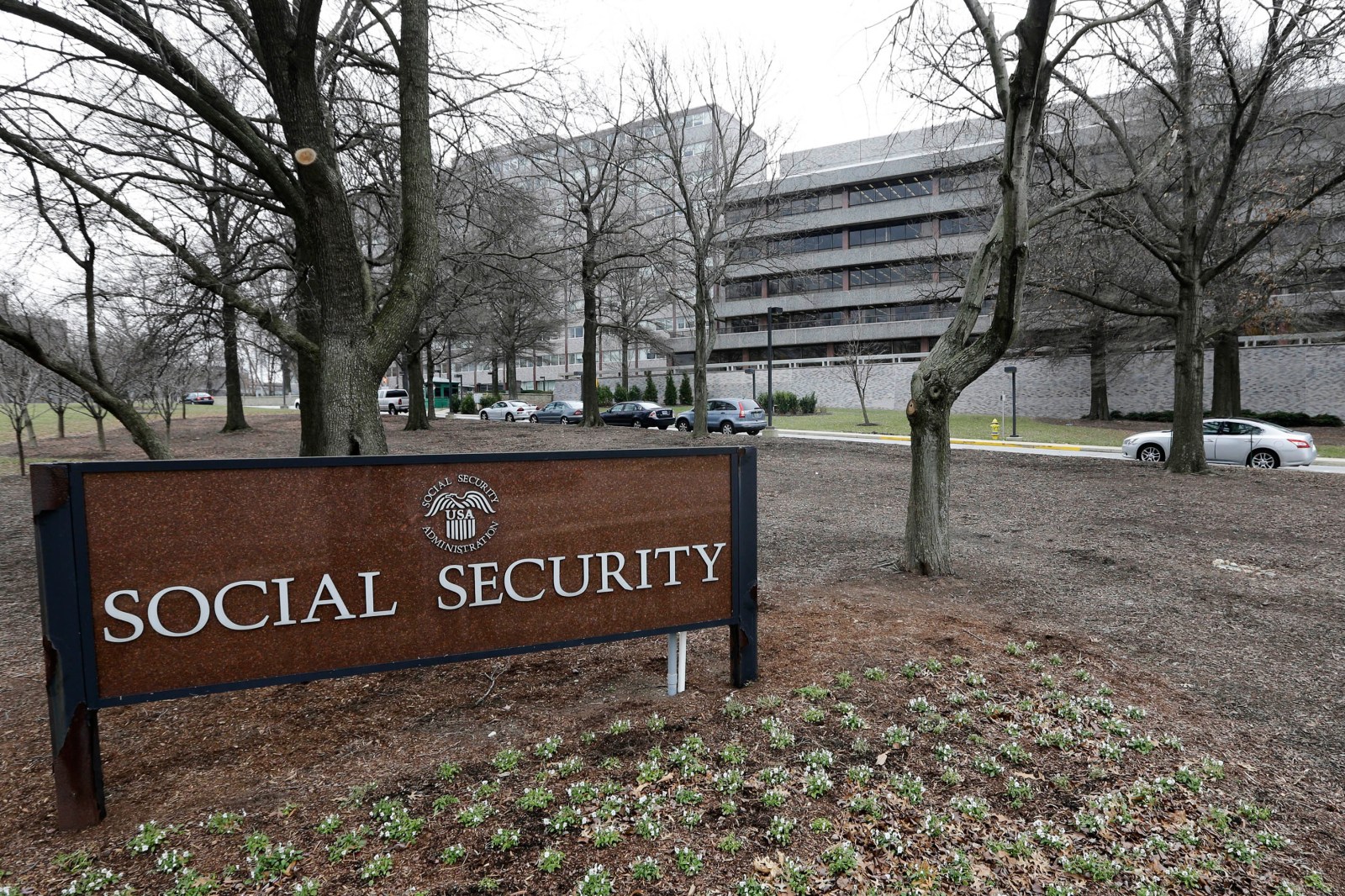
WASHINGTON — Democratic Sen. Dick Durbin of Illinois and Republican Sen. Bill Cassidy of Louisiana have initiated a bipartisan push to prevent an estimated 22 percent across-the-board reduction in Social Security benefit payments, which fiscal projections indicate could take effect within six years. Working within the remaining months of their current Senate tenures, the two lawmakers are introducing legislative concepts aimed at restoring long-term fiscal solvency to the nation's primary social insurance program. The effort represents a rare joint initiative between senior members of opposing parties to tackle one of the most politically sensitive entitlement challenges in federal governance, where inaction threatens financial security for tens of millions of American retirees, individuals with disabilities, and surviving family dependents.
Key facts
What happened
Senators Dick Durbin and Bill Cassidy have launched a focused effort to draft legislative solutions that would avert a mandatory 22 percent cut to Social Security benefits, a scenario projected to materialize in approximately six years if Congress fails to pass structural reforms. The two senators, who are navigating the final months of their terms in the upper chamber, have begun socializing potential policy frameworks among their colleagues to build a bipartisan coalition capable of advancing through a closely divided Senate.
The central challenge facing the lawmakers is the structural imbalance between Social Security revenue and outgoing benefit obligations. Under federal law, if the underlying trust funds backing the program are fully depleted, the Social Security Administration is legally prohibited from paying out full benefits beyond what is immediately collected through incoming payroll taxes. Current financial estimates show that income from current payroll taxes would cover only about 78 percent of scheduled payments once the reserves are exhausted, resulting in an immediate 22 percent reduction across the board for all beneficiaries.
To head off this automatic contraction, Durbin and Cassidy are evaluating several policy mechanisms designed to bridge the fiscal gap. While formal bill language has not been finalized, the concepts under discussion involve combinations of revenue generation, structural adjustments to entitlement calculations, and alternative funding mechanisms. By starting negotiations well ahead of the statutory insolvency deadline, the senators aim to avoid a crisis-driven legislative scramble that could force sharper benefit reductions or steeper tax increases on short notice.
Why it matters
The potential 22 percent reduction in Social Security payments carries profound economic consequences for individual households and the broader U.S. economy. Social Security serves as the foundational source of income for more than 65 million Americans, including retirees, workers with severe disabilities, and the surviving spouses and children of deceased wage earners. For nearly half of older Americans, Social Security benefits provide at least 50 percent of their total household income, while for roughly one in four retirees, the monthly payments account for 90 percent or more of their financial support. An immediate 22 percent drop in monthly revenue would instantly push millions of vulnerable seniors below the federal poverty line and significantly curtail consumer spending across local economies.
Beyond household finances, the insolvency timeline presents severe political and budgetary implications for federal policymakers. If Congress delays action until the trust funds are exhausted, the required adjustments to revenue or outlays will be vastly more severe than if incremental changes are phased in gradually. Achieving solvency through revenue increases alone would require significant adjustments to payroll tax rates or earnings caps, while relying entirely on benefit reductions would demand sharp cuts to future payments or substantial increases in the full retirement age. The willingness of Durbin and Cassidy to navigate these competing pressures underscores the recognition that early legislative action remains the most effective way to minimize financial disruption to current and future retirees.
The background
Social Security was established under President Franklin D. Roosevelt through the landmark Social Security Act of 1935, creating a social insurance system designed to provide economic security for elderly Americans in the wake of the Great Depression. The program expanded in subsequent decades to include disability insurance in 1956 and benefits for surviving dependents. The system is funded primarily through dedicated payroll taxes governed by the Federal Insurance Contributions Act (FICA), which assesses a 12.4 percent tax on covered earnings, split equally between employees and employers, up to a statutorily defined annual maximum earnings limit.
The program's underlying financial architecture relies on two dedicated reserves: the Old-Age and Survivors Insurance (OASI) Trust Fund and the Disability Insurance (DI) Trust Fund. For several decades following statutory changes enacted in 1983, payroll tax revenues exceeded monthly benefit outlays, allowing the trust funds to accumulate trillions of dollars in special-issue U.S. Treasury securities. The 1983 reforms, forged by a bipartisan commission led by Alan Greenspan and championed by President Ronald Reagan and House Speaker Tip O'Neill, gradually raised the full retirement age from 65 to 67, introduced taxation on benefits for higher-income recipients, and adjusted payroll tax rates to ensure solvency for four decades.
However, fundamental demographic shifts have steadily eroded the surplus reserves. The large post-World War II "baby boom" generation, born between 1946 and 1964, has entered retirement, vastly increasing the number of benefit recipients. Simultaneously, lower U.S. birth rates and lengthened life expectancies have altered the worker-to-beneficiary ratio. In 1960, there were more than five active workers contributing payroll taxes for every Social Security beneficiary; today, that ratio has fallen to approximately 2.7 workers per beneficiary and continues to decline. As a result, annual program outlays have outpaced annual revenue, forcing the Social Security Administration to draw down trust fund reserves to cover the shortfall, setting the stage for total reserve depletion within the next decade.
Reaction
The initiative led by Durbin and Cassidy has drawn attention from fiscal policy groups, advocacy organizations, and congressional leadership, though official reactions reflect the deep political divides surrounding entitlement reform. Advocacy groups representing older Americans, such as AARP, have historically resisted proposals that involve reductions in scheduled benefits or increases in the retirement age, advocating instead for revenue expansion by raising or eliminating the cap on taxable earnings for high-income earners. Conversely, fiscal conservative research organizations and tax policy groups emphasize the need to control spending growth, favoring adjustments to benefit formulas, such as chained CPI adjustments for cost-of-living updates, or targeted increases in the retirement eligibility age for younger workers.
Within Capitol Hill, committee leaders in both chambers are monitoring the discussion closely. Jurisdiction over Social Security legislation rests with the Senate Finance Committee and the House Ways and Means Committee. While leadership in both parties acknowledges the math driving the trust fund depletion, reaching consensus on revenue versus benefit adjustments has stymied legislative progress for years. The effort by Durbin and Cassidy represents a bottom-up attempt to build bipartisan support outside the traditional committee structure before presenting a package to party leaders for formal consideration.
What we don't know yet
Several critical elements of the legislative initiative remain unconfirmed in the available reporting. First, the specific parameters of the Durbin-Cassidy proposal—such as whether it relies on adjusting the FICA tax cap, altering benefit formulas for high earners, establishing a sovereign wealth-style investment fund, or modifying the retirement age—have not yet been detailed in formal statutory language.
Second, it is unclear whether congressional leadership in either the Senate or the House will commit committee time or floor scheduling for a comprehensive Social Security bill prior to the conclusion of the current session. Finally, the precise position of the executive branch on the specific trade-offs floating in the Durbin-Cassidy discussions remains unstated, leaving open the question of whether a negotiated compromise could clear presidential approval in a highly polarized political environment.
What to watch
In the coming months, several key indicators will determine the trajectory of Social Security reform efforts:
This report is based on original news coverage detailed by Kevin Freking of The Associated Press.
How this story was produced
This report was written by The Global Wire newsroom from reporting first published by Kevin Freking, The Associated Press; Kevin Freking; The Associated Press; Feedloaderapi. We verify the core facts against the original report, write our own account, and add the background and consequences a short wire item leaves out. Drafting is AI-assisted inside an editor-supervised pipeline, and every story is checked for accuracy of attribution, structure and duplication before it appears — full detail in our AI and funding disclosure.
Spotted an error? Tell us at corrections@horizonglobalnews.com and read our corrections policy or editorial standards.





Reader comments
Loading comments…