

Sydney Biosolar Study Shows Green Roofs Cool Solar Panels and Boost Power Output
Field testing by University of Technology Sydney researchers revealed that vegetative green roofs lowered solar panel temperatures by up to 9.63°C and doubled peak power generation.
By The Global Wire Newsroom · Reported from Team Global
Link preview · horizonglobalnews.com
Sydney Biosolar Study Shows Green Roofs Cool Solar Panels and Boost Power Output
Field testing by University of Technology Sydney researchers revealed that vegetative green roofs lowered solar panel temperatures by up to 9.63°C and doubled peak power generation.
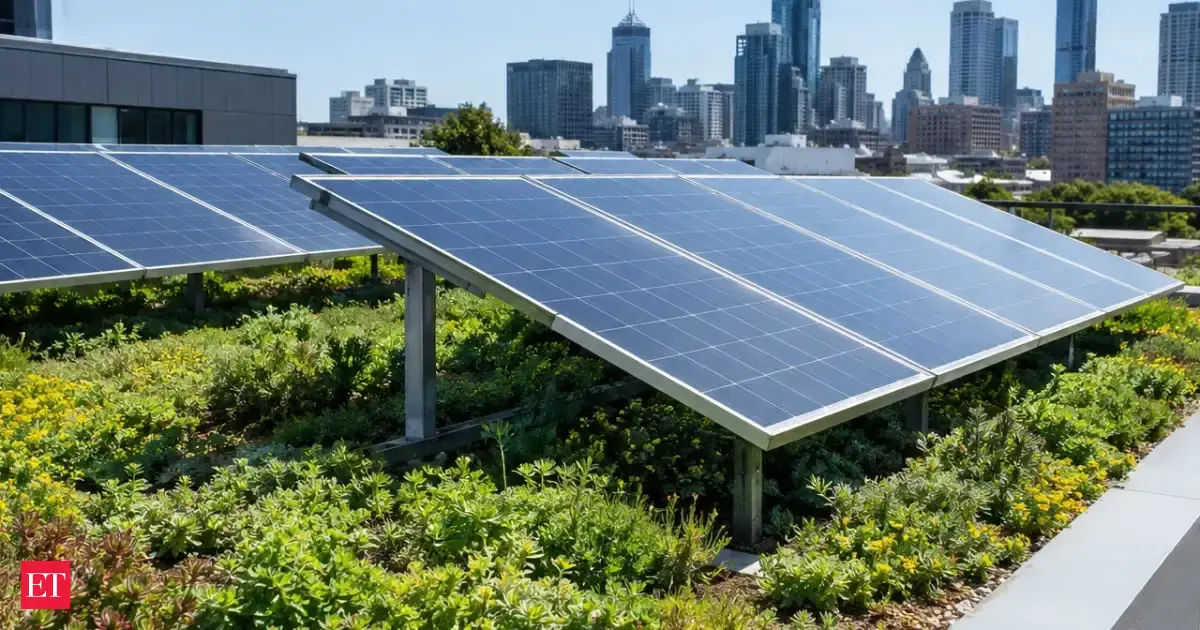
SYDNEY — Researchers at the University of Technology Sydney have demonstrated that integrating living plant infrastructure with rooftop solar arrays significantly boosts clean energy output while lowering operational temperatures, according to study results released in September 2026. The trial evaluated a biosolar green roof system installed in Sydney, measuring how the microclimate created by vegetation beneath photovoltaic panels influences energy generation, thermal management, stormwater retention, and local ecosystem health. Researchers recorded reductions in solar panel operating temperatures of up to 9.63 degrees Celsius compared to conventional installations, alongside seasonal spikes in peak electrical generation that exceeded baseline measurements by up to 107 percent. The findings highlight the potential for dual-use rooftop infrastructure to address urban heat stress and improve the yield of urban solar generation assets.
Key facts
What happened
Researchers associated with the University of Technology Sydney established a real-world testing site in Sydney to measure the performance of a biosolar roof, an infrastructure model that combines extensive vegetative green roofs with elevated photovoltaic solar arrays. Over the monitoring period, the research team logged panel efficiency metrics, surface thermal signatures, microclimate temperatures, and biological activity across varying conditions.
The primary challenge facing urban rooftop solar installations is thermal degradation. Photovoltaic cells convert sunlight into electricity less efficiently as their temperature rises above standard testing benchmarks. By establishing a dense vegetative layer beneath the solar panel mountings, the UTS team leveraged plant evapotranspiration—the process by which vegetation releases moisture into the surrounding air—to maintain a lower ambient operating temperature around the panels.
The results confirmed substantial improvements. Thermal sensors recorded maximum panel temperature reductions of up to 9.63°C compared against standard rooftop solar setups on conventional substrates. This thermal suppression translated into higher conversion efficiency for the solar modules. Depending on the month, peak power output from the biosolar array surged, reaching maximum generation increases of up to 107% over control arrays operating without vegetative cooling.
Beyond energy production, the trial monitored ecological outcomes. Partial shade from the panels created favorable microenvironments for ground cover plants, preventing soil desiccation during intense sunlight periods. In turn, the thriving vegetation increased soil microbial activity and attracted local pollinators, boosting urban biodiversity while absorbing rainfall to reduce urban stormwater discharge volume.
Why it matters
The UTS findings hold significant implications for municipal climate adaptation strategies, commercial real estate management, and energy sector economics, particularly in warming urban climates across Australia and globally. Standard rooftop solar panels suffer performance penalties during heatwaves—the precise periods when urban electricity demand surges due to air conditioning loads. By preventing thermal efficiency loss through biological cooling, biosolar systems can help stabilize grid generation during peak demand periods.
For commercial building owners, the economic calculation surrounding green roof adoption has historically been challenged by upfront capital expenses relative to financial returns. Integrating solar arrays onto green roofs creates a dual-benefit mechanism: vegetation improves the pay-back period of the solar investment by boosting daily power production, while the solar infrastructure yields continuous energy savings. Simultaneously, the green roof substrate protects underlying roofing membranes from direct ultraviolet radiation and thermal cycling, potentially extending roof lifespan while insulating internal spaces to reduce heating and cooling costs.
From an urban planning perspective, scaling biosolar installations addresses the urban heat island effect. Built environments dominated by concrete absorb solar radiation during daylight hours and re-radiate thermal energy overnight. Large-scale deployment of vegetated roofs mitigates this thermal retention through evapotranspiration, while simultaneously reducing stormwater runoff burdens on city drainage infrastructure by retaining rainwater within plant soil beds.
The background
Photovoltaic solar panels convert solar irradiance into electricity through the photoelectric effect, but operational efficiency is tied to semiconductor chemistry. Standard silicon PV modules are factory-tested at a reference cell temperature of 25°C. Under actual field conditions, especially on dark suburban or commercial rooftops, module temperatures frequently exceed 65°C. For every degree Celsius that a panel's temperature rises above 25°C, power output decreases by a temperature coefficient typically ranging between -0.3% and -0.5% per degree. On hot summer days, thermal stress can cause conventional rooftop arrays to lose 15% to 25% of their rated output capability.
Green roof technology has developed independently as a civil engineering tool to manage urban hydrology and thermal insulation. Extensive green roofs utilize lightweight growing mediums and low-maintenance plants, such as sedums and native groundcovers, to absorb rainwater and reduce thermal transfer into structural ceilings. However, green roofs operating in isolation can suffer plant mortality during prolonged drought without irrigation.
The biosolar approach combines these two systems into an integrated framework. Solar panels provide partial shade, creating microclimates that allow diverse plant species to thrive. In return, plants cool the air directly beneath the modules through transpiration, acting as a passive liquid-cooling mechanism for photovoltaic cells.
Australia presents an ideal testing environment for this technology. The nation maintains high per-capita rooftop solar adoption rates, driven by abundant solar irradiance. However, major cities including Sydney experience extreme summer heat events and urban heat islands, making passive cooling innovations valuable for long-term grid efficiency.
Reaction
Following the publication of the UTS findings, urban sustainability experts, civil engineers, and commercial property developers are expected to analyze how the reported efficiency gains translate to commercial deployment. Building codes and municipal green infrastructure standards in major Australian cities, including Sydney and Melbourne, have increasingly incentivized green building certifications, creating an established regulatory pathway for biosolar designs.
Industry group responses will likely focus on capital expenditure timelines and maintenance schedules. Energy developers and building managers are expected to analyze initial balance-of-system costs against returns generated by the 107% peak output gains. Environmental advocacy groups and urban forestry planners are expected to cite the UTS data when encouraging local councils to adopt biosolar guidelines on new commercial structures.
Academic researchers in renewable energy will monitor the published dataset to cross-evaluate performance across distinct climate zones. While Sydney's temperate coastal climate provides strong conditions for plant-assisted cooling, researchers in arid or colder climates will seek comparative data to verify whether similar thermal suppression can be achieved under different ambient humidity levels and vegetation profiles.
What we don't know yet
While the data from the UTS study highlights dramatic peak thermal and electrical performance improvements, several technical and operational variables remain unaddressed in the available reporting. Crucially, the long-term financial return on investment (ROI) calculation depends on structural factors that require extended observation.
What to watch
In the coming months, several key development points will signal whether biosolar technology transitions into widespread commercial adoption:
This report is based on primary reporting provided by Team Global.
How this story was produced
This report was written by The Global Wire newsroom from reporting first published by Team Global. We verify the core facts against the original report, write our own account, and add the background and consequences a short wire item leaves out. Drafting is AI-assisted inside an editor-supervised pipeline, and every story is checked for accuracy of attribution, structure and duplication before it appears — full detail in our AI and funding disclosure.
Spotted an error? Tell us at corrections@horizonglobalnews.com and read our corrections policy or editorial standards.





Reader comments
Loading comments…