

Aziz Abdul Disqualified in 90kg Final Following Post-Bell Punch in Egypt Bout
The Ugandan heavyweight boxer and grandson of Idi Amin was ejected from a tournament final against Egypt's Mohamed Hossen after delivering an illegal punch after the bell.
By The Global Wire Newsroom · Reported from CNA
Link preview · horizonglobalnews.com
Aziz Abdul Disqualified in 90kg Final Following Post-Bell Punch in Egypt Bout
The Ugandan heavyweight boxer and grandson of Idi Amin was ejected from a tournament final against Egypt's Mohamed Hossen after delivering an illegal punch after the bell.
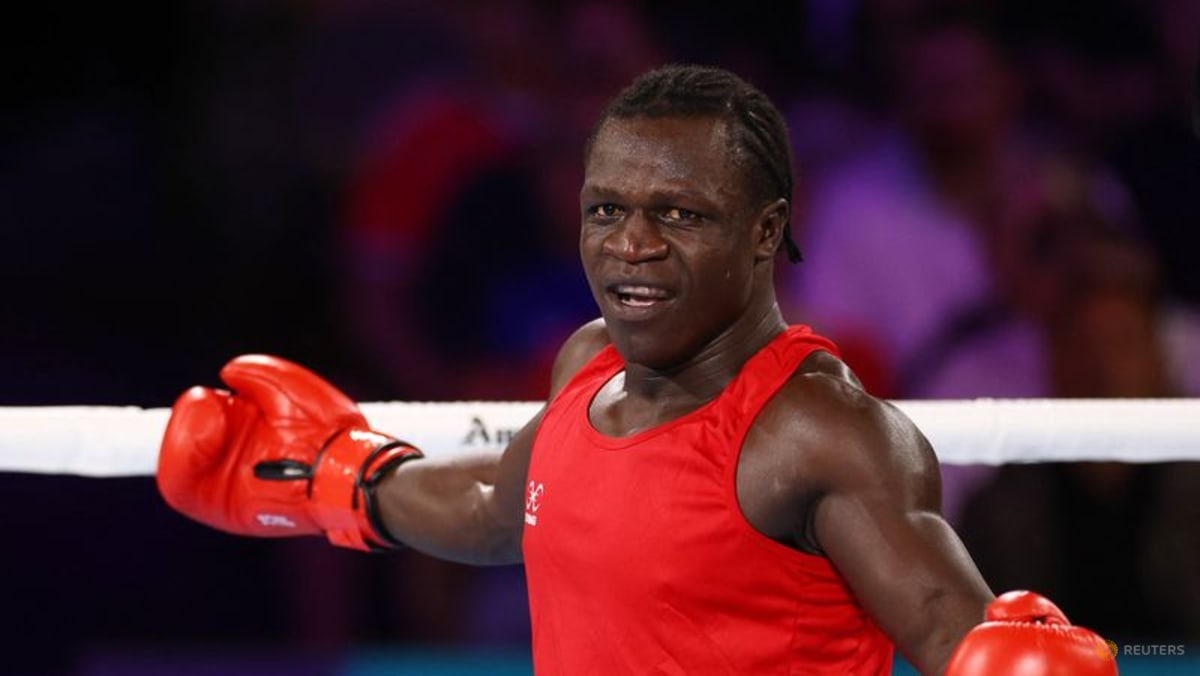
Ugandan heavyweight boxer Aziz Abdul has been disqualified from a major tournament final after delivering a punch to Egypt's Mohamed Hossen following the sound of the bell, marking the second time in several months that the athlete has faced disciplinary ejection from elite competition. The incident occurred during the championship decider of the men's 90-kilogramme division, bringing an abrupt and contentious end to the bout. Abdul, widely known as a grandson of the late Ugandan ruler Idi Amin, was sanctioned on the spot by officiating referees after swinging wildly at Hossen once the round had officially terminated, according to reporting by CNA. The infraction cost the Ugandan fighter an opportunity at gold and prompted renewed scrutiny into recurring disciplinary breakdowns inside the ring.
Key facts
What happened
According to reporting by CNA, the incident unfolded during the final bout of the men's 90-kilogramme weight class. Abdul and his Egyptian adversary, Mohamed Hossen, had reached the gold-medal stage of the bracket, representing two of the division's top competitors at the competition. Throughout the contest, exchanges between the two fighters remained physically intense, culminating in a critical breakdown of protocol at the conclusion of an active round.
As the timekeeper's bell sounded to signal the immediate cessation of combat, Abdul unleashed a wild punch aimed directly at Hossen. Because the round had concluded, fighters were obligated under unified international boxing codes to disengage instantly and retreat toward their respective neutral corners. Abdul's strike landed or attempted to land while Hossen was in the process of dropping his guard in response to the bell.
Referees and ring officials moved swiftly to control the canvas and assess the foul. Because post-bell strikes carry severe potential for injury when an opponent has ceased defending themselves, ring officials have strict authority to assess intentionality. Concluding that the action constituted a deliberate and egregious violation of contest rules rather than an accidental continuation of a flurry initiated before the bell, the officiating team issued a direct disqualification against Abdul, awarding the victory and title to Hossen.
Why it matters
The consequences of repeated disqualifications extend far beyond the loss of a single match. In regulated combat sports, repeated ejections within a condensed timeframe fundamentally threaten an athlete's eligibility, commercial viability, and status within national sport federations. For Abdul, accumulating two major tournament disqualifications in a matter of months places his competitive future under severe administrative jeopardy. Disciplinary commissions typically treat second infractions not as isolated errors in judgment, but as patterns of chronic misconduct requiring formal bans, fines, or mandatory behavioral reviews.
For the tournament organizers and the sport of boxing, the episode highlights the ongoing challenge of enforcing athlete safety and competitive integrity under high-stakes conditions. Strikes landed after the bell are classified among the most hazardous infractions in combat sports. Boxers rely on officiating signals to drop their defensive postures safely; strikes delivered during this vulnerable window present acute risks of concussive head trauma, facial fractures, and uncontrolled falls against ropes or ring posts. When an athlete repeatedly violates this fundamental boundary, governing bodies face legal and ethical pressure to intervene decisively to protect fellow competitors.
Furthermore, the incident casts a shadow over Uganda's amateur boxing programme, known historically as one of the most decorated sporting disciplines in the East African nation. Ejections at international finals rob national federations of earned ranking points, reduce qualification quotas for continental and global events, and risk alienating public and private sponsors whose financial backing is essential for training camps and international travel.
The background
Aziz Abdul occupies a unique position in global athletics due to his direct family lineage. He is the grandson of Idi Amin, the former military officer who ruled Uganda from 1971 until his overthrow in 1979. Before entering politics and seizing power in a military coup, Amin was a prominent athlete, serving as Uganda's national light heavyweight boxing champion for nearly a decade between 1951 and 1960 while enlisted in the British colonial military unit, the King's African Rifles. Amin frequently deployed his athletic background as an instrument of political propaganda, cultivating a persona centered on physical dominance and personal combat prowess.
Ugandan boxing has historically held a prestigious position on the world stage. Ugandan fighters, often competing under the national banner of the "Bombers," captured Olympic medals in 1968, 1972, and 1980, establishing the country as an elite continental boxing powerhouse. However, decades of underfunding, administrative friction within the Uganda Boxing Federation, and broader volatility within international boxing governance have complicated the development path for contemporary Ugandan athletes.
Under standard international amateur boxing rules, such as those historically codified by the International Boxing Association and contemporary independent tournament commissions, the sound of the bell legally terminates the round. Referees are explicitly instructed to penalize or disqualify any competitor who knowingly strikes an opponent once the signal is audible. Article 12 of standard technical and competition rules categorizes hitting after the bell as a critical foul. While accidental blows thrown simultaneously with the chime may result in a formal warning or point deduction, punches delivered after an appreciable delay, or characterized by uncontrolled aggression, warrant direct disqualification.
Prior precedents across professional and amateur ranks illustrate the severity of such infractions. In 1997, heavyweight bouts saw historic sanctions applied for flagrant post-bell or foul activity, while contemporary Olympic and regional tournament officials have repeatedly demonstrated zero-tolerance policies toward unprovoked physical aggression outside active clock time.
Reaction
While formal public statements from Abdul's corner and the Egyptian boxing delegation were not immediately released following the bout, the disqualification produced immediate tension inside the arena, according to reporting by CNA. In similar high-profile disqualifications, opposing teams typically demand formal confirmation of results and assurances regarding the physical condition of the targeted athlete. Mohamed Hossen and his coaching staff accepted the decision that secured the tournament championship for Egypt.
Disciplinary review panels at the regional and international levels are widely expected to convene to review video evidence of the final. The Uganda Boxing Federation, which manages the selection and administrative clearance of national fighters abroad, is expected to address Abdul's conduct, given that repeated ejections reflect directly on the country's national sporting representation. Previous disciplinary controversies involving national team selections in East Africa have prompted parliamentary queries or internal sporting committee hearings to evaluate coaching oversight and ring discipline.
What we don't know yet
Critical administrative and disciplinary details remain unconfirmed in the immediate aftermath of the final. The initial reporting did not disclose the precise sanctioning body operating the tournament, leaving it unclear whether Abdul faces automatic suspension under the auspices of a specific regional confederation or a global boxing body. It is also not yet known whether the Egyptian corner registered a formal medical report regarding Hossen's condition, or whether the Egyptian boxer sustained injuries requiring post-bout medical suspension.
Additionally, details regarding Abdul's prior disqualification earlier in the year—specifically the tournament in which it occurred, the opponent involved, and the precise nature of the earlier rule breach—remain unspecified in the immediate dispatch. Whether national team coaches intend to appeal the disqualification or whether Abdul will offer an explanation citing crowd noise, late auditory perception of the bell, or in-ring provocation remains an open question that could influence subsequent disciplinary reviews.
What to watch
The immediate focus will turn to the formal publication of the official tournament supervisor's report, which will document the exact timing of the referee's stoppage and the specific regulatory clause applied to Abdul. If the supervisor recommends disciplinary escalation, the relevant federation could issue a mandatory suspension, preventing Abdul from entering sanctioned rings for a period ranging from six months to two years.
The response from the Uganda Boxing Federation and national sports administrators will also be pivotal. Ugandan athletic authorities have previously instituted strict codes of conduct for competitors representing the country internationally. Observers will be monitoring whether Abdul is retained on national squad rosters for forthcoming continental championships or qualification tournaments for international multisport events.
Finally, observers will track whether Egypt's national federation files an official grievance seeking financial or punitive sanctions against the Ugandan camp, an action that would trigger formal hearings before sporting arbitration panels or continental boxing ethics committees.
This report is based on original reporting by CNA.
How this story was produced
This report was written by The Global Wire newsroom from reporting first published by CNA. We verify the core facts against the original report, write our own account, and add the background and consequences a short wire item leaves out. Drafting is AI-assisted inside an editor-supervised pipeline, and every story is checked for accuracy of attribution, structure and duplication before it appears — full detail in our AI and funding disclosure.
Spotted an error? Tell us at corrections@horizonglobalnews.com and read our corrections policy or editorial standards.



Reader comments
Loading comments…