

Sri Lanka Clinches Second-Highest Run Chase in ODI History Over England
Janith Liyanage struck a six on the penultimate delivery as Sri Lanka chased down a record-setting target against England to win by two wickets in a high-stakes tri-series match.
By The Global Wire Newsroom · Reported from Ankush Das
Link preview · horizonglobalnews.com
Sri Lanka Clinches Second-Highest Run Chase in ODI History Over England
Janith Liyanage struck a six on the penultimate delivery as Sri Lanka chased down a record-setting target against England to win by two wickets in a high-stakes tri-series match.
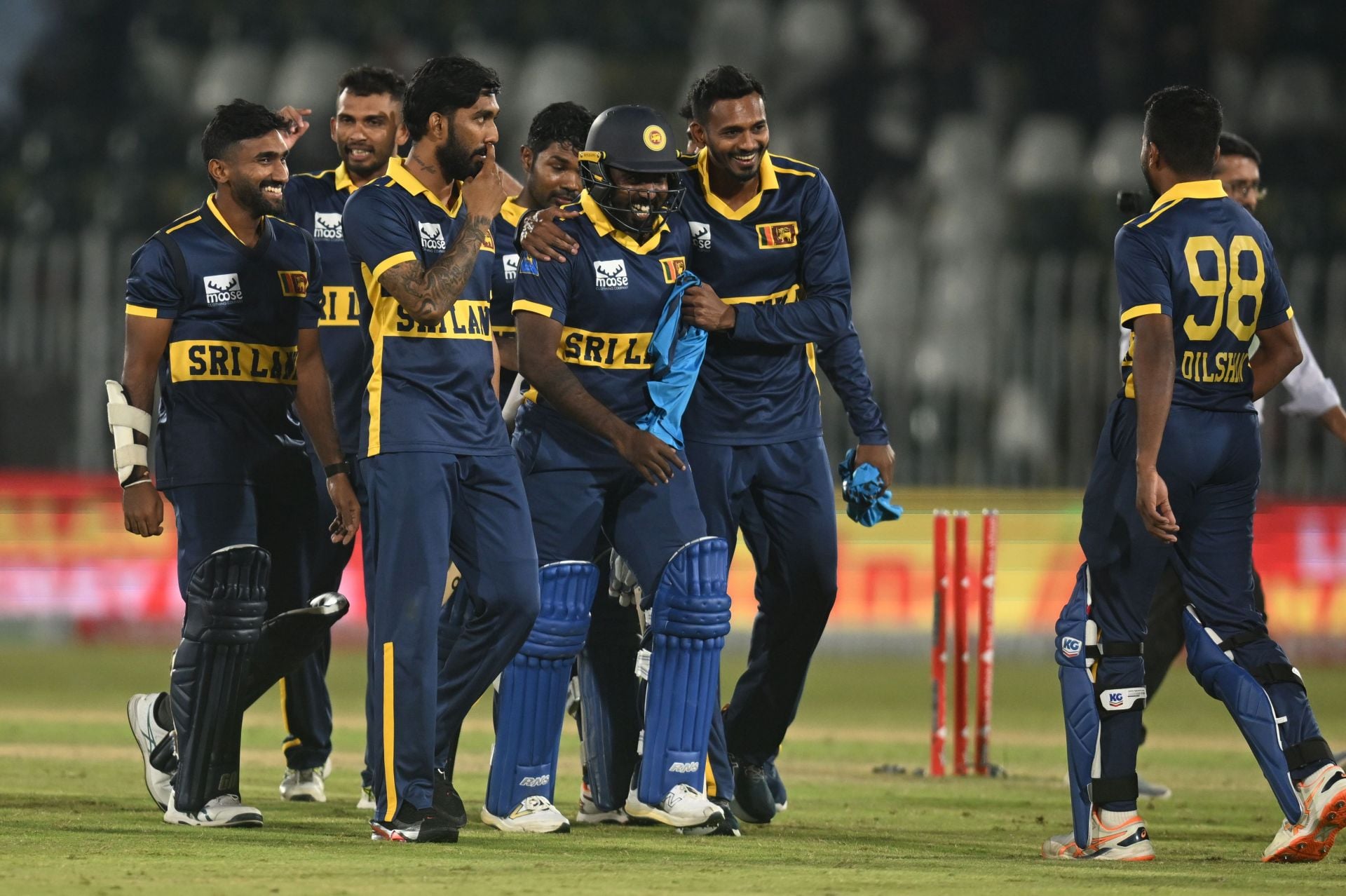
Sri Lanka completed the second-highest successful run chase in the history of men's One-Day International (ODI) cricket on Thursday, defeating England by two wickets in a dramatic tri-series contest. Facing a mammoth target in the 50-over match, Sri Lanka navigated a tense final over, securing the victory with just one ball to spare when middle-order batsman Janith Liyanage struck a boundary over the ropes on the penultimate delivery. The result marks one of the most formidable batting achievements in limited-overs history, eclipsing nearly two decades of high-scoring benchmarks and reshaping the narrative around Sri Lanka's white-ball resurgence against top-tier opposition.
Key facts
What happened
England set an extraordinary total during the first innings of Thursday's match, placing Sri Lanka in pursuit of a scoreline that demanded an aggressive scoring rate from the opening over. Modern limited-overs conditions and aggressive batting strategies have seen totals regularly surpass 300, but the target presented to Sri Lanka pushed the boundaries of historical precedent.
Sri Lanka’s innings was characterized by persistent momentum, as their batting order absorbed escalating run-rate requirements across the fifty overs. Despite losing eight wickets throughout the chase, the batting side maintained a striking pace capable of keeping the required run rate within reach. Wickets fell at critical junctures, placing immense tactical burden on the lower order as the match approached its decisive stages.
With two wickets in hand and the contest hanging in the balance in the final over, England's bowling unit sought to defend a narrow margin using defensive field placements and boundary-denying lengths. Janith Liyanage held his nerve under intense pressure. Facing the fifth ball of the 50th over—the penultimate delivery of the match—Liyanage launched the ball beyond the boundary ropes for a match-winning six. The hit concluded the chase at 49.5 overs, sparking celebrations among the Sri Lankan team and consigning England to a narrow defeat in one of the highest-scoring encounters ever contested.
Why it matters
This match represents a major structural shift in what is considered achievable in 50-over international cricket. For almost two decades, the pinnacle of ODI chasing was defined by the legendary March 2006 match at the Wanderers in Johannesburg, where South Africa overhauled Australia's 434 for 4 by scoring 438 for 9. Achieving the second-highest chase in format history demonstrates that the scoring ceiling in One-Day Internationals continues to rise, driven by modern power-hitting mechanics, refined data-driven pacing strategies, and modern pitch preparations that heavily favor strokeplay.
For Sri Lanka, the outcome is a monumental reputational breakthrough. The national side has endured extended rebuilding periods over the past decade following the retirements of legendary figures such as Kumar Sangakkara, Mahela Jayawardene, and Tillakaratne Dilshan. Successes of this scale against major nations like England validate Sri Lanka’s modern tactical adjustments, bolstering their standing within the International Cricket Council (ICC) rankings and boosting confidence in multi-team tournament setups. It also establishes Janith Liyanage as a reliable, cold-blooded finisher capable of managing extreme match situations against world-class bowling attacks.
For England, the defeat exposes vulnerabilities in late-innings bowling execution under duress. England pioneered a relentlessly aggressive white-ball philosophy following their group-stage exit at the 2015 ICC Cricket World Cup, breaking multiple world records for highest team totals. However, Thursday's outcome illustrates that posting colossal scores no longer guarantees safety against aggressive, deep batting line-ups.
The background
High-scoring limited-overs cricket has evolved dramatically since the turn of the century. Throughout the 1990s, totals exceeding 250 were considered highly competitive, and chasing down 300 was an infrequent phenomenon. Sri Lanka originally revolutionized limited-overs batting during the 1996 Cricket World Cup, when opening pair Sanath Jayasuriya and Romesh Kaluwitharana attacked bowlers inside the initial 15-over fielding restrictions, setting a structural template that reshaped international white-ball strategy.
The modern era of super-sized totals gained formal momentum following ICC regulation changes in October 2011, which mandated the use of two new balls per innings (one from each end) and altered boundary-fielding allowances. The elimination of reverse swing due to cleaner, less abrasive balls, combined with heavier bat profiles and standardized, flat pitches, caused average run rates to soar worldwide.
Prior to Thursday's fixture, the standard-bearer for historic chases remained the 2006 Johannesburg clash between South Africa and Australia. In the intervening years, several teams mounted successful pursuits of targets between 350 and 370—such as England chasing down 361 against the West Indies at Bridgetown in 2019, and South Africa chasing 372 against Australia in Durban in 2016. However, very few encounters in international cricket history have pushed into the stratosphere of the second-highest chase ever recorded. Sri Lanka's performance places this tri-series match squarely into that rarefied statistical tier.
Tri-series tournaments, once the staple of the international cricket calendar—most notably Australia's long-running World Series Cricket competitions—have grown increasingly scarce in the modern ICC Future Tours Programme due to the commercial dominance of domestic franchise Twenty20 leagues and bilateral agreements. The return of a high-stakes tri-series context provides rare competitive weight outside of official ICC tournaments.
Reaction
Official post-match comments from both camps are expected to focus heavily on the extraordinary conditions and the margin between victory and defeat. The England management and captain are likely to address their bowling tactics in the death overs during mandatory post-match press briefings, evaluating why defensive executions failed with six balls remaining and two wickets needed to secure a win.
Sri Lanka Cricket (SLC) and team leadership are expected to laud the mental resilience of Liyanage and the batting group in post-match presentations and media conferences. Analysts and commentators across the international cricket broadcast ecosystem will dissect the delivery selection on the penultimate ball, debating whether England erred in length or whether Liyanage produced an unstoppable stroke under maximum duress.
Cricket statistical bodies, including the ICC and independent record-keepers, will officially catalog the individual milestones, aggregate match runs, and strike rates generated across the 99.5 overs of the fixture.
What we don't know yet
While the outcome and its historic standing as the second-highest chase in ODI history are confirmed, full contextual parameters from the immediate dispatch remain incomplete. The initial summary does not specify the exact total posted by England in the first innings or Sri Lanka's final scoreline, leaving the precise target figure unstated. To rank as the second-highest successful chase in history, the target necessarily exceeds previous intermediate records in the 360-to-375 range, but the exact numeric aggregate remains unconfirmed until official scorecards are fully published.
Furthermore, the initial reporting does not detail the exact host venue, the third participating country in the tri-series, individual bowling figures, or which specific England bowler conceded the match-ending six to Liyanage. The tactical narrative of how the pitch played across both innings, including weather variables such as evening dew that frequently impairs fielding and bowling in day-night matches, is also absent from initial wire dispatches.
What to watch
Observers will look to the tournament standings as this tri-series continues, with net run rates and qualification scenarios shifting dramatically following such a high-scoring encounter. England’s immediate response in their next fixture will be scrutinized closely, particularly regarding whether team selectors alter their bowling combinations or bowling plans at the death.
Sri Lanka's subsequent team selections will indicate whether Janith Liyanage is assigned a more prominent, permanent role in the middle-to-lower order following his match-winning composure. Observers will also monitor whether the surfaces throughout the remainder of this tri-series maintain this heavy batting bias or whether tournament curators make adjustments to restore equilibrium between bat and ball.
This account is based on original reporting published by Ankush Das.
How this story was produced
This report was written by The Global Wire newsroom from reporting first published by Ankush Das. We verify the core facts against the original report, write our own account, and add the background and consequences a short wire item leaves out. Drafting is AI-assisted inside an editor-supervised pipeline, and every story is checked for accuracy of attribution, structure and duplication before it appears — full detail in our AI and funding disclosure.
Spotted an error? Tell us at corrections@horizonglobalnews.com and read our corrections policy or editorial standards.





Reader comments
Loading comments…