

As 9/11 Anniversary Approaches, Generational Memory Gap Fuels Online Conspiracy Theories
With 100 million Americans having no direct memory of September 11, 2001, researchers warn that younger generations are increasingly exposed to viral historical disinformation.
By The Global Wire Newsroom · Reported from Michael Koziol
Link preview · horizonglobalnews.com
As 9/11 Anniversary Approaches, Generational Memory Gap Fuels Online Conspiracy Theories
With 100 million Americans having no direct memory of September 11, 2001, researchers warn that younger generations are increasingly exposed to viral historical disinformation.
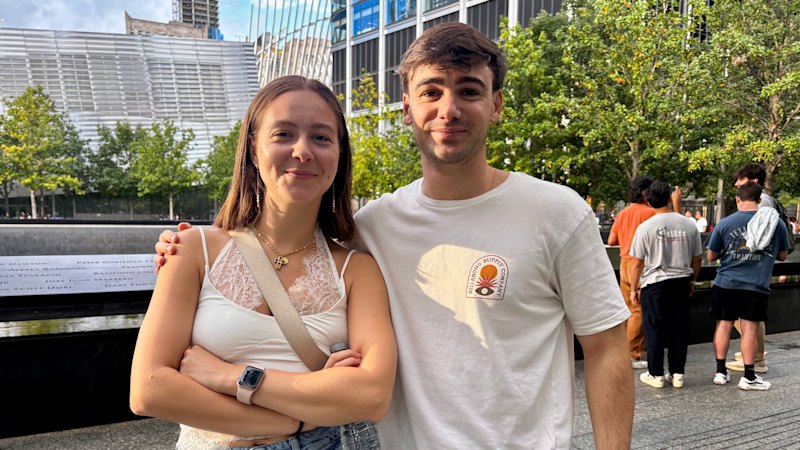
As the United States approaches the quarter-century mark since the September 11, 2001 terrorist attacks, a profound demographic shift is reshaping the way the nation recalls one of the most transformative days in modern history. According to reporting by Michael Koziol, an estimated 100 million Americans—approximately one-third of the country's total population—have no living memory of the event, having been born after the attacks or being too young at the time to remember them. In a modern media landscape increasingly dominated by short-form video applications, algorithmic recommendation engines, and declining faith in established institutions, this growing memory gap has left younger generations particularly vulnerable to viral conspiracy theories, historical revisionism, and online disinformation surrounding the disaster.
Key facts
What happened
The gradual transition of a historic tragedy from living memory into textbook history is a natural demographic progression, but the environment in which it is taking place today is without precedent. With 100 million Americans possessing no firsthand recollection of September 11, 2001, the primary channel through which young citizens learn about the event has shifted dramatically away from family narratives, traditional television broadcasting, and formal memorial ceremonies toward digital screens, as highlighted in reporting by Michael Koziol.
For Americans born in the late 1990s and 2000s, exposure to information about 9/11 occurs predominantly through social media platforms such as TikTok, YouTube, and Instagram. On these networks, short-form video algorithms routinely surface content that questions or denies established facts about the attacks. Viral claims range from assertions that the World Trade Center towers were felled by controlled explosive demolitions to theories that federal intelligence agencies engineered or permitted the strikes to justify subsequent foreign military campaigns.
The mechanics of modern digital platforms accelerate this trend. Algorithmic architecture on social networks is designed to maximize user engagement and duration of view, frequently prioritizing sensational or outrage-inducing content over verified historical record. When a young user searches for basic historical context regarding 9/11 out of curiosity, automated systems frequently funnel that user into rabbit holes of conspiratorial material. Koziol's reporting notes that many young people encountering these videos report feeling deeply confused, acknowledging that they lack a foundational understanding of what transpired because they received minimal or inconsistent instruction about the event in school or at home.
Why it matters
The presence of a 100-million-person demographic without personal memory of 9/11 carries significant implications for civic stability, democratic deliberation, and national security policy in the United States. When a third of the population lacks a shared factual understanding of a foundational historical crisis, the common narrative that underpins national identity and political discourse begins to fragment.
From a national defense and foreign policy standpoint, much of the contemporary legal and institutional infrastructure of the United States—ranging from federal Homeland Security departments to foreign intelligence gathering and airport screening procedures—was built directly in response to the specific vulnerabilities exposed on September 11, 2001. If younger generations come to view those foundational events through the prism of government conspiracy rather than documented foreign terrorism, public consensus surrounding counterterrorism policies, international security alliances, and civil liberties protections becomes highly unstable.
Furthermore, the vulnerability of young citizens to 9/11 conspiracy narratives reflects broader weaknesses in the public's ability to resist online disinformation. Foreign intelligence entities and domestic extremist groups regularly leverage conspiracy ecosystems to erode public faith in democratic institutions, press freedoms, and government accountability. When widespread doubt is cast on the historic record of major national traumas, institutional cynicism takes root. This cynicism reduces public resilience during future national emergencies and makes it increasingly difficult for educators and civic leaders to foster an informed, media-literate citizenry.
The background
On the morning of September 11, 2001, nineteen hijackers associated with the Islamist terrorist organization al-Qaeda commandeered four commercial airliners departing from airports in Boston, Newark, and the Washington, D.C. area. Two hijacked planes were deliberately flown into the Twin Towers of the World Trade Center in Lower Manhattan, leading to the collapse of both 110-story structures. A third aircraft struck the headquarters of the United States Department of Defense at the Pentagon in Arlington, Virginia. The fourth plane, United Airlines Flight 93, crashed into a field near Shanksville, Pennsylvania, after passengers launched a coordinated attempt to retake the cockpit from the hijackers.
The attacks resulted in 2,977 fatalities, representing the deadliest foreign attack on American territory in history. The victims included citizens of more than 90 nations, as well as 343 firefighters and 71 law enforcement personnel who lost their lives while conducting rescue efforts in New York City.
In response, the United States government initiated a comprehensive overhaul of its domestic security and foreign intelligence frameworks. In 2002, federal legislation established the Department of Homeland Security and created the National Commission on Terrorist Attacks Upon the United States, known as the 9/11 Commission. In July 2004, the bipartisan commission published its final 567-page public report, which documented al-Qaeda's operational planning, identified systemic intelligence and border security shortcomings, and outlined recommendations for federal reform. Congress subsequently enacted the Intelligence Reform and Terrorism Prevention Act of 2004, establishing the Office of the Director of National Intelligence to oversee 17 executive branch intelligence agencies.
Despite exhaustive public inquiries, forensic analyses by the National Institute of Standards and Technology (NIST), and independent investigative reporting, conspiratorial theories began circulating shortly after the attacks. Early internet-era documentaries and self-published websites in the mid-2000s raised unsubstantiated doubts regarding structural physics and political motives. Over the subsequent two decades, these fringe theories migrated from specialized message boards into algorithmic short-form video feeds, reaching millions of digital-native users born long after the events took place.
Reaction
Educators, historians, and educational advocates have expressed growing alarm over the expanding knowledge gap regarding 9/11 among young Americans. Academic organizations note that public school curricula vary widely across the 50 U.S. states. While several state education boards mandate specific, comprehensive units covering the 9/11 attacks, their causes, and their domestic and geopolitical aftermath, other jurisdictions treat the subject as optional or include it only briefly within broader modern history frameworks.
In response to changing demographics, institutions dedicated to historical preservation, such as the National September 11 Memorial & Museum in New York City, have shifted significant resources toward digital learning programs, virtual field trips, and primary-source educational packages tailored specifically for digital natives who have no personal memory of the day.
Meanwhile, media researchers and civil society groups continue to press major technology companies to refine their platform governance standards. Advocacy groups have urged social media platforms to implement stronger content moderation tools, provide prominent factual context panels alongside historic media, and adjust recommendation algorithms to restrict the automated promotion of debunked historical theories to younger users.
What we don't know yet
Crucial questions remain regarding how effective educational and technological interventions will be in addressing this generational divide. It remains unknown whether state-level media literacy programs and revised history curricula can successfully counteract the influence of constant exposure to conspiratorial content on social feeds.
Additionally, tech platforms have not provided comprehensive public data explaining how their proprietary recommendation engines identify or prioritize historical content, leaving it unclear to what extent platforms actively moderate or inadvertently promote historical revisionism.
Finally, as the generation of eyewitnesses, first responders, and political leaders who experienced the attacks firsthand ages, historians and sociologists are uncertain how the national collective memory of 9/11 will solidify in the coming decades, and whether the event will maintain its position as a unifying cultural touchstone or become a permanently polarized historical debate.
What to watch
This report is based on original reporting published by Michael Koziol.
How this story was produced
This report was written by The Global Wire newsroom from reporting first published by Michael Koziol. We verify the core facts against the original report, write our own account, and add the background and consequences a short wire item leaves out. Drafting is AI-assisted inside an editor-supervised pipeline, and every story is checked for accuracy of attribution, structure and duplication before it appears — full detail in our AI and funding disclosure.
Spotted an error? Tell us at corrections@horizonglobalnews.com and read our corrections policy or editorial standards.



Reader comments
Loading comments…