

Victoria Regulators Facing Criticism Over Lack of Strata Prosecutions
An investigation reveals Victorian consumer protection authorities took zero legal actions despite receiving 3,500 complaints about strata management over a decade.
By The Global Wire Newsroom · Reported from Adam Carey
Link preview · horizonglobalnews.com
Victoria Regulators Facing Criticism Over Lack of Strata Prosecutions
An investigation reveals Victorian consumer protection authorities took zero legal actions despite receiving 3,500 complaints about strata management over a decade.
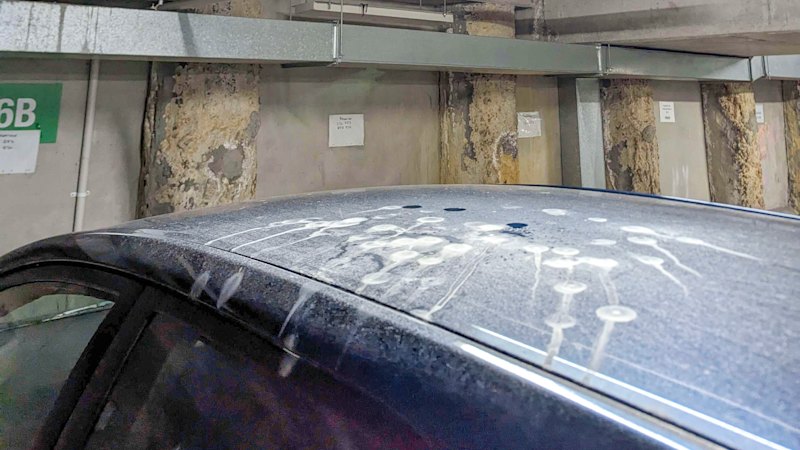
A decade-long record of zero prosecutions despite thousands of official complaints has exposed severe enforcement deficits within Victoria’s strata regulatory framework. An investigation into the state’s consumer protection apparatus revealed that over a 10-year period, regulatory authorities logged 3,500 complaints regarding owners corporations and strata managers without launching a single criminal or regulatory prosecution in court. The systemic lack of statutory enforcement was highlighted when a Melbourne apartment owner discovered evidence of alleged illegal fees assessed against unit holders in his residential building, only for the state consumer watchdog to advise him to seek legal remedy through external avenues rather than initiating an official investigation.
Key facts
What happened
The breakdown in state oversight emerged through individual attempts by property owners to challenge administrative practices within multi-unit residential developments in Melbourne. In one detailed case, an apartment owner conducted an audit of financial records within his building complex and identified evidence pointing to unauthorized and unlawful administrative fees billed to unit owners. The levies appeared to breach state laws governing how financial maintenance funds and management service charges can be levied on title holders.
Upon documenting the alleged financial irregularities, the owner submitted formal documentation to Victoria’s primary consumer watchdog, expecting statutory intervention or an official inquiry into the managing agent's financial conduct. However, state consumer officials informed the owner that the regulator would not launch an enforcement action or pursue legal proceedings against the entities involved. Instead, officials instructed the owner to pursue the matter independently through administrative tribunals or private legal channels.
Subsequent examination of government operational records revealed that this outcome reflected a comprehensive institutional pattern. Over a ten-year window, consumer protection agencies in Victoria gathered roughly 3,500 distinct complaints detailing alleged statutory breaches, financial misconduct, and administrative non-compliance across the strata sector. Throughout that decade, the state agency failed to bring a single prosecution or regulatory enforcement trial against any strata management firm, manager, or board executive, creating what critics describe as an enforcement vacuum in the state's housing sector.
Why it matters
The absence of public enforcement in Victoria’s multi-billion-dollar strata market transfers the entire burden of regulatory compliance onto individual property owners. In high-density residential developments, individual lot owners often lack the financial resources, legal expertise, or access to financial records needed to litigate complex disputes against professional strata management companies or dominant committee members. By referring complainants to tribunal adjudication rather than exercising statutory investigative powers, regulators compel citizens to spend thousands of dollars out-of-pocket to correct systemic financial breaches that state statutes explicitly forbid.
Furthermore, the failure to prosecute established breaches compromises financial transparency and consumer confidence across the broader housing market. Australia’s capital cities have seen significant growth in high-density multi-dwelling developments, with hundreds of thousands of residents now residing under strata titles. When regulatory bodies fail to penalize unlawful billing, unauthorized agent fees, or misallocated reserve funds, corrupt or negligent practices can proliferate without standard deterrence mechanisms. Strata managers operate under trust-based financial mandates, collecting millions of dollars annually in maintenance levies and capital works funds. Without active regulatory policing, apartment owners face heightened exposure to unrecoverable financial mismanagement, inflated living expenses, and diminished property resale valuations.
The background
Strata title arrangements in Victoria are governed under the Owners Corporations Act 2006, alongside regulatory standards monitored by Consumer Affairs Victoria (CAV). Under this framework, multi-unit buildings, commercial complexes, and master-planned estates automatically establish an owners corporation upon registration of a plan of subdivision. These legal entities hold statutory obligations to manage common property, maintain building insurance, collect annual fees, and manage common funds on behalf of lot owners.
Because operating an owners corporation requires specialized administrative, legal, and financial management, most residential committees contract professional strata management firms. These managers handle administrative functions, direct trade contractors, maintain financial ledgers, and hold operational trust accounts containing levy payments.
While state legislation outlines clear duties for managing agents—including requirements to act honestly, exercise due care, avoid conflicts of interest, and keep transparent accounts—enforcement pathways have historically suffered from structural bottlenecks. Consumer Affairs Victoria maintains the statutory power to investigate unfair business practices, register managers, and seek judicial orders or financial penalties against non-compliant businesses under Australian Consumer Law and state property statutes.
However, in practice, Victorian property disputes are routinely funneled toward the Victorian Civil and Administrative Tribunal (VCAT). Established under state legislation to provide an accessible, low-cost legal forum, VCAT handles civil disputes between individual lot owners, managers, and corporations. Over time, state regulators have relied on VCAT as the default mechanism for addressing strata issues, effectively shifting regulatory duties away from government enforcement bodies and placing civil litigation obligations onto individual consumers.
Reaction
The exposure of a ten-year statutory enforcement void has drawn sharp scrutiny from housing advocates, legal practitioners, and property owner associations across Victoria. Consumer advocacy groups argue that referring administrative complaints to tribunal arbitration strips the regulatory framework of its intended deterrent effect. Legal professionals specializing in property law note that while tribunals can resolve individual monetary disputes, they cannot issue public compliance orders, institute industry-wide audits, or apply criminal sanctions necessary to curb widespread statutory abuses.
Industry observers expect formal inquiries regarding how Consumer Affairs Victoria prioritizes its investigative resources and whether legislative amendments are required to mandate regulatory action upon receipt of substantiated complaints. Apartment owner advocacy groups have called for structural reforms, demanding dedicated oversight bodies equipped with explicit mandates to audit strata accounts, enforce governance standards, and prosecute bad actors directly. Representatives from the strata management sector are anticipated to address how statutory standards are maintained and clarify standard compliance procedures across professional firms.
What we don't know yet
Several critical operational details regarding the state’s regulatory approach remain unconfirmed. Public records have not disclosed the specific breakdown of the 3,500 complaints logged over the decade, making it unclear how many involved severe financial misappropriation versus minor administrative disagreements. Additionally, the internal criteria utilized by Consumer Affairs Victoria to evaluate incoming reports and determine whether to launch investigations have not been publicly detailed.
It is also unclear whether any non-judicial enforcement actions—such as formal warnings, administrative binding undertakings, or voluntary license surrenders—were utilized in place of formal court prosecutions. Furthermore, the total financial impact of the unprosecuted allegations on Victorian apartment owners remains unquantified, as state agencies do not aggregate financial damages cited in unresolved consumer complaints.
What to watch
In the coming months, observers will be watching for potential policy responses from Victorian government ministers oversight boards responsible for consumer protection and housing regulation. Key benchmarks include whether parliament considers legislative amendments to strengthen mandatory enforcement mechanisms under the Owners Corporations Act or reform the registration requirements for professional strata managers.
Stakeholders will also monitor upcoming reporting cycles from Consumer Affairs Victoria to see if public scrutiny prompts changes in complaint triage practices or an increase in active compliance audits. Additionally, developments in ongoing cases before the Victorian Civil and Administrative Tribunal may indicate whether individual property owners successfully obtain financial restitution through private legal channels in the absence of state intervention.
This report contains information originally reported by Adam Carey.
How this story was produced
This report was written by The Global Wire newsroom from reporting first published by Adam Carey. We verify the core facts against the original report, write our own account, and add the background and consequences a short wire item leaves out. Drafting is AI-assisted inside an editor-supervised pipeline, and every story is checked for accuracy of attribution, structure and duplication before it appears — full detail in our AI and funding disclosure.
Spotted an error? Tell us at corrections@horizonglobalnews.com and read our corrections policy or editorial standards.






Reader comments
Loading comments…