

United States Considers Stricter UN Travel Rules for Cuban Officials
The Trump administration is evaluating tighter movement limits on Cuban officials attending United Nations sessions in New York as part of a broader policy targeting Havana.
By The Global Wire Newsroom · Reported from ABC News
Link preview · horizonglobalnews.com
United States Considers Stricter UN Travel Rules for Cuban Officials
The Trump administration is evaluating tighter movement limits on Cuban officials attending United Nations sessions in New York as part of a broader policy targeting Havana.
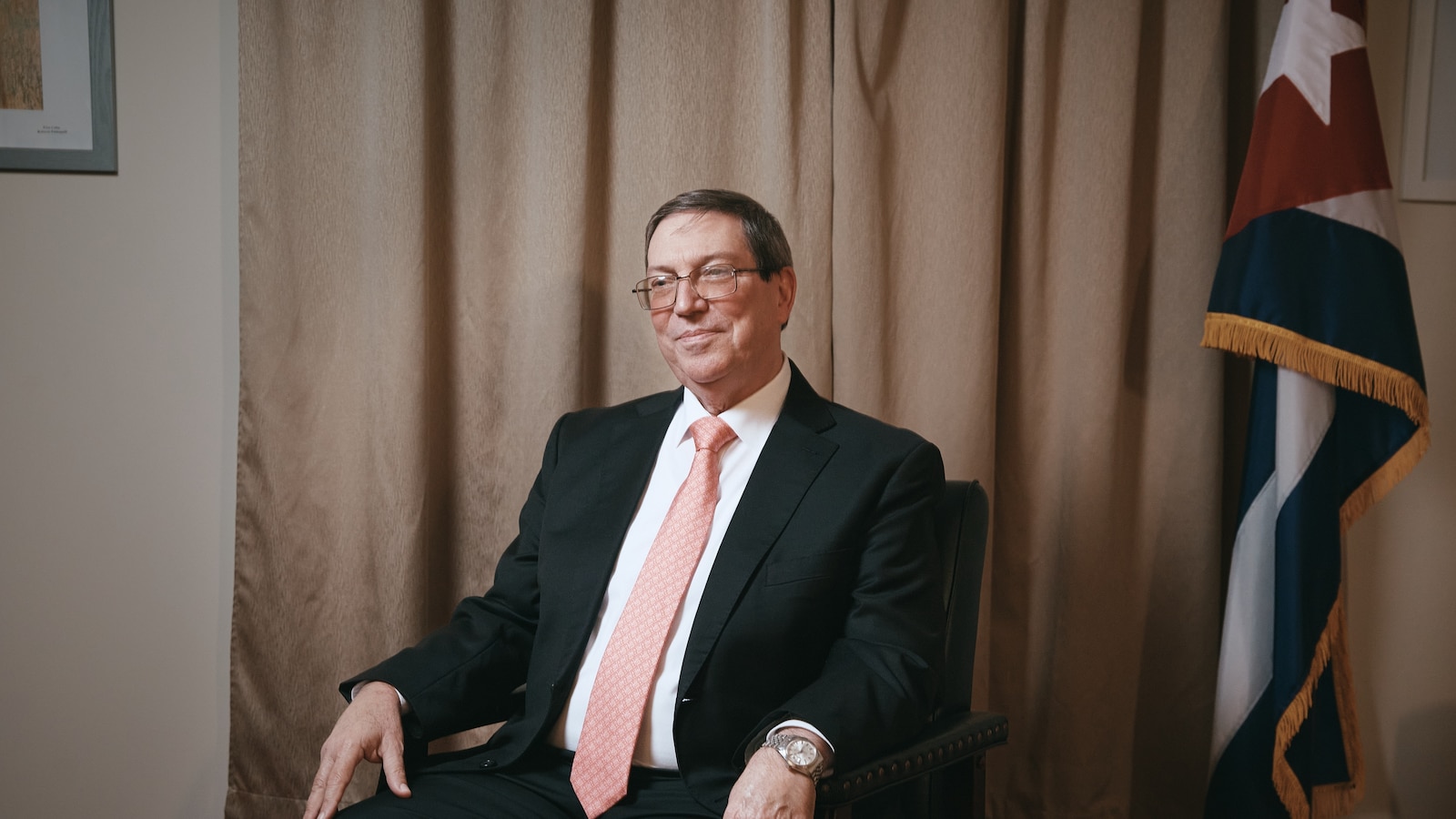
The United States government is weighing new travel restrictions targeting Cuban officials attending meetings at the United Nations headquarters in New York, according to reporting by ABC News. The prospective measures represent a targeted escalation in the Trump administration's effort to increase economic and diplomatic pressure on the government in Havana. If implemented, the policy would further narrow the scope of movement permitted for Cuban diplomats and visiting delegations operating on American soil under UN auspices.
Key facts
What happened
According to reporting published by ABC News on September 25, 2026, executive branch officials within the Trump administration are holding internal discussions regarding new travel constraints aimed at Cuban government personnel visiting the United Nations.
Under established United States policy, foreign diplomats stationed at or visiting the United Nations Secretariat in New York City operate under specific visa categories issued by the U.S. Department of State. While diplomats from most UN member states enjoy broad travel privileges across the United States, representatives from nations with strained bilateral relations with Washington—such as Cuba, Iran, North Korea, Russia, and Syria—have historically been subjected to mandatory travel notifications or strict geographical limits.
For Cuban diplomats assigned to Cuba's Permanent Mission to the United Nations, current regulations generally restrict unapproved travel to a 25-mile radius measured from Columbus Circle in Manhattan. Visiting high-level officials, including cabinet ministers or presidential delegates attending multi-day summits like the annual UN General Assembly high-level week, must navigate specialized visa review processes and travel permissions.
The deliberations within the administration center on imposing stricter parameters on these visits. Options under consideration include further shrinking the geographic zone within which Cuban officials are permitted to move, shortening the duration of diplomatic stay authorizations, requiring longer advance notification periods for requested travel outside designated zones, or limiting the total number of delegates permitted to enter the country for UN functions.
Why it matters
The potential policy shift touches upon a delicate balance between United States sovereign foreign policy goals and international legal obligations made to the world body. As host to the United Nations Headquarters since its establishment following World War II, the United States is bound by the 1947 United Nations Headquarters Agreement. Section 11 of Article IV of that accord stipulates that federal, state, or local authorities of the United States shall not impose any impediments to transit to or from the UN headquarters district for representatives of member states or specialized agencies.
When Washington imposes travel limits or visa delays on foreign delegations, it frequently ignites procedural friction within the UN system. Tightening travel rules on Cuban representatives directly impedes Havana's ability to conduct multilateral diplomacy outside the physical boundary of the UN complex. Cuban officials routinely utilize their presence in New York to hold press briefings, engage with civil society organizations, meet with trade representatives, and consult with sympathy groups in the American public sector. Restricting their movement curtails these outreach operations.
From an administrative perspective, the measures serve as an additional instrument in the White House's policy toward Cuba. By making diplomatic access to the UN more onerous for Havana, Washington seeks to signal that international forums hosted on American soil cannot be utilized by adversary states without regulatory friction. However, critics of such policies warn that escalating host-country restrictions risks setting precedents that could be weaponized against American diplomats abroad or undermine the neutral standing of the UN headquarters.
The background
Bilateral relations between Washington and Havana have remained a central geopolitical subject for over six decades. Following the 1959 Cuban Revolution and the alignment of Fidel Castro's government with the Soviet Union, the United States enacted a comprehensive trade embargo in 1962 under the Trading with the Enemy Act and the Foreign Assistance Act of 1961. Formal diplomatic relations were severed in 1961 and were not re-established until July 2015 under President Barack Obama.
The diplomatic thaw initiated during the Obama administration led to the reopening of embassies in Washington and Havana, the easing of certain commercial and travel restrictions, and Cuba's removal from the State Sponsor of Terrorism list in May 2015. However, this trajectory was sharply reversed during the first term of President Donald Trump from 2017 to 2021. That administration enacted more than 240 new sanctions and administrative measures against Cuba, restricted commercial flights and cruise ship docking, strictly limited family remittances, enforced Title III of the Helms-Burton Act of 1996 to allow lawsuits over confiscated property, and restored Cuba to the State Sponsor of Terrorism list in January 2021.
During the subsequent Biden administration, selected regulatory changes were introduced, including the restoration of commercial flights to regional Cuban airports and expanded processing of immigrant visas at the U.S. Embassy in Havana. However, core elements of the sanction framework remained operational. Following President Trump's return to office in January 2025, executive agencies resumed an assertive posture toward Havana, pointing to Cuba's ongoing political alliances with Russia, China, and Venezuela, alongside internal human rights conditions.
Host-country travel restrictions at the UN have a long precedent in American diplomacy. During the height of the Cold War, the U.S. State Department routinely limited the mobility of Soviet and Eastern Bloc diplomats to precise geographical corridors. In recent years, similar strict limits have been applied to Iranian delegations during periods of heightened nuclear negotiations, restricting Iranian officials strictly to a tight radius surrounding UN Headquarters, the Iranian Permanent Mission, and John F. Kennedy International Airport.
Reaction
While formal policy announcements have not yet been promulgated by the White House or Department of State, formal responses are anticipated across multiple diplomatic channels if the proposed rules take effect.
The Cuban government, through its Ministry of Foreign Affairs and its Permanent Mission to the United Nations, routinely denounces American travel restrictions as illegal, arbitrary, and a direct breach of the 1947 Headquarters Agreement. Havana routinely argues before international bodies that U.S. host-country policies represent a form of diplomatic harassment meant to stymie sovereign representations guaranteed under the UN Charter.
Within the United Nations, complaints regarding host-nation restrictions are formally handled by the Committee on Relations with the Host Country, a specialized organ created by the General Assembly in 1971. The committee, which includes representatives from the host state as well as a cross-section of member nations, serves as the primary forum where countries like Cuba, Russia, Iran, and Venezuela lodge formal grievances concerning visa denials, banking access obstacles, and travel limits enforced by U.S. authorities.
Within U.S. domestic politics, hardline members of Congress—particularly lawmakers representing South Florida constituencies—consistently advocate for strict enforcement of sanctions and limits on foreign government officials entering the United States. Conversely, foreign policy experts and former diplomatic officials often emphasize the legal obligations under international treaty agreements, cautioning against actions that could compromise the host status of New York City.
What we don't know yet
Several operational and legal dimensions of the proposed travel restrictions remain unconfirmed in current reporting:
First, the specific technical scope of the travel limits under discussion has not been detailed in available reports. It remains unclear whether the policy under review involves a further numerical reduction of the current 25-mile geographic boundary, stricter pre-approval window requirements for travel, or specific prohibitions against attending external public events and media appearances in New York.
Second, the exact timing for the implementation of any final policy decision remains undetermined. It is not clear whether the administration intends to codify these rules ahead of specific upcoming UN committee sessions or align them with future high-level diplomatic assemblies.
Third, it is uncertain how the U.S. Department of State plans to handle potential legal disputes raised by the UN Secretariat or the Committee on Relations with the Host Country if Cuba formally challenges the restrictions under Section 21 of the Headquarters Agreement, which outlines dispute settlement procedures.
What to watch
To gauge the progression and consequences of this policy initiative, several key development points will be critical to monitor:
This report is based on original reporting by ABC News.
How this story was produced
This report was written by The Global Wire newsroom from reporting first published by ABC News. We verify the core facts against the original report, write our own account, and add the background and consequences a short wire item leaves out. Drafting is AI-assisted inside an editor-supervised pipeline, and every story is checked for accuracy of attribution, structure and duplication before it appears — full detail in our AI and funding disclosure.
Spotted an error? Tell us at corrections@horizonglobalnews.com and read our corrections policy or editorial standards.


Reader comments
Loading comments…