

Royal Air Force Jet Crashes During Welsh Training Flight as Pilots Eject Safely
A British military jet crashed near buildings in Wales after failing to gain altitude, with both crew members treated for minor injuries following a timely ejection.
By The Global Wire Newsroom · Reported from cbsnews.com
Link preview · horizonglobalnews.com
Royal Air Force Jet Crashes During Welsh Training Flight as Pilots Eject Safely
A British military jet crashed near buildings in Wales after failing to gain altitude, with both crew members treated for minor injuries following a timely ejection.
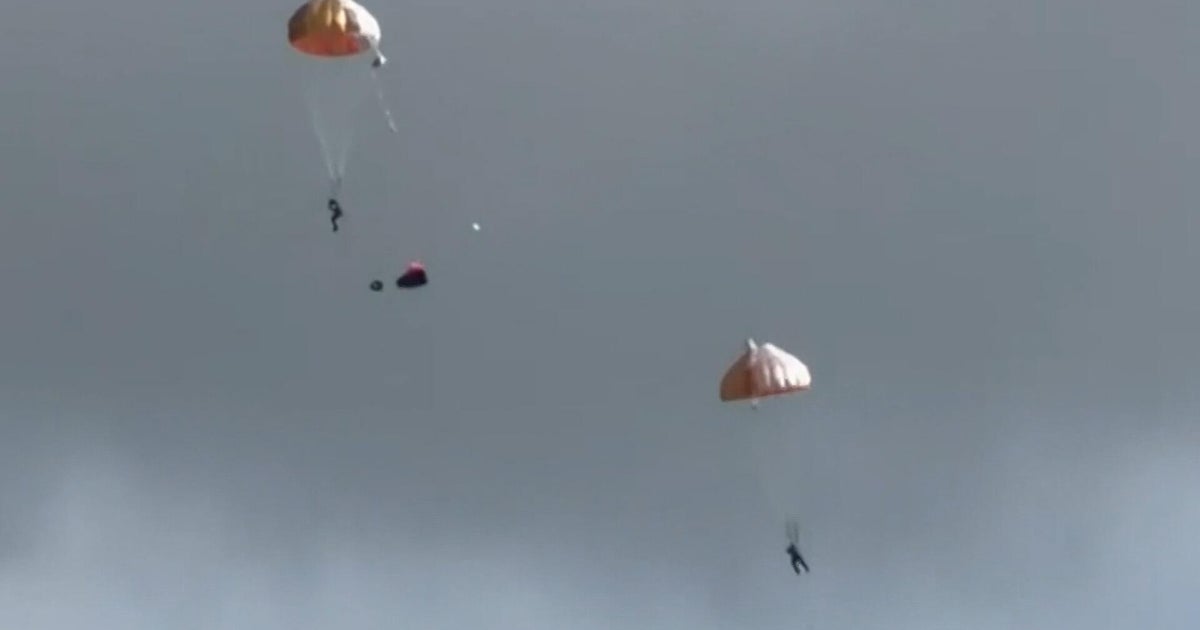
On September 23, 2026, a Royal Air Force jet crashed during a training exercise in Wales, coming down near buildings after struggling to maintain altitude. Video captured at the scene showed the aircraft flying dangerously low before descending rapidly toward the ground. Both crew members successfully ejected from the aircraft before impact and were treated for minor injuries. Emergency services and defense personnel secured the crash site, while military safety authorities initiated preliminary procedures for a formal inquiry into the cause of the incident.
Key facts
What happened
The incident occurred during a scheduled military training flight in Welsh airspace on September 23, 2026, according to reporting by CBS News. Video recorded by witnesses near the crash site showed the Royal Air Force jet operating at an unusually low altitude while experiencing severe difficulty gaining lift. In the footage, the airframe pitched upward in an apparent attempt to climb before losing momentum and descending sharply toward the terrain.
Recognizing that the aircraft could not be recovered, both crew members initiated their ejection seats while still at low altitude. The automated escape system cleared both aviators from the falling jet moments before it struck the ground. The impact occurred in close proximity to local buildings, narrowly missing structural impacts that could have caused major ground damage or civilian casualties.
Emergency services, including regional police, fire crews, and medical teams, responded rapidly to the crash location. Rescuers secured the immediate perimeter to manage potential fuel hazards and protect the site for investigation. Both pilots were located nearby in stable condition and received treatment for minor injuries typical of high-acceleration ejections. Defense personnel subsequently established a military cordon around the wreckage to preserve all physical evidence.
Why it matters
Military flight operations over inhabited areas require strict safety protocols, as low-altitude training leaves minimal margin for error. The narrow avoidance of buildings during this crash highlights the ongoing risks facing communities situated beneath military flight corridors and near operational airbases. When an aircraft encounters technical or aerodynamic distress at low altitude, aircrew have only seconds to diagnose the issue, attempt recovery, or execute an emergency ejection.
The successful survival of both pilots illustrates the vital role of modern military ejection technology. Low-altitude ejections are among the most dangerous maneuvers in military aviation because the escape system must rapidly accelerate the crew clear of the airframe and deploy parachutes before ground impact. The fact that both pilots sustained only minor injuries highlights the efficacy of zero-zero ejection seats, which are designed to save lives even when activated at low heights and low speeds.
The loss of an airframe also carries logistical and operational implications for the Royal Air Force. Depending on the aircraft type involved, defense leaders must evaluate whether the crash was caused by an isolated component failure or a fleet-wide technical issue. If investigators suspect a systematic defect, military authorities may issue temporary grounding orders or flight restrictions across similar aircraft, potentially disrupting training schedules and operational readiness pipelines.
The background
Wales is a central hub for British military flight training due to its varied terrain, designated low-flying zones, and key defense airbases. The Isle of Anglesey in North Wales is home to RAF Valley, the primary installation for No 4 Flying Training School. RAF Valley trains fast-jet pilots for both the Royal Air Force and the Royal Navy, preparing aircrew for front-line operational aircraft such as the Eurofighter Typhoon and the F-35B Lightning. Trainees at the base routinely operate platforms including the BAE Systems Hawk T2 jet trainer and the Texan T1 turboprop trainer.
Wales also encompasses Low Flying Area 7 (LFA7), a designated military low-flying sector that includes the famous "Mach Loop" in Mid Wales. In this mountainous region, fast jets practice low-level navigation at tactical altitudes as low as 250 feet above ground level. These exercises are designed to teach pilots how to use terrain to evade radar detection and operate in contested airspace.
Military aviation in the United Kingdom is regulated by the Defence Safety Authority (DSA) and the Military Aviation Authority (MAA). Following any significant flight incident, military regulations mandate the formation of a Service Inquiry to conduct an independent investigation into technical, human, and environmental factors.
Historically, low-altitude training flights in the UK have experienced occasional serious accidents. In March 2018, an RAF Hawk T1 jet attached to the Red Arrows aerobatic display team crashed during a training flight at RAF Valley, resulting in the death of a military engineer and severe injuries to the pilot. Over decades, safety insights from such incidents have led to continuous enhancements in engine diagnostic systems, flight control software, and pilot training standards. Most modern British military jets are equipped with zero-zero ejection seats manufactured by Martin-Baker, a British firm whose emergency ejection systems have saved over 7,500 lives worldwide since their introduction.
Reaction
Following the crash, statements are expected from military leaders, local government officials, and community representatives. The Ministry of Defence typically confirms the health status of involved personnel and outlines immediate safety measures while expressing gratitude to local emergency services for their rapid response.
Welsh government ministers, local council leaders, and Members of Parliament representing the region are expected to monitor the situation closely and request updates regarding public safety. Incidents near populated areas often lead local leaders to request reviews of low-altitude flight paths and training limits near residential communities.
The Defence Safety Authority will formally launch a Service Inquiry to determine the sequence of events. Investigative teams will collect physical debris, retrieve flight data recorders, review telemetry logs, interview the surviving aircrew, and analyze available video footage to construct a detailed timeline of the flight.
What we don't know yet
Several key facts about the incident remain unconfirmed. Official reports have not identified the specific type of Royal Air Force aircraft involved, leaving it unclear whether the jet was an advanced trainer like the Hawk T2, a turboprop trainer, or a front-line combat jet such as the Eurofighter Typhoon. The exact location within Wales where the crash occurred has also not been formally disclosed by defense authorities.
Furthermore, the precise cause of the jet's inability to gain altitude remains unknown. Investigators must determine whether the failure was caused by mechanical breakdown, an engine failure, control surface failure, an environmental hazard such as a bird strike, or crew disorientation during low-altitude maneuvering. The full extent of localized ground damage near the crash site also remains to be fully assessed.
What to watch
This report incorporates information originally reported by CBS News.
How this story was produced
This report was written by The Global Wire newsroom from reporting first published by cbsnews.com. We verify the core facts against the original report, write our own account, and add the background and consequences a short wire item leaves out. Drafting is AI-assisted inside an editor-supervised pipeline, and every story is checked for accuracy of attribution, structure and duplication before it appears — full detail in our AI and funding disclosure.
Spotted an error? Tell us at corrections@horizonglobalnews.com and read our corrections policy or editorial standards.




Reader comments
Loading comments…