

White House Press Pool Operations Under Scrutiny After Trump Administration Bans Outlets
A decision to bar CNN, MS NOW, and Politico from White House press pool rotations has brought renewed scrutiny to executive media access and decades of established press pool mechanics.
By The Global Wire Newsroom · Reported from Melissa Quinn; Sara Cook
Link preview · horizonglobalnews.com
White House Press Pool Operations Under Scrutiny After Trump Administration Bans Outlets
A decision to bar CNN, MS NOW, and Politico from White House press pool rotations has brought renewed scrutiny to executive media access and decades of established press pool mechanics.
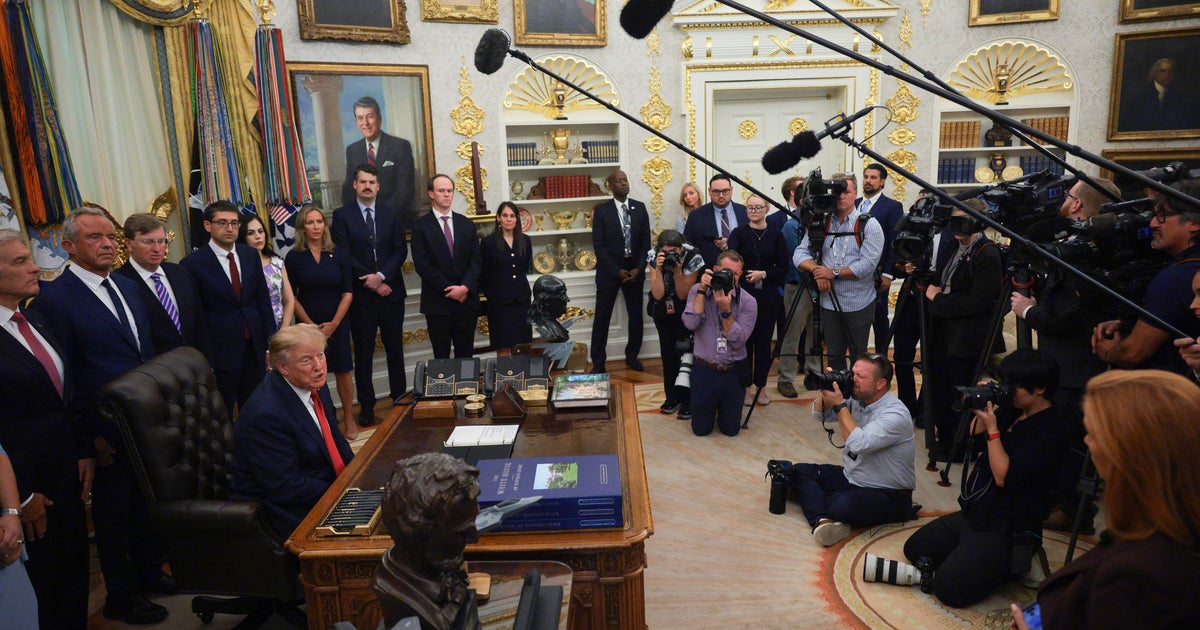
President Donald Trump's administration has barred journalists from news organizations CNN, MS NOW, and Politico from participating in the White House press pool, according to reporting by CBS News. The decision, disclosed on September 22, 2026, has brought fresh focus to the inner workings of the U.S. presidential press corps and the specialized pool system that has governed media coverage of the executive branch for decades. By excluding major television networks and digital political publications from pool rotations, the administration has reopened a long-running legal and constitutional debate over executive authority, presidential transparency, and the ground rules governing who gets to document the chief executive in real time.
Key facts
What happened
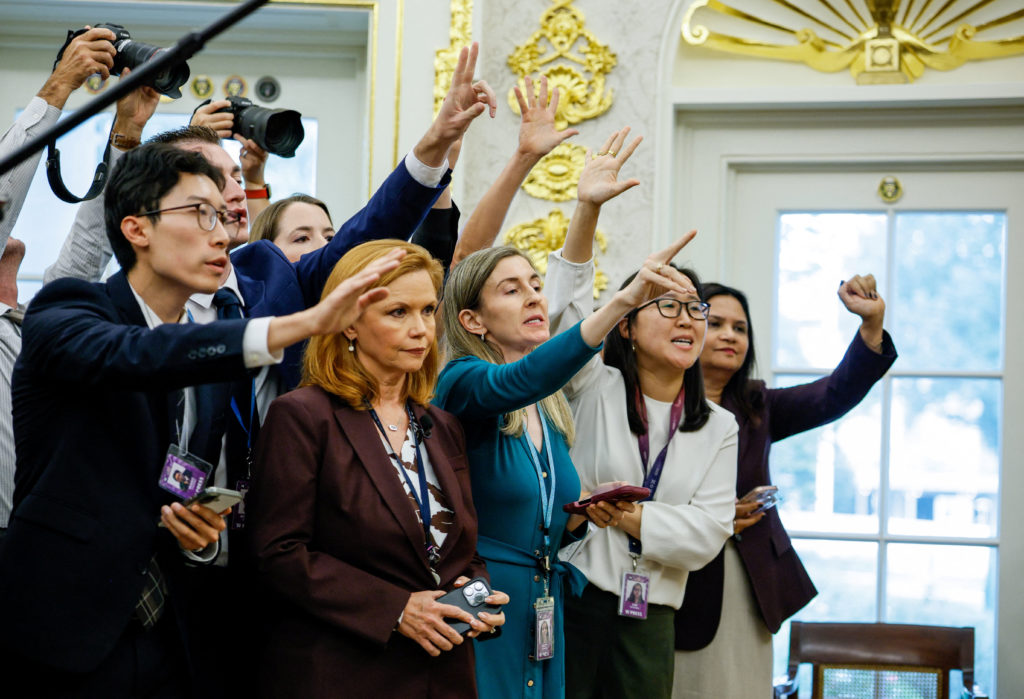
The move to exclude CNN, MS NOW, and Politico directly targets the mechanism through which news outlets obtain raw, immediate reporting from presidential events, according to CBS News reporters Melissa Quinn and Sara Cook. Under the standard White House press pool structure, a small, rotating group of reporters, photographers, and camera crews is permitted access to locations where space limitations prevent the full press corps—comprising hundreds of credentialed journalists—from assembling.
When a journalist is assigned to pool duty, they act on behalf of the entire White House press corps. The designated pool reporter is responsible for taking detailed notes, recording audio or video, capturing photographs, and drafting rapid summaries known as pool reports. These reports are then transmitted electronically to hundreds of news organizations around the world, ensuring that even media outlets without physical representation in a specific room receive timely, factual information about the president's movements, remarks, and public interactions.
By removing CNN, MS NOW, and Politico from these designated rotations, the administration effectively cuts those specific news organizations off from the primary mechanism for collecting first-hand material during restricted presidential events. While non-pool reporters can still read distributed pool reports generated by colleagues from other outlets, excluded journalists are prohibited from asking questions directly to the president in pool settings, capturing original broadcast footage in tight venues, or joining travel detachments assigned to transport vehicles such as Air Force One.
The administrative action touches both television broadcasting and print-digital reporting streams. CNN and MS NOW represent major cable television networks that frequently contribute to the broadcast pool, while Politico serves as a primary print and digital source for national political coverage. The exclusion prevents these outlets from rotating into leadership roles within the print and television pool schedules, altering the daily flow of news gathering inside the West Wing complex.
Why it matters
The exclusion of major news organizations from the White House press pool has immediate practical, constitutional, and institutional consequences. Operationally, the pool system functions as a public service utility for the national and international press corps. Because physical space inside 1600 Pennsylvania Avenue—particularly the Oval Office, Cabinet Room, and Press Briefing Room—is severely limited, the press pool guarantees that independent oversight of the chief executive does not depend entirely on official government releases or curated press releases.
From a constitutional perspective, selectively restricting access to established news organizations raises fundamental First Amendment concerns regarding press freedom and equal treatment under the law. The U.S. Constitution guarantees freedom of the press, and legal scholars emphasize that when government institutions grant press access to public proceedings or executive facilities, they cannot deny that access to specific outlets based on editorial stance, critical coverage, or viewpoint discrimination. Denying pool participation to prominent outlets sets an administrative precedent that future presidential administrations could use to reward favorable coverage or punish critical reporting.
The economic and competitive impacts are also substantial. News organizations spend millions of dollars annually to maintain full-time White House bureaus, pay for travel seats aboard charter flights, and contribute to shared broadcast engineering infrastructure. Exclusion from pool rotations deprives outlets of proprietary video footage, unique photographic angles, and direct questioning opportunities, potentially putting them at a commercial disadvantage against competitors who retain pool access.
Furthermore, the pool system serves as an archival record of the American presidency. Pool reports document precise timelines, minor interactions, foreign leader visits, and off-camera presidential remarks that form the historic record. Restricting participation disrupts the collaborative nature of this recording mechanism, raising questions about whether pool outputs will remain comprehensive and universally accepted across the broader journalistic community.
The background
The White House press pool grew out of necessity during the early 20th century as the presidency became a focal point of daily national news. In 1914, during the administration of President Woodrow Wilson, journalists formed the White House Correspondents' Association (WHCA) to represent the press corps' interests and establish orderly rules for presidential coverage. Over the subsequent decades, as television, radio, and digital media expanded, the WHCA worked in tandem with White House press secretaries to manage pool arrangements.
The modern pool operates through distinct categories: wire services (such as the Associated Press, Reuters, and Bloomberg), major television networks (ABC, CBS, NBC, CNN, and Fox News), national print newspapers, news magazines, radio networks, and digital outlets. A standard in-house pool consists of roughly 13 to 15 journalists representing these sectors, while an expanded or travel pool accompanies the president on domestic and foreign trips.
The legal framework governing press access at the White House was shaped decisively by the 1977 ruling of the U.S. Court of Appeals for the D.C. Circuit in Sherrill v. Knight. In that case, the court ruled that the White House Press Office could not deny a press pass to Robert Sherrill, a correspondent for The Nation, without providing explicit, written criteria and a formal opportunity to appeal. The court established that access to White House press facilities, once opened to the media, is subject to Fifth Amendment due process protections.
This precedent was tested repeatedly during Donald Trump's first presidential term between 2017 and 2021. In November 2018, the Trump administration revoked the press credential of CNN chief White House correspondent Jim Acosta following an argumentative press conference. CNN filed a federal lawsuit citing First and Fifth Amendment violations. A U.S. District Court judge issued a temporary restraining order requiring the White House to restore Acosta's credential, ruling that the administration had violated due process by revoking the pass without notice or a formal appeals procedure.
In 2019, a similar dispute arose when the White House suspended the credential of political correspondent Brian Karem following a Rose Garden event. Karem sued, and the D.C. Circuit Court of Appeals upheld a lower court injunction restoring his pass, reinforcing the legal principle that executive officials cannot strip journalist access without clear, pre-existing guidelines and administrative notice.
While the White House Press Office holds authority over physical access to government property and Secret Service security clearances, the WHCA has traditionally managed the internal rotation schedule determining which credentialed outlet fills a pool slot on any given day. Decisions by an administration to directly ban specific outlets from pool duties represent an assertion of executive control over a system historically managed by independent journalists.
Reaction
The decision to ban CNN, MS NOW, and Politico from pool duties is expected to draw strong condemnation from press freedom organizations, legal advocacy groups, and media industry bodies. In prior instances of credential revocation or pool restrictions, organizations such as the White House Correspondents' Association, the Reporters Committee for Freedom of the Press, the Committee to Protect Journalists, and the Society of Professional Journalists issued formal statements calling on the executive branch to reverse course and respect established press access rules.
News executives at the targeted outlets are anticipated to evaluate formal legal remedies. During previous credential disputes, legal counsel for affected media organizations relied on First Amendment protections against viewpoint discrimination and Fifth Amendment guarantees of due process. Media law experts routinely note that federal courts in Washington, D.C., have consistently favored journalists when administrations attempt to unilaterally strip access without formal administrative procedures.
Solidarity among members of the White House press corps will also be scrutinised. During historical press access disputes, competing news outlets have sometimes issued joint statements or offered to share pool reporting materials with excluded peers to preserve the principle of collective media access. Whether remaining pool outlets take joint collective action or modify internal pool distribution protocols remains an immediate point of focus within the press room.
What we don't know yet
Several critical details regarding the administration's order remain unresolved in available reporting. It is not yet clear whether the ban on CNN, MS NOW, and Politico applies strictly to designated pool rotation slots or extends to general hard-pass access on White House grounds, such as entry to the James S. Brady Press Briefing Room and routine press office briefings.
Additionally, the specific formal mechanism or official justification provided by the White House press office for the exclusion has not been detailed in initial summaries. It remains unknown whether the administration issued formal written notices to the affected newsrooms outlining legal grounds or administrative violations, or whether the ban was communicated verbally to pool managers.
Another key unknown is whether the White House Correspondents' Association will alter its master pool rotation schedule to preserve seats for the banned outlets or if the administration will unilaterally assign those pool positions to alternative media organizations. Finally, it is uncertain whether CNN, MS NOW, or Politico will file emergency motions for temporary restraining orders in federal district court to halt the ban while broader litigation proceeds.
What to watch
In the coming days, media monitors and legal analysts will watch for formal statements and potential legal complaints filed by legal representatives for CNN, MS NOW, and Politico in the U.S. District Court for the District of Columbia. Federal judges in this jurisdiction have previously acted quickly on emergency petitions involving presidential press credentials.
The White House Correspondents' Association board of directors is expected to convene to address the integrity of the pool rotation system and determine its official posture toward the executive order. Observers will monitor whether the WHCA maintains the excluded outlets on its official schedule or if non-excluded media outlets adjust their handling of pool reports to ensure universal access.
Key decision points will also arise during upcoming presidential travel and high-profile White House events. Observers will track how Air Force One charter seats, Oval Office photo opportunities, and foreign leader bilateral meetings are staffed, providing a concrete indicator of how strictly the administration enforces the exclusion against journalists from the three banned outlets.
***
*This report incorporates news reporting originally published by CBS News correspondents Melissa Quinn and Sara Cook.*
How this story was produced
This report was written by The Global Wire newsroom from reporting first published by Melissa Quinn; Sara Cook. We verify the core facts against the original report, write our own account, and add the background and consequences a short wire item leaves out. Drafting is AI-assisted inside an editor-supervised pipeline, and every story is checked for accuracy of attribution, structure and duplication before it appears — full detail in our AI and funding disclosure.
Spotted an error? Tell us at corrections@horizonglobalnews.com and read our corrections policy or editorial standards.



Reader comments
Loading comments…