

At UN General Assembly, Nepal's Leader Frames Deadly Floods as Urgent Global Climate Warning
Addressing world leaders in New York a month after fatal monsoon flooding, Nepal's prime minister declared the Himalayan country's disaster an early signal of escalating global climate disruption.
By The Global Wire Newsroom · Reported from ABC News
Link preview · horizonglobalnews.com
At UN General Assembly, Nepal's Leader Frames Deadly Floods as Urgent Global Climate Warning
Addressing world leaders in New York a month after fatal monsoon flooding, Nepal's prime minister declared the Himalayan country's disaster an early signal of escalating global climate disruption.
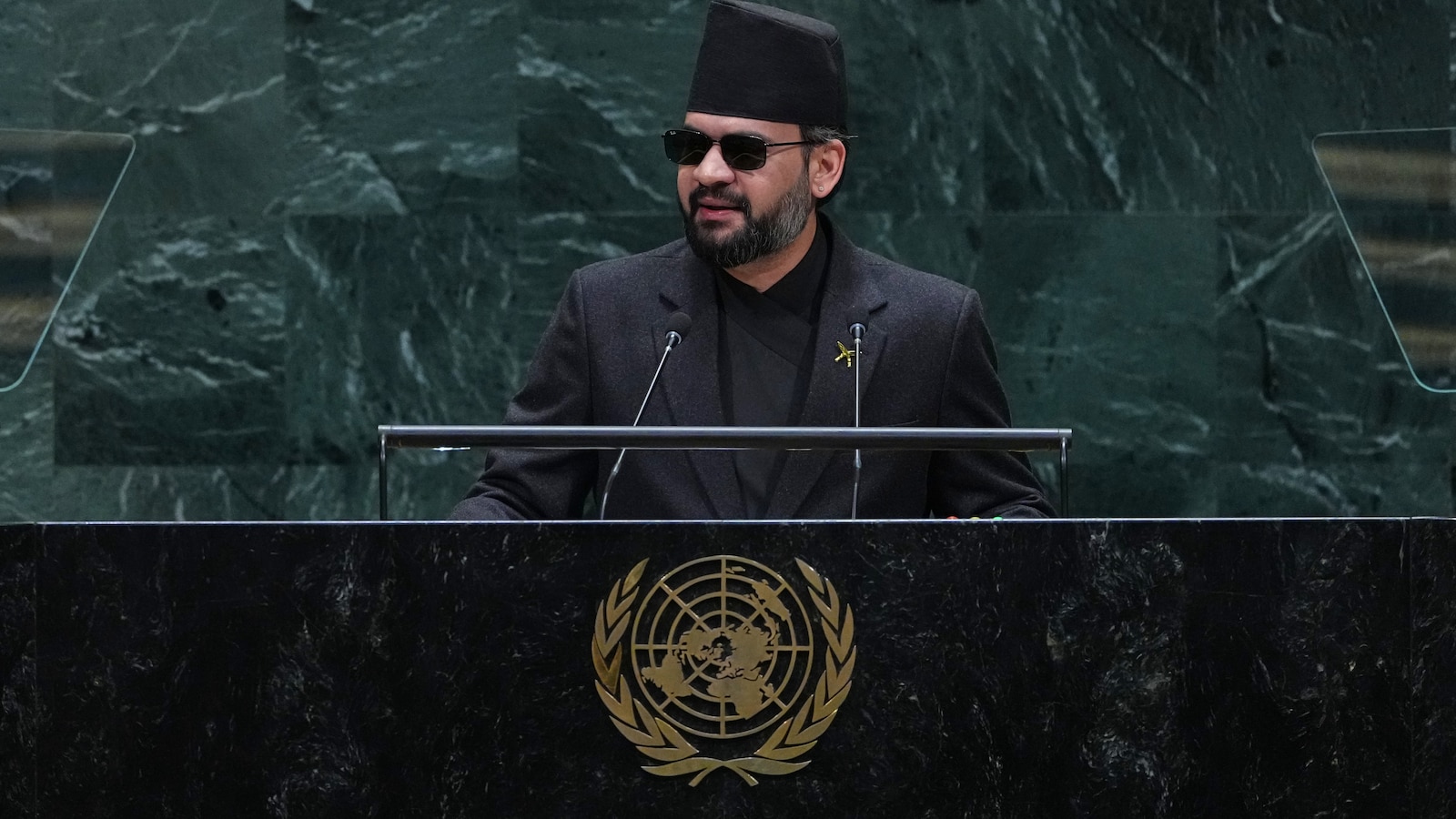
UNITED NATIONS — Speaking before world leaders at the United Nations General Assembly in New York, Nepal’s prime minister declared that catastrophic floods that devastated the Himalayan nation a month earlier serve as a critical warning to the rest of the world regarding climate change, according to reporting by ABC News. Addressing the annual high-level debate of the global body, the Nepalese leader framed the recent national disaster as a direct manifestation of planetary warming. The prime minister urged the international community to recognize that environmental crises in fragile high-altitude regions will eventually cascade down to affect the entire world, coming as South Asia concluded another monsoon season marked by erratic precipitation patterns and widespread inundation.
Key facts
What happened
Addressing the high-level session of the United Nations General Assembly at UN headquarters in New York, Nepal's prime minister utilized the global summit to link rising global temperatures directly to the fatal floods that submerged communities across Nepal roughly a month earlier. According to reporting by ABC News, the prime minister told assembled heads of state and foreign ministers that the extreme precipitation and environmental destruction were not isolated regional occurrences, but rather early indicators of a wider global systemic crisis.
During the address, the prime minister focused on the severe imbalance borne by mountainous, developing countries. While Nepal’s contribution to total global greenhouse gas emissions is negligible compared to major industrial powers, the nation finds itself on the front lines of climate volatility due to its fragile mountain geography and atmospheric position. The prime minister emphasized to international delegates that the environmental degradation of the Himalayas represents an existential hazard that extends well beyond Nepal’s sovereign borders.
The timing of the address coincided with the tail end of the traditional South Asian summer monsoon, which typically runs from June through September. In recent years, rainfall dynamics across the region have grown increasingly erratic, characterized by compressed periods of heavy downpours rather than evenly distributed precipitation. The Nepalese prime minister appealed to international leaders to treat the recent flooding as a loud warning bell, arguing that inaction on global emissions will inevitably threaten coastal and inland populations around the world.
Why it matters
The Nepalese leader's address highlights the severe geopolitical and economic friction between climate-vulnerable nations and major historic carbon emitters. High-altitude ecosystems serve as early indicators for planetary environmental disruption. When atmospheric warming destabilizes the Himalayan weather system, the immediate impacts—flash floods, mudslides, and river overflows—destroy vital infrastructure, ruin agricultural output, and displace vulnerable communities.
Beyond Nepal’s borders, the hydrological stability of the broader Hindu Kush Himalaya mountain range is critical for regional security across South Asia. Glacial melt and river basins originating in Nepal supply fresh water, agricultural irrigation, and hydroelectric capability to more than 1.6 billion people across downstream nations, including India and Bangladesh. Any long-term destabilization of these water systems directly threatens regional food security, economic stability, and energy grids.
Additionally, the prime minister’s statement carries diplomatic weight in the context of international climate policy negotiations. Under the United Nations Framework Convention on Climate Change (UNFCCC), developing states have consistently pushed for the full operationalization and funding of the Loss and Damage Fund. Addresses delivered by leaders of vulnerable states during the UN General Assembly set the tone for upcoming international negotiations, maintaining political pressure on wealthy nations to fulfill promises regarding climate adaptation funding and technology transfer.
The background
Nepal is a landlocked nation with an extreme range of elevation, extending from the low-lying Terai plains near sea level up to Mount Everest, the world's highest peak at 8,848.86 meters (29,031.7 feet). This mountainous topography makes the country exceptionally vulnerable to natural hazards, particularly during the annual summer monsoon, which accounts for roughly 80 percent of Nepal’s annual rainfall.
Scientific research from regional bodies such as the International Centre for Integrated Mountain Development (ICIMOD) shows that temperatures in the high-altitude Hindu Kush Himalaya region have risen faster than the global average. This accelerated warming hastens glacial retreat and increases the risk of Glacial Lake Outburst Floods (GLOFs), where fragile natural dams holding back meltwater collapse, sending torrents of water down populated river valleys.
In international diplomacy, high-altitude least developed countries (LDCs) have frequently struggled to secure targeted support. The 2015 Paris Agreement committed signers to limit global temperature increases to well below 2.0 degrees Celsius above pre-industrial levels, with a target of 1.5 degrees. However, climate scientists note that even a 1.5-degree global rise will result in disproportionate warming in high-altitude zones, potentially causing the loss of up to two-thirds of Himalayan glacier volume by the end of the 21st century.
Subsequent global summits, including COP27 in Sharm el-Sheikh and COP28 in Dubai, resulted in historic decisions to establish a dedicated Loss and Damage Fund for vulnerable nations. Despite these agreements, the distribution of funds to local communities in affected regions remains slow, hampered by complex application processes and inadequate voluntary contributions from industrial nations. Nepal has faced repeated major flood disasters in recent history, including severe monsoonal flooding events in 2017 and 2021 that killed hundreds of people and inflicted hundreds of millions of dollars in structural damage.
Reaction
Diplomatic addresses delivered by leaders of vulnerable nations at the United Nations General Assembly routinely generate support from multilateral organizations and allied developing countries. Delegations representing the Least Developed Countries (LDC) negotiating block and the Alliance of Small Island States (AOSIS) frequently align with statements like the one delivered by Nepal's prime minister, using joint forums to reiterate demands that wealthy nations meet their commitments to provide $100 billion annually in climate finance.
United Nations institutions, including the UN Environment Programme (UNEP) and the UN Development Programme (UNDP), consistently mirror the concerns voiced by high-altitude states. UN leadership has repeatedly warned that mountain ecosystems require specialized international assistance, improved early warning infrastructure, and targeted aid for building climate-resilient bridges, roads, and housing.
Climate policy researchers and non-governmental environmental organizations view high-level addresses by Himalayan leaders as vital reminders of the physical limits of local adaptation. Environmental advocates are expected to reference the prime minister's remarks during upcoming international climate summits to advocate for stricter emission reductions from high-emitting industrial economies.
What we don't know yet
While the prime minister's address focused on the global lessons of the tragedy, several specific details regarding the recent flood disaster remain unconfirmed in the immediate reporting of the UN address:
What to watch
Several upcoming indicators and international decision points will determine how the global community responds to the Nepalese prime minister's warning:
This report contains information originally reported by ABC News.
How this story was produced
This report was written by The Global Wire newsroom from reporting first published by ABC News. We verify the core facts against the original report, write our own account, and add the background and consequences a short wire item leaves out. Drafting is AI-assisted inside an editor-supervised pipeline, and every story is checked for accuracy of attribution, structure and duplication before it appears — full detail in our AI and funding disclosure.
Spotted an error? Tell us at corrections@horizonglobalnews.com and read our corrections policy or editorial standards.





Reader comments
Loading comments…