

United Airlines Operates 86 Simulators at Expanded Denver Pilot Training Center
United Airlines has expanded its 700,000-square-foot Denver pilot facility to 86 active full-flight simulators, advancing a multi-year development plan targeting 2030 completion.
By The Global Wire Newsroom · Reported from Aamir Khollam
Link preview · horizonglobalnews.com
United Airlines Operates 86 Simulators at Expanded Denver Pilot Training Center
United Airlines has expanded its 700,000-square-foot Denver pilot facility to 86 active full-flight simulators, advancing a multi-year development plan targeting 2030 completion.
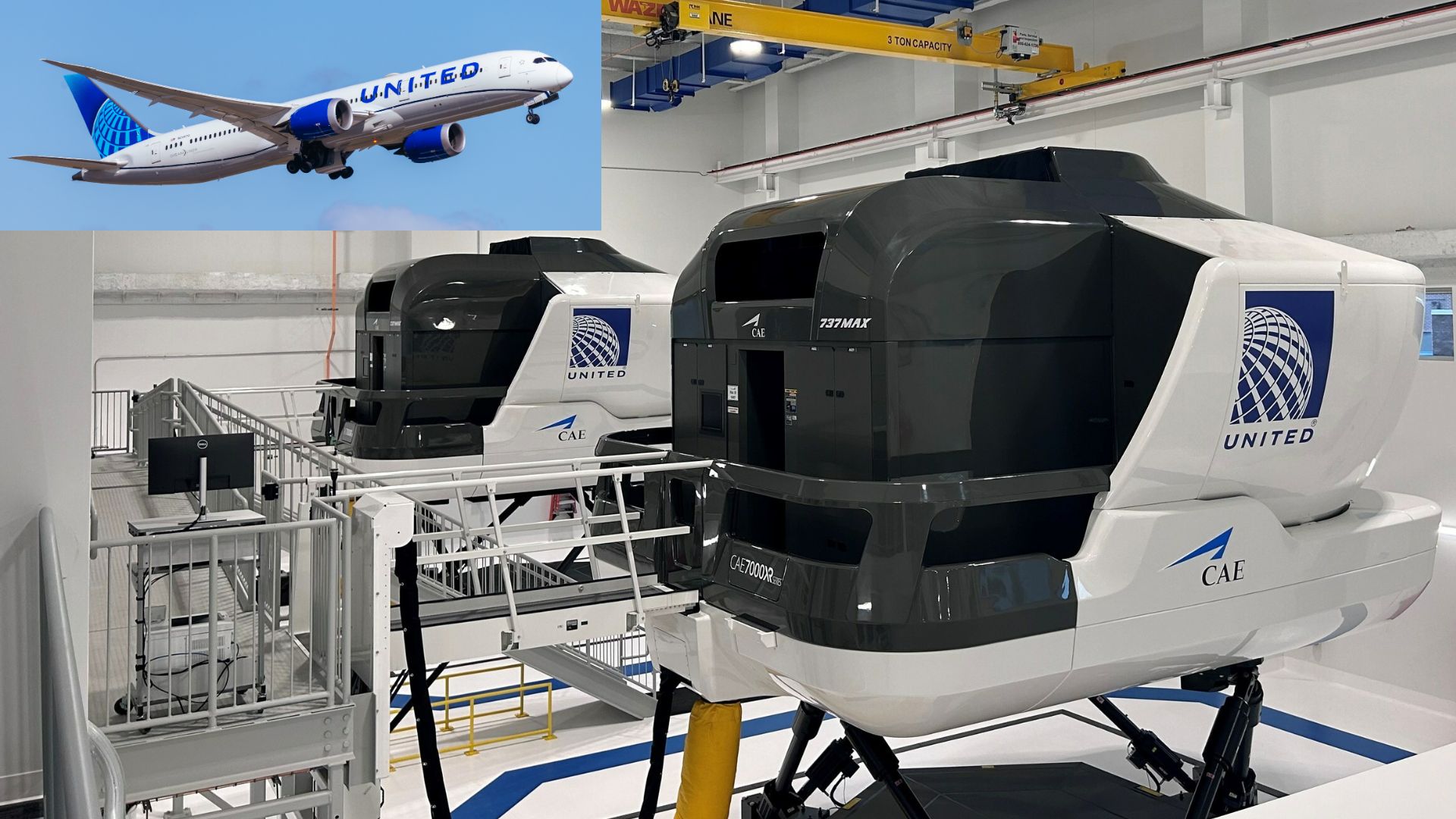
United Airlines has expanded its primary pilot training facility in Denver, Colorado, reaching an operational capacity of 86 full-flight simulators across its 700,000-square-foot campus, according to reporting by Aamir Khollam. The milestone cements the facility's position as the world's largest commercial aviation training center. The expansion comes as the Chicago-based airline advances a multi-stage modernization initiative designed to accommodate thousands of newly hired and existing aviators. The carrier is currently progressing with the second phase of the facility's master development plan, which targets full completion by 2030. The infrastructure development underscores the substantial capital investments major U.S. air carriers are making to support ambitious fleet renewal programs and ensure steady pilot staffing.
Key facts
What happened
As reported by Aamir Khollam on August 21, 2026, United Airlines reached a significant operational benchmark by bringing 86 full-flight simulators into active service at its central flight training center in Denver, Colorado. The 700,000-square-foot complex serves as the exclusive instructional hub for the airline's total pilot force, conducting round-the-clock training operations throughout the year.
The installation of these advanced devices represents a major component of United's multi-year capital investment strategy. Each full-flight simulator is an advanced, multi-million-dollar machine mounted on electro-mechanical or hydraulic motion bases. These systems replicate the exact cockpit layout, flight dynamics, and atmospheric responses of specific aircraft models operated across United's mainline fleet, including Boeing 737, 777, and 787 aircraft, as well as Airbus A320-family jets.
Alongside daily training sessions, United is actively carrying out Phase Two of the campus development project. This ongoing multi-year expansion is designed to construct additional simulator bays, instructional classrooms, and briefing spaces. The new infrastructure will house future simulator acquisitions through 2030, ensuring that the Denver facility can handle the large volume of aviators undergoing initial type ratings, command upgrades, and routine proficiency checks.
Why it matters
For major commercial airlines, simulator throughput represents one of the most critical logistical bottlenecks in flight operations and fleet planning. Under Title 14 of the Code of Federal Regulations (14 CFR) Part 121, federal law requires commercial pilots to undergo intensive simulator evaluations every six to twelve months, depending on their crew role, as well as mandatory transition training whenever moving to a different aircraft type or advancing from first officer to captain.
By building out its simulator footprint to 86 active units within a single 700,000-square-foot location, United substantially reduces its dependence on third-party contract training providers. Maintaining direct ownership and control over such extensive simulator capacity allows the airline to optimize scheduling efficiency, accelerate the onboarding process for new hires, and prevent training backlogs from disrupting commercial flight schedules.
Furthermore, full-flight simulators provide a safe, fuel-efficient, and environmentally friendly environment for pilot instruction. Modern Level D flight simulators—the highest standard certified by civil aviation authorities—replicate motion sensory cues, visual terrain, and severe weather conditions with high fidelity. This allows flight crews to practice complex emergency procedures, such as engine failures, hydraulic loss, or severe windshear, without exposing real aircraft to risk, burning jet fuel, or generating greenhouse gas emissions.
The background
The United Airlines Flight Training Center in Denver, Colorado, situated on part of the site formerly occupied by Stapleton International Airport, has served as the core of the carrier's flight crew education for decades. Established in the mid-20th century, the facility has expanded iteratively to keep pace with airline mergers, route network growth, and technological advancements in flight simulation.
Following the severe disruptions to global travel during the COVID-19 pandemic, the commercial aviation sector encountered a sharp shortage of qualified flight personnel. Mandatory pilot retirements at age 65, combined with early retirement packages accepted during the downturn and rapid post-pandemic travel recovery, created an urgent demand for new pilots across the industry. In response, United announced its "United Next" strategy, placing historic firm orders for hundreds of narrowbody and widebody jets from Boeing and Airbus to replace regional aircraft and expand mainline international routes.
To crew these incoming aircraft, United launched aggressive recruitment campaigns, including its proprietary Aviate flight academy, while pulling pilots from regional carriers and military backgrounds. However, acquiring new aircraft and hiring aviators creates an immediate demand for simulator instruction time. Every pilot joining the airline or transitioning between aircraft types requires hundreds of hours of ground school and simulator training. Recognizing that training facility capacity could become a constraint on corporate growth, United embarked on a multi-phase campus expansion, acquiring land adjacent to the Denver center and designing high-capacity simulator halls to support operational needs through 2030.
Reaction
While specific public comments regarding the August 21 update were not included in the original report, infrastructure developments of this scale draw significant attention across the aviation industry, regulatory bodies, and labor unions.
The Air Line Pilots Association (ALPA), the labor union representing United's mainline pilots, monitors training center scheduling and working conditions closely. Because flight simulators at the Denver facility operate continuously, pilots often receive simulator assignments during late night or early morning hours. Expanding the overall fleet of active simulators to 86 is generally viewed within the pilot body as a welcome development that can help smooth scheduling patterns, reduce travel burdens, and facilitate smoother career advancement transitions.
Regulators such as the Federal Aviation Administration (FAA) maintain continuous oversight at the Denver facility to certify each full-flight simulator to Level D specifications. Maintaining high technical standards allows pilots to complete type ratings entirely within the simulator without requiring flight time in actual passenger aircraft. Local economic leadership in Denver also views the multi-year expansion through 2030 as a major economic anchor, securing thousands of skilled instruction and technical maintenance jobs within the local economy.
What we don't know yet
Despite the operational milestone, several specific details remain unconfirmed in the initial reporting by Aamir Khollam. The total financial capital allocated to Phase Two of the Denver campus expansion has not been disclosed, leaving the full economic scope of the project open to estimation.
Additionally, the exact breakdown of the 86 simulators across specific aircraft types—such as the proportion assigned to Boeing 737 MAX models versus Boeing 787 Dreamliners or Airbus A321neo aircraft—remains unstated. It is also unclear how many additional simulator bays Phase Two will add between now and the 2030 target date, or whether supply chain bottlenecks affecting global simulator manufacturers could impact delivery schedules for upcoming devices.
What to watch
In the coming years, industry observers will watch key operational indicators to evaluate the progress of United's training expansion. A primary point of focus will be construction milestones and interim capacity additions leading up to the Phase Two completion date in 2030.
Analysts will also monitor FAA certification announcements as new full-flight simulators are brought online and validated for instruction. Furthermore, United's quarterly financial reports and pilot hiring statistics will provide insight into whether training capacity is keeping pace with aircraft deliveries under the United Next program, ensuring smooth flight operations across the carrier's global network.
This report contains information originally reported by Aamir Khollam on August 21, 2026.
How this story was produced
This report was written by The Global Wire newsroom from reporting first published by Aamir Khollam. We verify the core facts against the original report, write our own account, and add the background and consequences a short wire item leaves out. Drafting is AI-assisted inside an editor-supervised pipeline, and every story is checked for accuracy of attribution, structure and duplication before it appears — full detail in our AI and funding disclosure.
Spotted an error? Tell us at corrections@horizonglobalnews.com and read our corrections policy or editorial standards.
Reader comments
Loading comments…