

UN Concedes 1.5°C Warming Boundary Will Be Breached, Shifting Focus to Temperature Recovery
A United Nations assessment acknowledges that global temperatures will surpass the 1.5-degree Celsius threshold, calling for strategies to manage overshoot and return to safer levels.
By The Global Wire Newsroom · Reported from pbs.org
Link preview · horizonglobalnews.com
UN Concedes 1.5°C Warming Boundary Will Be Breached, Shifting Focus to Temperature Recovery
A United Nations assessment acknowledges that global temperatures will surpass the 1.5-degree Celsius threshold, calling for strategies to manage overshoot and return to safer levels.
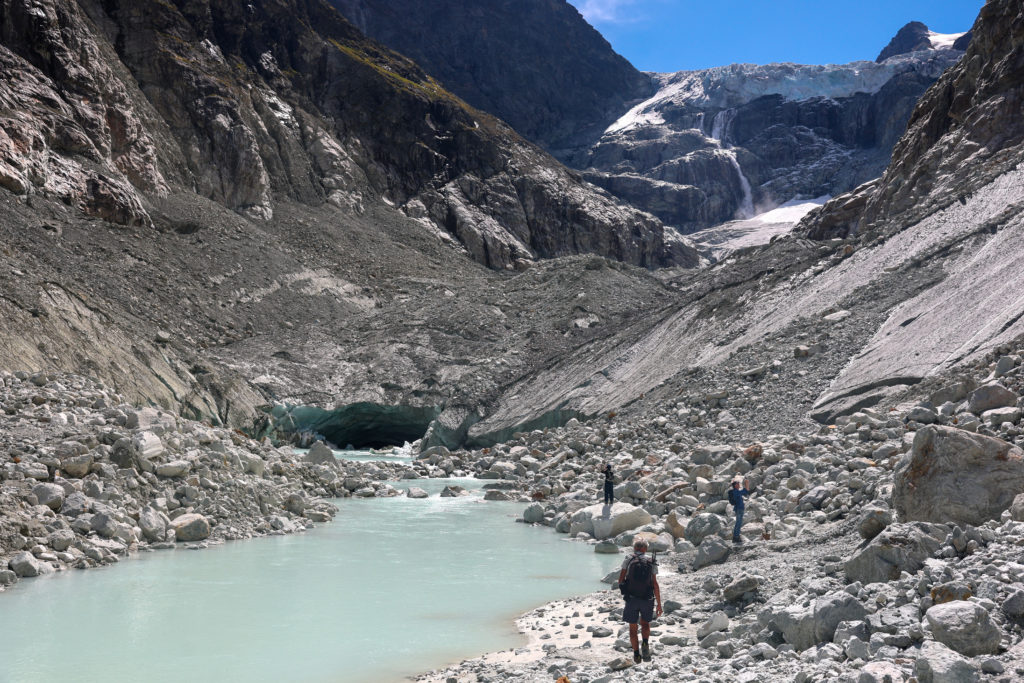
The United Nations formally acknowledged on September 3, 2026, that human-driven climate change will exceed the long-standing international target of limiting global temperature rise to 1.5 degrees Celsius above pre-industrial levels. In a landmark assessment detailing the state of global climate action, the multilateral body conceded that years of insufficient emissions reductions have made breaching the critical threshold inevitable. The publication marks a strategic recalibration for global climate policy: rather than focusing exclusively on holding global warming behind the 1.5-degree line, international bodies and national governments must now construct frameworks to manage a temporary temperature overshoot and execute a long-term plan to draw temperatures back down to safe levels. UN leaders stressed that while exceeding the limit guarantees an escalation in dangerous climate impacts, aggressive efforts to curb emissions remain vital to minimizing both the height of the temperature peak and the duration of the breach.
Key facts
What happened
The release of the UN assessment on September 3, 2026, represents a dramatic narrative shift in international environmental diplomacy, according to reporting by PBS. For decades, international agreements focused on preventing global temperatures from breaching safe upper boundaries. However, persistent delays in phasing out fossil fuels and transitioning energy infrastructure have left the international community unable to stop temperatures from crossing the 1.5-degree Celsius threshold.
According to the PBS report, the UN document lays out a practical framework for navigating an era of climate overshoot. Under this strategic pivot, scientists and policy analysts present a multi-stage timeline. First, global emissions must be brought to a rapid peak to prevent the overshoot from reaching catastrophic levels such as 2.0 degrees Celsius or higher. Second, nations must achieve global net-zero carbon emissions, halting the ongoing accumulation of heat-trapping gases in the atmosphere. Third, the global economy must transition into a phase of net-negative emissions, utilizing both natural ecosystem restoration and engineered carbon capture technologies to actively extract carbon dioxide from the atmosphere.
UN officials framed this roadmap not as an acceptance of failure, but as a necessary operational plan for survival in a changed climate reality. By establishing explicit guidelines for overshoot management, the UN aims to prevent governments from abandoning decarbonization goals once the 1.5-degree line is breached. The report stresses that every fraction of a degree above the target amplifies risk, meaning that aggressive emission reductions remain as urgent during an overshoot period as they were prior to it.
Why it matters
The formal recognition that the 1.5-degree Celsius threshold will be exceeded carries profound implications for global financial systems, international law, public policy, and environmental stability. From an economic perspective, breaching the limit alters risk assessments across sectors including insurance, real estate, agriculture, and energy. Insurers operating in high-risk zones—such as coastal regions vulnerable to rising sea levels and arid zones prone to severe wildfires—face expanding liabilities, which could accelerate market withdrawals or render coverage unaffordable for millions of property owners.
For international climate finance, the shift toward an overshoot model drastically increases the projected costs of climate adaptation and emergency response. Developing nations, which have historically contributed the least to global emissions yet bear the brunt of climate impacts, will require significantly expanded financial transfers from industrialized nations. Funding mechanisms such as the loss and damage facility established at recent UN climate summits will face unprecedented demands as extreme weather events increase in frequency and severity during the overshoot window.
Furthermore, exceeding 1.5 degrees Celsius elevates the risk of triggering self-reinforcing climate feedback loops and ecological tipping points. Scientific research indicates that crossing this threshold increases the probability of irreversible damage to tropical coral reef ecosystems, accelerated thawing of Arctic permafrost, and structural destabilization of major ice sheets in Greenland and West Antarctica. Even if global temperatures are eventually pulled back below 1.5 degrees late in the century, losses sustained during the overshoot period—such as species extinctions or collapsed marine habitats—cannot be undone.
The background
The 1.5-degree Celsius limit became the central benchmark of global climate governance following the adoption of the Paris Agreement at the 21st Conference of the Parties (COP21) in December 2015. Under the landmark treaty, 196 parties agreed to hold the increase in global average temperature to well below 2.0 degrees Celsius above pre-industrial levels, while pursuing explicit efforts to limit the temperature increase to 1.5 degrees Celsius. Pre-industrial baselines are generally defined by climate scientists as the average global surface temperature measured between 1850 and 1900, prior to the widespread industrial combustion of coal, oil, and gas.
In 2018, the Intergovernmental Panel on Climate Change (IPCC) issued a landmark special report analyzing the impacts of 1.5 degrees Celsius of warming compared to 2.0 degrees. The findings demonstrated that keeping warming to 1.5 degrees would substantially reduce the risks of extreme heatwaves, heavy precipitation, drought, sea-level rise, and biodiversity loss compared to a 2.0-degree scenario. To maintain a reasonable probability of staying below 1.5 degrees, the IPCC calculated that global net anthropogenic carbon dioxide emissions would need to decline by approximately 45 percent from 2010 levels by 2030, reaching net zero around 2050.
Despite these warnings, global greenhouse gas emissions continued to rise in the years following the Paris Agreement, driven by ongoing fossil fuel consumption, industrial expansion, and land-use changes. Annual global monitoring reports from agencies such as the World Meteorological Organization (WMO) and the UN Environment Programme (UNEP) tracked steady increases in atmospheric concentrations of carbon dioxide, methane, and nitrous oxide. By the mid-2020s, global average surface temperatures had reached roughly 1.2 to 1.3 degrees Celsius above pre-industrial levels, with individual years briefly touching or surpassing the 1.5-degree mark due to natural climate variability like El Niño. The persistent gap between national pledge commitments and real-world emissions trajectories ultimately forced the diplomatic transition toward overshoot planning.
Reaction
While official responses to the UN report continue to emerge across capital cities and diplomatic channels, the admission is expected to trigger intense debate among climate advocacy organizations, vulnerable nations, and industrial stakeholders. Climate justice advocates and representatives from small island developing states have historically resisted shifting focus to overshoot scenarios, arguing that normalizing a breach of the 1.5-degree target reduces political pressure on heavy-emitting countries to rapidly phase out fossil fuels. Leaders of low-lying island nations, whose territorial survival depends on strict temperature limits, are expected to demand enhanced legal guarantees and guaranteed financial reparations for loss and damage caused during the overshoot phase.
Conversely, major industrial nations and energy sector representatives are likely to emphasize the technological challenges of rapid decarbonization while advocating for heavy investment in carbon dioxide removal (CDR) and atmospheric remediation technologies. Environmental policy experts caution that relying heavily on future carbon removal presents significant moral and operational hazards, as many carbon capture technologies remain unproven at the massive scale required to pull hundreds of gigatons of carbon dioxide from the atmosphere.
What we don't know yet
Key operational and scientific questions remain unanswered following the UN announcement. First, the precise magnitude and duration of the anticipated temperature overshoot remain uncertain. The peak temperature reached above pre-industrial levels, as well as the number of years or decades global warming remains above 1.5 degrees Celsius, will depend entirely on how quickly nations achieve peak emissions and scale carbon reduction efforts over the next decade.
Second, the technical and economic feasibility of returning temperatures back below 1.5 degrees remains unproven. Strategies for drawing down atmospheric carbon rely heavily on technologies such as Direct Air Capture (DAC) and Bioenergy with Carbon Capture and Storage (BECCS), alongside nature-based solutions like large-scale reforestation. However, the energy, land, water, and financial resources required to deploy these technologies at a planetary scale carry major ecological and socioeconomic trade-offs that have not been fully mapped.
Finally, scientific uncertainty persists regarding whether natural systems will respond predictably as temperatures fall. It remains unknown whether key planetary components—such as ocean circulation patterns, carbon absorption by forests and oceans, and polar ice stability—will recover once temperatures are lowered, or whether temporary overshoot will permanently alter the Earth system.
What to watch
The immediate focus for international observers will be the upcoming UN Climate Change Conferences, where diplomats must negotiate updated rules for national climate plans, known as Nationally Determined Contributions (NDCs). Observers will track whether governments revise their 2030 and 2035 emission reduction targets to align with the new overshoot management guidelines or if the breach leads to a weakening of national climate ambitions.
Additionally, financial commitments from developed nations toward global climate funds will serve as a critical metric of international cooperation. Watching how multilateral development banks and international financial institutions restructure their lending practices to support both severe adaptation programs and long-term carbon removal infrastructure will reveal whether the global economy can operationalize the UN overshoot strategy.
Finally, progress in technological carbon removal deployment, monitoring of annual atmospheric carbon dioxide concentration data, and annual surface temperature metrics published by major scientific organizations will provide concrete indicators of whether the planet is on track to cap its temperature peak and begin the path toward atmospheric recovery.
This news report is based on original coverage by PBS.
How this story was produced
This report was written by The Global Wire newsroom from reporting first published by pbs.org. We verify the core facts against the original report, write our own account, and add the background and consequences a short wire item leaves out. Drafting is AI-assisted inside an editor-supervised pipeline, and every story is checked for accuracy of attribution, structure and duplication before it appears — full detail in our AI and funding disclosure.
Spotted an error? Tell us at corrections@horizonglobalnews.com and read our corrections policy or editorial standards.


Reader comments
Loading comments…