

Ukrainian Railway Workers Keep Capital Rail Network Moving Amid Escalating Air Hazards
Staff operating Ukraine's national rail system in Kyiv maintain passenger and cargo transit despite recurring threats to transport infrastructure, according to reporting by David Crowe.
By The Global Wire Newsroom · Reported from David Crowe
Link preview · horizonglobalnews.com
Ukrainian Railway Workers Keep Capital Rail Network Moving Amid Escalating Air Hazards
Staff operating Ukraine's national rail system in Kyiv maintain passenger and cargo transit despite recurring threats to transport infrastructure, according to reporting by David Crowe.
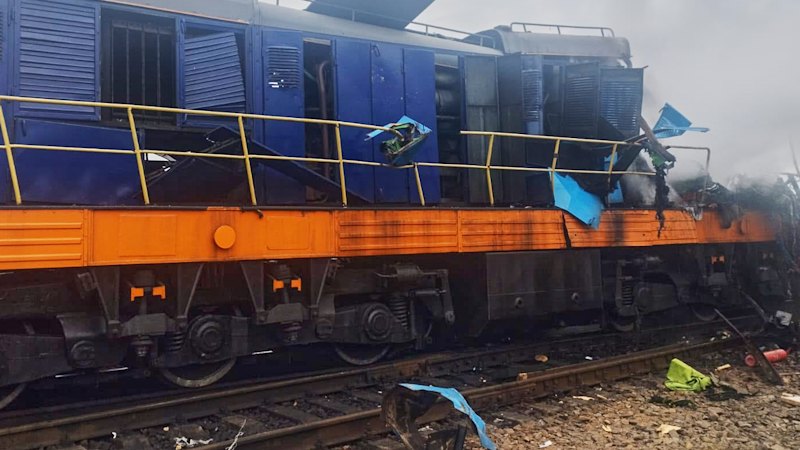
In Kyiv, civilian railway personnel are maintaining operations across Ukraine's national train network under conditions of heightened operational danger, according to reporting by David Crowe published on September 20, 2026. Working within the state-owned rail enterprise, railway staff continue operating passenger trains, moving essential cargo, and managing rail hubs despite persistent threats from aerial bombardment and missile strikes against transport infrastructure. The report highlights the sustained commitment of train crews, station personnel, and maintenance teams who remain at their posts in the capital and across the country to preserve the nation's primary transit backbone as security conditions deteriorate.
Key facts
What happened
According to reporting by David Crowe from Kyiv, train crews, maintenance engineers, and station personnel inside Ukraine's capital are continuing daily railway operations amid elevated physical risks. Staff members across the city's rail infrastructure have maintained train schedules and essential station services despite frequent security alerts and the threat of incoming air strikes.
In the account reported by David Crowe, railway workers describe a collective determination to remain on duty, viewing their presence as vital to sustaining public movement and national logistics. The operational personnel—including drivers, conductors, repair crews, and traffic controllers—confront ongoing hazards associated with long-range strikes targeting urban transit nodes, rail yards, and power systems.
To keep passenger and freight traffic flowing through Kyiv and surrounding regions, railway teams execute immediate contingency measures whenever infrastructure is impacted. While the dispatch by David Crowe captures the immediate dedication of frontline workers in Kyiv, broader operational context shows that railway personnel across Ukraine routinely perform emergency repairs on severed track lines and overhead catenary wires within hours of strikes, switching from electric power to reserve diesel locomotives when localized power grids fail.
Why it matters
The operational continuity of Ukraine's national railway system is fundamental to the country's humanitarian resilience, economic stability, and international standing. Since the launch of Russia's full-scale invasion on February 24, 2022, all commercial civil aviation in Ukraine has been suspended. Consequently, the national rail network operated by Ukrzaliznytsia has functioned as the sole heavy transport mechanism connecting major urban centers—including Kyiv, Kharkiv, Lviv, and Dnipro—to each other and to neighboring European Union nations such as Poland, Slovakia, Hungary, and Romania.
For the civilian population, the rail network remains a vital conduit for internal displacement and safe travel. Millions of civilians have relied on train transport to escape active combat zones or travel to international border crossings. Beyond passenger transit, the railway serves as a critical driver of economic output, carrying agricultural exports, raw materials, and humanitarian aid to replace sea routes that have suffered repeated blockades and military interference along the Black Sea coastline.
The railway system also plays an essential role in international statecraft through an official initiative commonly designated as "Iron Diplomacy." Foreign heads of state, diplomatic delegations, and high-ranking international officials visiting Kyiv rely entirely on specially equipped passenger trains to enter and exit the country securely. The ability of Ukrzaliznytsia workers to maintain reliable timetables under military threat ensures that the Ukrainian government maintains direct physical contact with its international allies. A systemic failure or collapse of the rail network would severely impair the country's domestic mobility and economic logistics.
The background
To understand the resilience of Ukraine's railway personnel, it is necessary to examine the historical scale and structure of the nation's rail system. Joint Stock Company Ukrainian Railways, known natively as Ukrzaliznytsia, ranks among the largest state transport enterprises in Europe. Historically employing more than 220,000 workers, the organization oversees a broad-gauge rail network constructed primarily during the Soviet era and modernized following Ukraine's declaration of independence in 1991. The system was engineered to handle high-density industrial freight and heavy passenger traffic across vast distances.
Following the onset of full-scale conflict in February 2022, Ukrzaliznytsia immediately initiated the largest emergency civilian evacuation in modern European history. During the opening months of hostilities, train crews operated non-stop schedules under blackout conditions, transporting over four million civilians away from eastern and southern battlefields toward western regions and European Union border stations. Conductors, locomotive engineers, and station staff frequently worked multi-day shifts without relief, managing severely overcrowded trains while navigating tracks through active combat zones.
As the conflict progressed, energy infrastructure and transport choke points became primary targets for long-range missile and drone attacks. Hostile strikes targeted traction power substations, maintenance facilities, repair depots, and major rail bridges. In response, Ukrzaliznytsia implemented a decentralized management architecture. The enterprise prepositioned fleet units of diesel locomotives, established independent satellite communication networks for train dispatchers, and organized mobile track-repair brigades capable of restoring damaged line segments within hours.
This operational fortitude gave rise to the widespread recognition of railway personnel as "Zalizni lyudy," or "Iron People." However, maintaining continuous rail traffic during war has involved significant human loss. Hundreds of Ukrzaliznytsia employees have been killed and thousands injured since February 2022 while performing track repairs, operating locomotives through targeted corridors, or managing passenger facilities. Despite these casualties, the workforce has consistently restored service following attacks, sustaining an operational reliability rate that international transport analysts consider unprecedented in modern war zones.
Reaction
The steadfastness displayed by Ukrainian railway personnel has received formal recognition from government officials, foreign leaders, and international labor unions. Within Ukraine, senior government leaders and executive administrators at Ukrzaliznytsia regularly award national honors and bravery commendations to railway workers who perform life-saving actions or restore critical track infrastructure following bombardments.
On the international stage, European transport ministers and international railway associations have repeatedly praised Ukrzaliznytsia's operational resilience. European rail operators have provided direct technical assistance, sending spare maintenance components, modern tools, and heavy diesel equipment to support Ukraine's railway maintenance operations.
International transport organizations, global labor bodies, and multilateral lending institutions—including the European Bank for Reconstruction and Development (EBRD)—are expected to address the ongoing support requirements for Ukrainian rail workers at upcoming international logistics and recovery conferences. Discussions in these forums focus on securing advanced protective gear for track crews, funding medical rehabilitation programs for injured personnel, and financing long-term infrastructure modernization to integrate Ukraine's broad-gauge rail system with standard European track standards.
What we don't know yet
Despite the insight provided by David Crowe's reporting from Kyiv, several critical operational facts remain undisclosed due to strict military secrecy and rapid situational shifts. The precise casualty figures among Ukrzaliznytsia employees in recent months, as well as the exact number of personnel assigned to active frontline transit corridors, are treated as classified information by Ukrainian authorities to prevent adversary forces from assessing operational vulnerabilities.
Furthermore, public reporting does not specify the exact extent of structural damage recently sustained by maintenance workshops, rolling stock yards, and electrical substations within the Kyiv metropolitan area. It remains unclear to what degree current shortages of specialized repair components, functional diesel locomotives, and backup generator systems are affecting long-term repair capacity across the national system. Additionally, the full operational challenge posed by upcoming seasonal winter weather combined with potential grid destabilization remains an open question for railway management.
What to watch
Several specific indicators will reveal the operational capacity and endurance of Ukraine's railway network moving forward:
This report is based on original news gathering conducted in Kyiv by reporter David Crowe, published on September 20, 2026.
How this story was produced
This report was written by The Global Wire newsroom from reporting first published by David Crowe. We verify the core facts against the original report, write our own account, and add the background and consequences a short wire item leaves out. Drafting is AI-assisted inside an editor-supervised pipeline, and every story is checked for accuracy of attribution, structure and duplication before it appears — full detail in our AI and funding disclosure.
Spotted an error? Tell us at corrections@horizonglobalnews.com and read our corrections policy or editorial standards.





Reader comments
Loading comments…