

Twenty Years at Guantanamo: Why the Trial of 9/11 Mastermind KSM Remains Stalled
More than two decades after his transfer to the U.S. military prison at Guantanamo Bay, Khalid Sheikh Mohammed has still not faced a completed trial for his role in the Sept. 11 terror attacks.
By The Global Wire Newsroom · Reported from Larry Neumeister, The Associated Press; Larry Neumeister; The Associated Press; Feedloaderapi
Link preview · horizonglobalnews.com
Twenty Years at Guantanamo: Why the Trial of 9/11 Mastermind KSM Remains Stalled
More than two decades after his transfer to the U.S. military prison at Guantanamo Bay, Khalid Sheikh Mohammed has still not faced a completed trial for his role in the Sept. 11 terror attacks.
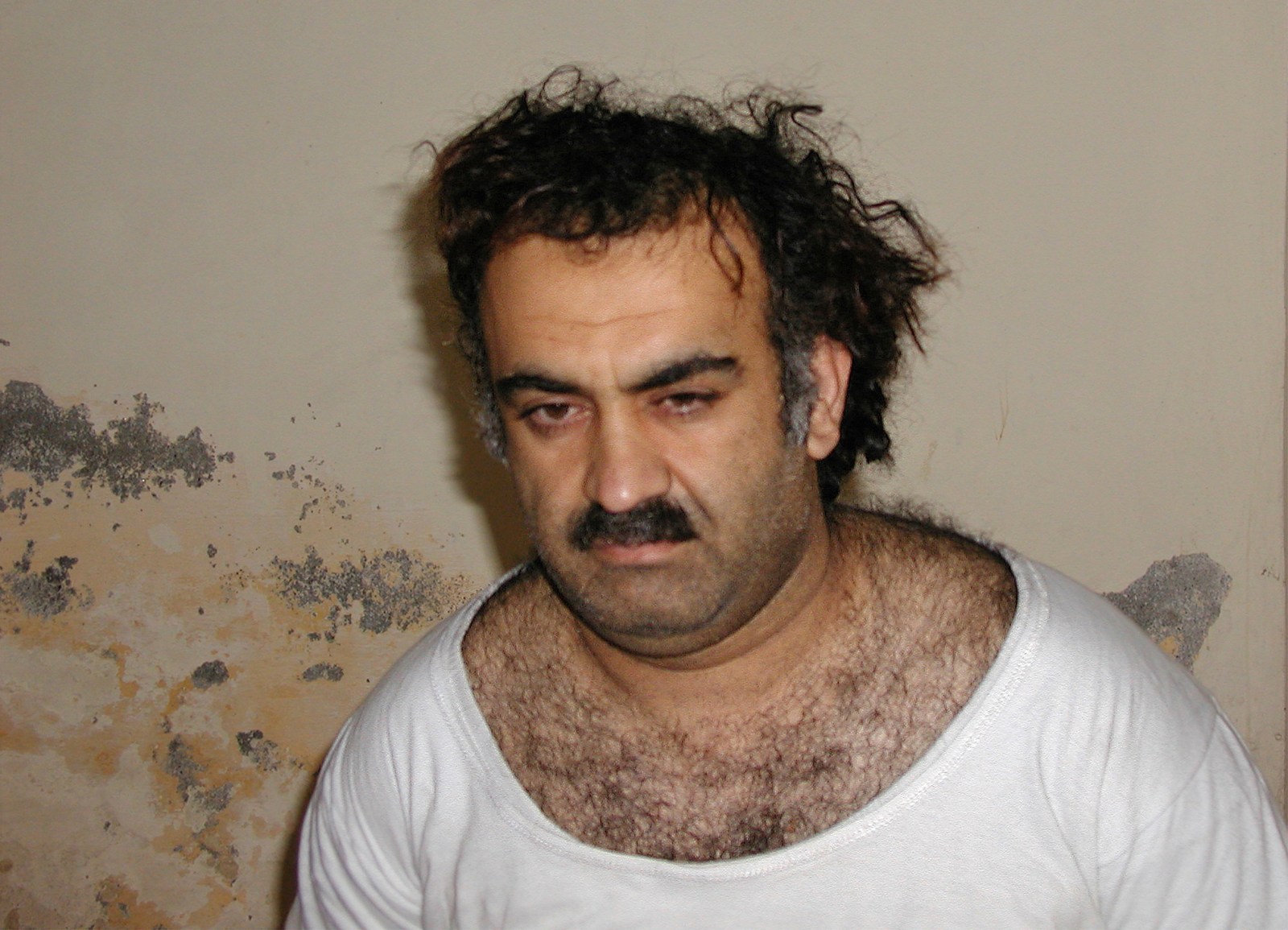
NEW YORK — More than two decades after United States authorities transferred Khalid Sheikh Mohammed to the U.S. Naval Station at Guantanamo Bay, Cuba, the self-described mastermind behind the Sept. 11, 2001 terrorist attacks remains in military custody without a completed trial, according to reporting by The Associated Press. Captured in Pakistan in 2003 and subsequently held at clandestine Central Intelligence Agency detention facilities before his September 2006 arrival at the Cuban enclave, Mohammed stands accused of planning the hijacking plot that claimed nearly 3,000 lives. Yet despite decades of legal proceedings, government filings, and pretrial hearings before military commissions, a definitive judicial resolution continues to elude the U.S. legal system, leaving victims' families and constitutional scholars waiting for an outcome that appears little closer than when he first entered the offshore prison.
Key facts
What happened
The long-standing stalemate in the prosecution of Khalid Sheikh Mohammed highlights one of the most protracted legal sagas in modern U.S. judicial history, as reported by The Associated Press. Mohammed, who was taken into custody by American and Pakistani intelligence officials in Rawalpindi, Pakistan, in March 2003, spent three years in secret CIA detention facilities before being transferred to the military prison at Guantanamo Bay in September 2006.
Upon his transfer to military custody, federal authorities designated Mohammed a high-value detainee and initiated proceedings under the U.S. military commission system. He was initially charged alongside four co-defendants—Walid bin Attash, Ramzi bin al-Shibh, Ammar al-Baluchi, and Mustafa al-Hawsawi—with offenses including murder in violation of the law of war, terrorism, and conspiracy linked to the Sept. 11 attacks.
However, the military commission tribunal has spent years bogged down in procedural motions, evidentiary disputes, and jurisdictional challenges. Pretrial hearings, conducted in a specialized courtroom at Camp Justice inside the Guantanamo Bay military base, have repeatedly stalled over defense claims regarding the treatment of defendants while in CIA custody and the government's obligation to turn over classified records.
Attempts to bypass a formal capital trial through pretrial plea agreements have similarly encountered major obstacles. Proposed agreements that would have removed the death penalty in exchange for guilty pleas and life sentences without parole were presented in 2024, only to trigger sharp controversy and administrative intervention from senior U.S. Department of Defense officials. Consequently, the case remains locked in a cycle of pretrial arguments with no set date for a jury panel to hear opening statements.
Why it matters
The persistent delay in bringing Khalid Sheikh Mohammed to trial carries profound consequences for the American justice system, national security policy, and the families of the 2,977 people killed on Sept. 11, 2001. For the victims' relatives, the absence of a trial outcome deprives them of finality and formal legal accountability after more than a quarter-century since the attacks. Many family members who have traveled to Guantanamo Bay to observe pretrial hearings have expressed frustration over a process that has outlasted multiple judges, prosecutors, and defense attorneys without producing a verdict.
Institutionally, the case underscores the operational limits and structural vulnerabilities of the U.S. military commission framework established after Sept. 11. Designed outside the traditional federal court system to handle foreign terrorism suspects, the commissions have struggled to navigate complex constitutional questions, classified information protocols, and international legal standards governing detention.
Furthermore, the proceedings have established a troubling precedent regarding the intersection of intelligence gathering and judicial prosecution. The heavy reliance on evidence derived during the CIA's extended interrogation program created an enduring legal dilemma: information extracted under conditions that international bodies classify as torture faces stringent evidentiary hurdles in court. As a result, the military commission system has faced scrutiny from human rights organizations and legal experts who argue that the delay undermines the credibility of American rule of law on the global stage.
The background
The legal path that brought Khalid Sheikh Mohammed to Guantanamo Bay began in the immediate aftermath of the Sept. 11 attacks, when the Bush administration established an extraordinary legal apparatus to detain and prosecute non-U.S. citizens suspected of terrorism. After his capture in Rawalpindi in March 2003, Mohammed was held at covert locations—often referred to as CIA "black sites"—in countries including Poland, Romania, and Thailand. During this period, he was subjected to severe interrogation methods authorized under government legal memorandums, including sleep deprivation, forced standing, stress positions, and 183 separate instances of waterboarding.
In September 2006, President George W. Bush announced the transfer of Mohammed and 13 other high-value detainees to the military facility at Guantanamo Bay, Cuba, requesting that Congress pass legislation to formalize the military commission system. Congress subsequently enacted the Military Commissions Act of 2006, which was later amended by the Military Commissions Act of 2009 under President Barack Obama to enhance procedural protections for defendants.
Mohammed and his co-defendants were formally arraigned before a military tribunal in May 2012 on capital charges. Since that arraignment, the case has been plagued by logistical and legal delays. More than a half-dozen military judges have presided over the proceedings, each requiring months to review millions of pages of classified records and procedural motions.
In 2009, Attorney General Eric Holder proposed transferring Mohammed to the U.S. District Court for the Southern District of New York to face a federal civilian trial just blocks from the former site of the World Trade Center. That plan was abandoned following intense political opposition from members of Congress and New York local officials, who cited security risks and municipal costs, effectively cementing Guantanamo Bay as the sole venue for the prosecution.
Reaction
The ongoing delay has drawn sharp criticism from across the political, legal, and humanitarian spectrum, though specific formal responses to the latest milestone reflect long-standing divisions. Relatives of Sept. 11 victims remain deeply divided over the trajectory of the prosecution. Some victim advocacy groups have insisted that nothing short of a full capital trial culminating in the death penalty is acceptable, viewing plea arrangements as an inadequate response to the deadliest terror attack on American soil. Conversely, other family members have publicly urged government authorities to accept plea agreements that guarantee life imprisonment without parole, arguing that prolonged litigation ensures many aging relatives will not live to see the end of the judicial process.
Human rights agencies, including Amnesty International and Human Rights Watch, have repeatedly called for the closure of the Guantanamo Bay detention center and the resolution of all pending military commission cases. These organizations argue that the government's inability to conclude a trial after two decades demonstrates the inherent flaws of an ad hoc tribunal system operating outside the standard federal judiciary.
Within the military and defense establishment, officials have maintained that the tribunal process remains necessary to safeguard national security secrets while ensuring due process under the governing statutes, even as successive administrations struggle to establish a definitive timetable for trial completion.
What we don't know yet
Crucial questions regarding the ultimate resolution of the case against Khalid Sheikh Mohammed remain unanswered in the available reporting. Most significantly, it remains uncertain whether the prosecution will ever proceed to a full capital trial before a military panel, or if the case will ultimately be resolved through a negotiated plea agreement that removes the possibility of execution.
The legal status of prior plea negotiations also presents an unresolved challenge. Litigation surrounding administrative efforts by defense leadership to overturn or reinstate plea deals remains pending within the military appellate court hierarchy, creating ambiguity over what legal framework currently governs the case.
Additionally, key questions persist regarding how the tribunal will handle extensive classified evidence related to the CIA interrogation program. It remains unclear how much testimony from former CIA contractors and medical personnel will be permitted in open court, or how appellate courts—including the U.S. Court of Appeals for the District of Columbia Circuit and the U.S. Supreme Court—might evaluate any eventual conviction given the procedural history of the commissions.
What to watch
Several specific milestones and decision points will dictate the next phases of the Khalid Sheikh Mohammed trial proceedings:
This report is based on original reporting by Larry Neumeister for The Associated Press.
How this story was produced
This report was written by The Global Wire newsroom from reporting first published by Larry Neumeister, The Associated Press; Larry Neumeister; The Associated Press; Feedloaderapi. We verify the core facts against the original report, write our own account, and add the background and consequences a short wire item leaves out. Drafting is AI-assisted inside an editor-supervised pipeline, and every story is checked for accuracy of attribution, structure and duplication before it appears — full detail in our AI and funding disclosure.
Spotted an error? Tell us at corrections@horizonglobalnews.com and read our corrections policy or editorial standards.





Reader comments
Loading comments…