

Trump Rhetoric Sparks Alarm Over Rising Anti-Muslim Bias Ahead of Midterms
Civil rights experts draw parallels to post-Sept. 11 hostility as political leaders intensify anti-Islamic commentary alongside record Muslim electoral milestones.
By The Global Wire Newsroom · Reported from Joseph Gedeon
Link preview · horizonglobalnews.com
Trump Rhetoric Sparks Alarm Over Rising Anti-Muslim Bias Ahead of Midterms
Civil rights experts draw parallels to post-Sept. 11 hostility as political leaders intensify anti-Islamic commentary alongside record Muslim electoral milestones.
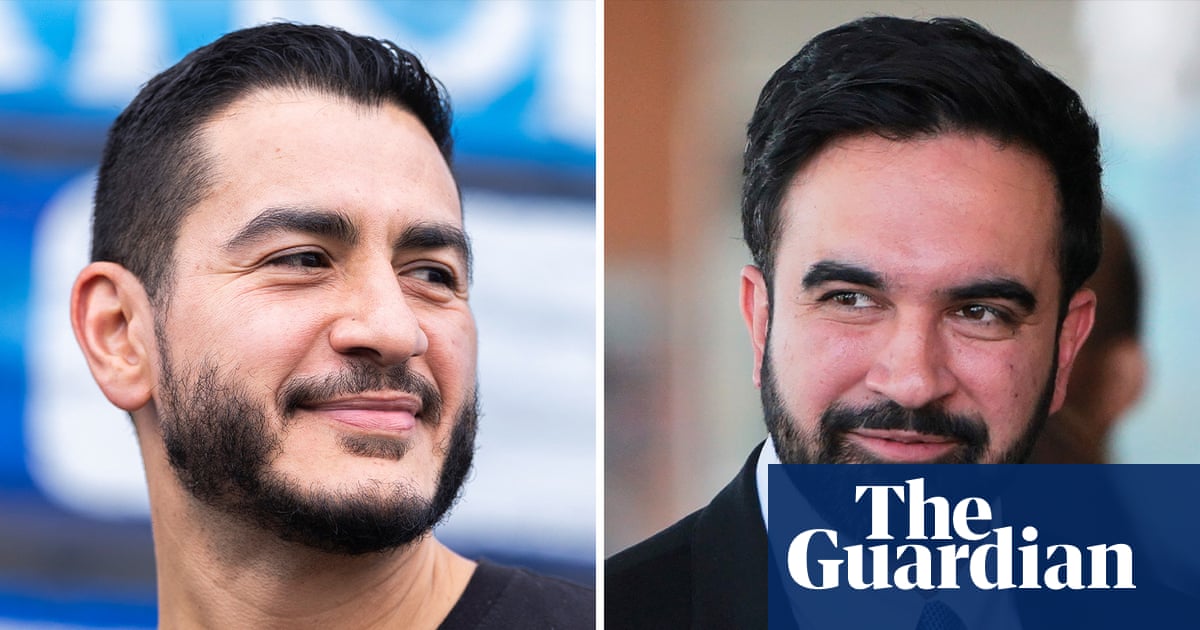
WASHINGTON — Former U.S. President Donald Trump is leading an intensified wave of anti-Muslim political rhetoric ahead of the upcoming midterm elections, drawing warnings from civil rights scholars and advocacy organizations who say the current climate rivals the hostility experienced by Muslim Americans following the September 11, 2001 terrorist attacks. The surge in hostile campaign speech occurs against a backdrop of historic political breakthroughs for Muslim candidates across the country, highlighting a sharp contrast between record civic representation and escalating political polarization. As candidates enter the final phase of campaign rallies and advertising buys, civil rights monitors warn that aggressive rhetoric targeting religious minorities threatens to normalize bigotry and incite real-world harm against vulnerable communities.
Key facts
What happened
According to reporting by Joseph Gedeon, political rhetoric targeting Islam and Muslim Americans has escalated sharply as candidates intensify campaign operations for the upcoming midterm elections. Former President Donald Trump has repeatedly deployed hostile statements regarding Muslim public officials and community members during political rallies, digital broadcasts, and campaign press briefings, framing Islamic religious identity as incompatible with American civic values.
The renewed focus on religious identity comes as Muslim Americans achieve historic levels of electoral success. In recent primary cycles across states such as Michigan, Minnesota, New Jersey, Pennsylvania, and Virginia, Muslim candidates have secured major party nominations and legislative seats in record numbers. These victories span federal congressional races, state legislative chambers, county boards, and municipal councils, reflecting years of structured civic organizing and increased voter mobilization.
However, civil rights researchers note that these historic political milestones have coincided with organized counter-campaigns. Political operatives and advocacy groups targeting Muslim candidates have increasingly utilized identity-focused rhetoric, questioning candidate loyalty, making unsubstantiated claims regarding security risks, and associating political opponents with extremist ideologies.
Monitors at civil rights watchdog groups report that high-visibility political statements by national leaders frequently trigger secondary waves of online harassment, physical threats, and vandalism targeting mosques and Islamic cultural centers. Researchers tracking political communications observe that campaign strategies relying on anti-Muslim messaging are often calibrated to energize conservative voter bases during competitive election cycles, particularly in swing districts where turnout drives outcome dynamics.
Campaign monitors further note that while previous election cycles featured localized anti-Muslim messaging, the current cycle is characterized by top-down leadership from prominent national figures, giving anti-Islamic commentary broader mainstream exposure across major news networks and social media platforms.
Why it matters
The intensification of anti-Muslim campaign rhetoric carries profound implications for public safety, legislative policy, and the stability of American democratic institutions. When prominent political leaders use discriminatory language, civil rights organizations consistently record a corresponding spike in real-world harassment, workplace discrimination, and violent hate crimes directed at Muslim individuals and those perceived to be Muslim, including Sikh, Arab, and South Asian Americans.
Beyond individual security, political rhetoric shapes formal governance and legislative priorities. Historical precedents show that widespread anti-Muslim sentiment often informs restrictive immigration legislation, expanded government surveillance authorities, and reduced federal protections for civil rights. It can also influence foreign policy debates, creating a domestic environment where national security discussions become conflated with religious prejudice.
For democratic governance, targeting a specific religious minority risks disenfranchising voters and eroding trust in public institutions. When public officials frame participation by certain faith communities as inherently suspect, it undermines the fundamental constitutional principle of equal protection under the law. Conversely, community organizers report that aggressive campaign tactics can also spur unprecedented civic counter-mobilization, increasing voter turnout and encouraging civic institutions to demand accountability from elected representatives across political parties.
The background
The current wave of political rhetoric fits into a broader historical pattern of anti-Muslim sentiment in U.S. politics that expanded dramatically after the terrorist attacks of Sept. 11, 2001. Following the 2001 attacks, the U.S. Department of Justice and the Federal Bureau of Investigation documented an unprecedented rise in hate crimes targeting Muslims and individuals of Middle Eastern descent. Federal policies during that period included targeted immigration reporting systems, such as the National Security Entry-Exit Registration System established in 2002, and expanded intelligence monitoring of religious institutions.
Anti-Muslim rhetoric re-emerged as a major national campaign strategy during the 2015 and 2016 presidential election cycles. During his initial presidential campaign, Donald Trump proposed a total shutdown of Muslims entering the United States. Following his inauguration in January 2017, the administration issued Executive Order 13769, restricting entry from several Muslim-majority nations. After extensive litigation across federal district and circuit courts, a revised version of the executive order was upheld by the U.S. Supreme Court in the landmark June 2018 ruling Trump v. Hawaii.
Despite legal and political obstacles, Muslim American political participation grew rapidly during the same timeframe. Representative Keith Ellison of Minnesota became the first Muslim elected to the U.S. House of Representatives in 2006, followed by Representative André Carson of Indiana in a 2008 special election. In November 2018, Representatives Ilhan Omar of Minnesota and Rashida Tlaib of Michigan became the first Muslim women elected to Congress.
At the state and local levels, organizations such as the Council on American-Islamic Relations (CAIR), the Muslim Public Affairs Council (MPAC), and political action group Emgage have built extensive infrastructure to support candidate training, voter registration, and civil rights defense. By 2024, hundreds of Muslim Americans had won election to school boards, municipal councils, and state legislatures across more than two dozen states, marking a structural shift in American local governance.
Reaction
The renewed anti-Muslim campaign rhetoric has drawn strong condemnation from civil rights organizations, legal defense funds, and interfaith coalitions. Representatives from groups such as CAIR and the American Civil Liberties Union (ACLU) have called on political candidates across party lines to reject bigotry and commit to campaign standards that respect constitutional protections for religious freedom.
Community leaders and advocacy groups have also organized public briefings and voter protection initiatives aimed at combating disinformation and securing polling places. Local interfaith councils have expressed solidarity with Muslim communities, holding joint press conferences to emphasize communal unity during the election season.
Political strategists associated with conservative campaigns have largely defended candidate statements, maintaining that their commentary focuses on national security, border control, and ideological differences rather than religious intolerance. They contend that political scrutiny of candidates' policy positions and public records is appropriate during a national election cycle.
Elected Muslim officials have urged voters to respond to hostile rhetoric by participating in the democratic process. Leaders across impacted communities emphasize that increased political participation remains the most effective long-term defense against systemic bias and political marginalization.
What we don't know yet
Several key elements regarding the long-term impact of current political trends remain unverified:
What to watch
As the midterm campaign enters its final phase, key developments will indicate how these political dynamics unfold:
This report is based on original news reporting published by Joseph Gedeon.
How this story was produced
This report was written by The Global Wire newsroom from reporting first published by Joseph Gedeon. We verify the core facts against the original report, write our own account, and add the background and consequences a short wire item leaves out. Drafting is AI-assisted inside an editor-supervised pipeline, and every story is checked for accuracy of attribution, structure and duplication before it appears — full detail in our AI and funding disclosure.
Spotted an error? Tell us at corrections@horizonglobalnews.com and read our corrections policy or editorial standards.


Reader comments
Loading comments…