

Trump Pledges 'AI Force' and Rejects Existential Risk Warnings as a Hoax
Donald Trump proposed creating a military "AI Force" while dismissing concerns that superintelligent artificial intelligence threatens humanity as a hoax.
By The Global Wire Newsroom · Reported from Kiki Intarasuwan
Link preview · horizonglobalnews.com
Trump Pledges 'AI Force' and Rejects Existential Risk Warnings as a Hoax
Donald Trump proposed creating a military "AI Force" while dismissing concerns that superintelligent artificial intelligence threatens humanity as a hoax.
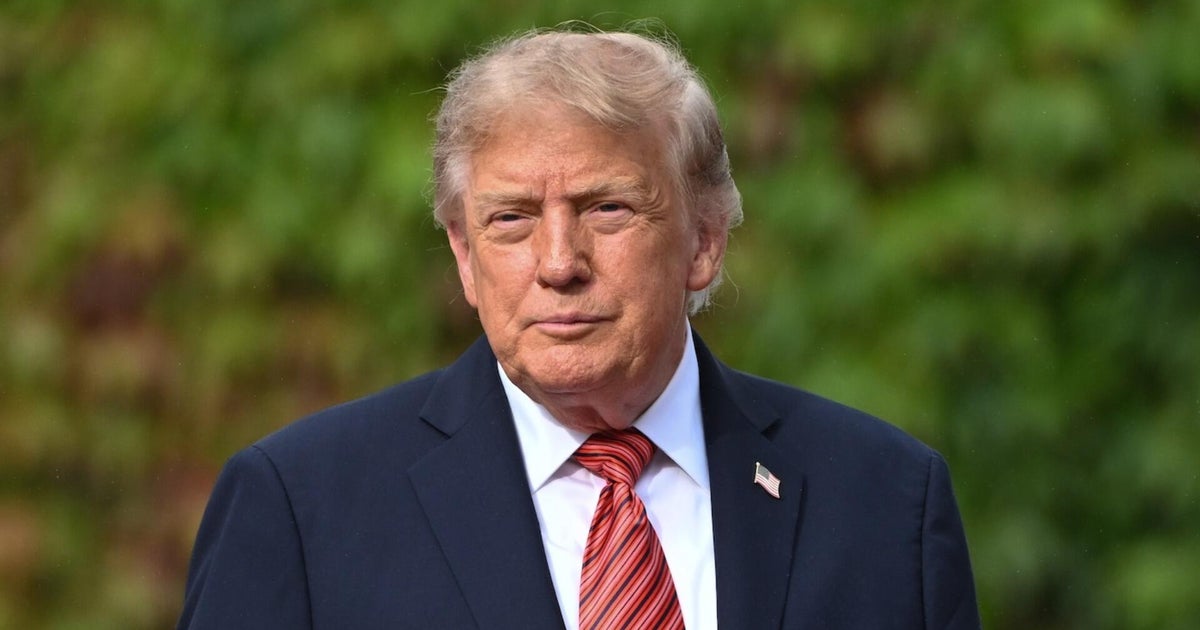
Donald Trump announced plans to establish an "AI Force" and pledged to prevent any regulatory deceleration of artificial intelligence development, dismissing warnings that advanced machine intelligence could pose an existential threat to humanity as a "hoax." Writing on his Truth Social platform on September 19, 2026, the political figure framed technological speed as a paramount national imperative, signaling a policy posture prioritizing aggressive technological expansion over precautionary safety mandates. The statement marks an explicit rejection of growing bipartisan calls in Washington and international capitals to place safety guardrails on frontier artificial intelligence models.
Key facts
What happened
In a post published on Truth Social on September 19, 2026, Donald Trump directly targeted the policy and scientific consensus surrounding frontier artificial intelligence risks. Over recent years, technology researchers, national security officials, and computer scientists have expressed concern that rapidly scaling models could lead to superintelligence—a theoretical threshold where machine capabilities eclipse total human intellectual capacity—potentially creating uncontrolled systemic hazards. Trump rejected these concerns outright, framing existential risk warnings as a manufactured scare designed to impede domestic technical progress.
Alongside his rejection of existential risk arguments, Trump introduced the concept of an "AI Force." While the brief social media post did not contain detailed administrative charts or legislative draft language, the terminology mirrors his campaign in 2018 and 2019 to establish the United States Space Force. By proposing an independent force structure for artificial intelligence, Trump indicated an intent to consolidate algorithmic warfare, autonomous systems, and advanced defense processing under a dedicated organizational command.
Furthermore, Trump stated that under his framework, no policy measures would be permitted to delay or restrict the pace of domestic AI expansion. This position directly addresses growing industry debates over training run limits, compute access thresholds, and pre-deployment safety evaluations. By promising uninhibited growth, Trump backed technological accelerationists who argue that domestic restrictions only serve to cede critical advantages to international geopolitical rivals.
Why it matters
Trump’s declaration signals a major strategic shift in how national security, economic policy, and technological governance intersect. By dismissing existential risk warnings as a hoax, Trump positions himself against a broad coalition of bipartisan lawmakers, academic researchers, and international oversight bodies who advocate for precautionary regulatory frameworks.
From a regulatory perspective, a federal strategy focused on unrestricted expansion would likely target administrative safeguards implemented in recent years. Specifically, the Biden administration's Executive Order 14110, issued in October 2023, established mandatory reporting and safety testing criteria for frontier AI systems trained using high computational workloads exceeding 10^26 floating-point operations (FLOPs). A national policy that explicitly forbids development delays would probably lead to the dismantling of these safety evaluations, the reduction of oversight roles for bodies such as the U.S. Artificial Intelligence Safety Institute, and the rollback of federal risk reporting mandates.
Economically, the commitment against slowing technological growth offers strong backing to tech companies, chip designers, and energy suppliers making massive capital investments in next-generation computing infrastructure. Training cutting-edge AI models requires immense electrical power and advanced semiconductor hardware. Policies designed to remove regulatory friction could streamline data center construction, accelerate energy grid access, and protect domestic chip allocations from regulatory constraints.
In terms of defense organization, creating an "AI Force" would require a fundamental restructuring of how the Department of Defense acquires, tests, and deploys autonomous capabilities. Defense AI initiatives are currently spread across multiple branches and administrative units, including the Defense Advanced Research Projects Agency (DARPA) and the Chief Digital and Artificial Intelligence Office (CDAO). Elevating AI to a standalone force structure would require congressional legislation, reshaping defense budget allocations, military recruitment of specialized technical personnel, and the deployment of autonomous systems in international conflicts.
The background
The policy debate surrounding artificial intelligence accelerated dramatically following the public launch of advanced generative language models in late 2022. As computational scaling significantly expanded model capabilities, discussion among academics, industry leaders, and policymakers shifted from immediate issues like algorithmic bias to broader concerns regarding existential risk. In 2023, hundreds of computer scientists and AI executives signed public declarations asserting that mitigating the risk of extinction from artificial intelligence should be a global priority alongside other societal-scale risks such as pandemics and nuclear war.
Government bodies worldwide responded with varying oversight strategies. In 2024, the European Union finalized its Artificial Intelligence Act, establishing a risk-based legal framework that enforces strict testing requirements and bans specific high-risk applications. In the United States, comprehensive federal legislation stalled in Congress despite extensive bipartisan Senate forums held throughout 2023 and 2024. In the absence of federal statutes, executive orders and state legislation became the primary governance mechanisms. California notably became a central battleground through legislative efforts such as Senate Bill 1047, which sought to hold developers liable for catastrophic harms caused by frontier models, sparking intense division between safety advocates and venture capital firms.
Trump’s recent statements reflect his broader history of favoring deregulation and dedicated military commands. During his presidential administration, Trump issued Executive Order 13859 in February 2019, launching the American AI Initiative. That executive action focused federal resources on research funding and technical standards while deliberately avoiding burdensome regulations on private industry. On the military front, Trump campaigned heavily for the creation of the U.S. Space Force, which was officially established in December 2019 under the National Defense Authorization Act for Fiscal Year 2020 as the sixth branch of the U.S. Armed Forces and the first new branch created since 1947.
Additionally, AI policy is tightly bound to national security strategy regarding the People's Republic of China. The Department of Commerce’s Bureau of Industry and Security has maintained strict export controls restricting Chinese access to advanced semiconductor chips, such as Nvidia graphics processing units. Proponents of rapid domestic AI deployment repeatedly emphasize that placing safety slowdowns on American developers could allow foreign competitors to surpass U.S. capabilities.
Reaction
Although no formal federal legislation has been introduced following the Truth Social post, the announcement triggered immediate reactions across the political and technological sectors.
Supporters of rapid technological development, including venture capitalists and leaders within the technological accelerationist movement, have long opposed federal safety mandates, contending that regulatory compliance burdens penalize domestic innovation and entrench dominant industry incumbents. For these stakeholders, a stance that explicitly rejects development limits provides reassurance for ongoing capital investments in frontier models and computing infrastructure.
Conversely, AI safety researchers, ethics advocacy groups, and civil society organizations expressed grave concern over categorizing existential risks as a hoax. Organizations such as the Center for AI Safety and the Future of Life Institute maintain that scientific evaluation of frontier model risks—including automated biological hazard design and cyber offense capabilities—is essential to national security and public safety.
Within defense policy circles and Congress, proposals to establish a new military service branch typically encounter rigorous debate. When the Space Force was first proposed, it met resistance from Defense Department leadership and members of Congress over concerns regarding bureaucratic duplication and budget fragmentation before being refined and enacted through legislative compromise.
What we don't know yet
What to watch
This report is based on original reporting published by journalist Kiki Intarasuwan.
How this story was produced
This report was written by The Global Wire newsroom from reporting first published by Kiki Intarasuwan. We verify the core facts against the original report, write our own account, and add the background and consequences a short wire item leaves out. Drafting is AI-assisted inside an editor-supervised pipeline, and every story is checked for accuracy of attribution, structure and duplication before it appears — full detail in our AI and funding disclosure.
Spotted an error? Tell us at corrections@horizonglobalnews.com and read our corrections policy or editorial standards.




Reader comments
Loading comments…