

Trump Disavows Ambassador's Claim of Arms Sales Talks With China's Xi Jinping
President Donald Trump expressed ignorance after U.S. Ambassador to China David Perdue stated that arms sales to Beijing were raised during high-level bilateral discussions.
By The Global Wire Newsroom · Reported from Eren Waris
Link preview · horizonglobalnews.com
Trump Disavows Ambassador's Claim of Arms Sales Talks With China's Xi Jinping
President Donald Trump expressed ignorance after U.S. Ambassador to China David Perdue stated that arms sales to Beijing were raised during high-level bilateral discussions.
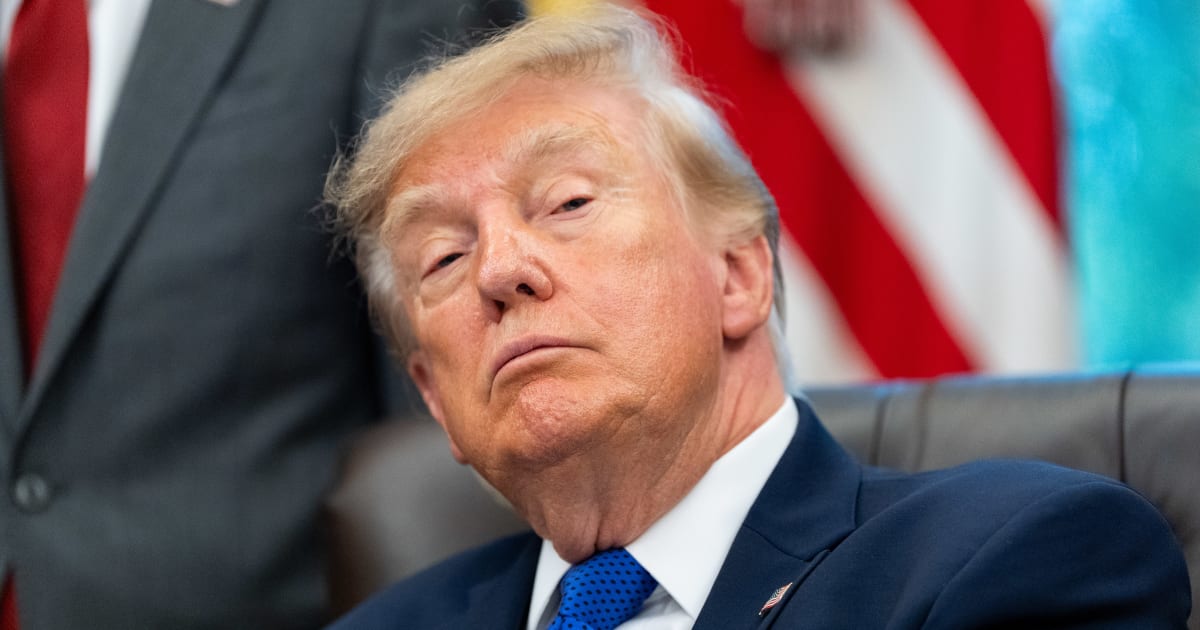
WASHINGTON — U.S. President Donald Trump publicly distanced himself on Monday from assertions made by his own envoy to Beijing, denying awareness of a proposal to consider selling American military hardware to China. The public rift emerged after U.S. Ambassador to China David Perdue stated that Trump had raised the prospect of U.S. arms sales to Chinese President Xi Jinping during bilateral talks. Asked about the ambassador's claims, Trump appeared caught off guard, remarking, "I never heard of that one," exposing a stark communication gap between the White House and top U.S. diplomatic officials in Beijing on a core national security issue.
Key facts
What happened
The discrepancy surfaced following public remarks by Ambassador David Perdue detailing high-level engagements between American and Chinese delegations. According to reporting by Eren Waris, Perdue revealed that President Trump had brought up the possibility of selling American military weapons to China during conversations with President Xi Jinping.
The revelation immediately drew attention across diplomatic and national security circles in Washington due to long-standing legal prohibitions restricting military technology transfers to Beijing. When asked directly about Ambassador Perdue's statements, President Trump expressed surprise and disavowed knowledge of any such proposal, stating, "I never heard of that one."
The public divergence between the president and his ambassador in Beijing presents an unusual disconnect over U.S. foreign policy toward China. In standard diplomatic protocol, ambassadorial accounts of presidential meetings are closely coordinated with official White House readouts. Trump's immediate dismissal indicates a breakdown in internal administration messaging or a misunderstanding regarding private exchanges during bilateral sessions.
The reporting by Eren Waris notes that the exchange occurred amid broader U.S.-China bilateral diplomacy focused on trade and economic competition. Neither the White House Press Office nor the U.S. Embassy in Beijing issued a revised summary to resolve the conflicting accounts.
Why it matters
The public disagreement between President Trump and Ambassador Perdue carries significant implications for U.S. foreign policy, global defense trade regulations, and international alliances in the Indo-Pacific.
From a strategic perspective, any consideration of arms sales to China would mark a major departure from post-Cold War U.S. security doctrine. For over three decades, U.S. military strategy in East Asia has focused on maintaining a qualitative technological edge over the People's Liberation Army and deterring aggression against regional partners. Proposing American military sales to Beijing—even as a hypothetical trade bargaining chip—runs counter to established defense policy and bipartisan consensus.
Legally, U.S. weapon sales are governed by strict statutory oversight. The Arms Export Control Act empowers the executive branch to regulate defense exports but subjects major sales to mandatory congressional notification. Additionally, U.S. arms exports are regulated under the International Traffic in Arms Regulations (ITAR), administered by the Department of State. China remains designated as a prohibited destination for defense hardware and dual-use technologies. Altering these restrictions would require major statutory revisions that face overwhelming opposition in Congress.
For regional allies, including Japan, South Korea, Australia, and Taiwan, consistency in U.S. security policy is essential for regional stability. In Taiwan, where military defense relies on U.S. arms supplied under the Taiwan Relations Act, any suggestion of arms sales to Beijing creates significant strategic uncertainty.
The background
Understanding the significance of Ambassador Perdue's statements and President Trump's denial requires examining the historical framework governing U.S.-China military relations.
The legal foundation for current U.S. restrictions on military sales to Beijing dates to June 1989. Following the Chinese government's military crackdown on pro-democracy protesters in Tiananmen Square, President George H.W. Bush suspended government-to-government military sales and commercial defense exports to China. Congress subsequently codified these sanctions into federal law, restricting defense transfers, satellite technology, and dual-use equipment. Successive administrations have maintained these prohibitions, citing human rights concerns, strategic rivalry, and China's military expansion in the South China Sea and Taiwan Strait.
Concurrently, U.S. policy toward Taiwan has been guided by the Taiwan Relations Act of 1979, enacted after Washington normalized diplomatic relations with Beijing. The statute mandates that the United States provide Taiwan with defensive arms necessary to maintain a sufficient self-defense capability. This policy—arming Taiwan while maintaining an embargo on China—has served as a cornerstone of American strategy in East Asia for decades.
President Trump's approach to international relations has frequently departed from conventional diplomacy. Throughout his career, Trump has favored an "America First" foreign policy focused on transactional negotiations, bilateral trade balances, and direct leadership meetings. During his presidency and political tenure, Trump engaged in high-profile meetings with leaders such as President Xi Jinping, often connecting trade negotiations with strategic foreign policy issues.
Ambassador David Perdue, a former Republican U.S. Senator from Georgia (2015–2021), brought extensive corporate experience in Asian supply chains to his diplomatic post in Beijing. As U.S. Ambassador to China, Perdue represents Washington in a diplomatic posting defined by economic competition, technology sanctions, and geopolitical tension.
Reaction
The public contradiction between President Trump's statements and Ambassador Perdue's account is expected to draw scrutiny from lawmakers and foreign policy analysts.
Members of the Senate Foreign Relations Committee and House Foreign Affairs Committee routinely oversee executive branch dealings with Beijing. Lawmakers from both parties historically maintain a hawkish stance on defense technology exports, consistently pushing for tight controls on military equipment and dual-use technologies. Congressional leaders are expected to seek formal briefings from the Department of State regarding the bilateral discussions.
In Beijing, Chinese officials maintain strict control over meeting readouts. Historically, China's Ministry of Foreign Affairs has condemned U.S. arms sales to Taiwan while opposing American sanctions. Chinese officials have not issued public statements clarifying whether President Xi acknowledged or discussed arms sales during the meeting.
Foreign policy analysts note that unscripted exchanges during summit meetings can create ambiguity unless promptly clarified by national security officials, emphasizing the importance of clear diplomatic communication.
What we don't know yet
Several important aspects of the exchange remain unconfirmed:
What to watch
Key developments to monitor in the coming weeks include:
This report is based on coverage provided by Eren Waris.
How this story was produced
This report was written by The Global Wire newsroom from reporting first published by Eren Waris. We verify the core facts against the original report, write our own account, and add the background and consequences a short wire item leaves out. Drafting is AI-assisted inside an editor-supervised pipeline, and every story is checked for accuracy of attribution, structure and duplication before it appears — full detail in our AI and funding disclosure.
Spotted an error? Tell us at corrections@horizonglobalnews.com and read our corrections policy or editorial standards.





Reader comments
Loading comments…