

Tony Albert Collects Hundreds of 'Aboriginalia' Artifacts for Exhibition on Colonial Kitsch
Indigenous artist Tony Albert has gathered hundreds of mid-century commercial items depicting First Nations caricatures to reframe Australia's history of racial stereotyping into contemporary art.
By The Global Wire Newsroom · Reported from Linda Morris
Link preview · horizonglobalnews.com
Tony Albert Collects Hundreds of 'Aboriginalia' Artifacts for Exhibition on Colonial Kitsch
Indigenous artist Tony Albert has gathered hundreds of mid-century commercial items depicting First Nations caricatures to reframe Australia's history of racial stereotyping into contemporary art.
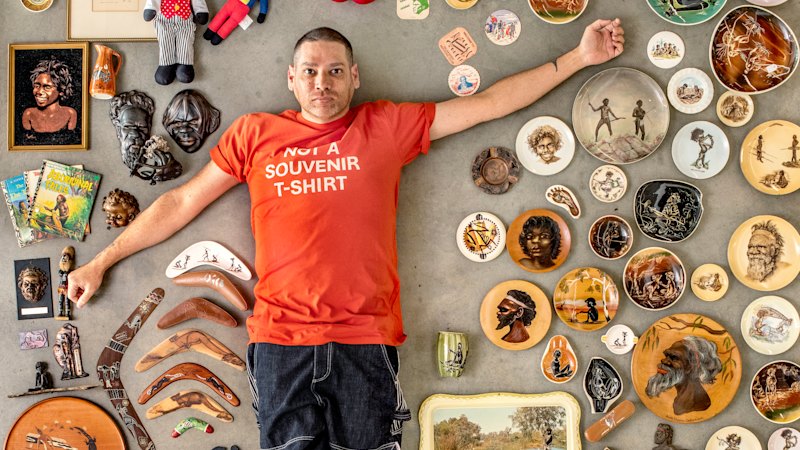
Contemporary Indigenous Australian artist Tony Albert has received hundreds of physical artifacts featuring caricatured and stereotypical depictions of First Nations peoples following a nationwide public appeal for his latest exhibition project. The appeal invited members of the public to donate or lend items classified under the broad term "Aboriginalia"—a category encompassing mid-20th-century commercial souvenirs, domestic ceramics, printed textiles, and novelty homewares produced almost exclusively by non-Indigenous manufacturers. By gathering these ubiquitous items from suburban attics, antique stores, and estate sales across Australia, Albert plans to recontextualize colonial-era domestic kitsch into large-scale contemporary art, creating a visual archive that directly confronts Australia's history of commercial exploitation, cultural appropriation, and racial stereotyping.
Key facts
What happened
In launching the public appeal, Albert issued a broad invitation to Australians to examine their homes, inherited collections, and local second-hand markets for physical examples of mid-century mass production depicting First Nations people. The callout generated an immediate and substantial response from the public, with hundreds of individual items shipped to the artist's studio from urban and regional locations across the country.
The submitted items reflect the broad array of commercial goods produced during Australia's post-World War II manufacturing boom. Among the hundreds of objects received were painted black-velvet wall canvases, ceramic ash trays, wooden souvenir spoons, tea towels printed with caricatured Indigenous figures, velvet-lined trinket boxes, novelty salt and pepper shakers, and decorative porcelain wall plates manufactured by prominent mid-century Australian potteries.
Following the intake of the objects, Albert began systematically cataloging and organizing the items into visual compositions. Rather than displaying the objects individually as historical curiosities, the artist integrates them into large-scale wall relief installations, geometric patterns, and complex visual arrays.
Albert's technique involves disrupting the nostalgic affection typically associated with mid-century vintage collectables. By arranging hundreds of similar objects into collective formations—often forming explicit block letters, target motifs, or symbolic shapes—the repetition exposes the pervasive, systemic nature of racial caricatures in mid-20th-century Australian retail culture, stripping the individual objects of their perceived innocence.
Why it matters
The public callout and resulting exhibition address fundamental issues surrounding material culture, racial history, and public memory in Australia. Throughout the mid-20th century, the manufacturing and retail distribution of "Aboriginalia" generated significant commercial profit for non-Indigenous business owners, designers, and retailers. During this same era, First Nations artists were largely excluded from the commercial art market, denied copyright protections, and excluded from receiving financial returns or royalties for representations of their own culture.
From a sociological perspective, these everyday domestic goods illustrate how racial caricatures were normalized within white Australian domestic environments. Displayed on living room mantlepieces, hung in kitchens, and used at dining tables across suburban homes, these products routinely reinforced patronizing and inaccurate depictions of First Nations people, embedding colonial stereotypes into everyday domestic routine.
In terms of institutional curation and heritage management, Albert's methodology provides a practical framework for addressing problematic historical artifacts. Rather than destroying these items or removing them entirely from public view, the artist uses contemporary art as a medium for public education and truth-telling. By placing these objects under the curatorial control of a First Nations artist, the initiative shifts the power dynamic, transforming tools of historical caricature into instruments of contemporary artistic critique.
The project also impacts the broader antiques and vintage collectables market. Items that were long bought and sold as harmless Australiana are recontextualized through Albert's work, compelling antique dealers, auction houses, and private collectors to acknowledge the underlying racial subtext of mid-century commercial manufacturing.
The background
The proliferation of "Aboriginalia" in Australia coincided with the economic expansion and suburban development of the 1950s, 1960s, and 1970s. During this period, domestic travel surged, creating a strong market for Australian-themed souvenirs and decorative homewares. Non-Indigenous manufacturers, including established ceramics producers such as Martin Boyd Pottery, Pates Potteries, Westminster, and Studio Anna, produced extensive lines of decorative goods featuring Indigenous motifs. However, these designs were routinely created without consultation with First Nations communities, frequently merging distinct cultural practices into monolithic, inaccurate caricatures.
During this era, Indigenous Australians lived under highly restrictive state protection acts that limited their physical mobility, civil liberties, and financial independence. While commercial manufacturers profited from exaggerated depictions of Indigenous life, authentic First Nations cultural expressions were frequently classified by state institutions as ethnographic artifacts rather than visual art.
Born in Townsville, Queensland, in 1981, Tony Albert is a Girramay, Yidinji, and Kuku Yalanji man who has established a prominent international career examining visual sovereignty, colonial history, and popular culture. Albert began collecting vintage souvenir items as a child while visiting second-hand stores with his family. Over more than two decades, his studio collection grew to include thousands of individual artifacts.
Albert achieved wide acclaim for integrating these consumer goods into contemporary art installations. Previous major works include Optimism (2008), Pay Attention (2009–2010), and Headhunter (2014), all of which incorporated discarded pop-culture items into large-scale visual statements. In addition to gallery works, Albert has produced major public art commissions, such as the 2015 memorial sculpture Yininmadyemi - Thou didst let fall in Sydney's Hyde Park, which honors First Nations military personnel. His career achievements include receiving the Basil Sellers Art Prize and the Telstra National Aboriginal & Torres Strait Islander Art Award in 2014.
Reaction
The public response to the callout was marked by significant participation from individuals who inherited mid-century items from older family members. Numerous donors indicated that they were seeking an ethical method to dispose of objects they found offensive or uncomfortable to keep, but were reluctant to sell for profit or send to landfill.
First Nations community leaders, art commentators, and cultural historians have commended the initiative for converting a public appeal into an active exercise in truth-telling. Scholars note that by encouraging non-Indigenous Australians to audit their own personal collections and submit items for artistic recontextualization, the project fosters direct engagement with Australia's racial and cultural history.
Art museum professionals and academic curators are monitoring the project as a model for decolonizing museum practice and addressing difficult material culture. The completed exhibition is expected to spark broader discussions within Australian arts institutions regarding the ethics of collecting, displaying, and interpreting colonial-era commercial artifacts.
What we don't know yet
Although the public callout successfully gathered hundreds of objects, several operational and curatorial details have not yet been disclosed. The complete, itemized inventory of donated objects—including exact dates of manufacture, regional origin, and specific production houses—remains under cataloging by the artist's studio team.
The comprehensive national exhibition schedule and host venues have not been fully published. While initial showing arrangements are underway, the complete list of regional galleries, state art museums, or potential international venues scheduled to host the completed project remains unconfirmed.
Additionally, the long-term disposition of the donated items following the conclusion of the exhibition circuit has not been publicly specified. It remains unconfirmed whether the collected materials will be incorporated permanently into Albert's studio collection, gifted to public museum archives, or converted into an educational teaching resource.
What to watch
This report is based on original news reporting by Linda Morris.
How this story was produced
This report was written by The Global Wire newsroom from reporting first published by Linda Morris. We verify the core facts against the original report, write our own account, and add the background and consequences a short wire item leaves out. Drafting is AI-assisted inside an editor-supervised pipeline, and every story is checked for accuracy of attribution, structure and duplication before it appears — full detail in our AI and funding disclosure.
Spotted an error? Tell us at corrections@horizonglobalnews.com and read our corrections policy or editorial standards.






Reader comments
Loading comments…