

Frost Demands Focus as UCF Pivots From Double-Overtime BYU Upset to Baylor
After an exhausting multi-overtime victory, UCF confronts a compressed turnaround against Baylor as coach Scott Frost guards against emotional deflation.
By The Global Wire Newsroom · Reported from Andrea Adelson
Link preview · horizonglobalnews.com
Frost Demands Focus as UCF Pivots From Double-Overtime BYU Upset to Baylor
After an exhausting multi-overtime victory, UCF confronts a compressed turnaround against Baylor as coach Scott Frost guards against emotional deflation.
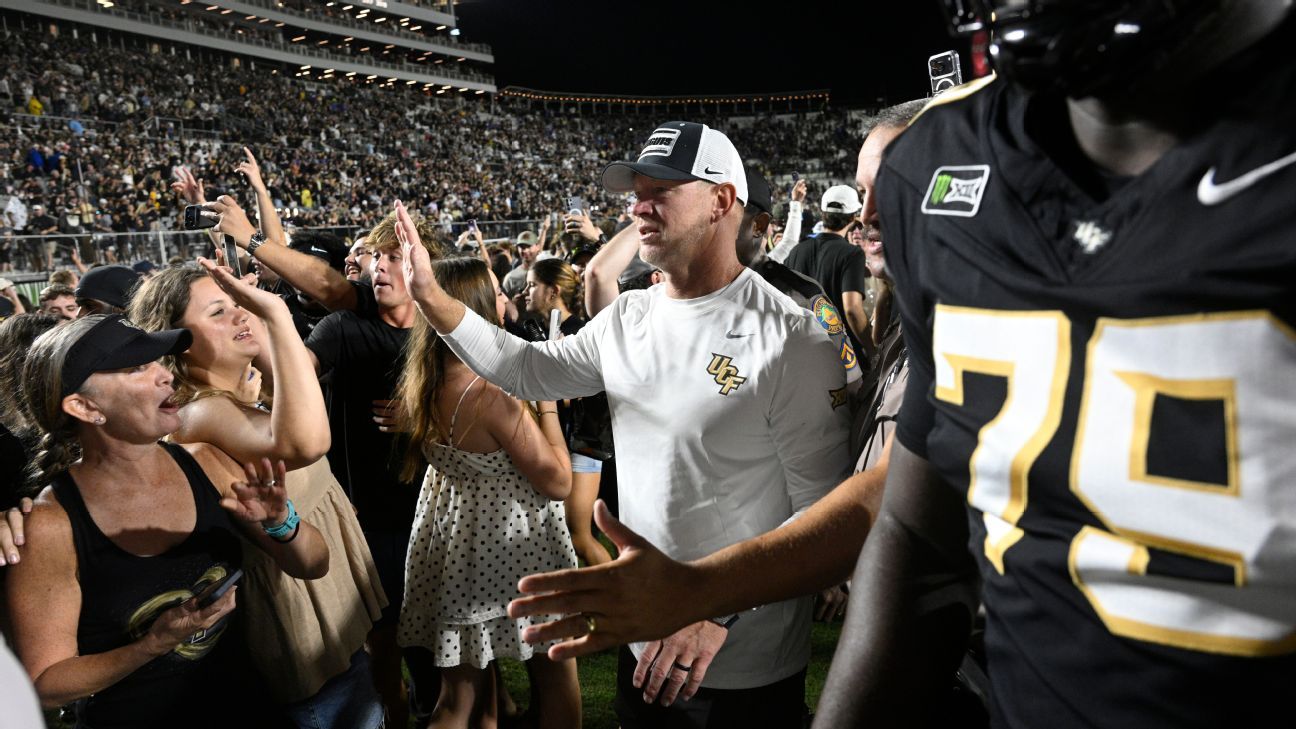
ORLANDO, Fla. — University of Central Florida head coach Scott Frost is demanding heightened operational discipline from his football program this week, rejecting suggestions that the Knights will suffer an emotional hangover following an exhausting double-overtime upset of Brigham Young University. Speaking to reporters ahead of UCF's upcoming Friday night conference matchup against Baylor University, Frost emphasized that the team's practice schedule and mental preparation must intensify rather than slacken. The dramatic Saturday victory over nationally regarded BYU provided the program with a signature triumph, but the abbreviated six-day training turnaround places immediate physical and tactical demands on the roster as it navigates the rigors of the Big 12 schedule.
Key facts
What happened
UCF's clash with BYU extended well beyond regulation play on Saturday, devolving into a grueling battle of attrition that required two extra periods to settle. After matching scores through four quarters and trading possessions during the initial overtime frame, the Knights executed in critical red-zone sequences to pull off an upset victory against the Cougars. The physical toll of the extended contest was immediate, requiring heavy snap counts for starting personnel on both offense and defense under collegiate overtime rules, which mandate elevated end-zone execution and high-leverage defensive stands from the 25-yard line.
Following the emotional peak of the victory, Frost convened his team to address the structural risks that often afflict college rosters in the immediate aftermath of major upsets. With UCF scheduled to play on a non-traditional Friday calendar against Baylor, the coaching staff was forced to compress a standard seven-day preparation workflow into fewer than six days. That calendar compression eliminates the conventional recovery day typically afforded to athletes on Sundays, moving tactical game-planning and film review directly into Monday morning.
Addressing the media, Frost directly challenged the assumption that his players would experience an emotional regression, declaring that he does not expect a letdown. Instead, the coaching staff structured mid-week practices with heightened urgency, focusing on technical fundamentals, rotational depth to offset muscle fatigue, and scheme installations tailored to Baylor's balanced offensive and defensive personnel.
Why it matters
In modern college football, managing the physiological and psychological fallout of a multi-overtime game is one of the most complex operational tasks facing a coaching staff. The physical stress of extended play is substantial. Under National Collegiate Athletic Association (NCAA) guidelines adopted in recent cycles to manage athlete workload, teams playing beyond the standard 60 minutes incur an elevated risk of soft-tissue strain and central nervous system fatigue. When that load is followed by an abbreviated six-day cycle rather than the customary full week, the margins for physical recovery diminish sharply.
Beyond sports physiology, the psychological vulnerability known across collegiate athletics as the "letdown spot" is well documented. Teams that achieve an emotional ceiling against a ranked or favored adversary frequently experience measurable dips in execution, turnover discipline, and tackling efficiency the following week. For UCF, an uninspired showing against Baylor would instantly wipe out the competitive equity and momentum generated by beating BYU.
In the broader landscape of the expanded 16-team Big 12 Conference, every intra-conference result exerts outsized leverage on tiebreakers, bowl selection hierarchies, and the College Football Playoff picture. The Big 12 features notable parity across the middle and upper tiers of its standings, where two conference losses often represent the dividing line between contention for the championship game at AT&T Stadium in Arlington, Texas, and placement in lower-tier postseason bowls. A failure to consolidate the BYU upset with a victory in Waco would stall UCF's climb up the league ladder.
The background
Managing emotional parity across rigorous conference schedules has been a recurring theme throughout Scott Frost's career. Frost achieved national prominence during his original tenure at UCF, guiding the Knights to an undefeated 13-0 campaign in 2017 that concluded with a Peach Bowl victory over Auburn and an unclaimed national championship claim that reshaped the institution's athletic identity. His subsequent tenure at the University of Nebraska, where he compiled a 16-31 record before departing in September 2022, was characterized by repeated struggles in one-score contests and difficulties maintaining consistency from week to week.
UCF's institutional landscape has also evolved dramatically since that initial run. The university officially transitioned from the American Athletic Conference (AAC) into the Power Five ranks by joining the Big 12 on July 1, 2023, alongside BYU, Cincinnati, and Houston. That conference realignment, later augmented by the arrival of Arizona, Arizona State, Colorado, and Utah in 2024, eliminated the talent and depth disparities that formerly permitted programs to survive low-energy performances against lower-tier conference opponents.
BYU and Baylor represent two foundational challenges in the modern Big 12. BYU, which maintained football independence for over a decade before entering the league, brings physical line play, mature rosters, and disciplined execution rooted in program stability under head coach Kalani Sitake. Baylor, operating out of McLane Stadium under Dave Aranda, utilizes structured defensive schemes designed to exploit undisciplined offensive timing. Historically, road trips to Waco present harsh environments for visiting squads, particularly on nationally broadcast weekday evenings when campus turnouts are heightened.
Reaction
While public reaction from the UCF locker room remained focused on operational tasks, Frost's firm posture drew immediate analysis across collegiate football circles. Observers viewed his preemptive commentary as an intentional psychological maneuver designed to set team expectations before outside praise and national media accolades could generate complacency among players.
Within the conference, coaches and analysts routinely monitor the post-upset trajectory of league rivals. Baylor's coaching staff is anticipated to address the matchup in their weekly press conferences, where defensive coordinators typically assess whether an opposing offense shows signs of residual fatigue or lingering injuries on tape. While BYU's staff addressed their own execution breakdowns in post-game remarks following the double-overtime loss, the program's primary objective shifted toward repairing defensive lapses that UCF exposed in the extra sessions.
Official reaction from the Big 12 league office remains neutral, focused on scheduling logistics, television broadcast coordination, and standard weekly officiating reviews following contested multi-overtime games.
What we don't know yet
Significant tactical and medical variables remain unresolved heading into Friday's kickoff. Andrea Adelson's initial reporting did not disclose specific injury designations stemming from the double-overtime contest against BYU, leaving open questions about the availability of key starters across the offensive line and defensive secondary who sustained high snap counts on Saturday.
It is also unclear how Frost and his strength and conditioning staff distributed workload during Monday and Tuesday contact drills. Coaching staffs facing short weeks must choose between full-speed situational scrimmaging to preserve sharp timing, or walk-through installations designed to protect muscle recovery. Whether UCF adjusted its practice tempo or kept conventional tackling periods remains undisclosed.
Furthermore, the long-term mental resilience of this specific roster under extended pressure has yet to be fully demonstrated over a full conference slate. Winning an emotional home game in overtime is fundamentally distinct from executing cleanly on the road in hostile territory five days later, and the extent to which the Knights can replicate their defensive discipline against Baylor's specific personnel packages remains unknown.
What to watch
The most immediate indicator of UCF's mental and physical readiness will emerge on the opening possessions of Friday night's game in Waco. Observers should track whether the Knights demonstrate crisp pre-snap operation, avoiding false starts and delay-of-game penalties that typically signify mental exhaustion on short preparation cycles. Early execution in the run game, particularly offensive line push against Baylor's defensive front, will reveal whether physical fatigue lingers from the double-overtime workload against BYU.
Personnel rotation patterns will also serve as a critical checkpoint. If Frost relies heavily on secondary depth and rotational defensive linemen during the first half, it will signal a deliberate strategy to preserve fourth-quarter stamina. Conversely, if primary starters are forced to play nearly every snap from the outset, UCF may find itself vulnerable to late-game offensive surges.
Finally, the turnover margin and third-down conversion rates will determine whether UCF avoids the letdown trap. Road victories on condensed schedules almost universally require positive turnover differentials and sustained drives that keep the opposing crowd disengaged.
This report is based on original reporting by Andrea Adelson, whose coverage detailed coach Scott Frost's outlook and preparation strategy following UCF's double-overtime victory over BYU.
How this story was produced
This report was written by The Global Wire newsroom from reporting first published by Andrea Adelson. We verify the core facts against the original report, write our own account, and add the background and consequences a short wire item leaves out. Drafting is AI-assisted inside an editor-supervised pipeline, and every story is checked for accuracy of attribution, structure and duplication before it appears — full detail in our AI and funding disclosure.
Spotted an error? Tell us at corrections@horizonglobalnews.com and read our corrections policy or editorial standards.



Reader comments
Loading comments…