

Sweden Votes in Tight Election as Far Right Poised for Unprecedented Influence
Final polling shows a 0.3-point gap between Sweden's political blocs as the anti-immigration Sweden Democrats seek to enter government or act as key kingmakers.
By The Global Wire Newsroom · Reported from Miranda Bryant
Link preview · horizonglobalnews.com
Sweden Votes in Tight Election as Far Right Poised for Unprecedented Influence
Final polling shows a 0.3-point gap between Sweden's political blocs as the anti-immigration Sweden Democrats seek to enter government or act as key kingmakers.
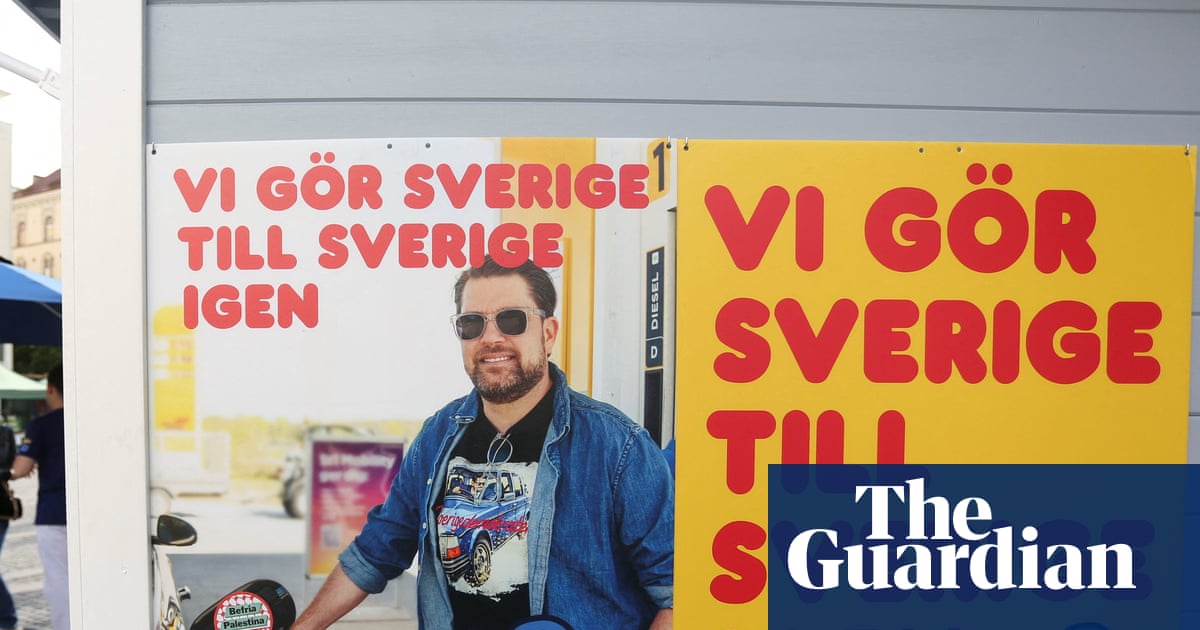
Voters across Sweden are casting ballots in an exceptionally tight national election, with final opinion polling showing a minute 0.3 percentage point gap between the country's left-leaning and right-leaning parliamentary blocs. The narrow balance leaves the composition of the next government uncertain and opens the realistic prospect of the anti-immigration, far-right Sweden Democrats securing direct power or formal parliamentary influence. According to reporting by journalist Miranda Bryant, the high-stakes contest has evolved into a critical test of Sweden’s national model, placing the Nordic country’s long-standing reputation as a global leader in human rights and social diplomacy under intense scrutiny. As polling stations operate nationwide, both major political alliances are preparing for complex post-election negotiations to construct a viable parliamentary majority.
Key facts
What happened
The final stretch of the Swedish parliamentary campaign has culminated in one of the closest political deadlocks in the nation's democratic history. Pre-election surveys published ahead of the vote highlighted a mere 0.3 percentage point divide between the governing left-leaning alliance and the challenger right-leaning coalition, leaving analysts unable to predict which side will secure a working majority.
At the center of the political battle are two opposing political coalitions competing for the 349 seats in the unicameral Riksdag. The left-leaning bloc is led by the Social Democrats, who have historically anchored Swedish public life and currently seek to maintain control of the executive branch. The right-leaning coalition is headed by the center-right Moderates, working in tandem with the Christian Democrats and the Liberals. However, the pivotal force within the right-leaning alliance is the Sweden Democrats (Sverigedemokraterna), an anti-immigration, right-wing populist party that has grown from political isolation into one of the country's largest electoral forces.
Reporting by Miranda Bryant indicates that the campaign was predominantly framed around issues that favor right-leaning platform proposals, specifically a surge in lethal gang violence, firearm offences, and integration hurdles associated with past immigration inflows. The political discourse largely moved away from traditional Scandinavian debates regarding public healthcare expansion and state spending, shifting instead toward law enforcement reform, stricter border controls, and energy security amid rising living costs. Because the polling margin between the two primary alliances remains virtually nonexistent, small fluctuations in voter turnout or minor shifts among fringe parties could determine which candidate receives the first mandate to form a cabinet.
Why it matters
The political stakes of the vote extend far beyond traditional party rivalry, touching upon the foundational principles of Sweden's governance model and its global profile. For generations, Sweden has been internationally recognized as an exemplar of Nordic social democracy, combining expansive public welfare systems with progressive social policies, generous asylum frameworks, and active multilateral diplomacy. The prospective inclusion of the Sweden Democrats in a governing alliance or as an indispensable legislative backer represents a fundamental departure from this long-standing political consensus.
A shift toward a right-leaning government dependent on far-right support would likely trigger immediate statutory changes regarding immigration thresholds, asylum criteria, and nationalization standards. Proposed platform policies include stricter deportation protocols, reduced quotas for refugee resettlement, and tougher residency requirements. Furthermore, domestic policy would see significant shifts in criminal justice legislation, including mandatory minimum sentences, expanded police surveillance powers, and dedicated stop-and-search zones aimed at curbing gang activity.
Economically and institutionally, the tight margin creates potential instability for legislative business. Reconciling the free-market economic preferences of traditional center-right parties with the protectionist welfare tendencies of the Sweden Democrats will require delicate fiscal negotiations. Internationally, European Union partners are closely monitoring the outcome, as a more nationalist leadership in Stockholm could alter Sweden's positions on European Union migration pacts, climate targets, and joint budget commitments.
The background
Understanding the significance of the election requires examining the mechanics of Swedish governance and the dramatic evolution of its party system over recent decades. Sweden operates under a parliamentary democratic framework anchored by the Riksdag. Every four years, Swedish citizens vote to fill all 349 seats through a party-list proportional representation system. To qualify for seat distribution, a political party must achieve at least 4% of the nationwide vote or 12% in a specific electoral district. To govern effectively without facing immediate parliamentary defeat, a prime minister must avoid a majority of 175 votes against them in the chamber.
For much of the 20th century, the Social Democratic Party dominated Swedish politics, establishing the famous Swedish social model known as "Folkhemmet" (the People's Home). This model combined high taxation and comprehensive social welfare with economic growth and strong trade union participation. Political dynamics were long characterized by predictable stability and coalition building among established center-left and center-right parties.
However, the emergence of the Sweden Democrats radically disrupted this historic equilibrium. Founded in 1988 with historical links to far-right and white nationalist movements, the party initially struggled for mainstream acceptance. It entered the Riksdag for the first time in 2010 after securing 5.7% of the vote, breaking the established consensus. In response, all traditional political parties established a formal "cordon sanitaire," agreeing to exclude the Sweden Democrats from legislative negotiations and executive power due to concerns over their ideology and rhetoric regarding ethnic identity and immigration.
This exclusion strategy led to prolonged political instability in subsequent national elections, as neither traditional bloc could secure an absolute majority without taking the Sweden Democrats into account. Following the 2018 national election, parliamentary deadlock persisted for over four months before a fragile government could be established. As public concern over gang-related shootings and integration difficulties grew throughout the late 2010s, the cordon sanitaire began to crumble. Mainstream center-right leaders, particularly within the Moderates and Christian Democrats, concluded that achieving a parliamentary majority was impossible without engaging the Sweden Democrats, setting the stage for the current election's competitive dynamic.
Reaction
The razor-thin polling margins and the realistic prospect of far-right influence have drawn intense reactions from political figures, civil society, and international observers. Reporting by Miranda Bryant highlights widespread concern among human rights groups and international commentators, who warn that the entry of the far right into government decision-making could damage Sweden's international standing as a champion of humanitarian values and minority protection.
Within Sweden, progressive groups, trade unions, and civil rights advocates have warned that a government reliant on the Sweden Democrats could undermine civil liberties, reduce foreign aid assistance, and weaken social cohesion. Opponents argue that proposed police measures and migration cuts threaten fundamental rights and risk further marginalizing immigrant communities.
Conversely, supporters of the right-leaning alliance maintain that the country's social stability demands an urgent shift in policy direction. Representatives from the Moderates and Sweden Democrats argue that previous administrations failed to address the systemic challenges of organized crime and unintegrated migrant populations. They contend that a firm approach to border control, combined with increased resources for law enforcement and stricter penal codes, is essential to restore public safety and restore public trust in state institutions.
What we don't know yet
Several critical elements of the outcome remain uncertain until the voting process concludes and official results are fully audited. First, the precise mathematical balance of the 349-seat Riksdag remains unknown, as even a shift of one or two seats could decide whether the left or right alliance can form a viable administration. The official count of advance ballots and international postal votes, which typically takes several days to complete, could prove decisive in such a close race.
Second, the structural nature of any resulting right-leaning administration remains unconfirmed. It is currently unclear whether the Sweden Democrats would be offered formal cabinet positions within a coalition government or whether they would agree to support a center-right minority cabinet through a binding legislative agreement without holding ministerial posts.
Third, the performance of smaller political parties remains a major variable. Parties hovering near the 4% national threshold, such as the Liberals or the Green Party, risk being excluded from parliament entirely if their vote share falls short, an outcome that would automatically redistribute seats and alter the majority threshold for both major blocs.
What to watch
Over the coming days and weeks, key procedural and political milestones will determine the national outcome. The first concrete indicator will be the publishing of verified preliminary results by the Swedish Election Authority (Valmyndigheten), followed by the official certification of seat allocations once all postal and overseas ballots are counted.
Once seat totals are certified, attention will center on the Speaker of the Riksdag, who holds the constitutional duty to initiate formal consultations with party leaders. The Speaker will appoint a candidate to attempt government formation, initiating a structured negotiation period. Observers should watch for the release of formal policy agreements negotiated between coalition partners, which will reveal the extent of legislative concessions made to secure majority support.
Key policy areas to monitor during these negotiations include proposed caps on asylum applications, modifications to criminal sentencing laws, energy taxation adjustments, and changes to the foreign aid budget. Additionally, responses from European partners and international financial markets will offer an early signal of how a potential right-ward shift in Swedish governance is received globally.
This account relies on reporting provided by Miranda Bryant, detailing the final polling statistics, political party dynamics, and broader societal implications of Sweden's general election.
How this story was produced
This report was written by The Global Wire newsroom from reporting first published by Miranda Bryant. We verify the core facts against the original report, write our own account, and add the background and consequences a short wire item leaves out. Drafting is AI-assisted inside an editor-supervised pipeline, and every story is checked for accuracy of attribution, structure and duplication before it appears — full detail in our AI and funding disclosure.
Spotted an error? Tell us at corrections@horizonglobalnews.com and read our corrections policy or editorial standards.





Reader comments
Loading comments…