

Smuggling Networks Deploy Larger Inflatables for English Channel Crossings
Human traffickers are using overcrowded 13-meter craft to transport hundreds of migrants across the English Channel, according to reporting by The Telegraph.
By The Global Wire Newsroom · Reported from Nick Gutteridge; Max Stephens; Vivian Song; Charles Hymas
Link preview · horizonglobalnews.com
Smuggling Networks Deploy Larger Inflatables for English Channel Crossings
Human traffickers are using overcrowded 13-meter craft to transport hundreds of migrants across the English Channel, according to reporting by The Telegraph.
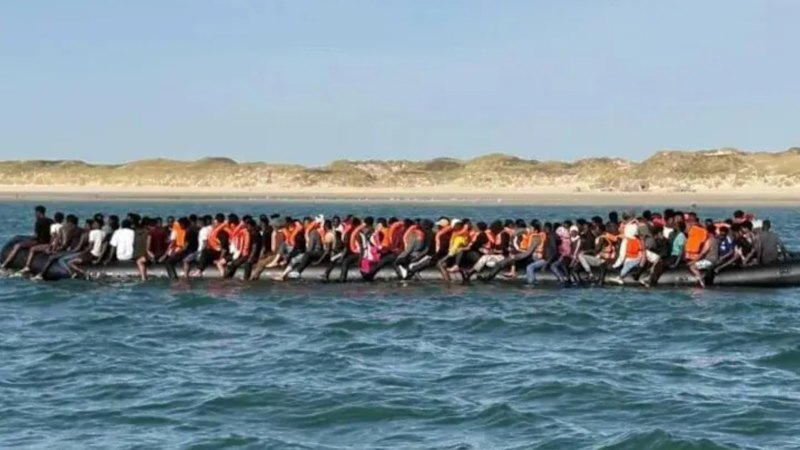
Human smuggling networks operating along the northern coastline of France are deploying larger, heavily packed inflatable craft to carry migrants across the English Channel into the United Kingdom, according to reporting by The Telegraph.
In a report by journalists Nick Gutteridge, Max Stephens, Vivian Song, and Charles Hymas, researchers and maritime authorities observed a shift toward high-capacity inflatable vessels designed to carry extreme passenger loads. Smugglers have been documented packing up to 230 individuals onto single craft measuring 13 meters in length. The vessels, manufactured in China, are being loaded to maximum capacity before launching from coastal sites in France for the maritime passage.
Escalation in Vessel Size and Passenger Loads
The utilization of 13-meter rigid-hulled and soft-hulled inflatables marks an operational shift for organized crime groups coordinating unauthorized maritime crossings. Previous years saw smaller craft deployed with lower overall passenger numbers, but law enforcement measures and supply constraints have driven networks to maximize the payload of every individual voyage.
According to the reporting by The Telegraph, packing as many as 230 people onto a single 13-meter inflatable creates severe physical density aboard the vessel. Passengers are typically seated in tight formation along the rubber pontoons and across the floorboards of the craft. This level of crowding limits mobility, increases the risk of structural failure, and drastically reduces the freeboard—the distance between the waterline and the top edge of the boat's side.
Maritime Safety Hazards in the Channel
The English Channel is among the busiest and most regulated commercial shipping lanes in the world, traversed daily by hundreds of cargo ships, container vessels, and industrial tankers. The introduction of heavily laden, low-profile inflatables into these sea lanes poses significant navigational hazards.
Maritime safety experts note that overcrowded rubber vessels carry heightened risks of capsizing, flooding, and structural collapse. Standard 13-meter inflatables are not engineered to safely support the weight of over two hundred adults alongside heavy outboard motors and fuel containers. When craft are loaded beyond safe weight thresholds, any sudden movement by passengers or impact from wave action can cause seawater to breach the sides, leading to rapid swamping.
Furthermore, the physical conditions aboard these vessels present direct health risks. Exhaust fumes from low-horsepower outboard engines, mixed with saltwater splashing into the hull, frequently create toxic chemical burns for individuals seated near the stern. The extreme crowding also increases the likelihood of crush injuries or asphyxiation if panic occurs while at sea.
Supply Logistics and Manufacturing Equipment
The supply chains supplying small boats to European trafficking networks rely heavily on industrial maritime equipment produced overseas. The 13-meter dinghies identified in the crossings are manufactured in factories in China before being exported through international logistics hubs.
Criminal networks procure these craft in bulk alongside high-capacity outboard engines, life jackets, and hand pumps. The equipment is typically transported across multiple European borders via land routes, stored in covert warehouses or forested areas near the northern French coastline, and brought to beaches shortly before launch to evade detection by police surveillance.
Governments in Western Europe have targeted these equipment supply chains as part of broader enforcement strategies. European border control agencies and intelligence services have sought to track the shipment of large inflatables and outboard motors from overseas manufacturers, attempting to seize maritime hardware at transit points before it reaches the coastal launch sites in France.
Coastal Surveillance and Interdiction Challenges
French maritime policing units and shore-based patrols face operational difficulties in preventing launches along the extensive coastline of the Pas-de-Calais region. Smuggling groups frequently alter launch locations, utilizing remote stretches of beach and operating under cover of darkness or during foggy weather conditions.
Once a vessel enters French territorial waters, maritime law enforcement protocols focus on life safety over physical intervention. Puncturing or forcibly stopping an overcrowded craft in open water risks causing mass casualties. Consequently, French naval and coast guard units typically escort the inflatables until they reach international waters or require rescue, monitoring the craft's stability and status.
Upon crossing into British territorial waters, emergency response duties shift to HM Coastguard and the Royal National Lifeboat Institution (RNLI), along with Border Force personnel. Patrol vessels intercept the craft to transfer occupants to shore for processing, medical evaluation, and initial asylum screening at facilities in southern England.
Policy and Regulatory Responses
The strategy of deploying larger vessels reflects adaptations made by human trafficking syndicates in response to tightened border security and anti-smuggling policy initiatives. As European authorities step up coastal enforcement and land-based interdictions, organized networks attempt to minimize their operational frequency by moving larger volumes of people per transit.
Under international maritime conventions, including the United Nations Convention on the Law of the Sea (UNCLOS) and the International Convention for the Safety of Life at Sea (SOLAS), sovereign nations and passing vessels are bound by legal obligations to render assistance to any boat in distress. This framework ensures that search and rescue assets prioritize saving lives over immigration enforcement once a craft demonstrates signs of severe overcrowding or instability.
Discussions between British and French officials remain focused on intelligence-sharing mechanisms, joint police intelligence operations, and financial support for beach monitoring equipment. However, the ongoing movement of Chinese-manufactured mega-dinghies highlights the persistent capacity of international smuggling networks to secure maritime hardware and execute large-scale unauthorized crossings.
This article includes information originally reported by Nick Gutteridge, Max Stephens, Vivian Song, and Charles Hymas for The Telegraph.
How this story was produced
This report was written by The Global Wire newsroom from reporting first published by Nick Gutteridge; Max Stephens; Vivian Song; Charles Hymas. We verify the core facts against the original report, write our own account, and add the background and consequences a short wire item leaves out. Drafting is AI-assisted inside an editor-supervised pipeline, and every story is checked for accuracy of attribution, structure and duplication before it appears — full detail in our AI and funding disclosure.
Spotted an error? Tell us at corrections@horizonglobalnews.com and read our corrections policy or editorial standards.





Reader comments
Loading comments…