

Search operations stall in flooded Nepalese districts as thousands remain missing
Rescuers in Nepal face severe terrain obstacles as monsoon floodwaters leave thousands missing and isolate remote mountain communities.
By The Global Wire Newsroom · Reported from Hannah Ellis-Petersen; Gaurav Pokharel; Ahmer Khan
Link preview · horizonglobalnews.com
Search operations stall in flooded Nepalese districts as thousands remain missing
Rescuers in Nepal face severe terrain obstacles as monsoon floodwaters leave thousands missing and isolate remote mountain communities.
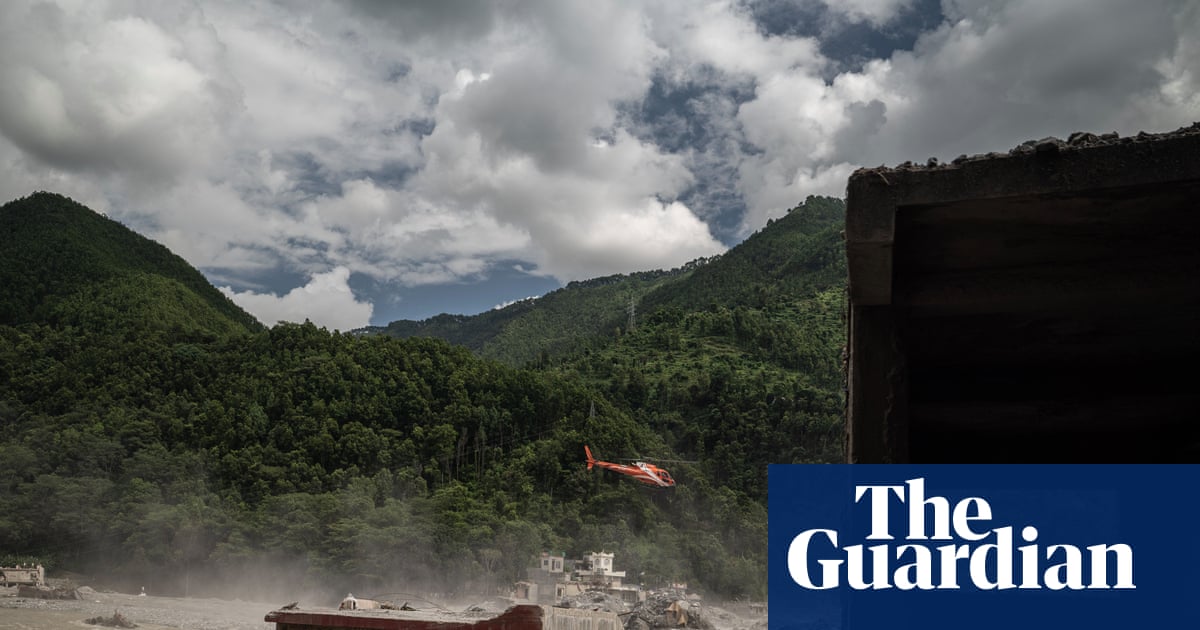
Rescuers and humanitarian agencies in Nepal faced severe obstacles early this September as catastrophic flooding across the country left thousands of people unaccounted for and cut off entire mountain communities from relief operations. Reporting from the field by Hannah Ellis-Petersen, Gaurav Pokharel, and Ahmer Khan highlights a worsening humanitarian emergency in Nepal's most heavily impacted districts, where destroyed bridges, swollen rivers, and landslides have prevented emergency crews from reaching affected populations. Emergency services are attempting to navigate treacherous terrain and washed-out road networks to provide medical care, emergency shelter, and potable water to survivors trapped in inundated zones.
Key facts
What happened
The crisis unfolded as intense torrential rainfall battered Nepal's river valleys and mountain watersheds, causing rivers to burst their banks and triggering mudslides across vulnerable mountain slopes. According to reporting by Hannah Ellis-Petersen, Gaurav Pokharel, and Ahmer Khan, the resulting floodwaters submerged homes, swept away critical bridge linkages, and buried transportation corridors under thick layers of mud and rock debris.
In the districts hit hardest by the deluge, entire settlements have been isolated as communications networks failed and electrical infrastructure was knocked offline. Local authorities and emergency personnel attempting to reach impacted settlements found major highway corridors blocked by landslide deposits, while raging torrents made river crossings impossible for conventional vehicles.
As emergency crews attempt to reach rural settlements, search-and-rescue teams face hazardous conditions. Emergency responders have been forced to rely on foot patrols and limited aerial reconnaissance where weather permits, but persistent rain and cloud cover have repeatedly grounded helicopter transport. Thousands of residents remain missing as family members and local volunteers search through waterlogged debris in search of survivors.
In inundated towns and villages, surviving residents have gathered on elevated terrain, rooftops, and temporary emergency shelters. Supplies of clean drinking water have been severely contaminated by floodwaters, raising immediate sanitation concerns. Local medical facilities in the worst-hit districts report operating under extreme constraints, with limited power, shortages of essential medicines, and damaged structural facilities.
Why it matters
The human toll and physical devastation associated with this disaster carry immediate and severe consequences for human health, food security, and regional economic stability in Nepal. The reported disappearance of thousands of people indicates that the ultimate mortality count could rise significantly as search crews reach isolated mountain hamlets.
From a public health perspective, the contamination of municipal water supplies and wells by floodwaters creates an urgent risk of waterborne disease outbreaks, including cholera, acute gastroenteritis, and typhoid. In disaster-affected districts where sanitation infrastructure has collapsed, the inability of health authorities to deliver clean water and water-purification tablets could amplify human suffering beyond the direct physical impact of the floodwaters.
Economically, Nepal's agrarian communities in rural districts bear a disproportionate share of flood-induced losses. In rural river valleys, agricultural fields containing standing food crops have been inundated or stripped away by erosion, destroying family livelihoods and threatening local food supplies for months ahead. Additionally, damage to national road networks and bridges halts internal trade, disrupts supply chains between rural districts and urban centers like Kathmandu, and inflates transport costs for essential goods.
The destruction of critical infrastructure also burdens Nepal's national budget. Rebuilding mountain roads, bridges, power transmission lines, and water distribution networks requires substantial capital investment in a country already constrained by fiscal limitations and reliant on foreign aid partners for major infrastructure rehabilitation.
The background
To understand the scale of the emergency, it is necessary to examine the geographical and climatic context of Nepal's monsoon ecosystem. Nepal, a landlocked nation of roughly 30 million people situated along the southern slopes of the Himalayas, experiences its primary rainfall season during the South Asian summer monsoon, which spans from June through September every year. During this four-month period, the country receives upwards of 80 percent of its total annual precipitation.
The topography of Nepal—ranging from the low-lying Terai plains in the south to the high Himalayan range in the north—makes its human settlements highly susceptible to hydrological hazards. Heavy rainfall on steep, geologically young mountain slopes frequently triggers sudden mass movements, including debris flows, rockfalls, and landslides. These geological hazards often dam fast-flowing mountain rivers, creating unstable natural impoundments that can burst unpredictably and unleash catastrophic flash floods on downstream communities.
In recent years, Nepal has suffered repeated devastating flood events during the monsoon months. Severe flooding in 2017 affected millions of people across the Terai belt, causing extensive agricultural destruction and loss of life. More recently, intense rain events in September 2024 brought record rainfall to the Bagmati river basin and the Kathmandu valley, resulting in more than 200 fatalities, destroyed infrastructure, and widespread landslides that cut off the capital city from the rest of the nation.
Experts and regional climate bodies have noted that climate change is altering traditional monsoon patterns across the Himalayan region. While total seasonal rainfall volumes vary, the frequency of high-intensity, short-duration extreme precipitation events has increased. This trend, combined with rapid urban expansion, deforestation along mountain slopes, and uncoordinated road construction along fragile hillsides, has significantly heightened rural and urban vulnerability to flooding.
The primary government entity responsible for disaster coordination in Nepal is the National Disaster Risk Reduction and Management Authority (NDRRMA), established under the Ministry of Home Affairs following the passage of the Disaster Risk Reduction and Management Act of 2017. Despite improvements in early warning systems and disaster planning over recent years, early response capabilities in remote mountain districts remain constrained by geography, equipment shortages, and logistical barriers.
Reaction
Following the disaster, national authorities and humanitarian organizations faced immediate pressure to clear blocked transportation arteries and deploy emergency assistance. While explicit public statements from specific government ministers were not detailed in the initial field dispatch by Ellis-Petersen, Pokharel, and Khan, standard disaster protocol in Nepal involves the mobilization of the Nepalese Army, the Armed Police Force, and the Nepal Police for search, rescue, and evacuation operations.
Non-governmental organizations, including the Nepal Red Cross Society and international relief agencies operating within the country, are expected to launch emergency appeals to supply dry food rations, tarpaulins, water purification tablets, and hygiene kits to displaced households.
At the international level, bilateral donor partners—including neighboring India and China, as well as multilateral bodies such as the United Nations Office for the Coordination of Humanitarian Affairs (OCHA)—typically assess requests from the Nepalese government for technical assistance, heavy equipment, and financial aid to support emergency operations and subsequent restoration of vital infrastructure.
What we don't know yet
Several critical elements of the crisis remain unconfirmed or subject to ongoing evaluation:
Resolving these uncertainties is essential for international donor agencies and government officials as they attempt to allocate emergency funding and plan long-term reconstruction strategies.
What to watch
In the coming days and weeks, key developments will determine the course of relief and recovery operations:
This report is based on original field reporting by Hannah Ellis-Petersen, Gaurav Pokharel, and Ahmer Khan.
How this story was produced
This report was written by The Global Wire newsroom from reporting first published by Hannah Ellis-Petersen; Gaurav Pokharel; Ahmer Khan. We verify the core facts against the original report, write our own account, and add the background and consequences a short wire item leaves out. Drafting is AI-assisted inside an editor-supervised pipeline, and every story is checked for accuracy of attribution, structure and duplication before it appears — full detail in our AI and funding disclosure.
Spotted an error? Tell us at corrections@horizonglobalnews.com and read our corrections policy or editorial standards.





Reader comments
Loading comments…