

Nithya Raman Pledges Los Angeles Film Office to Combat Production Decline
Los Angeles mayoral candidate Nithya Raman proposed a municipal film office to address declining shoot days and echoed voter frustration with city leadership.
By The Global Wire Newsroom · Reported from Tess Patton
Link preview · horizonglobalnews.com
Nithya Raman Pledges Los Angeles Film Office to Combat Production Decline
Los Angeles mayoral candidate Nithya Raman proposed a municipal film office to address declining shoot days and echoed voter frustration with city leadership.
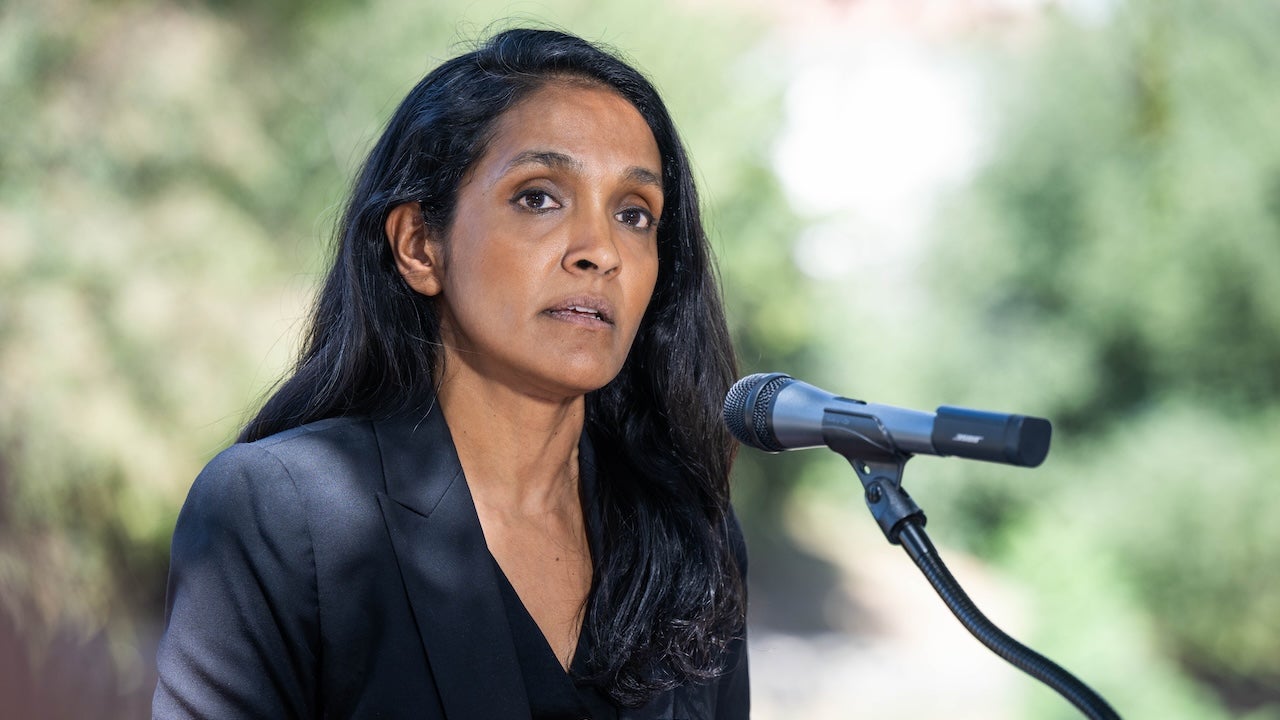
Nithya Raman, a member of the Los Angeles City Council and candidate for mayor, pledged on October 1, 2026, to establish a dedicated municipal film office in an effort to stem the steep decline of local film and television production. In remarks reported by journalist Tess Patton, Raman stated that she shared the frustration expressed by local residents and high-profile voters regarding the city’s current governance and economic direction. The proposal targets one of Southern California’s foundational economic engines, positioning entertainment workforce retention as a central pillar of her civic strategy.
Key facts
What happened
According to reporting by Tess Patton, Los Angeles City Councilmember Nithya Raman outlined a policy platform designed to directly support the region's struggling entertainment sector. Speaking as part of her mayoral campaign, Raman announced that, if elected, her administration would establish an executive-level municipal film office housed directly within city government.
During her remarks, Raman addressed mounting dissatisfaction among Los Angeles voters regarding city leadership and local government operations. She acknowledged public critiques voiced by local figures, including reality television personality Spencer Pratt, who had publicly vented frustration with municipal governance and city services. Raman stated that she shares those underlying concerns, arguing that public exasperation highlights real structural flaws in how Los Angeles delivers basic services and supports its key economic drivers.
To address industry concerns, Raman proposed bringing film administration closer to the mayor’s desk. The planned municipal office would be charged with overseeing production logistics, coordinating city departments, advocating for streamlined street closures, and negotiating inter-agency coordination to lower operational hurdles for location filming.
Why it matters
The economic health of the entertainment industry remains vital to the broader Southern California ecosystem. While high-profile actors and studio executives dominate public headlines, the vast majority of entertainment employment consists of below-the-line union crew members, including camera technicians, gaffers, set builders, costumers, and transportation drivers. Key labor organizations representing these workers, such as the International Alliance of Theatrical Stage Employees (IATSE) and Teamsters Local 399, have experienced prolonged unemployment among their ranks as production volume contracted.
Beyond direct set employment, location filming drives significant revenue into local small businesses, including catering vendors, equipment rental yards, vehicle fleets, security agencies, and retail shops. When production leaves the region, municipal tax bases and neighborhood businesses suffer compounding secondary losses.
Establishing an official city film office represents a structural shift in municipal administration. For decades, Los Angeles has relied on external non-profit contracting to process film logistics. Creating a dedicated agency inside city hall would grant the mayor's office direct operational authority to review local municipal fees, adjust police and fire detail protocols, and prioritize entertainment retention across municipal departments.
Politically, the policy allows Raman—a prominent progressive city official—to address middle-class job protection and business retention while explicitly acknowledging widespread voter dissatisfaction with city operations.
The background
Los Angeles has faced relentless pressure from rival production centers for more than two decades. The trend known as "runaway production" initially saw film and television projects relocate to Canadian hubs such as Vancouver and Toronto. In subsequent years, domestic competition expanded dramatically as states like Georgia, New York, and New Mexico introduced aggressive, refundable tax credits and constructed state-of-the-art soundstage facilities. Overseas jurisdictions, including the United Kingdom, Hungary, and Australia, have similarly enticed major studio features away from Southern California.
The local industry suffered unprecedented shocks in recent years. Following the severe disruption of the COVID-19 pandemic in 2020, the industry experienced a temporary surge in production during the peak of streaming service expansion. However, in 2023, Hollywood was paralyzed by twin labor strikes. The Writers Guild of America (WGA) struck for 148 days, while the Screen Actors Guild-American Federation of Television and Radio Artists (SAG-AFTRA) struck for 118 days. The combined work stoppages shut down physical production for nearly half a year.
Following the resolution of the strikes, post-strike recovery failed to materialize at anticipated levels. Media conglomerates instituted aggressive cost-cutting measures, reduced scripted series orders, and shifted budgets toward lower-cost regions. Quarterly data released by FilmLA—the non-profit organization that manages filming permits for the City and County of Los Angeles—has consistently showed on-location shoot days remaining well below historical averages.
Historically, film permitting in Los Angeles has operated through FilmLA, a private 501(c)(4) non-profit organization operating under administrative contracts with municipal and county authorities. While FilmLA manages logistics, neighbor notifications, and permit processing, it lacks statutory power to change city municipal codes, revise police detail fee structures, or alter municipal department policy.
Nithya Raman was elected to represent Los Angeles City Council District 4 in 2020 and secured re-election in 2024. Her district encompasses prominent entertainment nodes, including parts of Hollywood, Studio City, Sherman Oaks, Encino, and Silver Lake, giving her a constituency heavily populated by entertainment industry workers, independent production companies, and historic studio lots.
Reaction
Reactions to proposals concerning Los Angeles entertainment policy reflect a heightened sense of urgency across Southern California's creative community. Below-the-line trade unions and local business coalitions have spent years pressing elected officials for relief from rising municipal costs and bureaucratic friction that make filming on Los Angeles streets increasingly expensive compared to rival jurisdictions.
While specific formal responses to Raman's proposal were not detailed in the original reporting, industry stakeholders routinely advocate for reduced city service fees—such as mandatory off-duty LAPD traffic control officers and LAFD safety monitors—which line producers cite as primary factors pushing independent projects out of the city.
In the broader political landscape, civic commentators expect competing candidates in the Los Angeles mayoral race to offer alternative economic platforms. As voter frustration over housing affordability, public safety, and infrastructure persists, candidates across the political spectrum are under pressure to demonstrate pragmatic administrative reforms.
What we don't know yet
Several administrative and financial elements of Raman’s proposal remain unclarified in available reports. It is not yet clear how a newly established municipal film office would coexist with or alter the city’s long-standing contractual relationship with FilmLA. The proposal leaves open whether the new office would absorb FilmLA’s permit-processing functions or serve as a separate executive advocacy body.
Additionally, the specific budgetary requirements, personnel size, and funding mechanisms for the proposed office have not been outlined. It remains unknown whether the proposal will include specific legislative pushes to reduce municipal permitting fees, streamline police detail requirements, or offer local tax credits to offset city business taxes for resident productions.
What to watch
Key developments to monitor as the mayoral campaign progresses include:
This account is based on original reporting published by Tess Patton.
How this story was produced
This report was written by The Global Wire newsroom from reporting first published by Tess Patton. We verify the core facts against the original report, write our own account, and add the background and consequences a short wire item leaves out. Drafting is AI-assisted inside an editor-supervised pipeline, and every story is checked for accuracy of attribution, structure and duplication before it appears — full detail in our AI and funding disclosure.
Spotted an error? Tell us at corrections@horizonglobalnews.com and read our corrections policy or editorial standards.






Reader comments
Loading comments…