

Modern Single-Cell Biology Validates and Complicates Waddington's Epigenetic Landscape Metaphor
Recent experimental advances in cellular profiling offer empirical backing for C.H. Waddington's 1950s conceptual model of cell differentiation while revealing unexpected complexity.
By The Global Wire Newsroom · Reported from Philip Ball October 9
Link preview · horizonglobalnews.com
Modern Single-Cell Biology Validates and Complicates Waddington's Epigenetic Landscape Metaphor
Recent experimental advances in cellular profiling offer empirical backing for C.H. Waddington's 1950s conceptual model of cell differentiation while revealing unexpected complexity.
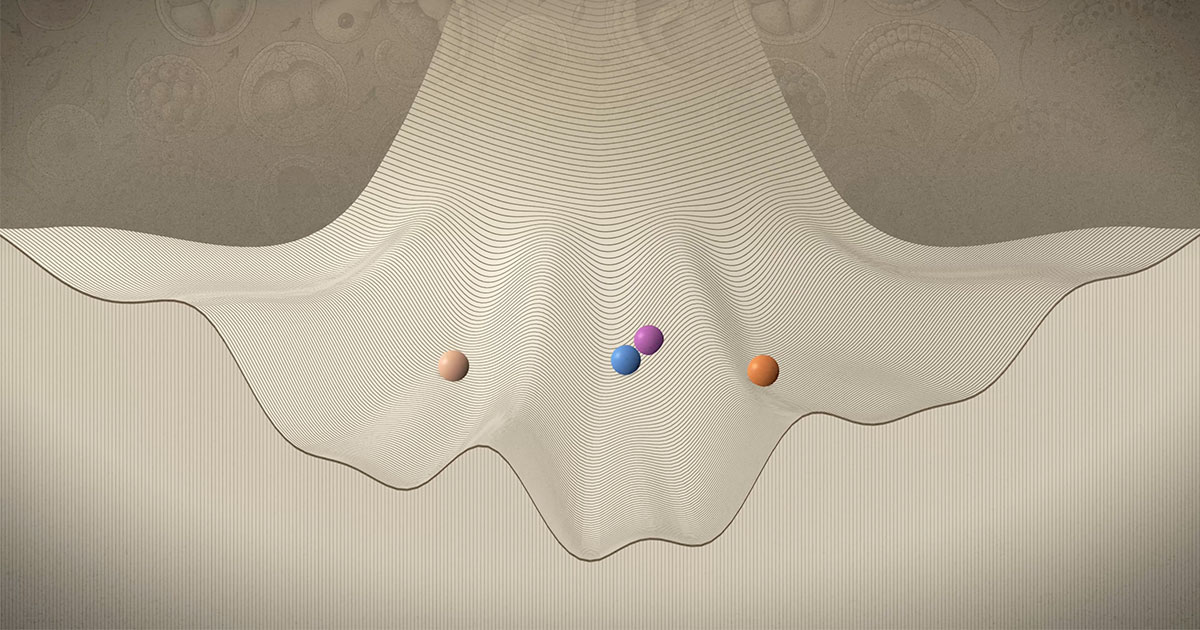
Modern advances in single-cell technology and mathematical modeling are transforming one of biological science's most enduring metaphors into a quantitative physical reality. For more than seven decades, developmental biologists have relied on a conceptual framework introduced by British scientist Conrad Hal Waddington: an embryonic stem cell depicted as a marble rolling down a corrugated, sloping landscape, selecting divergent valleys as it specializes into specific tissue types. Recent experimental work is now directly measuring and mapping the mathematical properties of these conceptual terrains, confirming Waddington's visionary intuition while revealing that cellular development is significantly more flexible and dynamic than originally envisioned, according to reporting by Quanta Magazine.
Key facts
What happened
The transition of Waddington's conceptual model into empirical science has accelerated as computational tools match the resolution of modern laboratory instruments. In Waddington's original formulation, the landscape surface was imagined as an outcome of deeper genetic mechanisms: beneath the rolling terrain, a network of pegs driven into the ground represented individual genes, connected by tensioned flexible ropes to the landscape above. As gene activity changed, the tension on the ropes shifted the contours of the valleys and ridges, guiding the cell along specific developmental pathways.
According to reporting by Quanta Magazine, contemporary systems biologists and physicists are now constructing these surfaces using direct measurements of living cells. By deploying single-cell RNA sequencing, laboratory researchers can measure the expression levels of thousands of genes within individual cells simultaneously. When computational algorithms analyze thousands of these cellular snapshots collected across different developmental stages, they construct high-dimensional state spaces. Mathematical techniques such as dimensionality reduction project these multi-dimensional spaces into two- and three-dimensional landscapes that strikingly mirror Waddington's original sketches.
However, modern data has also introduced significant complexity to the traditional picture. Where Waddington envisioned a largely one-way, deterministic descent governed by fixed downhill channels, empirical measurements show that cellular motion is inherently stochastic. Cells do not merely roll down pre-determined channels; they undergo random fluctuations driven by cellular noise. Under certain biological conditions or experimental interventions, cells can cross the elevated ridges separating valleys, linger in intermediate meta-stable states, or even reverse direction and move upward toward less differentiated stem-like states.
Why it matters
The quantitative validation and refinement of the epigenetic landscape model have profound implications across stem cell biology, regenerative medicine, oncology, and synthetic bioengineering. In developmental biology, having an accurate mathematical framework for cell fate decisions allows researchers to move beyond qualitative descriptions toward quantitative predictions of how embryos develop and how tissues self-organize.
In regenerative medicine, the ability to map cellular terrains offers a blueprint for reprogramming adult cells. Therapies that aim to convert somatic cells—such as skin fibroblasts—into induced pluripotent stem cells or directly transdifferentiate them into functional heart or neural cells require guiding cells across high topological barriers. Understanding the precise height and shape of these energy barriers allows bioengineers to select optimal chemical and genetic interventions to lower the ridges, drastically improving the efficiency and safety of cellular therapies.
In oncology, cancer can be reinterpreted through the lens of landscape dynamics. Malignant transformation often involves cells escaping their normal tissue valleys by breaching epigenetic barriers, allowing them to slide into aberrant, highly proliferative states. Mapping these dysregulated landscapes provides oncologists with potential targets for therapeutic intervention, enabling the design of treatments aimed at restoring normal topological barriers or pushing cancer cells into terminal, non-dividing states.
The background
Conrad Hal Waddington (1905–1975), a British biologist and philosopher working at the University of Edinburgh, first coined the term "epigenetics" in 1942 to describe the complex interaction between genes and their environment that gives rise to a phenotype. In his landmark 1957 book The Strategy of the Genes, Waddington published his iconic drawing of the epigenetic landscape, illustrated by artist John Piper. At the time, modern molecular biology was in its infancy; James Watson and Francis Crick had published the structure of DNA only four years prior, in 1953, and the concept of gene regulatory networks was purely theoretical.
For decades, Waddington's drawing remained a powerful educational illustration rather than a quantitative working tool. Conventional biological assays required destroying millions of cells together, producing an averaged snapshot of gene expression that erased the distinct molecular states of individual cells. Consequently, scientists could not trace the continuous path of a single cell as it made fate choices.
The landscape model experienced a major conceptual shift in 2006, when Japanese researcher Shinya Yamanaka and his team demonstrated that introducing just four transcription factors—subsequently known as the Yamanaka factors—could reprogram mature adult skin cells back into a pluripotent stem cell state. This breakthrough proved that cellular differentiation is not an irreversible, one-way downhill slide, earning Yamanaka the Nobel Prize in Physiology or Medicine in 2012.
Simultaneously, the development of high-throughput single-cell RNA sequencing (scRNA-seq) in the late 2000s and 2010s revolutionized cellular analysis. By allowing researchers to profile the transcriptomes of thousands of individual cells in a single experiment, scRNA-seq provided the raw data necessary to build data-driven potential energy surfaces, fulfilling Waddington's vision through modern computational physics.
Reaction
The synthesis of historical intuition and modern quantitative analysis has generated widespread enthusiasm among systems biologists and biophysicists, alongside cautious debate regarding mathematical boundaries. Researchers appreciate that Waddington's visual metaphor offers an intuitive bridge between complex genomic data and conceptual developmental mechanics.
However, theoretical physicists and bioinformaticians frequently caution against taking three-dimensional topographical visualizations too literally. Experts emphasize that a cell's true state space exists in a mathematical realm spanning thousands of dimensions corresponding to individual genes, microRNAs, and epigenetic modifications. Reducing these massive dimensions down to a simple 3D surface inevitably collapses critical biological information.
Furthermore, physical chemists note that biological systems operate far from thermodynamic equilibrium. Standard energy landscape models in physics assume closed systems in thermal equilibrium, whereas living cells continuously consume energy and dissipate heat. Consequently, researchers working in computational biology are actively negotiating how to apply non-equilibrium statistical dynamics to accurately model cellular transitions without introducing mathematical artifacts.
What we don't know yet
Major empirical and theoretical gaps remain in translating cell state measurements into accurate landscape dynamics. A central limitation of current single-cell RNA sequencing technology is that it requires destroying the analyzed cells to measure their RNA content. As a result, current datasets consist of static snapshots of different individual cells taken at successive time points, rather than continuous tracking of a single living cell moving through state space over time. Researchers must rely on computational algorithms to reconstruct hypothetical continuous trajectories, a process known as pseudotime inference, which carries inherent assumptions.
Additionally, scientists do not yet fully understand how physical mechanical forces, tissue architecture, dynamic cell-to-cell signaling, and extracellular matrix microenvironments alter the topography of the landscape in real time. It remains unclear whether the underlying landscape remains static while cells navigate it, or if cellular movements dynamically reshape the landscape itself during morphogenesis.
What to watch
Key developments to monitor include the rapid evolution of live-cell lineage tracing paired with non-destructive single-cell imaging. Techniques using fluorescent reporters, CRISPR-based molecular recording tags, and high-speed optical microscopy are increasingly enabling researchers to follow individual living cells in real time as they traverse developmental states.
Watch also for breakthroughs in spatial transcriptomics and single-cell multi-omics, which measure gene expression, chromatin accessibility (via methods such as ATAC-seq), and spatial localization within intact tissues simultaneously. Integrating these multi-layered datasets into unified mathematical frameworks will reveal how spatial context reshapes cellular terrain. In clinical applications, monitor progress in computational software platforms designed to predict cellular reprogramming routes for cell-based therapies and regenerative medicine protocols.
This report incorporates analysis based on original reporting published by Quanta Magazine and written by science journalist Philip Ball on October 9, 2026.
How this story was produced
This report was written by The Global Wire newsroom from reporting first published by Philip Ball October 9. We verify the core facts against the original report, write our own account, and add the background and consequences a short wire item leaves out. Drafting is AI-assisted inside an editor-supervised pipeline, and every story is checked for accuracy of attribution, structure and duplication before it appears — full detail in our AI and funding disclosure.
Spotted an error? Tell us at corrections@horizonglobalnews.com and read our corrections policy or editorial standards.





/https://tf-cmsv2-smithsonianmag-media.s3.amazonaws.com/filer_public/55/9c/559c3e43-f760-48c8-978b-1faec1bf964e/nobel-chem.jpg)
Reader comments
Loading comments…