

Japan Launches Seventh Taigei-Class Submarine Featuring Advanced Lithium-Ion Propulsion
Tokyo expands its conventional attack fleet with a new 20-knot sub-surface vessel built for acoustic stealth and long-range target detection.
By The Global Wire Newsroom · Reported from Atharva Gosavi
Link preview · horizonglobalnews.com
Japan Launches Seventh Taigei-Class Submarine Featuring Advanced Lithium-Ion Propulsion
Tokyo expands its conventional attack fleet with a new 20-knot sub-surface vessel built for acoustic stealth and long-range target detection.
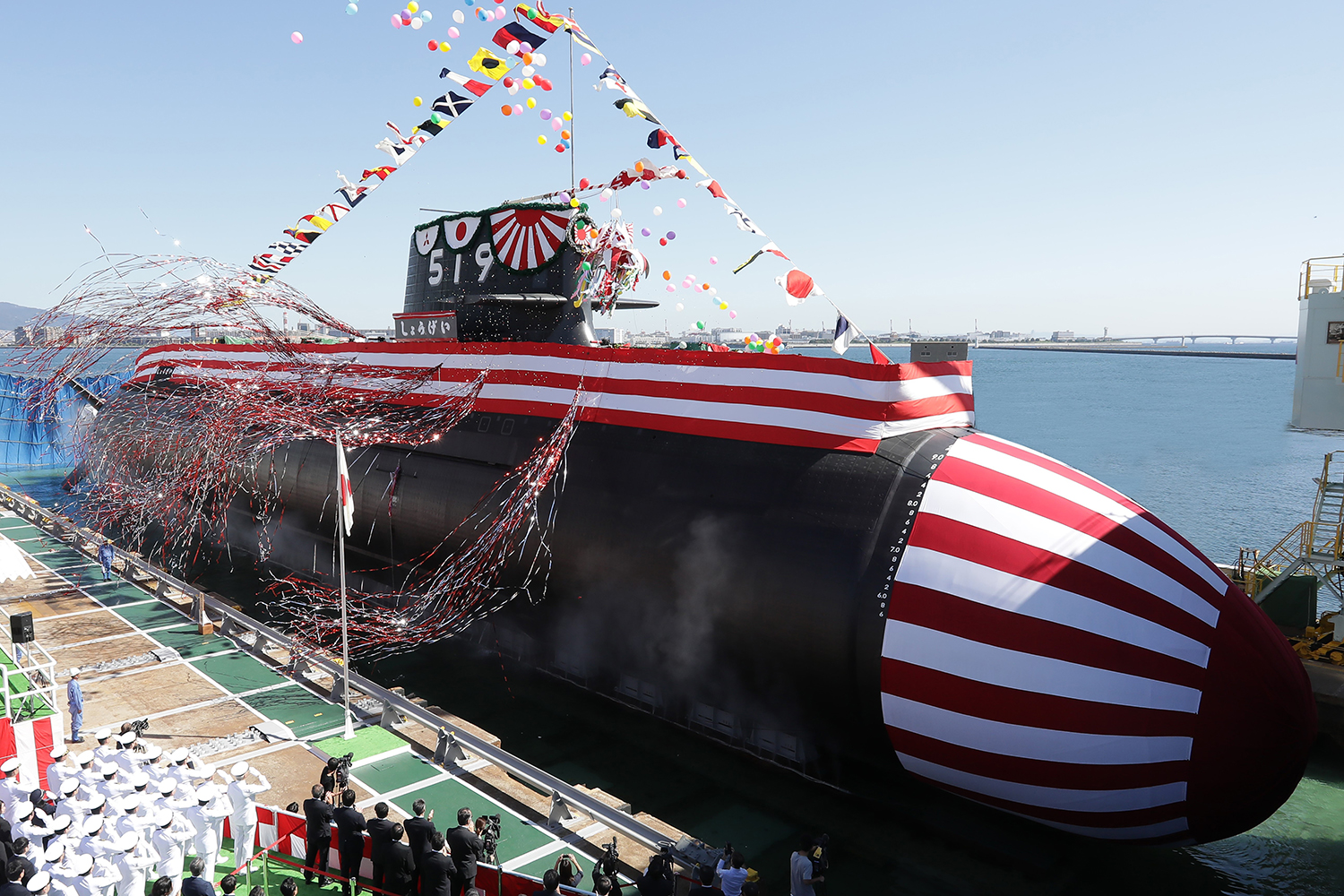
The Japan Maritime Self-Defense Force reached a major milestone in its sub-surface modernization program on October 9, 2026, with the official launch of its seventh Taigei-class attack submarine. Built around an advanced lithium-ion energy storage system, the newly unveiled vessel is engineered to reach submerged speeds of up to 20 knots while incorporating quiet machinery designs and modernized sensor systems for long-range target acquisition, according to reporting by defense analyst Atharva Gosavi. The development reflects Japan’s ongoing effort to maintain technological superiority across regional sea lanes amid expanding naval activity in the Western Pacific.
Key facts
What happened
On October 9, 2026, Japan formally introduced the seventh hull of the Taigei-class attack submarine program, as detailed in reporting by Atharva Gosavi. The vessel represents the latest addition to the Japan Maritime Self-Defense Force (JMSDF) fleet of conventional, non-nuclear attack submarines.
The newly launched vessel achieves a maximum submerged speed of 20 knots, relying on an electric propulsion system powered entirely by high-density lithium-ion batteries. Unlike traditional diesel-electric attack submarines that depend on conventional lead-acid battery banks paired with auxiliary Stirling-cycle Air-Independent Propulsion (AIP) engines, the Taigei architecture relies on lithium-ion power storage to deliver higher continuous electrical output, faster recharging cycles, and extended high-speed underwater endurance.
Alongside propulsion enhancements, the seventh Taigei-class submarine incorporates design modifications focused on signature reduction. Vibration-dampening mountings and sound-absorbing hull materials reduce acoustic emissions, while upgraded sonar hardware and signal processing systems provide improved detection capability against quiet surface ships and sub-surface targets.
Why it matters
The launch of the seventh Taigei-class submarine carries operational implications for maritime security across East Asia. Submarines powered by high-density lithium-ion technology possess distinct tactical advantages over older conventional designs. By removing the mechanical moving parts associated with legacy air-independent propulsion engines and providing double the energy capacity of traditional lead-acid batteries, lithium-ion vessels can maintain high submerged speeds—up to 20 knots—for longer periods without needing to surface or extend a snorkel to recharge.
For the JMSDF, this operational profile is crucial for monitoring critical maritime passages, including the East China Sea, the Sea of Japan, and strategic choke points throughout the First Island Chain such as the Miyako Strait. Submarines operating in these waters must remain undetected while performing surveillance, intelligence gathering, anti-submarine warfare, and sea-denial missions.
From an institutional and economic standpoint, Japan's choice to push the limits of conventional diesel-electric design offers a high-capability alternative to nuclear-powered attack submarines. Nuclear submarines require massive initial financial investments, specialized shore infrastructure, and significant political backing. By contrast, Japan’s refined lithium-ion submarine program delivers stealth, mobility, and extended submerged endurance within a conventional framework, serving as a model for allied navies considering future fleet modernization strategies.
The background
The Taigei class—translated from Japanese as "Big Whale"—was designed to succeed the Sōryū-class attack submarines, which entered frontline service beginning in 2009. While the first ten vessels of the 12-ship Sōryū fleet utilized lead-acid batteries alongside Swedish-designed Stirling AIP engines, the final two hulls of that class, JS Ōryū (commissioned in 2020) and JS Tōryū (commissioned in 2021), served as operational prototypes for lithium-ion propulsion.
Building upon those operational tests, Japan’s Ministry of Defense designed the Taigei class from the ground up to utilize lithium-ion power exclusively. The lead vessel, JS Taigei (SS-513), was launched in October 2020 and commissioned in March 2022. It initially served as a dedicated test-and-evaluation unit to validate updated combat direction systems, fiber-optic sonar arrays, and high-efficiency electrical grids before entering standard operational service. Subsequent sister ships—including JS Hakugei, JS Jingei, JS Raigei, JS Chōgei, and JS Geiryū—have systematically entered service to replace aging Oyashio-class attack submarines as they reach the end of their service lives.
Japan’s submarine construction pipeline operates under a dual-shipyard procurement system divided between two major defense shipbuilders located in Kobe: Mitsubishi Heavy Industries and Kawasaki Heavy Industries. The two shipyards alternate construction of JMSDF submarines on an annual basis. This operational cadence maintains specialized industrial capability, prevents technical bottlenecks, and ensures the continuous delivery of one new attack submarine per year.
This continuous procurement cycle directly fulfills the fleet structure mandates outlined in Japan’s National Security Strategy and National Defense Strategy. Japanese defense planning established a mandate to expand the operational attack submarine force from 16 to 22 vessels. Achieving this operational posture is considered essential by defense officials to ensure continuous coverage across Japan's extensive island chain and maintain open sea lines of communication that support the nation's maritime trade.
Reaction
While formal diplomatic responses from neighboring states were not immediately issued following the launch, international naval analysts regard the deployment of another Taigei-class unit as a deliberate confirmation of Japan’s commitment to undersea warfare capabilities. Regional naval defense planners closely monitor Japan’s submarine force, as JMSDF crews are recognized internationally for their expertise in shallow-water navigation, acoustic monitoring, and anti-submarine operations.
Naval experts note that the regular addition of silent, high-speed conventional submarines complicates military planning for regional powers seeking to project naval force into the Philippine Sea and wider Pacific Ocean. Furthermore, defense industry observers across Europe and the Indo-Pacific region continue to examine Japan’s real-world operational experience with lithium-ion power plants as other nations evaluate replacing traditional AIP technology in their own naval procurement programs.
What we don't know yet
Several technical and operational details concerning the seventh Taigei-class submarine remain unconfirmed in available reports. The specific hull name and designated pennant number (SS-519) have not been formally detailed in the available summary, as official vessel naming is traditionally announced during formal ceremony procedures led by Ministry of Defense leadership.
Additionally, available reporting does not specify whether the vessel was built at the Kobe facility of Mitsubishi Heavy Industries or Kawasaki Heavy Industries. Detailed specifications regarding the unit's onboard weapon loadout—such as the balance between traditional Type 89 or Type 18 heavy torpedoes and tube-launched UGM-84 Harpoon anti-ship missiles—remain classified. Furthermore, the precise schedule for upcoming sea trials and the target commissioning date for active fleet integration have not yet been made public.
What to watch
Over the next 12 to 18 months, key milestones will center on the vessel's transition from outfitting into harbor acceptance tests and deep-water sea trials. Following the completion of sea trials, the submarine will undergo formal commissioning into the JMSDF fleet, where it will be assigned to either Submarine Flotilla 1 based at Kure or Submarine Flotilla 2 based at Yokosuka.
Observers will also watch upcoming Japanese defense budget requests to track long-term procurement targets for additional Taigei-class hulls. A key point of focus will be whether future units in the production line will be modified to incorporate vertical launch systems (VLS) designed to fire long-range standoff land-attack missiles, a capability under consideration in broader Japanese defense planning. Finally, naval engineers will monitor operational reports regarding the performance, maintenance requirements, and long-term cell durability of the lithium-ion power system under sustained ocean deployments.
This report relies on original reporting published by defense analyst Atharva Gosavi.
How this story was produced
This report was written by The Global Wire newsroom from reporting first published by Atharva Gosavi. We verify the core facts against the original report, write our own account, and add the background and consequences a short wire item leaves out. Drafting is AI-assisted inside an editor-supervised pipeline, and every story is checked for accuracy of attribution, structure and duplication before it appears — full detail in our AI and funding disclosure.
Spotted an error? Tell us at corrections@horizonglobalnews.com and read our corrections policy or editorial standards.




/https://tf-cmsv2-smithsonianmag-media.s3.amazonaws.com/filer_public/55/9c/559c3e43-f760-48c8-978b-1faec1bf964e/nobel-chem.jpg)
Reader comments
Loading comments…