

Archaeological Discovery Highlights Artistic Shift During Rome's Imperial Transition
Archaeologists and art historians have detailed the discovery of a 2,000-year-old marble torso that captures the pivot from Republican traditions to Imperial identity in ancient Rome.
By The Global Wire Newsroom · Reported from Andrew Paul
Link preview · horizonglobalnews.com
Archaeological Discovery Highlights Artistic Shift During Rome's Imperial Transition
Archaeologists and art historians have detailed the discovery of a 2,000-year-old marble torso that captures the pivot from Republican traditions to Imperial identity in ancient Rome.
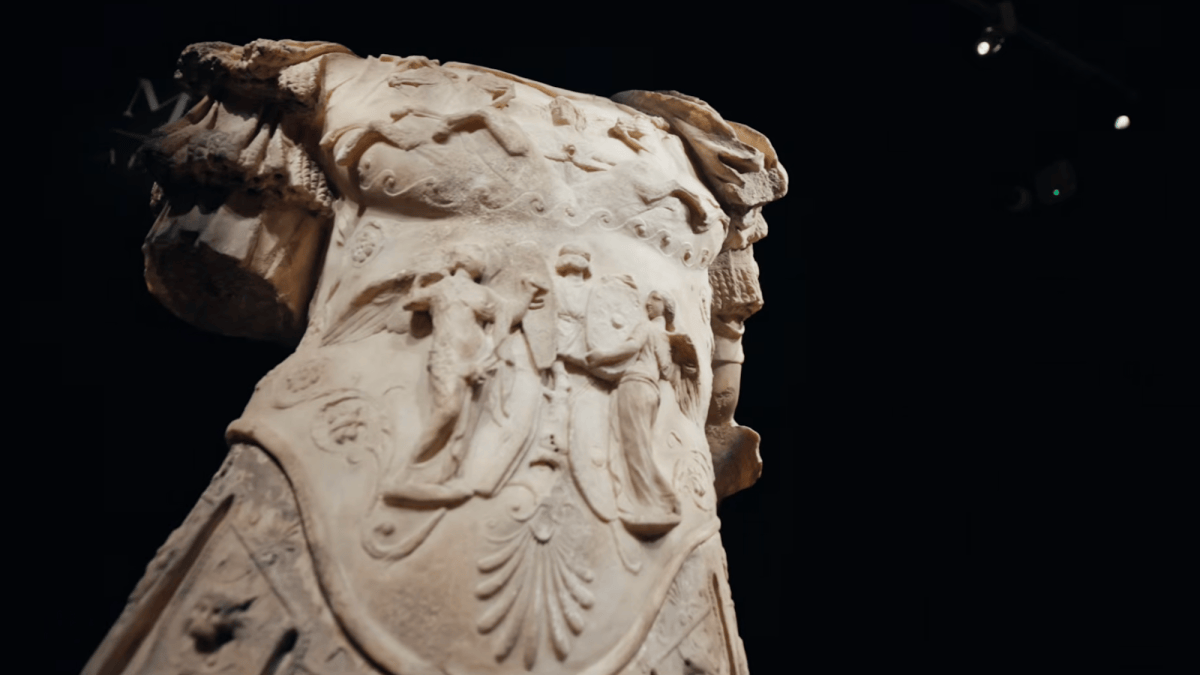
Archaeologists and art historians have highlighted the significance of a newly analyzed 2,000-year-old marble torso that captures a pivotal moment in the formation of Roman civilization. According to reporting by Andrew Paul, the ancient sculpture offers a vivid physical representation of the era when Rome consolidated its political authority and forged a distinct visual identity, bridging Greek artistic traditions with Roman ideological ambition. Scholars evaluating the piece noted that the artifact captures the essence of "Rome becoming Rome in a sculpture," serving as a critical material link to the structural and cultural transformations that reshaped the Mediterranean basin at the dawn of the Roman Empire.
Key facts
What happened
The analysis of the 2,000-year-old marble torso has drawn renewed attention to the visual language of ancient Mediterranean sculpture. As detailed in coverage by Andrew Paul, the torso represents an era when sculptors working in the Italian peninsula were actively refining their craft to reflect the changing political landscape of the Roman state. The marble figure, preserved without its original limbs and head, exhibits anatomical sculpting techniques characteristic of the late first century BCE and early first century CE.
During this period, Roman artisans adapted techniques honed by Classical and Hellenistic Greek masters, translating them into monumental public and private works across the growing territory of Rome. Researchers examining the torso emphasize that the carving demonstrates a refined understanding of human musculature, drapery, and proportion, while simultaneously departing from purely Greek stylistic predecessors. Instead of replicating Greek archetypes in isolation, the craftsmen responsible for such works engineered a synthesis that visually communicated power, order, and civic authority.
The artifact's physical attributes reflect the rigorous standards of Roman stone carving during the transition toward imperial rule. The careful carving of the torso's musculature and tension points illustrates how ancient sculptors managed stone to convey movement and presence. Scholars assessing the discovery point to the sculpture as a prime artifact illustrating the moment when Roman civic art moved away from eclectic borrowed styles toward a cohesive, self-assured national aesthetic.
Why it matters
The visual culture of ancient civilizations is rarely a matter of simple decoration; in classical antiquity, public and private statuary served as an essential medium of statecraft, religious devotion, and social stratification. For an empire without modern mass communications, stone sculptures were primary vectors through which authority, law, divine favor, and cultural values were communicated across vast territorial spans. The identification of a marble torso that captures the moment of "Rome becoming Rome" carries profound implications for understanding how visual media accompanied political consolidation.
Art historians and classical archaeologists study shifts in sculptural style to trace broader structural changes in society. When Roman sculptors altered their treatment of the human body—moving from the hyper-realistic, aged depictions of the late Republic to idealized, heroic forms in the early Empire—they were reflecting a fundamental reordering of power dynamics. Republican statuary had traditionally favored verism, an artistic approach that emphasized wrinkles, receding hairlines, and signs of age to signal wisdom, military service, and devotion to the republic's senatorial traditions. By contrast, the emerging imperial style embraced idealized youth, symmetry, and divine proportions, establishing a visual canon that presented rulers and deities as eternal and supreme.
Furthermore, the material aspect of such sculptures matters immensely to economic and technological history. The widespread deployment of high-grade marble statuary during this period relied on complex supply chains, maritime trade networks, and quarrying infrastructure across the Mediterranean basin. The analysis of marble artifacts provides insight into how raw materials were extracted, transported, and carved, highlighting the economic integration of the ancient world.
The background
To understand the significance of a 2,000-year-old marble torso, it is necessary to examine the historical and political environment of Rome during the first century BCE and the first century CE. This period marked one of the most tumultuous and transformative chapters in human history, as the Roman Republic—plagued by decades of civil wars, political assassinations, and economic instability—collapsed and was reconstituted into the Roman Empire under its first emperor, Augustus.
Following the assassination of Julius Caesar in 44 BCE and the subsequent defeat of Mark Antony and Cleopatra at the Battle of Actium in 31 BCE, Octavian emerged as the sole ruler of the Roman world, assuming the title of Augustus in 27 BCE. Augustus initiated a sweeping program of architectural, religious, and artistic renewal designed to legitimize his rule and restore public order. The ancient historian Suetonius famously recorded that Augustus boasted he had "found Rome a city of brick and left it a city of marble." This was not merely a statement of architectural vanity, but a deliberate political strategy to project stability, prosperity, and divine favor.
Crucial to this transformation was the expansion of marble quarrying within Italy itself. Prior to the late Republic, Roman builders and sculptors relied heavily on imported Greek marble from quarries such as Penteli near Athens or the Aegean island of Paros, or used local Italian stones like travertine and tufa covered in stucco. However, during the late first century BCE, the extensive exploitation of the Carrara marble quarries—known in antiquity as Luna marble—in northern Tuscany dramatically lowered the cost of high-quality white stone. This development allowed Roman workshop masters to scale up production and establish a self-reliant tradition of marble carving.
Simultaneously, Roman artists synthesized two distinct visual heritages. From Classical Greece, they adopted proportion, idealization, and heroic athletic forms; from indigenous Italian traditions, they retained a focus on specific political function, civic portraiture, and narrative relief carving. The result was a distinct imperial artistic identity that combined aesthetic perfection with direct political messaging, defining Western art for centuries to come.
Reaction
The publication of research concerning the torso has elicited strong interest across the fields of classical archaeology, art history, and museum studies. Scholars within the academic community regularly evaluate such finds to refine timelines of artistic developments during the late Republic and early Principate.
In institutional settings, museum curators and university researchers are expected to examine the physical characteristics of the sculpture against existing cataloged collections in Europe and North America. Discussions typically center on whether the artifact originated from a civic building, such as a basilica or forum, or a wealthy private villa suburbana. While specific public statements from state cultural ministries remain pending dependent on technical peer review, classical art specialists routinely highlight how individual sculptural fragments can alter prevailing theories regarding workshop practices and regional artistic dissemination across the Roman provinces.
What we don't know yet
Despite the historical clarity offered by the torso's stylistic attributes, several critical questions remain unconfirmed in the available reporting. First, the precise archaeological context and findspot of the artifact have not been fully disclosed in the initial report by Andrew Paul. Knowing whether the sculpture was recovered from a stratified excavation layer in an urban center, a rural villa, or a recycled building context from a later period is essential for accurately dating its installation and determining its original social function.
Second, the subject represented by the torso remains uncertain. Lacking an intact head, hands, and identifying attributes (such as held objects, armor, or specific drapery folds), researchers cannot definitively state whether the sculpture depicts a Greco-Roman deity—such as Apollo, Mars, or Hercules—a mythological hero, a prominent magistrate, or an early Roman emperor.
Third, technical analyses regarding the marble's precise provenance and original appearance are still ongoing or unannounced. Isotopic analysis of marble samples is required to pinpoint whether the stone originated from Italian quarries in Luna or was imported from Greek or Asia Minor quarries. Additionally, microscopic spectroscopic testing is necessary to determine if trace pigments remain, as ancient marble sculptures were originally painted in vibrant colors rather than displayed as raw white stone.
What to watch
In the coming months, several key milestones will clarify the full historical impact of the discovery. Scholars and observers should watch for the publication of a formal, peer-reviewed study in an accredited classical archaeology or art history journal. Such publications typically include high-resolution 3D photogrammetry scans, detailed metallurgical or mineralogical analyses, and comparative stylistic breakdowns.
Additionally, cultural heritage authorities may announce conservation plans and potential public exhibition schedules for the torso. If the object undergoes restoration or stabilization, museum presentations may offer public access to updated scientific findings.
Finally, archaeological teams working at or near the discovery site may undertake further excavations. The recovery of additional sculptural fragments—such as head portions, limbs, or inscription-bearing plinths—could conclusively identify the figure portrayed and provide a definitive date for the work's creation.
This report is based on original coverage by Andrew Paul.
How this story was produced
This report was written by The Global Wire newsroom from reporting first published by Andrew Paul. We verify the core facts against the original report, write our own account, and add the background and consequences a short wire item leaves out. Drafting is AI-assisted inside an editor-supervised pipeline, and every story is checked for accuracy of attribution, structure and duplication before it appears — full detail in our AI and funding disclosure.
Spotted an error? Tell us at corrections@horizonglobalnews.com and read our corrections policy or editorial standards.
/https://tf-cmsv2-smithsonianmag-media.s3.amazonaws.com/filer_public/55/9c/559c3e43-f760-48c8-978b-1faec1bf964e/nobel-chem.jpg)




Reader comments
Loading comments…