

U.S. Redeploys B-1 Bombers from UK Airbase Following Iran Threat Intelligence
American military commanders have ordered B-1B Lancer heavy bombers out of RAF Fairford in England after receiving operational intelligence regarding a potential threat from Iran.
By The Global Wire Newsroom · Reported from Georgina Jedikovska
Link preview · horizonglobalnews.com
U.S. Redeploys B-1 Bombers from UK Airbase Following Iran Threat Intelligence
American military commanders have ordered B-1B Lancer heavy bombers out of RAF Fairford in England after receiving operational intelligence regarding a potential threat from Iran.
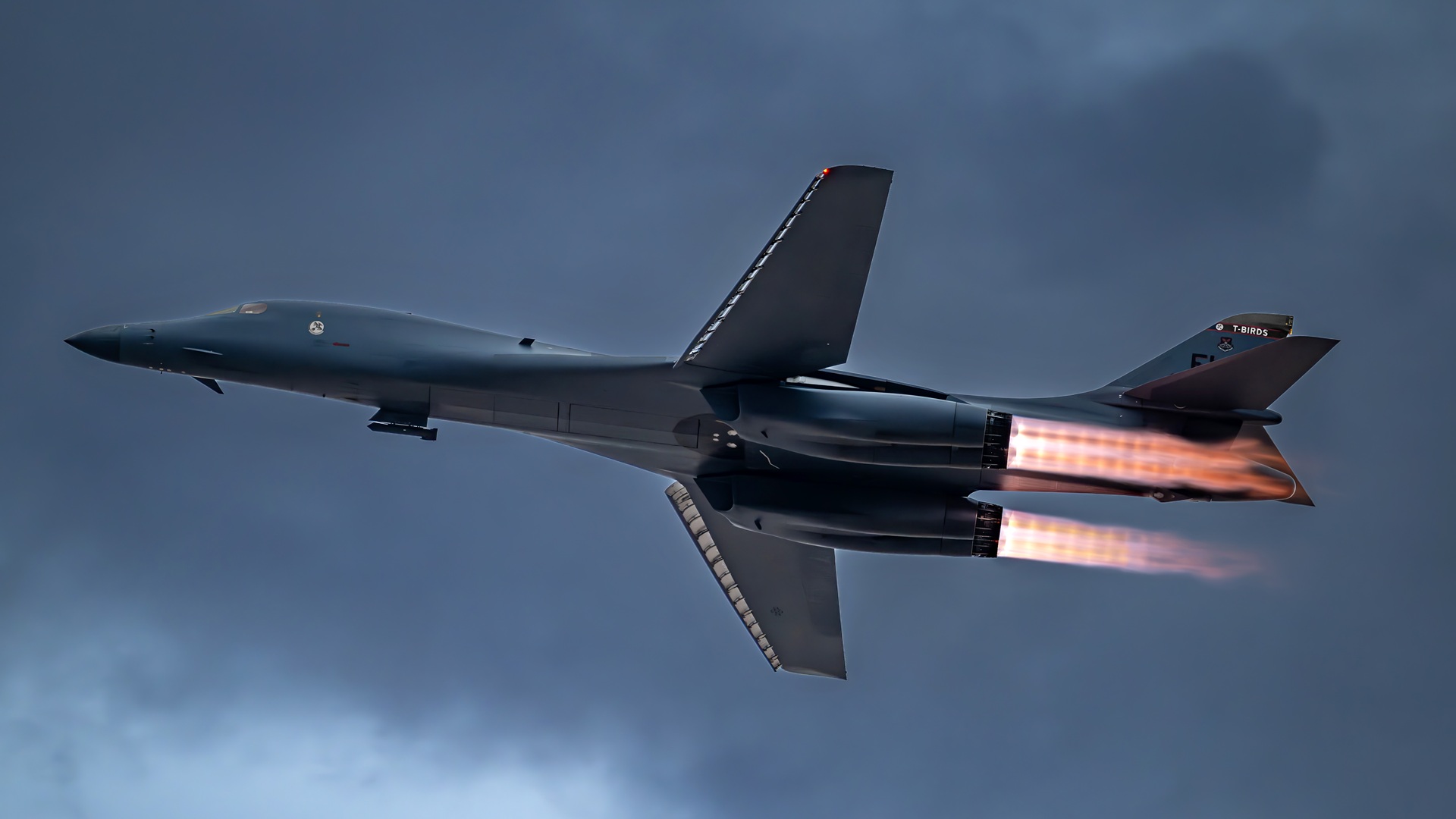
The United States military has ordered the sudden withdrawal of its B-1B Lancer strategic bombers from Royal Air Force Base Fairford in Gloucestershire, England, following the receipt of new intelligence regarding a potential threat originating from Iran. The redeployment, executed on October 5, 2026, represents an unexpected operational change for American long-range strike forces staged in Europe. U.S. defense officials acted after command channels received updated security assessments indicating elevated risk factors linked to Iranian capabilities or regional operational planning.
Key facts
What happened
The departure of the aircraft from RAF Fairford unfolded rapidly on October 5, 2026, after military commanders evaluated fresh intelligence detailing potential Iranian threat activity. The B-1B Lancer bombers, which had been staged at the Gloucestershire facility as part of routine and contingency force projection operations, were instructed to vacate the base to mitigate risk and adjust operational positioning.
While military authorities maintained strict operational security regarding flight schedules and destination coordinates, the movement of heavy strategic bombers from a primary European hub underscores the high priority command elements placed on the incoming threat indicators. Staging bases such as RAF Fairford provide the United States Air Force with rapid-response capabilities covering Europe, North Africa, and the Middle East. Moving the aircraft out of the UK base disrupts planned mission profiles, forcing air planners to recalculate transit routes, aerial refueling logistics, and maintenance scheduling.
The tactical decision to move the bombers reflects standard force protection protocols deployed when threat levels against specific facilities or deployed assets cross actionable intelligence thresholds. Commanders frequently choose between reinforcing physical perimeter defenses at host bases or physically relocating high-value strategic assets to less vulnerable operating locations or home stations.
Why it matters
The sudden movement of primary long-range strike assets from a central NATO installation carries significant implications for regional security dynamics, allied defense planning, and global military deterrence. Heavy bombers such as the B-1B Lancer are among the most visible components of American strategic power projection. Their presence at RAF Fairford provides a continuous signal to adversary states across Western Eurasia and the Middle East, demonstrating the ability to strike targets at extended ranges with heavy conventional payloads.
Withdrawing these platforms due to Iranian threat intelligence indicates that threat vectors associated with Tehran—whether involving long-range ballistic strike capabilities, uncrewed aerial systems, cyber disruption, or regional proxy action—are actively influencing U.S. military dispositions well beyond the immediate boundaries of the Persian Gulf. This decision highlights the vulnerability of forward-deployed infrastructure and forces Western defense networks to reassess the safety of strategic assets hosted at European installations.
Furthermore, the redeployment complicates operational readiness for U.S. Air Forces in Europe (USAFE) and U.S. Central Command (CENTCOM). Coordinating mission profiles for heavy bombers requires extensive support architecture, including specialized ground crews, munitions handling equipment, and dedicated KC-135 or KC-46 aerial refueling tankers. Changing operational bases on short notice places immediate stress on military logistics networks and temporary gaps in localized deterrence postures.
The background
RAF Fairford, located in southwestern England, holds a unique historical position in transatlantic defense cooperation. Established in 1944 during World War II, the airfield was redeveloped during the Cold War to accommodate heavy strategic bombers. It features a runway measuring nearly 10,000 feet (over 3,000 meters), specifically designed to handle heavy military transports and large bomber platforms. RAF Fairford is designated as the U.S. Air Force’s main European forward operating location for strategic bombers, housing specialized infrastructure including climate-controlled hangers capable of accommodating stealth aircraft such as the B-2 Spirit.
Over recent decades, RAF Fairford has served as a launchpad for major U.S. and NATO military campaigns. Bombers staged from the airfield flew combat missions during Operation Desert Storm in 1991, Allied Force in Kosovo in 1999, and Operation Iraqi Freedom in 2003. In recent years, U.S. Strategic Command has utilized RAF Fairford as the central hub for its regular Bomber Task Force (BTF) rotations, which deploy B-1B Lancers, B-52H Stratofortresses, and B-2 Spirits to conduct training exercises alongside NATO allies and project power near European peripheral areas.
The B-1B Lancer, originally designed by Rockwell International in the 1970s and 1980s as a low-altitude supersonic nuclear penetrator, underwent significant operational evolution following the end of the Cold War. Under international disarmament agreements, including the START treaties, the U.S. military physically converted the B-1B fleet to purely conventional strike roles, formally stripping the platform of nuclear capability by 2011. Powered by four General Electric F101-GE-102 augmented turbofan engines, the aircraft features variable-sweep wings that allow high-speed low-altitude flight as well as efficient high-altitude cruising. It possesses the largest internal payload capacity of any bomber in the U.S. inventory, capable of deploying up to 75,000 pounds of precision-guided weapons, such as the Joint Direct Attack Munition (JDAM) and the Joint Air-to-Surface Standoff Missile (JASSM).
The security context surrounding Iran involves an expanding array of asymmetrical and long-range strike tools. Tehran has developed the Middle East's largest inventory of ballistic and cruise missiles, including systems such as the Khorramshahr, Sejjeel, and Kheibar Shekan, capable of reaching targets thousands of kilometers away. Additionally, Iran has expanded its deployment of long-range one-way attack drones, such as the Shahed series, while maintaining proxy relationships with armed groups in Iraq, Syria, Lebanon, and Yemen. Concerns over potential Iranian attacks on Western military infrastructure have grown steadily as diplomatic negotiations regarding regional security and nuclear monitoring have faced ongoing friction.
Reaction
The sudden redeployment of American strategic bombers from a major European base typically prompts scrutiny from military analysts, host-nation officials, and international diplomats. Official responses from defense establishments generally remain highly guarded during active security incidents.
The United States Department of Defense routinely declines to detail specific operational security intelligence or confirm flight routes of strategic assets, citing standard force protection guidelines. Similarly, the United Kingdom Ministry of Defence, which retains sovereign oversight of RAF Fairford under the Visiting Forces Act, operates under long-standing bilateral agreements that limit public disclosure of real-time movements involving allied aircraft.
Defense analysts and regional experts are expected to monitor official press briefings from the Pentagon and U.S. European Command for clarification on whether the aircraft relocation reflects a temporary precautionary measure or a broader restructuring of U.S. forward presence in the European and Middle Eastern operational theaters. Foreign ministries in Middle Eastern capitals and NATO member states will also evaluate the shift for signals regarding potential changes in U.S. intelligence assessments of Iranian intent.
What we don't know yet
Several critical elements regarding the bomber redeployment remain unverified due to operational secrecy and limited public disclosures:
First, the exact nature of the threat intelligence regarding Iran remains undisclosed. It is unknown whether the security concern involved direct kinetic capabilities—such as long-range missile or drone threats—or asymmetric risks such as cyber capabilities, saboteur activity, or targeted intelligence gathering against U.S. assets stationed in Europe.
Second, the public record does not confirm the destination of the departing B-1B bombers. Officials have not stated whether the aircraft were rerouted to alternative forward bases, such as the joint U.S.-UK facility at Diego Garcia in the Indian Ocean or Al Udeid Air Base in Qatar, or returned directly to their home stations in the United States, such as Dyess Air Force Base in Texas or Ellsworth Air Force Base in South Dakota.
Third, the timeline for potential return or replacement of bomber forces at RAF Fairford remains uncertain. Whether this departure represents a short-term relocation pending threat mitigation or a multi-month operational pause at the British facility will depend on evolving intelligence assessments that have not been shared publicly.
What to watch
In the coming days and weeks, key developments will indicate the long-term strategic fallout of the B-1B relocation:
This account is based on original reporting by Georgina Jedikovska.
How this story was produced
This report was written by The Global Wire newsroom from reporting first published by Georgina Jedikovska. We verify the core facts against the original report, write our own account, and add the background and consequences a short wire item leaves out. Drafting is AI-assisted inside an editor-supervised pipeline, and every story is checked for accuracy of attribution, structure and duplication before it appears — full detail in our AI and funding disclosure.
Spotted an error? Tell us at corrections@horizonglobalnews.com and read our corrections policy or editorial standards.






Reader comments
Loading comments…