

Israel Advances Wildlife Bridges in South to Reconnect Fractured Gazelle Habitats
Two dedicated overpasses in southern Israel will span transport arteries to link isolated populations of endangered gazelles and prevent vehicular collisions.
By The Global Wire Newsroom · Reported from Zafrir Rinat
Link preview · horizonglobalnews.com
Israel Advances Wildlife Bridges in South to Reconnect Fractured Gazelle Habitats
Two dedicated overpasses in southern Israel will span transport arteries to link isolated populations of endangered gazelles and prevent vehicular collisions.
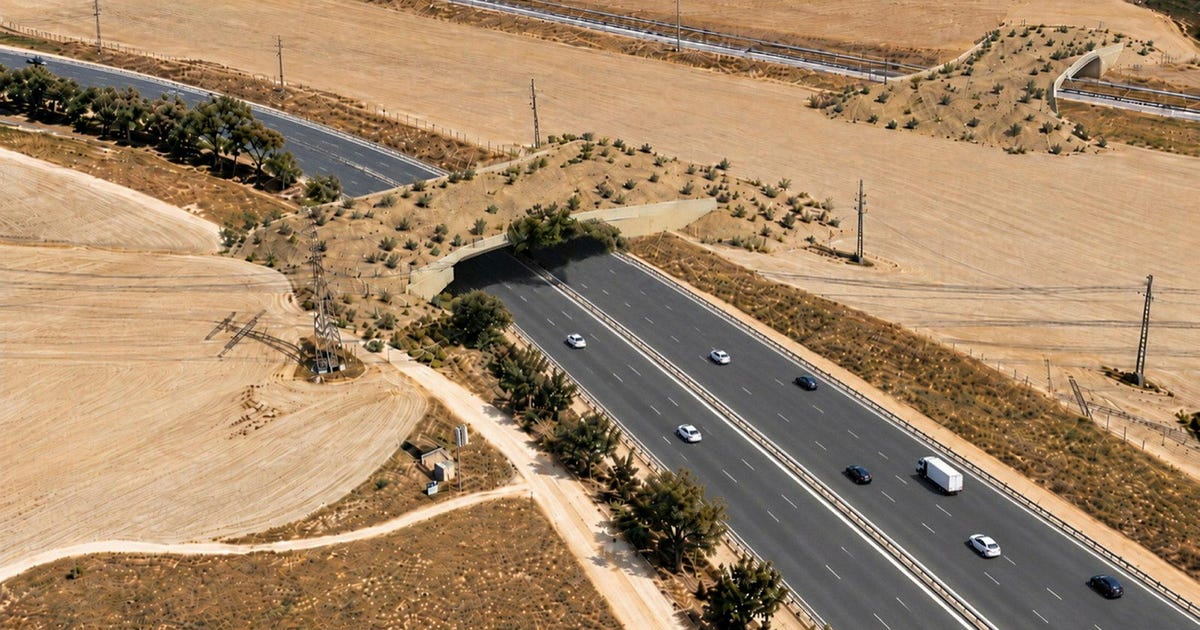
Infrastructure authorities in Israel have advanced plans to construct a series of dedicated wildlife crossings across heavily trafficked transit routes in the southern region of the country, aiming to re-establish vital movement corridors for fragmented populations of endangered gazelles. According to reporting by Zafrir Rinat, the initiative focuses on two critical overpasses designed to allow native wildlife to navigate over major arterial highways and an adjacent railway line. The physical barriers created by these transportation corridors have long isolated breeding herds, restricted foraging territories, and exposed local fauna to chronic vehicular mortality, posing an existential threat to desert biodiversity in the arid south.
Key facts
What happened
Regional transportation and planning bodies have mapped out engineering interventions centered on two major animal crossings situated across high-volume transit routes in southern Israel, according to reporting by Zafrir Rinat. The structures will span transport arteries that currently sever contiguous natural ranges into detached, shrinking pockets of wilderness. The landscape in this sector of the country is traversed by national highways linking central metropolitan areas to the southern port city of Eilat, as well as freight and passenger rail corridors that move industrial materials, agricultural produce, and commuters through open desert terrain.
Over several decades, the progressive widening of regional highways, the erection of continuous perimeter security fencing, and the installation of heavy concrete central reservations have turned ground-level roads into impermeable barricades for terrestrial mammals. The newly planned crossings are engineered specifically as vegetated overpasses, often known in ecological engineering as ecoducts or green bridges. Rather than simple concrete spans, these structures are typically contoured to blend directly into the bordering topography, using natural substrate, indigenous desert flora, and earthen embankments designed to mute traffic glare and noise.
By positioning the crossings at documented natural transit chokepoints, the project aims to guide wandering herds safely across both vehicular lanes and train tracks without exposing them to traffic. Gazelles, which rely on wide vistas and lateral flight paths to detect and evade predators, generally avoid cramped, subterranean culverts or dark underpasses. Elevated, wide-span overpasses that maintain open horizons represent the established global standard for encouraging ungulate migration over transit infrastructure.
Why it matters
The construction of dedicated wildlife crossings carries critical ramifications for biological conservation, public transportation safety, and infrastructure planning throughout Israel and similar arid environments. For conservationists, the intervention addresses one of the most destructive byproducts of modern infrastructure development: the fragmentation of continuous ecosystems. When an animal population is cut in two by an impassable motorway, the effective population size of each isolated pocket drops precipitously. Over time, restricted mating pools lead to genetic drift, reduced genetic diversity, higher rates of congenital abnormalities, and increased susceptibility to infectious disease outbreaks. For an endangered species whose total national census numbers in the hundreds or low thousands, the loss of even a few dozen breeding adults per year to highway strikes or genetic stagnation can accelerate an irreversible extinction vortex.
Beyond the direct ecological imperative, road-wildlife collisions present a significant human safety hazard and economic liability. A full-grown gazelle struck by a passenger vehicle travelling at highway speeds can cause catastrophic vehicular damage, severe passenger injuries, and secondary multi-vehicle pileups. For railway operators, collisions with large mammals can prompt emergency braking sequences, disrupt scheduled services, damage locomotive sensory equipment, and impose recurring maintenance costs. Designing infrastructure that physically segregates high-speed transit from native fauna creates a safer operating environment for both motorists and train systems.
On a regulatory and policy level, the project sets an important precedent for infrastructure development across the Middle East, a region where rapid urbanization and transportation expansion frequently outpace environmental protection frameworks. Incorporating landscape permeability directly into state transport budgets institutionalizes the concept that ecological connectivity is a mandatory public utility rather than an optional ecological luxury. The long-term viability of southern Israel's desert biome depends on whether mega-infrastructure projects can coexist with the delicate movements of native wildlife.
The background
Israel occupies a critical biogeographical crossroads, linking Europe, Asia, and Africa across a compact geographical footprint. Because of this strategic junction, the nation contains an unusually high density of microclimates and biodiversity relative to its surface area. However, Israel is also among the most densely populated and rapidly growing industrialized nations in the Organisation for Economic Co-operation and Development (OECD). Over the past four decades, intensive highway construction, the expansion of high-speed rail networks, and the expansion of residential and industrial zones have steadily eroded contiguous natural open spaces.
The country is home to three notable members of the gazelle genus. The mountain gazelle (Gazella gazella) primarily occupies the central and northern hills, the Dorcas gazelle (Gazella dorcas) ranges throughout the arid Negev and southern desert valleys, and the highly endangered acacia gazelle (Gazella acaciae) is restricted to a precarious, hyper-isolated pocket in the southern Arava desert. While the overall mountain gazelle population has suffered severe declines across the Levant due to poaching, feral dog predation, and car strikes, the southern desert populations face unique survival pressures dictated by extreme resource scarcity. In arid ecosystems, gazelles must travel extensive distances to locate ephemeral desert blooms, scattered acacia groves, and seasonal watering holes. When modern infrastructure cuts across these traditional grazing pathways, herds can be cut off from essential food and water resources during prolonged droughts.
The conflict between transport networks and wildlife preservation has historically been managed through reactionary measures, such as post-hoc fencing or road warning signs, which frequently failed to prevent vehicle strikes. In response, environmental bodies, primarily the Israel Nature and Parks Authority (INPA) in coordination with national transport agencies such as Netivei Israel (the National Transport Infrastructure Company) and Israel Railways, have worked to incorporate ecological corridors into statutory master plans. Israel established its first major wildlife ecoduct in the late 1990s and early 2000s across Highway 6, the country's primary central toll motorway. Data gathered from camera traps on that northern bridge proved that when crossings are properly landscaped and fenced, medium and large mammals—including wild boars, porcupines, jackals, and gazelles—eventually adopt the paths. Applying this design concept to the more fragile and ecologically arid terrain of the south represents the next evolutionary step in the nation's corridor restoration strategy.
Reaction
While direct official statements were not catalogued in the initial reporting by Zafrir Rinat, structural announcements of this type reliably draw close engagement from environmental organizations, national park stewards, and regional planning authorities. Conservation groups such as the Society for the Protection of Nature in Israel (SPNI) and scientists from the Israel Nature and Parks Authority routinely advocate for wildlife corridors as a prerequisite for highway expansion approvals, viewing such overpasses as essential mitigation rather than discretionary spending.
At the municipal and regional level, southern local councils typically welcome measures that reduce the incidence of high-speed animal collisions along remote desert highways, where emergency medical response times can be prolonged. However, debates often emerge during formal planning commission hearings regarding project timelines, fiscal prioritization, and spatial allocation. Agricultural communities bordering transport routes frequently voice concern over whether newly channeled animal movements might direct grazing herds into fenced commercial orchards and irrigated fields. Moving forward, formal responses and technical testimony are expected during regional zoning committee reviews, where environmental impact assessments and project budgets must clear statutory hurdles before construction contracts are awarded.
What we don't know yet
Several substantive operational and technical details remain unverified in the immediate aftermath of the announcement. The available reporting does not specify the precise geographical coordinates or route markers for the two planned overpasses, leaving open the question of which specific highways and railway branches will host the construction. Southern transport arteries encompass several critical corridors—including Route 40, Route 90, and the Be'er Sheva rail links—and knowing the exact construction points is essential for evaluating which specific gazelle subpopulations will benefit.
Furthermore, project timelines, overall budgetary appropriations, and the lead contracting agencies have not been publicly detailed. It remains unclear whether the initiative is fully financed through approved state infrastructure budgets or remains dependent on forthcoming multi-year fiscal allocations. From an ecological perspective, baseline monitoring data has not yet been published to clarify how long regional zoologists expect the target gazelle herds to take to adapt to the artificial overpasses. Ungulates are famously cautious when approaching foreign structures, and success will hinge heavily on structural parameters that have yet to be disclosed, such as the width of the overpasses, the sound-dampening capabilities of perimeter walls, and the specific composition of soil and vegetation used across the spans.
What to watch
The progression of the southern crossing project will unfold across several verifiable milestones over the coming months and years. Observers should watch for statutory planning submissions to the Southern District Planning and Building Committee, which will formally publish the precise topographic maps, engineering schematics, and public review timelines for the two structures. Approval by regional planning authorities will provide concrete confirmation of project schedules, structural dimensions, and designated construction contractors.
Following statutory approval, attention will turn to the procurement process conducted by Netivei Israel or Israel Railways, specifically the tender announcements detailing construction milestones and environmental compliance mandates. Once ground is broken, conservation scientists will be looking closely at the implementation of complementary funnel fencing along the highway margins, an engineering detail critical to preventing animals from bypassing the bridge and wandering back into oncoming traffic.
In the longer term, the decisive benchmark of success will come through post-construction ecological monitoring. Environmental authorities routinely deploy motion-activated camera traps and satellite telemetry collars to document animal crossing frequency. Tracking whether southern gazelle herds routinely use the spans to cross between grazing ranges—and whether roadkill statistics in the surrounding sectors drop measurably—will determine whether this engineering template is replicated across other transport corridors throughout the country.
This report draws upon original reporting published by Zafrir Rinat regarding the development of wildlife bridges spanning highways and railway lines in southern Israel.
How this story was produced
This report was written by The Global Wire newsroom from reporting first published by Zafrir Rinat. We verify the core facts against the original report, write our own account, and add the background and consequences a short wire item leaves out. Drafting is AI-assisted inside an editor-supervised pipeline, and every story is checked for accuracy of attribution, structure and duplication before it appears — full detail in our AI and funding disclosure.
Spotted an error? Tell us at corrections@horizonglobalnews.com and read our corrections policy or editorial standards.




Reader comments
Loading comments…