

Fatal Chest Impact in Spanish Football Puts Commotio Cordis Under Medical Scrutiny
The suspected fatal collapse of footballer Jesús de Miguel highlights the rare, lethal cardiac phenomenon triggered by direct blows to the chest.
By The Global Wire Newsroom · Reported from Adam Taylor
Link preview · horizonglobalnews.com
Fatal Chest Impact in Spanish Football Puts Commotio Cordis Under Medical Scrutiny
The suspected fatal collapse of footballer Jesús de Miguel highlights the rare, lethal cardiac phenomenon triggered by direct blows to the chest.
The sudden death of Jesús de Miguel, an association football player associated with Spanish club CD Tenerife, has drawn international focus to commotio cordis, an exceptionally rare and frequently fatal cardiac phenomenon caused by blunt, non-penetrating trauma to the chest wall. The potential diagnosis was examined in detail by medical anatomist Adam Taylor, who analyzed the physiological mechanisms that allow an apparently routine physical impact on the pitch to disrupt the electrical rhythm of a healthy heart and induce instantaneous cardiac arrest.
Key facts
What happened
According to analysis provided by medical anatomist Adam Taylor, Spanish footballer Jesús de Miguel, who played with the Canary Islands club Club Deportivo Tenerife, is suspected to have suffered a fatal episode of commotio cordis. The reporting by Taylor focuses on the physiological sequence that unfolds when a physical blow delivered to the precordium—the anterior surface of the chest directly overlying the heart—instigates sudden cardiac arrest during athletic activity.
Commotio cordis, a Latin phrase translating roughly to "agitation of the heart," does not stem from pre-existing structural heart disease, nor does it require severe traumatic force capable of fracturing the sternum or tearing vascular structures. Instead, as Taylor highlighted, the event is defined by the precise timing of an external impact relative to the heart’s electrical conduction system. Under clinical analysis, an impact of moderate velocity delivered over the cardiac silhouette during cardiac repolarization disrupts normal cellular signaling. The physical impulse deforms ion channels within cardiac myocytes, provoking an erratic, disorganized electrical storm known as ventricular fibrillation. Once ventricular fibrillation begins, the heart ceases its coordinated mechanical pumping function, blood pressure plummets to zero, and the individual collapses within seconds due to immediate cerebral hypoperfusion.
Why it matters
The medical analysis surrounding the death of an active professional athlete carries profound ramifications for sports medicine, competitive leagues, and the clinical emergency protocols deployed across stadiums worldwide. Unlike hypertrophic cardiomyopathy, anomalous coronary arteries, or channelopathies—congenital or genetic anomalies that can be flagged during comprehensive pre-season cardiovascular screenings—commotio cordis strikes structurally normal hearts. Consequently, routine electrocardiograms, cardiac magnetic resonance imaging, and echocardiograms cannot identify athletes at risk. Every participant in contact or projectile sports remains susceptible if struck at the critical physiological moment.
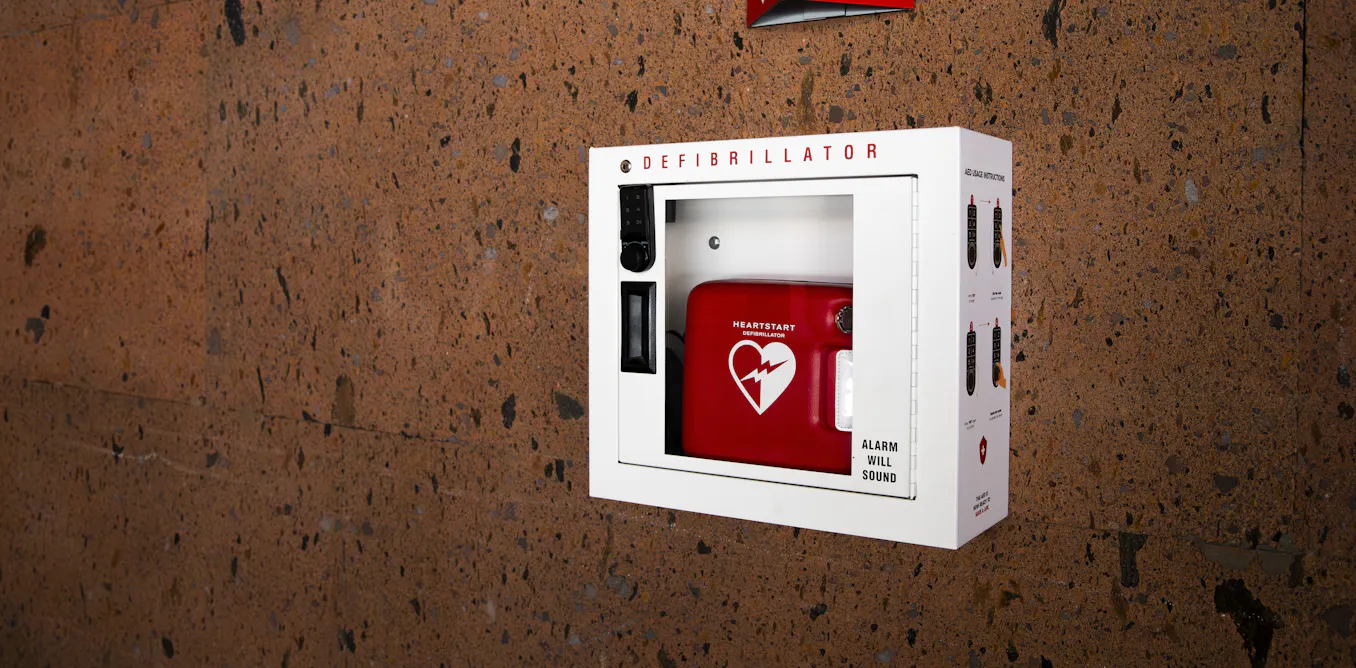
This reality shifts the primary defense from medical screening to rapid physical emergency response. The outcome of commotio cordis is determined within the first three minutes following the strike. Data compiled by resuscitation councils demonstrate that each sixty-second delay in delivering an electrical shock from an automated external defibrillator reduces the likelihood of neurologically intact survival by approximately 7% to 10%. Without an immediate shock to reset the disorganized cardiac rhythm, permanent brain damage occurs within four to five minutes, followed shortly by clinical death. In sports leagues that span varying levels of professional and semi-professional competition, the presence of trained emergency personnel capable of distinguishing commotio cordis from routine concussive or orthopedic trauma is literally a matter of life and death.
Furthermore, this incident underscores the urgent need to address disparities in emergency preparedness between elite first-tier clubs and lower-tier, academy, or grassroots environments. While top-flight European fixtures invariably feature specialized paramedic teams, intensive-care ambulances, and pitchside resuscitation gear, lower-division clubs and training complexes frequently operate with fewer resources, leaving athletes vulnerable when critical medical crises emerge.
The background
Commotio cordis was first systematically recorded in industrial and forensic literature in the nineteenth century, but systematic scientific evaluation accelerated significantly in the late twentieth century through work by cardiologists, including registry data compiled at the Minneapolis Heart Institute Foundation. Historically, the phenomenon has been most prevalent in youth sports involving high-density projectiles, such as baseball, lacrosse, and ice hockey. In those disciplines, young competitors with pliant, underdeveloped thoracic cages are struck directly in the sternum by a ball or puck travelling at speeds between 30 and 50 miles per hour.
Physiologically, the vulnerability depends upon a razor-thin temporal window known as the cardiac "vulnerable period." In standard electrophysiology, the heart undergoes cycles of depolarization and repolarization, tracked on an electrocardiogram through the P wave, QRS complex, and T wave. Commotio cordis can only be triggered during a specific 15- to 30-millisecond segment occurring on the upslope of the T wave, just prior to its peak. This segment represents the exact phase when the ventricular myocardium is repolarizing and recovering unevenly. If a kinetic strike lands over the center of the left ventricle during this fraction of a second, the localized mechanical pressure activates mechanosensitive ion channels, generating a premature electrical current that ignites sustained ventricular fibrillation.
Comparable sporting incidents have previously reshaped medical policy across global athletics. In 1998, National Hockey League defenceman Chris Pronger survived a commotio cordis event after blocking a slap shot with his chest during a Stanley Cup playoff game, regaining consciousness following rapid medical assistance. On January 2, 2023, American football player Damar Hamlin of the Buffalo Bills suffered cardiac arrest on field following a direct chest tackle during a National Football League game in Cincinnati, Ohio; prompt cardiopulmonary resuscitation and rapid defibrillation on the field resulted in his complete recovery and eventual return to professional play.
Within association football, sudden cardiac events have driven continuous regulatory updates from governing bodies such as FIFA and UEFA. Following high-profile cardiac arrests on the pitch—including Fabrice Muamba in 2012 and Christian Eriksen at the 2020 European Championship, both of which involved underlying cardiovascular abnormalities rather than commotio cordis—international regulations mandated the presence of advanced cardiac life support kits, standardized medical bags, and emergency action plans at sanctioned matches.
Reaction
Official confirmation and regulatory assessments following the analysis by Adam Taylor are expected to proceed through institutional sports governance and forensic medical channels. CD Tenerife, competing under the auspices of the Real Federación Española de Fútbol and LaLiga, operates within Spanish athletic frameworks that mandate specific medical oversight protocols for active players. While Taylor's anatomical breakdown focused on educating the broader sporting and scientific public on the mechanics of commotio cordis, the event typically obliges medical boards within national leagues to evaluate whether pitchside response times complied with existing safety guidelines.
Player associations, including the Asociación de Futbolistas Españoles, frequently respond to critical medical incidents by demanding heightened safety infrastructure across all training facilities, advocating for mandatory certified resuscitation training for non-medical technical staff, match officials, and players themselves. Medical authorities across Europe have consistently reiterated that athletic clubs at every tier must maintain visible, fully serviced defibrillators located within two minutes of any active pitch.
What we don't know yet
Crucial specifics regarding the event described in Taylor's analysis remain unclarified in available reports. The primary account does not disclose the precise date, time, or location of the incident involving Jesús de Miguel, nor does it specify whether the fatal strike occurred during an official league match, a club training session, or an informal fixture. Furthermore, the exact mechanical nature of the blow—whether caused by a close-range struck football, an accidental collision with another athlete's knee, elbow, or head, or a fall against a pitch fixture—has not been publicly detailed.
It is also unconfirmed whether formal forensic autopsy results have concluded that commotio cordis was the sole cause of death, or if toxicological and histopathological testing is ongoing to definitively rule out underlying microscopic cardiac channelopathies or undiagnosed genetic conditions. Finally, the timeline of the medical response on the scene—specifically the elapsed time between collapse, initiation of chest compressions, and delivery of an initial automated external defibrillator shock—remains undocumented in the initial reporting.
What to watch
In the coming weeks, attention will turn to any formal statements issued by Club Deportivo Tenerife, Spanish athletic authorities, or judicial medical examiners clarifying the definitive autopsy findings and the circumstances surrounding the player's death. Independent medical examiners in sudden athletic deaths typically conduct extensive tissue analysis, which can take several weeks to rule out underlying arrhythmogenic right ventricular cardiomyopathy, myocarditis, or anomalous vasculature.
Observers should also track whether football governing bodies use this case to issue updated emergency preparedness directives. In particular, sports safety advocates will monitor whether domestic federations institute mandatory baseline defibrillator audits across lower-division training grounds, or introduce requirements for specialized thoracic protective gear in training environments where close-quarters physical contact is frequent.
This report is based on original reporting and medical analysis published by anatomist Adam Taylor.
How this story was produced
This report was written by The Global Wire newsroom from reporting first published by Adam Taylor. We verify the core facts against the original report, write our own account, and add the background and consequences a short wire item leaves out. Drafting is AI-assisted inside an editor-supervised pipeline, and every story is checked for accuracy of attribution, structure and duplication before it appears — full detail in our AI and funding disclosure.
Spotted an error? Tell us at corrections@horizonglobalnews.com and read our corrections policy or editorial standards.





Reader comments
Loading comments…