

Himalayan Rangeland Study Finds Livestock Grazing Drives Shift in Arthropod Populations
A 14-year field experiment in northern India reveals domestic herds suppress spiders while spurring surges in grasshoppers, ticks, and mites across cold-desert ecosystems.
By The Global Wire Newsroom · Reported from TOI Science Desk
Link preview · horizonglobalnews.com
Himalayan Rangeland Study Finds Livestock Grazing Drives Shift in Arthropod Populations
A 14-year field experiment in northern India reveals domestic herds suppress spiders while spurring surges in grasshoppers, ticks, and mites across cold-desert ecosystems.
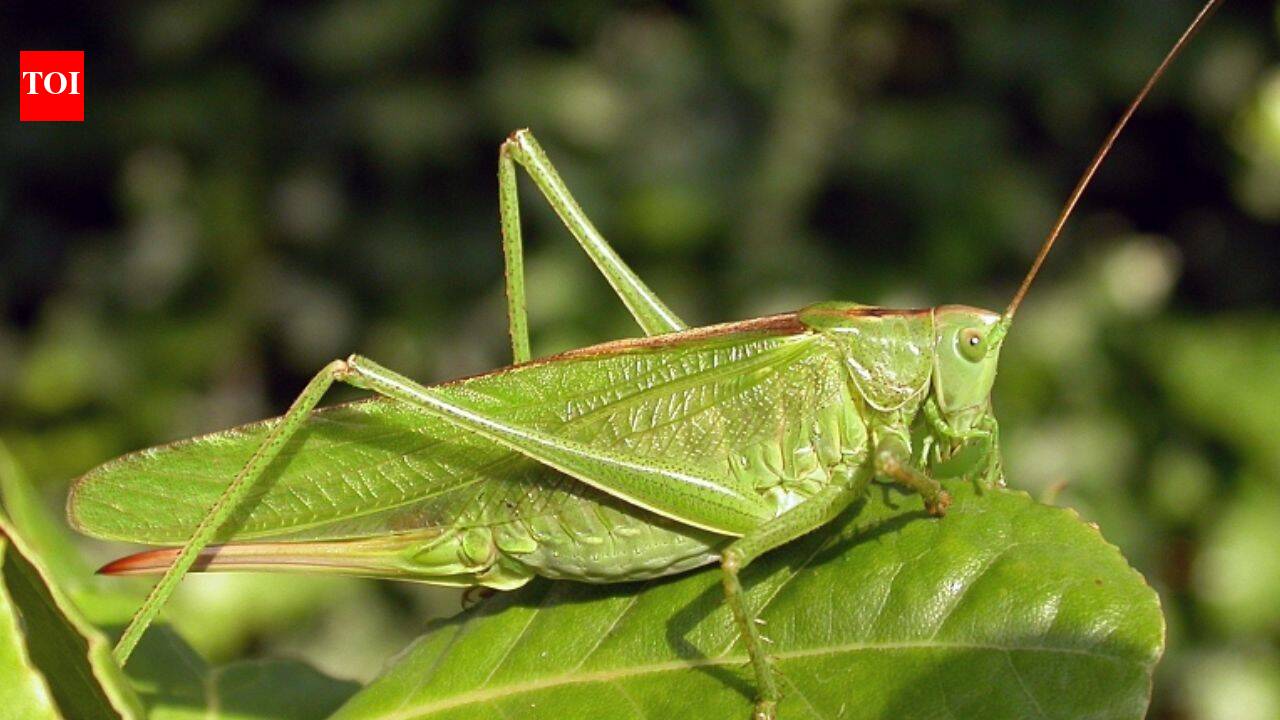
A 14-year ecological investigation conducted across the cold deserts of northern India's Trans-Himalayan ecosystem has determined that displacing wild native herbivores with domestic livestock substantially alters the composition of ground-dwelling arthropod communities. According to findings reported by the TOI Science Desk, researchers evaluated 25,604 individual arthropods gathered across 2,765 trap-days during successive spring seasons. The long-term monitoring revealed a divergent shift in invertebrate assemblages: while predatory arachnids such as spiders experienced notable population declines in areas grazed by domestic herds, populations of herbivorous grasshoppers and parasitic ticks and mites registered distinct increases. The findings demonstrate how pastoral conversion reshapes foundational biodiversity in fragile alpine and high-altitude steppe environments.
Key facts
What happened
Over a duration of 14 continuous years, ecologists in northern India monitored experimental tracts within the high-elevation Trans-Himalayan desert to evaluate the long-term ecological consequences of pastoral activity. The research focused on comparing habitats maintained under the foraging regimes of indigenous wild ungulates—such as blue sheep and Asiatic ibex—against sectors allocated to domestic livestock grazing, including domestic sheep, goats, and pack animals. To quantify terrestrial invertebrate biodiversity without sampling bias, investigators established standardized pitfall trapping grids across the landscape during the spring thaw, the primary period of biological activity in high-altitude cold deserts.
Over the course of 2,765 trap-days, field workers systematically harvested, preserved, and categorized 25,604 arthropod specimens. Pitfall traps, which capture surface-active organisms navigating across open ground and beneath low scrub canopy, provided an objective ledger of seasonal invertebrate density and diversity. The team tracked taxonomic orders across multi-year cycles to isolate long-term shifts from annual meteorological fluctuations and drought anomalies.
As detailed by the TOI Science Desk, the comparative analysis documented pronounced disparities between land grazed by domestic herds and adjacent habitats sustained by native fauna. The most pronounced trophic contractions occurred among spiders, an apex predatory invertebrate group that experienced marked suppression in livestock-dominated zones. Conversely, the same pastoral plots fostered elevated populations of orthopterans—predominantly herbivorous grasshoppers—and acarine arachnids, notably parasitic ticks and mites. The long-term monitoring confirmed that domestic grazing pressure consistently reorganizes the lower levels of the food web, suppressing insectivorous predators while favoring specific primary consumers and ectoparasites.
Why it matters
Arthropods form the functional backbone of high-altitude ecosystems, driving soil aeration, litter decomposition, nutrient cycling, and serving as the primary caloric base for insectivorous birds, reptiles, and small mammals. When the structural dynamics of ground-dwelling arthropods shift so decisively, the entire trophic structure of alpine habitats faces disruption. The suppression of spiders removes an essential biological control mechanism that regulates herbivorous insect populations. In mountain biomes characterized by short vegetative windows and scarce plant biomass, a concurrent surge in grasshopper abundance introduces acute competition for forage, compounding the defoliation pressures already exerted by domestic livestock herds.
Furthermore, the proliferation of ticks and mites introduces substantial veterinary and public health concerns. Cold deserts have historically acted as natural climate barriers against vector-borne disease proliferation because prolonged freezing temperatures and thin air suppress parasite vectors. The documented increase in ectoparasitic acari suggests that the introduction of dense domestic herds creates persistent host reservoirs, facilitating conditions where parasites thrive. Ticks and mites vector numerous pathogens affecting both domestic livestock and vulnerable wild mountain ungulates, including babesiosis, anaplasmosis, and various forms of viral encephalitis. For rural pastoralists whose livelihoods hinge on the survival of animal stocks, an intensifying burden of ectoparasites directly compromises herd health, reduces wool yields, and elevates the financial costs of antiparasitic veterinary interventions.
From a conservation management viewpoint, the research challenges the conventional assumption that domestic livestock serve as ecological equivalents to the wild ungulates they supplant. Rangeland policies across Central and South Asia frequently treat pastoral grazing as functionally neutral if total animal headcounts remain below gross carrying capacity metrics. This study demonstrates that even when vegetation survives grazing, the mechanistic nature of livestock foraging fundamentally breaks subterranean and surface microhabitats, altering soil compaction, plant architecture, and invertebrate survival in ways distinct from native wildlife.
The background
The Trans-Himalayan cold deserts span vast territories across the rain shadow of the main Himalayan range, encompassing regions such as Ladakh and the Spiti Valley in northern India, adjacent tracts of western Tibet, and the Karakoram range. These high-altitude landscapes—frequently situated at elevations between 3,000 and 5,000 meters above sea level—are governed by extreme environmental conditions, including sub-zero winter temperatures, hyper-arid precipitation regimes, and severe ultraviolet radiation. Despite their apparent barrenness, these habitats sustain specialized floral communities alongside threatened fauna, including the snow leopard, Tibetan wolf, and wild ungulate species like the bharal (blue sheep), Asiatic ibex, argali, and Tibetan gazelle.
Over the past half-century, socioeconomic transitions have transformed traditional pastoralism throughout the Himalayan highlands. While historical grazing regimes were characterized by highly mobile, low-density nomadic pastoralism that mirrored wild herd movements, modern shifts toward commercial production have intensified local grazing burdens. In particular, global demand for cashmere (pashmina) wool derived from Changthangi goats has incentivized the dramatic expansion and sedentary consolidation of domestic goat and sheep populations across delicate alpine ranges. The expansion of these domestic herds has steadily marginalized wild herbivores through direct competition for scarce forage and space.
Prior ecological research across the Tibetan Plateau and adjacent ranges primarily evaluated how livestock intensification reduces rangeland plant cover, increases desertification, or limits wild ungulate population density. However, subterranean and surface-level invertebrate ecology remained largely understudied due to the logistical challenges of maintaining rigorous, decades-long monitoring programs in remote high-altitude field stations. Pitfall trapping protocols, while recognized worldwide as the benchmark for surveying surface-active cursorial arthropods, require continuous seasonal maintenance and labor-intensive microscopic taxonomic identification. The newly released 14-year dataset addresses a critical evidentiary gap by documenting multi-trophic changes that occur beneath the visible flora and macrofauna.
Reaction
While formal policy responses from regional rangeland management authorities and state agricultural departments remain pending, researchers and conservation practitioners working across the Himalayan arc are assessing the operational implications of the 14-year data release. High-altitude pastoralists, community-run pasture development committees, and provincial forest departments in Ladakh and Himachal Pradesh are the key bodies whose regulatory and livestock management strategies intersect directly with these scientific findings.
Veterinary authorities and ecological researchers routinely convene at regional wildlife summits, where discussions are expected to center on whether veterinary vector surveillance protocols must be expanded across northern frontier pastures. Environmental non-governmental organizations dedicated to snow leopard conservation are also expected to scrutinize the data, as wild ungulate prey populations face heightened vulnerability when exposed to parasite booms or when rangeland vegetation is doubly consumed by domestic livestock and burgeoning grasshopper swarms. Formal peer-group analysis within rangeland ecology forums will focus on comparing the Trans-Himalayan observations with parallel long-term grazing trials maintained across the Mongolian steppes and the Patagonian plains.
What we don't know yet
Significant ecological questions remain unresolved regarding the fine-grained physiological and behavioral drivers responsible for the invertebrate community shift. The data released does not isolate the exact physical mechanism suppressing spider populations: it remains unconfirmed whether spider numbers fell due to mechanical trampling of burrows and webs, the reduction of structural plant canopies required for ambush and web anchoring, or the microclimatic warming and desiccation of bare, compacted soil surfaces.
Similarly, it is not yet established which specific species of ticks and mites are experiencing the reported population surges, or whether these acarine groups are carrying active, zoonotic pathogens that could spill over into wild mammal reservoirs or human pastoralist settlements. The available summaries do not specify the taxonomic resolution of the grasshoppers collected, leaving open whether the herbivore increase involves native alpine orthopterans taking advantage of altered plant communities or opportunistic, disturbance-adapted species outcompeting regional endemics. Finally, because the 14-year investigation restricted systematic pitfall trapping to the spring seasonal surge, the ecological status of these arthropod communities during autumn desiccation and throughout the freezing winter remains undocumented.
What to watch
Over the coming seasons, observers will watch whether wildlife and forest management agencies in India's Himalayan states incorporate arthropod and soil-health indices into formal rangeland monitoring frameworks, which historically relied solely on floral biomass surveys. Upcoming scientific symposiums addressing high-altitude ecology, including mountain biodiversity working groups under the International Union for Conservation of Nature (IUCN), represent key milestones where full comparative datasets from this multi-year experiment may be evaluated.
Attention will also focus on veterinary field stations operating in high-altitude zones to see if documented tick increases correlate with elevated reports of livestock morbidity or tick-borne livestock fevers during forthcoming spring seasons. Community-level pasture management initiatives, particularly in regional wildlife corridors where livestock exclusion zones have been piloted alongside community-based tourism, offer experimental benchmarks to test whether the removal of domestic herds allows spider populations to recover and depresses tick densities over time.
This article is based on reporting published by the TOI Science Desk.
How this story was produced
This report was written by The Global Wire newsroom from reporting first published by TOI Science Desk. We verify the core facts against the original report, write our own account, and add the background and consequences a short wire item leaves out. Drafting is AI-assisted inside an editor-supervised pipeline, and every story is checked for accuracy of attribution, structure and duplication before it appears — full detail in our AI and funding disclosure.
Spotted an error? Tell us at corrections@horizonglobalnews.com and read our corrections policy or editorial standards.




Reader comments
Loading comments…