

SpaceX Flies 125th Mission of 2026 in Classified Space Force Launch From California
A Falcon booster lifted a secret national security payload into orbit from the California coast on Nov. 6, marking a major flight-cadence milestone for SpaceX.
By The Global Wire Newsroom · Reported from Mike Wall
Link preview · horizonglobalnews.com
SpaceX Flies 125th Mission of 2026 in Classified Space Force Launch From California
A Falcon booster lifted a secret national security payload into orbit from the California coast on Nov. 6, marking a major flight-cadence milestone for SpaceX.
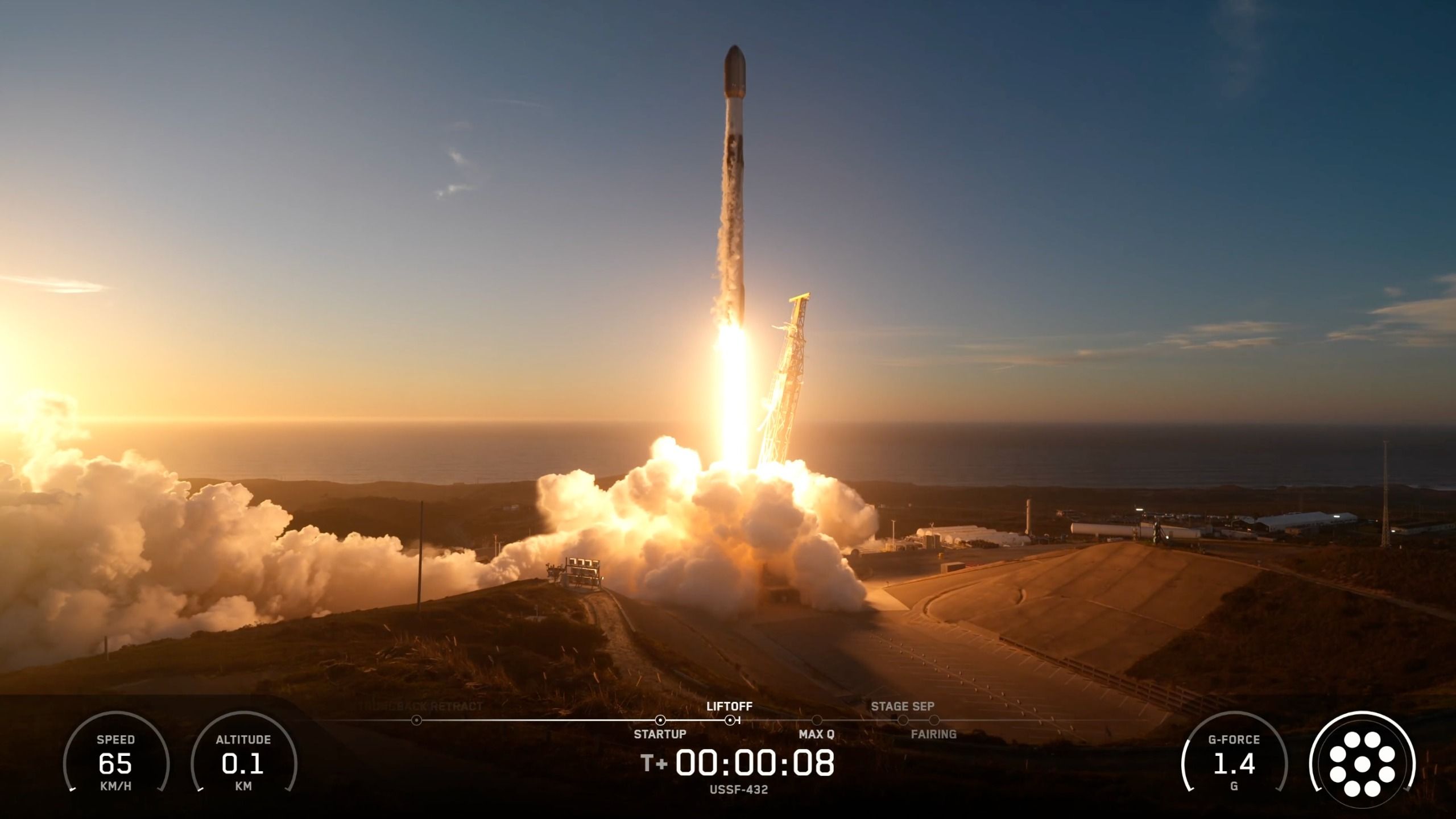
A commercial SpaceX rocket lifted off from the California coastline on the evening of Nov. 6, 2026, delivering a classified payload into orbit for the U.S. Space Force. The sunset ascent marked the private launch contractor's 125th operational mission of the calendar year, reflecting an unprecedented flight tempo for both commercial and military access to space.
Key facts
What happened
Liftoff occurred during twilight on Nov. 6, creating an atmospheric visual effect commonly observed during evening departures from coastal California facilities. The rocket ascended through the lower atmosphere under the thrust of its first-stage engines, tracking south-southwest across the Pacific Ocean downrange trajectory typical of missions deploying into polar or retrograde trajectories.
Following normal operational staging, the booster separated from the upper stage. While commercial launches conducted by SpaceX typically feature continuous live video broadcasts detailing second-stage burns and satellite deployment mechanisms, coverage of this mission was curtailed shortly after fairing jettison and first-stage shutdown. This procedure is standard operational practice for missions coordinated under the National Security Space Launch program to prevent adversaries from determining exact orbital mechanics, engine burn durations, and precise deployment coordinates.
The mission represented the 125th successful liftoff for SpaceX within the 2026 calendar year, an aggregate that encompasses internal Starlink deployments, commercial satellite flights, crewed missions to the International Space Station, and dedicated Department of Defense sorties.
Why it matters
The completion of 125 launches before the conclusion of the eleventh month of the year demonstrates an operational tempo unmatched by any corporate entity or national space agency in history. For decades, the global aerospace sector measured domestic national capabilities in dozens of launches per year across all active rocket families combined. SpaceX's ability to maintain a turnaround pace exceeding one launch every three days underscores how radically vertical integration, fleet reusability, and automated pad recovery have transformed orbital logistics.
For the U.S. Space Force, that high flight rate provides operational flexibility that was unachievable during earlier eras of space procurement. Historically, national security payloads faced multi-year integration delays, limited booster availability, and launch costs that frequently exceeded hundreds of millions of dollars per flight under legacy cost-plus procurement models. The ability to integrate and launch classified assets on an almost on-demand commercial cadence allows the military to field, refresh, and test space-based capabilities far more rapidly.
Moreover, the mission emphasizes the Pentagon’s heavy reliance on a single commercial vendor for assured access to space. While federal procurement guidelines through the National Security Space Launch (NSSL) framework intentionally seek to sustain multiple certified providers—such as United Launch Alliance and emergent entrants—SpaceX has absorbed the dominant share of active launch cadence due to vehicle availability and demonstrated pad turnaround.
The background
The launch complex used by SpaceX in California is located at Vandenberg Space Force Base, situated in Santa Barbara County northwest of Los Angeles. Vandenberg has served as the United States' primary orbital departure gate for polar-orbiting satellites since the late 1950s. Because launching due south over the open waters of the Pacific eliminates the risk of dropping spent rocket stages onto populated landmasses, the base is the designated hub for military reconnaissance, Earth observation, weather monitoring, and certain types of surveillance spacecraft that require orbital planes passing over the Earth's poles to survey the entire globe as the planet rotates beneath them.
The legal and institutional framework underpinning this flight stems from the National Security Space Launch program, managed by the Space Systems Command within the U.S. Space Force. The Space Force itself was established as an independent military branch within the Department of the Air Force under the National Defense Authorization Act for Fiscal Year 2020. Space Systems Command is tasked with developing, acquiring, and fielding military space capabilities, including the procurement of commercial launch services for the intelligence community and defense agencies, such as the National Reconnaissance Office and the Defense Advanced Research Projects Agency.
SpaceX first secured certification to fly national security missions in 2015, breaking what had been a near-decade-long monopoly held by United Launch Alliance, a joint venture of Boeing and Lockheed Martin. Since winning its initial competitive NSSL contracts, SpaceX has steadily increased its flight manifests, leveraging the two-stage Falcon 9 and the heavy-lift Falcon Heavy to fly payloads ranging from GPS III navigation satellites to classified orbital test platforms.
In recent years, the Department of Defense has adjusted its overarching space architecture. Rather than relying entirely on a small number of extraordinarily expensive, custom-built satellites that take a decade to construct and cannot easily be replaced if disabled, defense planners have increasingly shifted toward a hybrid posture. This concept includes "proliferated" low-Earth-orbit constellations comprised of hundreds of smaller, cheaper satellites, interspersed with traditional, highly exquisite classified platforms. Operating a launch pipeline that can fly upwards of a hundred times a year is an essential structural requirement for maintaining such distributed orbital networks.
Reaction
Neither the U.S. Space Force nor SpaceX released formal operational statements detailing the identity of the spacecraft or its specific defense remit following the liftoff. Official silence is the uniform protocol for non-public national security flights, where mission details are insulated from public disclosure by classification shields.
Historically, the leadership of Space Systems Command, based at Los Angeles Air Force Base in El Segundo, California, issues concise post-launch statements confirming only whether the primary stage executed as intended and delivered its payload into the requested baseline trajectory. Industry analysts and independent observers closely track these missions, noting that while federal agencies refrain from commentary, the lack of anomaly reports or safety notices from Federal Aviation Administration air-traffic corridors indicates normal orbital insertion.
Commercial space competitors and defense oversight committees in the U.S. Congress are expected to evaluate the ongoing flight tempo as negotiations continue over future multi-year procurement blocks. Lawmakers on the House and Senate Armed Services committees routinely monitor the commercial launch market to ensure that the Department of Defense maintains resilient supply chains and launch pad infrastructure capable of sustaining this pace without creating single-point vulnerabilities.
What we don't know yet
Substantial details surrounding the mission remain entirely inaccessible to the public. The exact designation of the mission—often categorized internally under alphanumeric identifiers such as "USSF" or classified "NROL" code numbers—was not formally disclosed in public manifests.
Consequently, independent analysts are left to deduce the satellite's primary operational role. It remains unknown whether the payload is dedicated to electro-optical imaging, signals intelligence collection, missile tracking, orbital space domain awareness, or tactical communications. Furthermore, the contract value, the prime industrial contractor that manufactured the satellite bus, and the intended lifespan of the spacecraft have not been revealed.
It is also unclear whether the mission deployed a single monolithic spacecraft or a cluster of smaller satellites operating as a coordinated formation. In several recent defense-sponsored launches, secondary rideshare platforms or experimental technology demonstrators were deployed alongside the primary payload without initial disclosure on military flight manifests.
What to watch
In the coming days, public tracking networks and amateur satellite observers will monitor orbital corridors accessible from California to identify newly cataloged objects tracked by the U.S. military’s own public Space-Track database. When the 18th Space Defense Squadron logs the orbital elements of the launch, civilian tracking data will reveal the spacecraft’s orbital altitude, inclination relative to the equator, and eccentricity, providing clues to its functional purpose.
Attention will also center on SpaceX’s year-end operational count. With 125 launches logged by early November, observers are tracking whether the contractor can reach or exceed its internal goal of roughly 140 to 150 flights before the end of December 2026. Maintaining that rate requires uninterrupted turnaround times at facilities in both California and Florida.
Finally, observers of the defense space sector will be looking toward upcoming announcements from the Space Force regarding Phase 3 National Security Space Launch contract awards. The continued reliable performance of operational commercial vehicles serves as a benchmark against which upcoming competitors, including United Launch Alliance's Vulcan Centaur and Blue Origin's New Glenn, will be evaluated as the military seeks to guarantee dual-source access for critical defense infrastructure.
This report is based on original reporting by Mike Wall.
How this story was produced
This report was written by The Global Wire newsroom from reporting first published by Mike Wall. We verify the core facts against the original report, write our own account, and add the background and consequences a short wire item leaves out. Drafting is AI-assisted inside an editor-supervised pipeline, and every story is checked for accuracy of attribution, structure and duplication before it appears — full detail in our AI and funding disclosure.
Spotted an error? Tell us at corrections@horizonglobalnews.com and read our corrections policy or editorial standards.




Reader comments
Loading comments…