

Hawaiian Honeycreeper's Biomechanics Highlight Specialized Evolution and Extinction Threat
New reporting details the extreme anatomical foraging adaptations of the critically endangered 'akiapōlā'au as conservationists battle to save Hawaii's remaining forest birds.
By The Global Wire Newsroom · Reported from Anastasia Scott
Link preview · horizonglobalnews.com
Hawaiian Honeycreeper's Biomechanics Highlight Specialized Evolution and Extinction Threat
New reporting details the extreme anatomical foraging adaptations of the critically endangered 'akiapōlā'au as conservationists battle to save Hawaii's remaining forest birds.
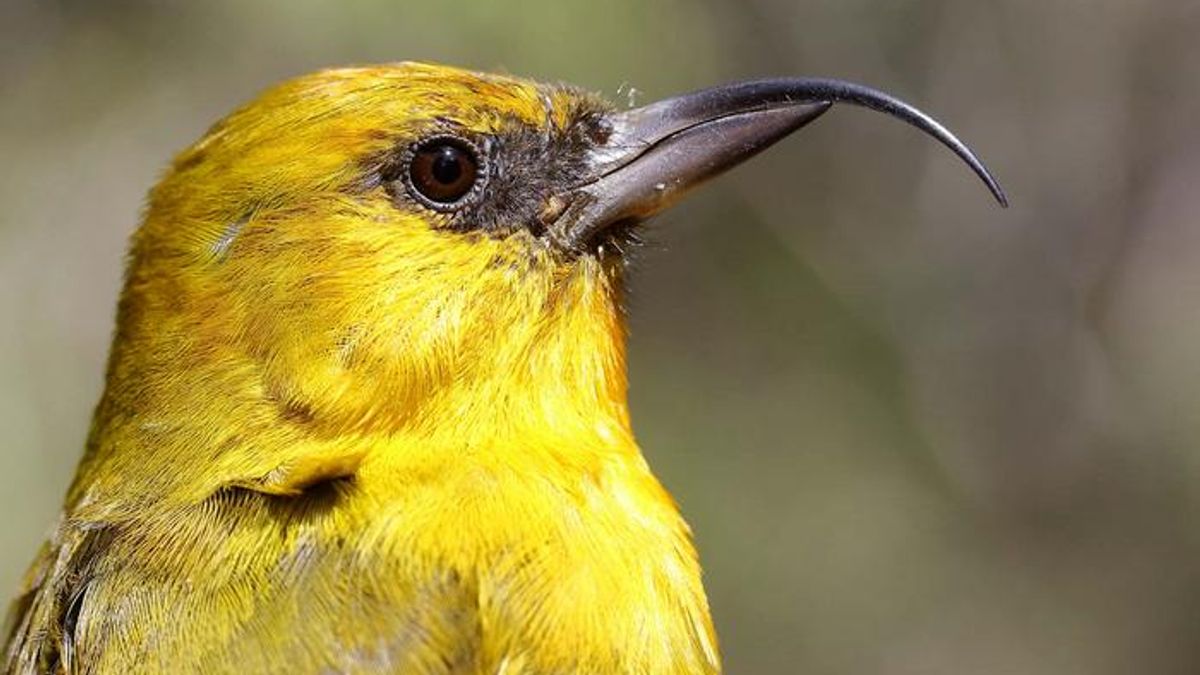
HONOLULU — Fresh scientific focus on one of the world's most anatomically specialized birds has detailed how the 'akiapōlā'au, a critically endangered Hawaiian honeycreeper endemic to the island of Hawaii, relies on asymmetrical bill morphology, reinforced skeletal joints, and full-body leverage to forage for wood-boring insect larvae. According to reporting by Anastasia Scott, the species utilizes its disparate upper and lower bill structures in tandem with unusually robust lower-limb anatomy, driving its entire body forward in ax-like motions to breach native bark before fishing out prey. The analysis highlights an evolutionary marvel shaped over millions of years of geographic isolation, even as the bird faces an accelerating extinction crisis driven by habitat loss, invasive predators, and the upward march of climate-induced avian disease across the Hawaiian archipelago.
Key facts
What happened
An anatomical and behavioral evaluation reported by Anastasia Scott has drawn renewed scientific and public attention to the foraging mechanics of the 'akiapōlā'au. Unlike typical woodpeckers, which possess symmetrically fortified, straight bills and shock-absorbing cranial architecture to drill into timber, the Hawaiian honeycreeper lineage evolved in an isolated island ecosystem completely devoid of the Picidae family. To exploit the ecological niche left vacant by the absence of woodpeckers, ancestral honeycreepers underwent dramatic adaptive radiation, producing the extraordinary dual-purpose bill of the 'akiapōlā'au.
The bird's bill functions through distinct functional division. The lower mandible is stout, straight, and heavily ossified, roughly half the length of the upper mandible. In contrast, the upper bill is elongated, slender, and curved downward like a scythe. When feeding, the bird opens its bill slightly to keep the fragile upper tip away from the substrate. It then anchors itself against tree trunks—most frequently native koa (*Acacia koa*) and 'ōhi'a lehua (*Metrosideros polymorpha*)—using thickened, muscular lower-limb architecture.
Using its powerful ankles and legs as a mechanical fulcrum, the bird swings its upper torso and head forward with significant momentum. The lower mandible strikes the bark repeatedly, chipping away exterior layers and exposing larval tunnels excavated by cerambycid beetles and other wood-dwelling invertebrates. Once wood fibers are chiseled open, the bird inserts its flexible, down-curved upper mandible into the crevice, using it like a probe or forceps to impale and extract the insect larvae. This combination of concussive force and micro-extraction represents one of the most extreme functional specializations documented among passerine birds.
Why it matters
The biomechanical sophistication of the 'akiapōlā'au is not merely an evolutionary curiosity; it underscores the fragility of island ecosystems where species possess extreme specializations that leave zero margin for environmental shock. When an organism invests its entire physiology into a singular foraging strategy tailored to specific old-growth trees and insect communities, it cannot readily pivot to alternative food sources when those forests degrade or fragment. The bird serves as a keystone indicator of forest canopy health across windward and subalpine zones on Hawaii Island, particularly within high-elevation native reserves like the Hakalau Forest National Wildlife Refuge.
Furthermore, the species exemplifies the high stakes of modern avian conservation in Oceania. Hawaii is frequently termed the bird extinction capital of the world. More than 50 distinct honeycreeper species once inhabited the archipelago, having radiated from a single ancestral finch species that arrived roughly five million years ago. Today, fewer than 20 species remain, and over half of those are teetering on the verge of biological extinction. The loss of the 'akiapōlā'au would extinguish millions of years of specialized genetic adaptation, permanently severing an irreplaceable ecological role in regulating native wood-boring insect populations across montane forest tracts.
The background
To contextualize the precarious position of the 'akiapōlā'au, it is necessary to examine the cascading ecological disruption that began following human settlement and accelerated after Western arrival in the late 18th century. In 1826, the southern house mosquito (*Culex quinquefasciatus*) was accidentally introduced to the Hawaiian Islands via the ballast water of the merchant vessel *Wellington* in Lahaina, Maui. The mosquito became an efficient vector for avian malaria (*Plasmodium relictum*) and avian poxvirus (*Poxvirus avium*). Native Hawaiian honeycreepers, having evolved in geographic isolation without historical exposure to these pathogens, possess virtually no natural immunological resistance. A single bite from an infected mosquito carries a mortality rate exceeding 90 percent for many honeycreeper species.
For more than a century, remaining populations found sanctuary at elevations above 1,500 meters (roughly 5,000 feet) on volcanoes such as Mauna Kea and Mauna Loa. At these higher altitudes, cold ambient temperatures historically prevented both the mosquito vector and the malaria parasite from reproducing. However, rising average temperatures driven by global climate change have disrupted this thermal barrier. Warmer conditions are allowing mosquitoes to survive and establish breeding colonies further up the mountainsides, directly invading the final disease-free refuges where species like the 'akiapōlā'au, 'akikiki, and kiwikiu persist.
Compounding this epidemiological crisis is historical deforestation. Extensive tracts of lowland and mid-elevation koa and 'ōhi'a forests were converted to cattle pasture and agricultural land during the 19th and 20th centuries. Non-native ungulates, such as feral pigs, goats, and sheep, stripped understory vegetation and created stagnant pools of water in hollowed tree ferns, creating artificial mosquito breeding sites. Invasive mammalian predators, including black rats (*Rattus rattus*) and small Indian mongooses (*Urva auropunctata*), further suppressed bird numbers by preying on eggs and incubating females.
Federal protections under the Endangered Species Act were codified for the 'akiapōlā'au in 1967, and the U.S. Fish and Wildlife Service, along with the Hawaii Department of Land and Natural Resources, established recovery plans. These initiatives focused on fencing out ungulates, restoring native forest corridors, and planting hundreds of thousands of koa seedlings. Despite these extensive habitat management efforts, total wild population estimates for the 'akiapōlā'au have remained low, often estimated in the low thousands or high hundreds, tightly concentrated within isolated pockets on the eastern and southwestern slopes of Hawaii Island.
Reaction
While the original reporting by Anastasia Scott focused on the functional morphology and physical mechanics of the bird's foraging behavior, the findings land amid urgent, ongoing policy debates among wildlife biologists, indigenous cultural practitioners, and federal agencies. In Hawaii, state wildlife managers and conservation consortia have frequently stressed that documenting the unique traits of honeycreepers highlights what stands to be irreversibly lost without immediate, landscape-level intervention.
Federal and state bodies, including the U.S. Geological Survey and the multi-agency initiative Birds, Not Mosquitoes, have increasingly directed attention toward modern vector control rather than relying solely on traditional habitat restoration. Wildlife authorities maintain that without aggressive suppressing of mosquito populations, detailed scientific appreciation of these birds' physiology will simply become documentation of a species on the path to extinction. Conservation groups continue to testify before state legislative committees and federal oversight bodies to ensure long-term funding streams for emergency bird recovery plans remain intact.
What we don't know yet
Significant gaps remain regarding the precise wild population trajectory and reproductive limits of the 'akiapōlā'au across its remaining fragmented ranges. Unlike some more abundant forest birds, the 'akiapōlā'au exhibits an exceptionally low reproductive rate. Females typically lay only a single egg per clutch, and offspring remain dependent on parental care for up to a year as they slowly learn the complex motor skills required to use their asymmetrical bills. It remains uncertain whether juvenile birds can master this intricate feeding technique in degraded or novel forest environments where tree species composition differs from historical old-growth conditions.
Additionally, comprehensive empirical data is still lacking on whether low-level genetic resistance to avian malaria could emerge naturally before climate change erases high-altitude thermal refuges entirely. Scientists also do not know whether the species could successfully reproduce and sustain its behavioral foraging patterns under captive breeding protocols. Past efforts to maintain and breed other highly specialized insectivorous honeycreepers in captivity have encountered major nutritional, behavioral, and disease hurdles, leaving it unclear if captive safety nets represent a viable fallback if wild populations collapse.
What to watch
Key developments in the near term will center on the expansion of biological vector control across Hawaiian forest reserves. State and federal agencies are currently deploying the Incompatible Insect Technique (IIT), which involves releasing male *Culex quinquefasciatus* mosquitoes carrying a non-native strain of naturally occurring *Wolbachia* bacteria. When these males mate with wild females, the resulting eggs do not hatch, driving down total vector numbers without introducing synthetic chemicals or genetic modification. Wildlife observers are closely watching population monitoring reports from eastern Maui and Kauai to determine if IIT releases can be effectively scaled up to the vast high-elevation forests of Hawaii Island where the 'akiapōlā'au lives.
Observers should also track upcoming biennial forest bird survey results published by the Hawaii Department of Land and Natural Resources and the U.S. Fish and Wildlife Service, which will provide updated population estimates and range maps. Finally, the spread of Rapid 'Ōhi'a Death—a fungal pathogen (*Ceratocystis*) decimating native canopy trees across Hawaii Island—remains a critical variable to monitor, as any large-scale loss of mature canopy trees will directly undermine the insect prey base that the 'akiapōlā'au relies upon.
This report incorporates primary reporting on the physical and mechanical foraging traits of the 'akiapōlā'au published by Anastasia Scott.
How this story was produced
This report was written by The Global Wire newsroom from reporting first published by Anastasia Scott. We verify the core facts against the original report, write our own account, and add the background and consequences a short wire item leaves out. Drafting is AI-assisted inside an editor-supervised pipeline, and every story is checked for accuracy of attribution, structure and duplication before it appears — full detail in our AI and funding disclosure.
Spotted an error? Tell us at corrections@horizonglobalnews.com and read our corrections policy or editorial standards.




Reader comments
Loading comments…