

Science Probes How Animals Navigate by Geomagnetism and Evaluates Human Limits
Cross-species research reveals how marine and avian navigators read Earth's magnetic field, highlighting the persistent physiological divide between animal senses and human biology.
By The Global Wire Newsroom · Reported from Anastasia Scott
Link preview · horizonglobalnews.com
Science Probes How Animals Navigate by Geomagnetism and Evaluates Human Limits
Cross-species research reveals how marine and avian navigators read Earth's magnetic field, highlighting the persistent physiological divide between animal senses and human biology.
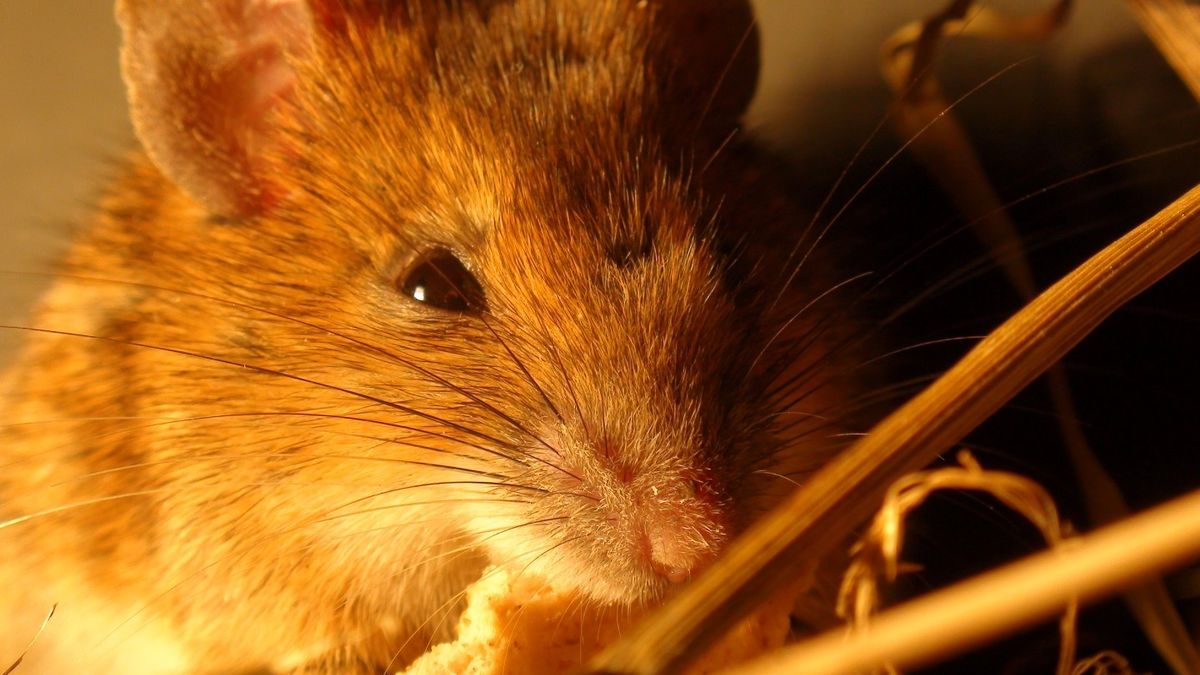
A comprehensive examination of biological magnetoreception has detailed how migratory wildlife navigate across planetary expanses by sensing Earth's geomagnetic field, while assessing whether human biology retains any dormant capacity to perceive the same invisible forces, according to reporting by science journalist Anastasia Scott. The analysis synthesizes decades of empirical field trials and biophysical laboratory investigations tracking pelagic sharks, open-ocean salmon, loggerhead sea turtles, and homing pigeons. These species routinely travel across thousands of kilometers of featureless oceans and skies with pinpoint accuracy by reading variations in the geomagnetic grid, raising persistent questions about the biophysical mechanisms involved and the physiological barriers that prevent humans from consciously sharing this sensory capability.
Key facts
What happened
According to reporting by Anastasia Scott, the investigation brings together the broad body of evidence explaining how diverse taxa translate invisible magnetic fields into functional spatial maps, and re-evaluates the longstanding hypothesis that human beings might harbor an unrealized sensory equivalent. For decades, naturalists and sensory physiologists observed that species such as loggerhead sea turtles (*Caretta caretta*) and sockeye salmon (*Oncorhynchus nerka*) complete transoceanic journeys spanning entire ocean basins, consistently returning to precise natal beaches and river systems to reproduce.
Scott's report outlines how these animals rely on a biological compass and map system capable of decoding two critical properties of Earth's magnetic field: inclination angle—the angle at which geomagnetic lines intersect the surface of the planet—and field intensity. By assessing these two parameters, juvenile sea turtles drifting through the North Atlantic Gyre determine their geographic position and adjust their swimming vectors to avoid lethal cold currents, effectively operating with an innate, internal coordinate system.
The reporting explores how sharks and homing pigeons solve similar navigation challenges through distinct physical pathways. Pelagic sharks navigate through electromagnetic induction, using specialized sensory pores called ampullae of Lorenzini. As an electrically conductive animal moves through the planetary magnetic field, weak voltage gradients are established across its body, which these electroreceptive organs measure with extreme sensitivity. Homing pigeons (*Columba livia*), meanwhile, integrate magnetic information alongside olfactory cues and celestial positions, using magnetoreception as a dependable fail-safe on heavily overcast days when the sun and stars are entirely obscured.
Scott assesses the accompanying question that has fascinated sensory biologists for generations: whether human beings possess a repressed, vestigial, or uncalibrated magnetic sense. Despite sporadic claims of directional intuition in humans, controlled testing continues to indicate that our species lacks a functional sensory pathway for magnetoreception. Scott's reporting examines whether technological augmentation, neurostimulation, or genetic mechanisms could ever bridge this gap, concluding that human neural architecture currently lacks the specialized receptor cells and conscious processing circuits that make animal navigation possible.
Why it matters
Understanding the mechanics of magnetoreception carries profound implications for global biodiversity conservation, technological development, and human sensory biology. Migratory species represent critical links across terrestrial and marine food webs. Because their navigational systems rely on delicate biophysical interactions, modern industrial environments introduce unprecedented disruption. Anthropogenic electromagnetic noise—generated by electrical transmission infrastructure, high-power communication towers, and urban electronic devices—has been shown in laboratory and field trials to disorient migratory songbirds, disrupting their seasonal travel schedules and contributing to population declines.
For wildlife conservationists and marine resource managers, charting the magnetic corridors used by sea turtles and commercially vital fish stocks like salmon is necessary for designating marine protected areas and regulating shipping lanes. If infrastructure projects such as subsea power cables from offshore wind installations emit localized electromagnetic fields that exceed or distort baseline geomagnetic values, they risk altering migration corridors, repelling benthic elasmobranchs, or disrupting salmon return runs.
Beyond environmental protection, deciphering biological magnetoreception offers foundational blueprints for next-generation navigation technology. Modern commercial transit, defense systems, and telecommunications rely heavily on the Global Positioning System (GPS), an orbital satellite network vulnerable to space weather disruptions, cyberattacks, and signal jamming. Engineering biomimetic navigation sensors that replicate the low-power, miniaturized quantum sensitivity of migratory birds or the induction mechanisms of sharks could allow autonomous drones and maritime vessels to navigate securely without satellite signals.
The background
Scientific study of magnetoreception developed slowly across the twentieth century because the sensory organs responsible are microscopic, dispersed throughout host tissue, and visually indistinct from surrounding cells. The modern era of research began in Frankfurt, Germany, during the late 1960s and early 1970s, when biologists Wolfgang Wiltschko and Roswitha Wiltschko demonstrated through controlled orientation cages that European robins (*Erithacus rubecula*) altered their migratory restlessness in response to artificial shifts in surrounding magnetic fields.
Subsequent research branched into two dominant physical models. The first model, pioneered theoretically by Klaus Schulten in 1978 and expanded by researchers including Thorsten Ritz and Henrik Mouritsen, centers on the radical pair mechanism. In this model, blue-light photons striking specialized retinal proteins called cryptochromes—particularly cryptochrome-4 (Cry4)—trigger an electron transfer between flavin adenine dinucleotide (FAD) and a chain of tryptophan amino acid residues. This process generates an entangled pair of radical molecules whose chemical recombination rates fluctuate according to the angle of Earth's magnetic field, theoretically producing visual patterns of light and shade that birds use as a directional compass.
The second major model relies on biogenic magnetite, a ferrimagnetic iron-oxide mineral (*Fe3O4*). Discovered inside magnetotactic bacteria and later found in the ethmoid tissues of salmon, the beaks of birds, and the cranial tissues of diverse vertebrates, magnetite crystals physically torque or compress adjacent mechanosensitive cell membranes when aligned with external magnetic fields, transmitting mechanical impulses directly into the nervous system.
Human magnetoreception research has a contentious history. In the early 1980s, British biologist Robin Baker at the University of Manchester published experiments asserting that blindfolded human volunteers could orient toward home after being transported along winding routes. Subsequent replication attempts conducted in the United States and Europe failed to confirm his findings, relegating the concept to fringe status for decades. Interest revived in 2019, when a Caltech-led study directed by geophysicist Joseph Kirschvink placed human participants inside an electrically shielded Faraday chamber surrounded by Helmholtz coils. Electroencephalogram (EEG) recordings documented a distinct drop in alpha-band brainwave amplitude when the artificial magnetic field rotated downward counter-clockwise, suggesting that the human central nervous system can unconsciously register field alterations, even if the brain fails to translate this input into conscious awareness.
Reaction
Reaction to the synthesis of magnetoreception data across the scientific community reflects a split between accepted biological facts and lingering debate over cellular mechanics. Evolutionary biologists and ornithologists universally acknowledge the operational reality of the animal magnetic compass, pointing to decades of replicable behavioral assays conducted across several continents. However, deep divisions remain regarding the relative dominance of cryptochrome quantum mechanisms versus iron-oxide magnetite systems, with researchers engaged in active debate over whether animals utilize one primary sensory method or an integrated dual-system architecture that combines both.
Sensory physiologists and neuroscientists hold an overwhelmingly cautious view regarding claims of human magnetoreception. While acknowledging the rigor of recent Faraday-cage trials, mainstream neurologists emphasize that subconscious neuroelectrical fluctuations do not constitute a functional sensory modality. Skeptics note that without an identified sensory organ, an associated cranial nerve pathway, or behavioral utility in everyday human life, observed brainwave responses may represent non-functional evolutionary relics or incidental physical interactions with cellular iron rather than active perceptual processing. Representatives of navigation technology programs and maritime organizations, by contrast, have expressed strong interest in biological models, seeking to license and reproduce biological quantum sensing for use in infrastructure resilience.
What we don't know yet
Significant gaps persist in the scientific understanding of magnetoreception across multiple disciplines. Biologists have yet to definitively pinpoint the exact sensory cells responsible for magnetite-based reception in birds and fish; while magnetic mineral particles are present, isolating specific receptor cells wired directly to functional afferent neurons has proven difficult due to the ubiquity of biological iron in cellular macrophage systems. Similarly, in quantum biology, researchers continue to study how radical pair states in cryptochrome proteins maintain quantum coherence within the warm, noisy interior of living cells long enough to record faint magnetic variations measuring mere fractions of a microtesla.
In human physiology, fundamental questions remain unanswered. Science has not determined whether the human retina's expression of cryptochrome-2 (hCry2) can operate as a magnetoreceptor in living human tissue, despite genetic transfer experiments in fruit flies demonstrating that the human protein can rescue light-dependent magnetic orientation in modified insects. Crucially, researchers do not know whether the subconscious neural reactions observed in laboratory EEG tests serve any real-world physiological purpose, or whether they can ever be trained, amplified, or translated into conscious spatial awareness without invasive sensory augmentation technology.
What to watch
Future advancements in magnetoreception will hinge on several key milestones over the coming years. In structural biology and quantum mechanics, researchers are deploying ultra-high-resolution cryo-electron microscopy and transient absorption spectroscopy to map the electron transfer pathways of avian Cry4 proteins, testing whether specific biochemical mutations enhance sensitivity to magnetic fields. Concurrently, behavioral ecologists are expanding monitoring programs to assess whether ambient radio-frequency electromagnetic fields from expanding municipal wireless networks impair migratory wildlife along continental flyways.
In clinical and neuroscience laboratories, observers are tracking follow-up trials utilizing advanced functional magnetic resonance imaging (fMRI) to locate the exact human cortical or subcortical structures that fire in response to magnetic field shifts. In engineering, government and commercial developers are constructing prototype bio-inspired magnetic anomaly detectors designed to replace satellite-based positioning systems for underwater submersibles and autonomous aerial platforms. The timeline for whether humans will ever directly experience this sensory domain will depend on neurotechnology developments, particularly non-invasive brain-computer interfaces aimed at translating environmental magnetic flux into tactile or visual sensory signals.
This article is based on reporting and scientific synthesis presented by Anastasia Scott.
How this story was produced
This report was written by The Global Wire newsroom from reporting first published by Anastasia Scott. We verify the core facts against the original report, write our own account, and add the background and consequences a short wire item leaves out. Drafting is AI-assisted inside an editor-supervised pipeline, and every story is checked for accuracy of attribution, structure and duplication before it appears — full detail in our AI and funding disclosure.
Spotted an error? Tell us at corrections@horizonglobalnews.com and read our corrections policy or editorial standards.





Reader comments
Loading comments…