

Greek Prime Minister Unveils €2B Fiscal Relief Plan Amid Cost-of-Living Protests
Prime Minister Kyriakos Mitsotakis has promised tax cuts and salary hikes exceeding 2 billion euros as Greek citizens protest persistent inflation ahead of next year's general election.
By The Global Wire Newsroom · Reported from ABC News
Link preview · horizonglobalnews.com
Greek Prime Minister Unveils €2B Fiscal Relief Plan Amid Cost-of-Living Protests
Prime Minister Kyriakos Mitsotakis has promised tax cuts and salary hikes exceeding 2 billion euros as Greek citizens protest persistent inflation ahead of next year's general election.
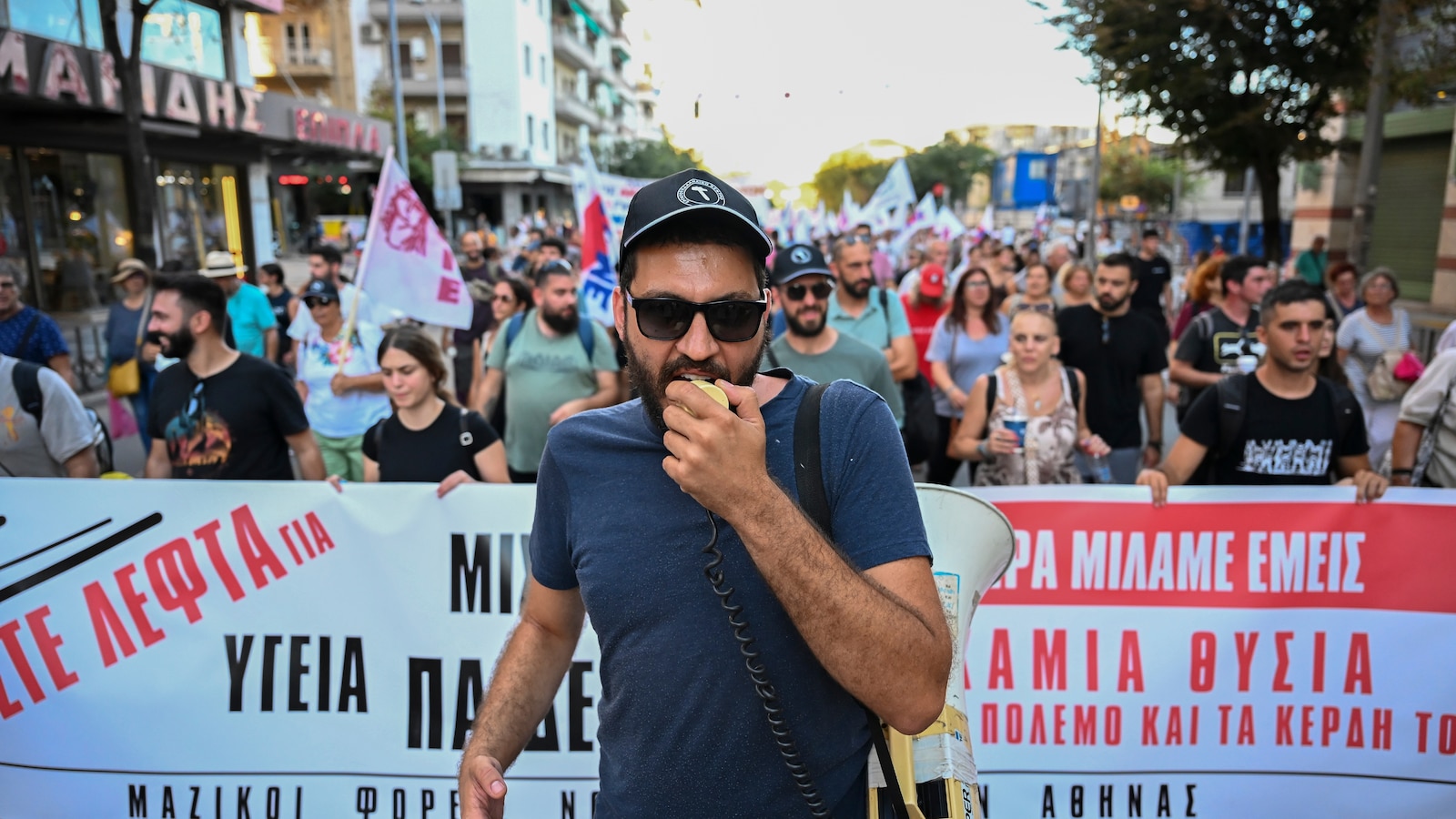
Greek Prime Minister Kyriakos Mitsotakis has unveiled a national economic relief package valued at more than 2 billion euros ($2.3 billion), pledging tax cuts, wage increases, and targeted financial support measures as his administration seeks to address mounting public anger over high living costs ahead of a general election scheduled for next year. The announcement came against a backdrop of widespread public demonstrations, with union workers, civil servants, and citizens taking to the streets to protest eroding purchasing power, escalating housing costs, and elevated prices for basic consumer goods. Addressing the country during a period of heightened socio-economic tension, Mitsotakis presented the multi-billion-euro initiative as a responsible distribution of the nation's recent fiscal gains, attempting to strike a delicate balance between public relief and European budget commitments.
Key facts
What happened
Greek Prime Minister Kyriakos Mitsotakis outlined a comprehensive fiscal program designed to provide direct financial relief to citizens impacted by prolonged inflation and stagnant purchasing power. According to reporting by ABC News, the government's plan promises over 2 billion euros ($2.3 billion) allocated toward personal tax reductions, salary increases for public sector workers, and supplementary support measures intended for vulnerable socio-economic groups.
As the prime minister delivered his policy roadmap, thousands of demonstrators gathered in major urban centers across Greece to voice frustration over the cost-of-living crisis. Organized by major labor confederations representing both private and public sector employees, the rallies focused on the widening gap between household incomes and everyday expenses. Protesters argued that recent economic growth metrics praised by international credit agencies have failed to translate into tangible improvements for average workers, who continue to face high energy bills, rising grocery prices, and escalating residential rents.
In his address, Mitsotakis argued that the country's recent macroeconomic recovery—marked by consecutive years of above-average economic growth in the Eurozone and enhanced tax collection efficiency—provided the fiscal space necessary to fund the package. He emphasized that the proposed tax relief and wage enhancements would be implemented in a manner that preserves Greece's primary budget surplus targets, seeking to reassure international financial markets that the government will not revert to the uncoordinated spending patterns that characterized prior decades.
Why it matters
The economic package carries significant implications for Greek households, domestic political stability, and the country's standing within European financial frameworks. For millions of citizens, years of compounding inflation have severely constrained disposable income. While macroeconomic indicators have pointed to a broader economic rebound following a decade of financial distress, real wages in Greece have lagged behind those of many West European peers, leaving the working class particularly vulnerable to post-pandemic price shocks.
Politically, the fiscal announcements signal the effective start of the campaign season leading into the upcoming general election. Mitsotakis and his governing New Democracy party face an increasingly discontented electorate that views cost-of-living relief as the central benchmark of governmental performance. By deploying fiscal resources toward tax cuts and income support, the administration hopes to blunt criticism from political opponents while reinforcing its narrative of competent economic stewardship.
From an international perspective, the 2 billion euro outlay serves as a test of Greece's post-bailout economic model. Having spent years under stringent external supervision by European institutions and the International Monetary Fund, the Greek government must demonstrate that it can offer meaningful social welfare protections without compromising fiscal rectitude or reigniting public debt concerns. Analysts and bond market investors closely evaluate whether such fiscal pledges align with the European Union's updated economic governance rules, which mandate strict limits on sovereign debt accumulation and deficit expansion.
The background
To fully understand the gravity of the current economic dispute, it is necessary to examine Greece's turbulent fiscal history over the past decade and a half. Following the global financial crisis of 2008, Greece entered a protracted economic emergency characterized by spiraling public debt and systemic banking vulnerabilities. In 2010, the country was forced to request the first of three international bailout programs, totaling over 280 billion euros, provided by the European Commission, the European Central Bank, and the International Monetary Fund—collectively known as the Troika.
In exchange for financial rescue funds, successive Greek governments were required to implement severe austerity measures. These included deep cuts to public sector wages, significant pension reductions, public asset privatizations, and broad tax increases. The economic contraction that followed wiped out roughly a quarter of Greece's gross domestic product, while unemployment surged to near 28 percent at its peak in 2013. Although Greece officially exited its final bailout monitoring program in August 2018, the structural damage to household savings and living standards persisted long after the emergency credit facilities concluded.
Kyriakos Mitsotakis took office as prime minister in July 2019 following an election victory by his center-right New Democracy party, promising market-oriented reforms, business deregulation, and tax reductions to stimulate economic investment. His administration secured a second term in mid-2023, bolstered by positive growth figures and a significant reduction in public debt relative to national output. In late 2023 and early 2024, major international credit rating agencies restored Greece's sovereign credit rating to investment grade, marking a major milestone in the country's institutional recovery.
However, the macroeconomic recovery coincided with a severe global inflation surge driven by supply chain disruptions during the COVID-19 pandemic and the European energy crisis following Russia's invasion of Ukraine in February 2022. While national GDP grew and tourism revenues set historic records, consumer price inflation outstripped baseline wage growth. Housing affordability deteriorated rapidly, particularly in major cities such as Athens and Thessaloniki, leading labor organizations to argue that the recovery has benefited corporate sectors while leaving workers behind.
Reaction
The prime minister's fiscal pledges drew immediate and sharp responses from labor organizations, political opposition parties, and civic groups across the country. Trade union leaders representing public and private workers asserted that the proposed 2 billion euro package represents a modest concession that fails to offset years of purchasing power loss. Union representatives called for systemic reforms, including the full restoration of collective bargaining rights dissolved during the bailout era, mandatory inflation-indexed minimum wage increases, and immediate price caps on essential household commodities and electricity tariffs.
Opposition political parties offered critical assessments of the announcement. Leaders from the left-wing Syriza party and the center-left PASOK movement characterized the economic proposals as pre-election maneuvers designed to buy voter favor rather than address underlying structural inequalities. Opposition spokespersons argued that the government should reduce value-added tax rates on food items and target excess corporate profits in energy and retail sectors to provide immediate relief to struggling families.
Conversely, business associations and commerce chambers expressed cautious optimism regarding the planned tax reductions, noting that lowering fiscal burdens on enterprise and labor can boost investment and employment. Government spokespersons defended the policy framework, reiterating that unconstrained public spending would risk destabilizing the national economy and threatening the hard-won investment-grade status that keeps sovereign borrowing costs manageable.
What we don't know yet
While Prime Minister Mitsotakis established the total financial scale of the package at more than 2 billion euros, several critical implementation details remain unclarified in the available reporting. The precise breakdown of how funds will be divided between income tax cuts, property tax adjustments, and public sector pay rises has not been fully articulated. Additionally, the exact timeline for when individual measures will take effect—whether through immediate decree or staggered legislative rollouts—remains unspecified.
It is also unclear how the financial burden will be distributed across different income brackets, specifically whether tax reductions will disproportionately benefit high-earning households or low-income workers. Furthermore, the economic growth projections and tax revenue assumptions underpinning the funding model have not been fully exposed to parliamentary scrutiny, leaving open questions about how the government will sustain these commitments if broader European economic growth slows.
What to watch
In the coming months, several key political and economic benchmarks will indicate the trajectory of Greece's economic policy. The formal introduction of the annual state budget in the Hellenic Parliament will offer the first detailed legislative breakdown of the 2 billion euro package, revealing the specific tax codes and salary schedules slated for revision. Parliamentary debates and committee hearings surrounding the budget bill will serve as a key forum for opposition challenges and potential policy amendments.
Observers should also monitor upcoming economic data releases from the Hellenic Statistical Authority and Eurostat, particularly monthly inflation figures, retail trade volumes, and wage growth indices, which will determine whether consumer purchasing power is recovering. Additionally, labor unions have signaled that ongoing protest actions and potential nationwide general strikes may be scheduled to coincide with parliamentary votes, testing the government's resolve. Finally, political polling leading up to the formal scheduling of the general election will demonstrate whether the economic relief measures succeed in reshaping public sentiment in favor of the governing administration.
This account is based on original reporting by ABC News.
How this story was produced
This report was written by The Global Wire newsroom from reporting first published by ABC News. We verify the core facts against the original report, write our own account, and add the background and consequences a short wire item leaves out. Drafting is AI-assisted inside an editor-supervised pipeline, and every story is checked for accuracy of attribution, structure and duplication before it appears — full detail in our AI and funding disclosure.
Spotted an error? Tell us at corrections@horizonglobalnews.com and read our corrections policy or editorial standards.



Reader comments
Loading comments…