

Glacier retreat and thawing permafrost elevate Alpine hazard risks, experts warn
Following disastrous mountain flooding in Nepal, glaciologists warn that rapid climate warming and permafrost loss are destabilizing steep slopes across the European Alps.
By The Global Wire Newsroom · Reported from euronews.com
Link preview · horizonglobalnews.com
Glacier retreat and thawing permafrost elevate Alpine hazard risks, experts warn
Following disastrous mountain flooding in Nepal, glaciologists warn that rapid climate warming and permafrost loss are destabilizing steep slopes across the European Alps.
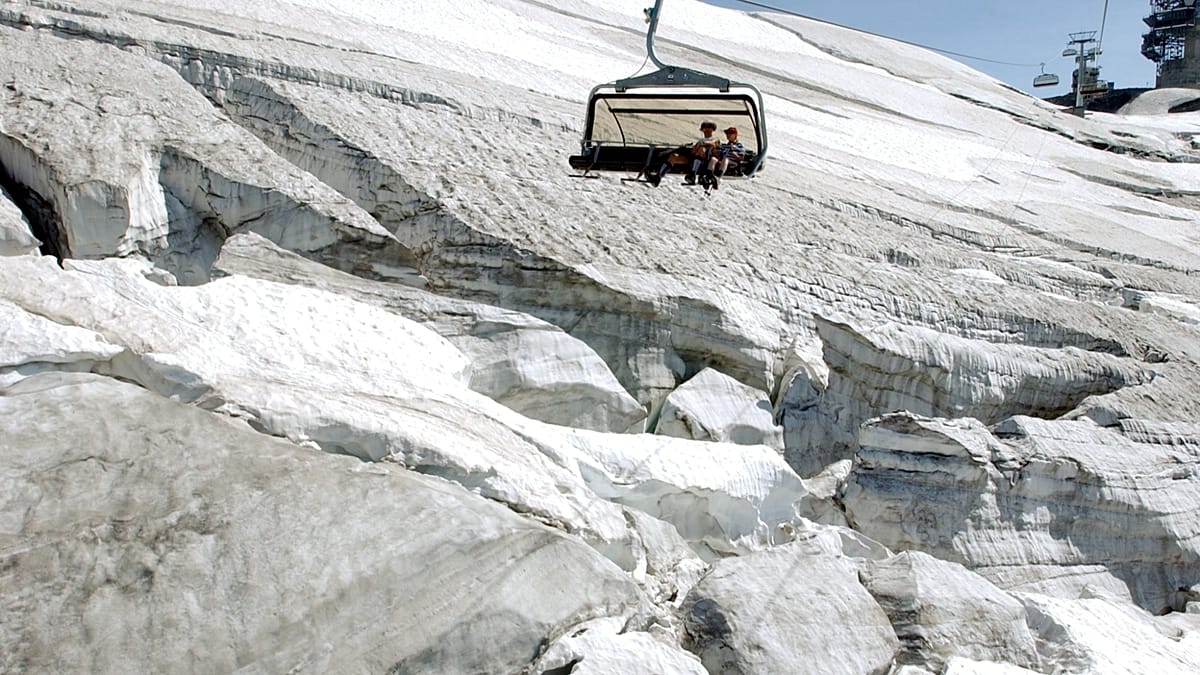
A destructive flood disaster in Nepal has sparked renewed warnings from climate scientists regarding the escalating risk of glacial and high-mountain catastrophes across the European Alps. In a report published on August 29, 2026, glaciologist Olaf Eisen emphasized that Europe ranks among the fastest-warming continents on Earth, driven by human-induced climate change. Speaking on the severe destabilization observed in high-altitude terrain, Eisen noted that rapid glacial retreat combined with the thawing of subterranean permafrost is degrading the structural stability of mountain slopes, creating hazardous conditions that mirror severe cryospheric events recently witnessed in the Himalayas.
Key facts
What happened
On August 29, 2026, Euronews reported on growing concerns among cryosphere experts that catastrophic mountain hazards seen in high-altitude regions such as Nepal present a clear preview of escalating dangers in the European Alps. Glaciologist Olaf Eisen identified human-driven global warming as the primary force accelerating the degradation of mountain environments across Europe.
According to Eisen's assessment, the rapid loss of glacial volume and the widespread thaw of permafrost—permanently frozen ground that anchors high-elevation rock and sediment—are fundamentally altering the stability of mountain slopes. The report drew direct parallels to extreme hydrological events in Nepal, where glacial lake outbursts, sudden meltwater surges, and massive slope collapses have inundated downstream valleys, destroying infrastructure and displacing communities.
In European mountain ranges, similar dynamics are unfolding as rising temperatures weaken the mechanical cohesion of steep rock walls and cause glacial lakes to expand behind unstable natural dams composed of ice and loose glacial debris. The warning underscores that high-altitude warming is no longer merely a long-term environmental issue, but an immediate operational risk for mountain management, civil defense authorities, and public safety across the Alpine states.
Why it matters
The destabilization of Alpine ice and permafrost poses direct, multi-billion-euro risks to infrastructure, civil safety, and local economies across central Europe. Millions of permanent residents and millions of seasonal tourists inhabit or visit the valleys of France, Switzerland, Italy, Austria, and Germany. Critical transport arteries, including trans-Alpine railway lines, highway tunnels, and high-altitude mountain passes, sit directly beneath steep slopes vulnerable to sudden rockfalls, landslides, and torrential debris flows.
Furthermore, high-altitude hazard dynamics threaten vital energy infrastructure. Hydroelectric reservoirs, which supply substantial electricity to the European power grid, rely on predictable meltwater flows and stable surrounding topography. Slope failures into reservoirs can generate high-velocity displacement waves capable of overtopping dams, while excessive sediment loading from eroded moraines can damage intake structures and hydro-turbine machinery.
In tourism-dependent mountain towns, changing cryospheric stability endangers winter ski resorts and summer mountaineering routes. Mountain guide associations have already been forced to permanently close traditional climbing routes during summer months due to frequent rockfalls. As glacial lakes form higher up in mountain basins, downstream towns face heightened risks of Glacial Lake Outburst Floods (GLOFs), requiring regional authorities to invest heavily in early warning networks, retention basins, and costly engineering interventions.
The background
To understand the significance of Eisen's warning, it is necessary to examine the broader climate trajectory of the European continent and the physical mechanics of mountain cryosphere degradation. According to multi-decadal climate observations from the World Meteorological Organization (WMO) and the European Union's Copernicus Climate Change Service, Europe has been warming faster than any other inhabited continent, registering temperature increases roughly twice the global average rate since the late 20th century.
In mountain environments, permafrost exists at elevations typically above 2,500 to 3,000 meters above sea level, filling microscopic fractures within bedrock and binding loose glacial moraines together. As average atmospheric temperatures rise and summer heatwaves become longer and more intense, the zero-degree thermal boundary penetrates deeper into the mountain core. When interstitial ice thaws, water pressure within rock joints increases while structural cohesion diminishes, triggering rockslides, block falls, and massive slope failures.
The Alpine region has already experienced major cryospheric disasters in recent years. On July 3, 2022, a massive collapse of the Marmolada glacier in the Italian Dolomites released thousands of tons of ice, rock, and debris down the mountain, killing 11 mountaineers and injuring eight others. In Switzerland, villages such as Brienz/Brinzauls have faced recurring evacuation orders due to unstable mountain slopes sliding above residential zones.
Similarly, in the Himalayas, mountain nations like Nepal have suffered devastating GLOFs and debris surges, such as the catastrophic Melamchi flood in June 2021 and the Thame glacial lake outburst in August 2024, which demolished entire communities. Scientists view the severe impacts in the Himalayas as an indicator of hazards that threaten Alpine regions if global greenhouse gas emissions continue to drive planetary warming.
Reaction
Following the warning published by Euronews, international glaciologists and mountain safety experts have reinforced the urgent need for expanded monitoring of high-altitude hazards. Cryosphere researchers across Europe have long advocated for comprehensive satellite and ground-based surveillance of alpine slope movements and newly forming glacial lakes.
Civil defense agencies in Alpine nations—including Switzerland's Federal Office for the Environment (FOEN), Italy's Department of Civil Protection, and Austria's Torrent and Avalanche Control service—are under pressure to adapt their risk assessment models. While public officials have not issued a unified joint response to Eisen's specific remarks, regional authorities across the Alps are actively evaluating local emergency plans and installing automated monitoring hardware, such as interferometric radar and seismic sensors, on high-risk mountain faces.
Environmental organizations and climate advocacy groups have cited the glaciologist's statement as further evidence that carbon mitigation efforts must be coupled with aggressive climate adaptation funding to protect mountain communities from sudden geomorphic disasters.
What we don't know yet
Despite advancing observational technology, significant scientific uncertainties remain regarding the exact timing and magnitude of potential high-mountain slope collapses and glacial lake breaches in the Alps. While scientists understand the macro-level drivers of permafrost thaw and ice retreat, predicting the precise structural failure point of a specific rock wall or moraine dam remains extremely challenging.
Furthermore, there is incomplete mapping of small, high-elevation glacial lakes across the entire Alpine arch. While large, prominent glaciers are continuously monitored, hundreds of smaller, transient water bodies formed by melting ice receive less frequent observational coverage.
It also remains uncertain how extreme weather events—such as intense summer atmospheric rivers delivering heavy rainfall onto high-altitude snowpacks—will interact with thawing permafrost to trigger compound hazards. The extent to which existing engineering protections, such as debris-flow retention basins and drainage channels, can withstand unprecedented event magnitudes also stays unverified.
What to watch
In the coming months and years, several key indicators will reveal how Alpine nations respond to escalating high-mountain risks. Researchers and policymakers will closely monitor the publication of updated European cryosphere assessments by bodies such as the Intergovernmental Panel on Climate Change (IPCC) and the European Geosciences Union (EGU).
Attention will focus on municipal and national budget allocations for Alpine hazard mitigation, specifically funding directed toward satellite-based radar monitoring, real-time warning networks, and artificial drainage projects for unstable glacial lakes.
Observer networks will also watch for structural developments during peak summer melt seasons. Summer temperature anomalies and prolonged high-altitude heatwaves will serve as immediate indicators of heightened rockfall and glaciological activity. Additionally, updates to land-use zoning laws and building permits in high-risk Alpine valleys will demonstrate whether local authorities are adjusting urban planning rules to reflect growing cryospheric hazards.
This report contains information originally published by Euronews on August 29, 2026.
How this story was produced
This report was written by The Global Wire newsroom from reporting first published by euronews.com. We verify the core facts against the original report, write our own account, and add the background and consequences a short wire item leaves out. Drafting is AI-assisted inside an editor-supervised pipeline, and every story is checked for accuracy of attribution, structure and duplication before it appears — full detail in our AI and funding disclosure.
Spotted an error? Tell us at corrections@horizonglobalnews.com and read our corrections policy or editorial standards.
Reader comments
Loading comments…