

Germany Blames Russia for Explosive Drone Discovered at Leipzig Airport
Berlin attributes an August drone carrying explosives at Leipzig/Halle Airport to Russian intelligence, following months of unauthorized surveillance over critical infrastructure.
By The Global Wire Newsroom · Reported from Kirsten Ripper
Link preview · horizonglobalnews.com
Germany Blames Russia for Explosive Drone Discovered at Leipzig Airport
Berlin attributes an August drone carrying explosives at Leipzig/Halle Airport to Russian intelligence, following months of unauthorized surveillance over critical infrastructure.
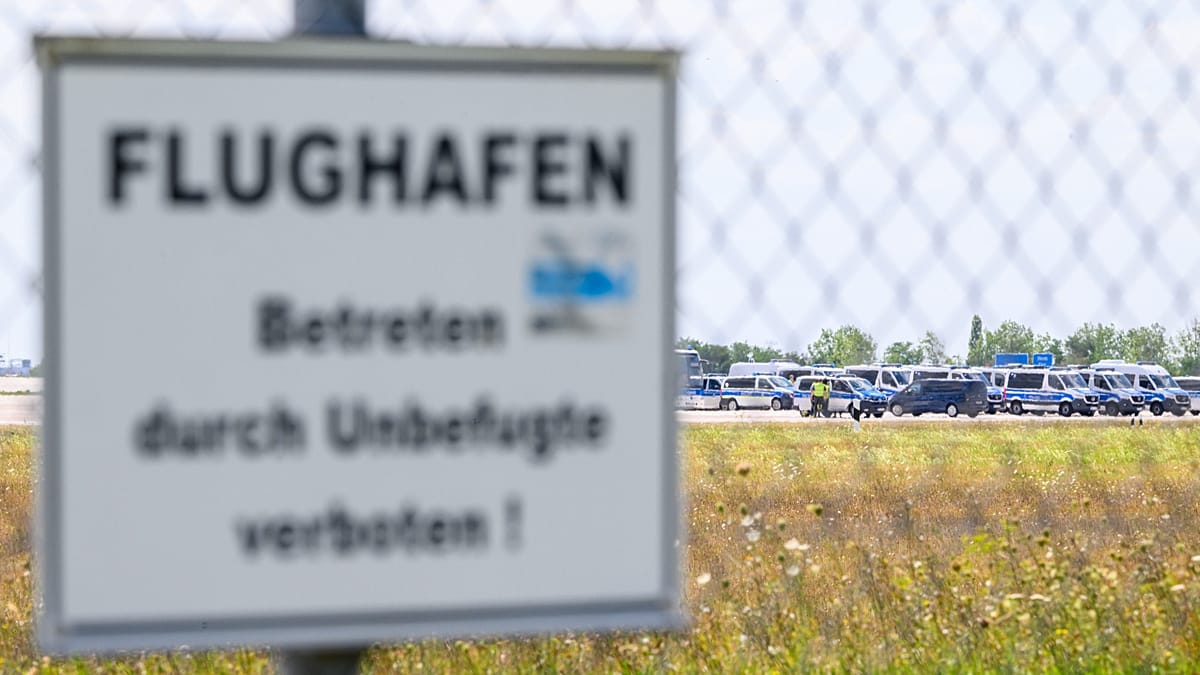
German government officials have attributed an explosive-laden drone recovered at Leipzig/Halle Airport to Russian state agencies, marking a sharp escalation in covert operations targeting European transport infrastructure. The unmanned aircraft, discovered on airport grounds during the overnight hours of August 4 to August 5, was found carrying a functional explosive payload, according to government findings detailed in reporting by Kirsten Ripper. While German security authorities have cataloged months of unauthorized drone overflights hovering above military installations, energy facilities, and industrial complexes across the country, the discovery of explosives at a primary civilian and military logistics hub elevates the security situation from airborne surveillance to an attempted kinetic attack inside a NATO member state.
Key facts
What happened
During the overnight period spanning August 4 and August 5, perimeter monitoring and air safety systems at Leipzig/Halle Airport detected an unauthorized drone operating in restricted airspace above the facility. Upon locating and securing the aircraft, responding federal law enforcement officers and technical experts discovered that the vehicle was equipped with an explosive device designed to detonate on target.
Following the initial discovery, forensic teams and intelligence specialists conducted a detailed examination of the drone's structural components, flight controller telemetry, communication frequencies, and explosive compounds. That technical investigation enabled authorities in Berlin to formally link the operation to Russian state agencies, identifying the event as part of a directed campaign rather than an isolated action by an independent actor.
The discovery marks a substantial shift in the pattern of unmanned aerial sightings across Germany. Over preceding months, federal and state security authorities had logged numerous unauthorized drone flights over high-value targets, including military training grounds, naval facilities along the Baltic and North Sea coastlines, chemical industrial parks, and critical power grid installations. While earlier flights appeared centered on mapping infrastructure, testing radar detection thresholds, and monitoring military activities, the August event at Leipzig/Halle provided concrete physical evidence of intent to execute explosive attacks on German soil.
Why it matters
The formal attribution of an explosive drone incident to Russian state actors represents a major shift in the security posture of Western Europe. While intelligence agencies have long warned of Russian hybrid operations, the deployment of armed unmanned aircraft against civilian logistics infrastructure crosses a critical line from intelligence gathering to direct sabotage. For aviation authorities and logistics firms, the presence of explosive-laden drones over commercial airfields introduces severe hazards to flight safety, cargo operations, and ground crews. Leipzig/Halle Airport handles massive international air freight volume and acts as a central sorting node for major express carriers; any sustained threat or disruption there threatens supply chains across Europe.
The incident also poses deep strategic challenges for NATO and European defense planning. Hybrid tactics are specifically designed to operate in a gray zone below the threshold that would automatically trigger a collective military response under Article 5 of the North Atlantic Treaty. By using covertly deployed drones with explosive payloads, foreign intelligence services can inflict physical damage or create chaos while seeking to obscure direct responsibility.
Furthermore, the discovery exposes systemic vulnerabilities in civil air defense. Western European security structures were primarily designed to protect civilian airports from ground-based intruders, conventional terrorism, or accidental drone trespass by hobbyists. Responding to state-backed, weaponized drones operating in dense civil airspace requires advanced counter-unmanned aerial systems, specialized electronic warfare assets, and revised rules of engagement. Equipping domestic airports and critical facilities with these tools demands substantial financial investment and regulatory reform across European jurisdictions.
The background
Leipzig/Halle Airport, situated in Saxony in eastern Germany, plays an essential role in international commerce and European defense logistics. It serves as one of Europe’s primary air freight hubs, acting as a main international hub for DHL Express and processing hundreds of thousands of tons of cargo each year. Additionally, the airport hosts charter operations supporting the Strategic Airlift International Solution (SALIS), a consortium that provides heavy transport aircraft capability to NATO members and allied nations for strategic military transport.
The incident occurs against a background of rising hybrid security threats across Western Europe following Russia’s full-scale invasion of Ukraine in February 2022. Security agencies, including Germany's Federal Office for the Protection of the Constitution (BfV) and Federal Intelligence Service (BND), have consistently warned of covert operations orchestrated by Russian intelligence services. These activities have included cyberattacks on public utilities, arson attempts against industrial sites, satellite navigation signal spoofing over the Baltic region, and persistent drone surveillance of sites where Allied forces train Ukrainian military personnel.
Leipzig/Halle Airport has been targeted by hybrid operations before. In July 2024, an incendiary device concealed within an air freight package caught fire at the airport's DHL facility before being loaded onto a cargo flight. European investigators subsequently attributed that plot to Russian covert networks attempting to detonate incendiary packages aboard air cargo flights across Europe.
German law enforcement operates under complex jurisdictional boundaries regarding airspace security. Domestic air traffic safety is overseen by Deutsche Flugsicherung (DFS), while airport security falls under the jurisdiction of the Federal Police (Bundespolizei). However, federal laws have historically limited the authority of police forces to deploy electronic jamming equipment or military-grade kinetic interceptors in civil airspace due to concerns over collateral damage and interference with commercial communication systems.
Reaction
The attribution of the armed drone to Russian agencies has intensified calls among German lawmakers for immediate security policy reforms. Members of the Bundestag’s Parliamentary Oversight Panel and Defense Committee have urged the federal government to establish unified command protocols and expand the operational authority of domestic security forces to neutralize airborne threats.
In the diplomatic arena, German officials are expected to raise the Leipzig incident within NATO’s North Atlantic Council and European Union security frameworks. Formal attributions of state-backed hybrid attacks routinely lead to diplomatic measures, including the expulsion of suspected foreign intelligence officers operating under embassy cover, reduced diplomatic representation, or targeted economic sanctions.
Moscow routinely denies involvement in sabotage, cyberattacks, or unauthorized drone activity across Western nations, dismissing Western attributions as baseless claims. Nonetheless, European leaders increasingly view public attribution as a necessary mechanism to establish international consensus, justify increased defense spending, and build legal cases for counter-measures against state-sponsored hybrid networks.
What we don't know yet
Several critical operational and technical aspects of the Leipzig incident remain undisclosed by investigating authorities. Official reports have not revealed the precise technical specifications, model, or payload size of the drone recovered at the airport. It remains unknown whether the aircraft was a modified commercial drone or a custom-built military asset designed specifically for covert delivery.
Additionally, authorities have not publicly identified the launch location or trajectory of the vehicle. It is unclear whether the drone was operated by a covert cell operating within German territory or launched from an external location, such as a maritime vessel or adjacent jurisdiction.
The precise intended target within the airport complex also remains uncertain. Investigators have not publicly confirmed whether the drone was targeted at cargo handling facilities, fuel reserves, aircraft parked on the apron, or military transport assets. Finally, federal authorities have not disclosed whether any suspects or local accomplices have been arrested or formally charged by the Generalbundesanwalt in connection with the event.
What to watch
Several developments will indicate how Germany and its international partners respond to this security threat. A key indicator will be whether the Generalbundesanwalt (Federal Public Prosecutor) formally assumes primary jurisdiction over the investigation, a step reserved for serious offenses against national security and foreign state-directed sabotage.
In the German parliament, lawmakers are set to evaluate proposed statutory updates to the Federal Police Act and aviation security statutes. These legislative proposals aim to grant law enforcement agencies expanded legal authorization to use high-powered electronic jammers, net-capture technology, and kinetic interceptors around high-risk transportation and energy infrastructure.
Internationally, future NATO defense ministerial meetings and European Council summits will provide concrete signals regarding coordinated responses. Observers will monitor whether member nations establish joint airspace surveillance frameworks, expand intelligence sharing regarding covert sabotage networks, or implement new sanctions packages targeting entities involved in unmanned aerial vehicle manufacturing and covert logistics.
This account relies on reporting by Kirsten Ripper, who first detailed the German government’s attribution of the August 4-5 Leipzig/Halle Airport explosive drone incident to Russian state agencies and documented the surrounding pattern of aerial incursions over German infrastructure.
How this story was produced
This report was written by The Global Wire newsroom from reporting first published by Kirsten Ripper. We verify the core facts against the original report, write our own account, and add the background and consequences a short wire item leaves out. Drafting is AI-assisted inside an editor-supervised pipeline, and every story is checked for accuracy of attribution, structure and duplication before it appears — full detail in our AI and funding disclosure.
Spotted an error? Tell us at corrections@horizonglobalnews.com and read our corrections policy or editorial standards.

Reader comments
Loading comments…