

General Atomics Unveils Liquid-Metal Microreactor for U.S. Military Operations
General Atomics has detailed a liquid-metal-cooled microreactor with output scalable up to 20 MWe designed to provide reliable tactical power for U.S. Army applications in extreme environments.
By The Global Wire Newsroom · Reported from Prabhat Ranjan Mishra
Link preview · horizonglobalnews.com
General Atomics Unveils Liquid-Metal Microreactor for U.S. Military Operations
General Atomics has detailed a liquid-metal-cooled microreactor with output scalable up to 20 MWe designed to provide reliable tactical power for U.S. Army applications in extreme environments.
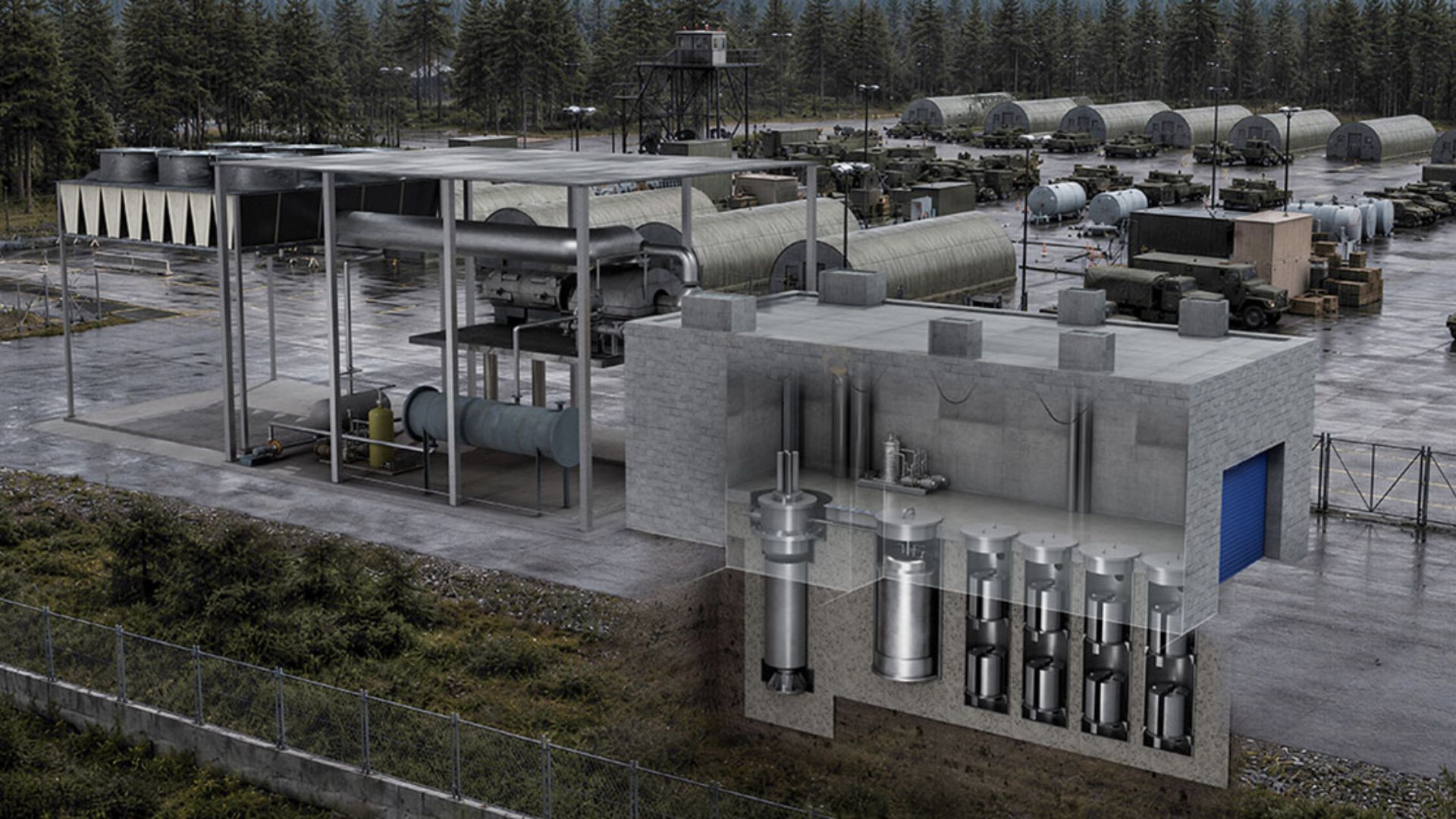
Defense contractor General Atomics has unveiled details regarding a liquid-metal-cooled nuclear microreactor engineered to deliver reliable electrical generation for the United States military in harsh operational environments, according to reporting published on August 27, 2026. The compact reactor system is designed with a standard baseline generation capacity of approximately 5 megawatts electric, featuring a modular architectural framework capable of scaling up to roughly 20 megawatts electric. Built to operate independently of traditional regional power grids and vulnerable fuel supply pipelines, the unit aims to address the growing energy demands of military installations and austere forward bases operating under extreme environmental conditions.
Key facts
What happened
According to reporting by Prabhat Ranjan Mishra, General Atomics detailed its technical design for a modern microreactor aimed at fulfilling military electrical power requirements. The system employs a liquid metal cooling mechanism, a technology selected to maintain stable heat transfer and internal thermal management even under challenging climate extremes.
The baseline model of the microreactor delivers roughly 5 MWe of continuous electrical output. To accommodate varying operational scales, General Atomics engineered the platform using a flexible architecture that allows power capacity to expand up to approximately 20 MWe depending on mission parameters. This modular scalability enables the system to support a wide spectrum of military uses, ranging from austere remote outposts requiring modest baseline electricity to larger command hubs or expeditionary bases with heavy power footprints.
The equipment is specifically structured to withstand extreme environmental conditions, ensuring that field forces retain uninterrupted electricity during severe weather, temperature swings, or environmental stresses that typically degrade conventional diesel generators or renewable installations. By combining compact physical dimensions with advanced thermal engineering, the design seeks to offer a transportable, resilient alternative to fossil-fuel-dependent field generation.
Why it matters
The introduction of a 5 MWe to 20 MWe transportable liquid-metal-cooled reactor represents a significant evolution in how military logistics and field energy architectures are structured. Modern defense operations are increasingly energy-intensive, driven by data processing centers, advanced radar installations, air defense shields, directed-energy weapons, and electrified ground vehicle fleets. Traditional expeditionary bases rely overwhelmingly on diesel-powered generator sets, requiring continuous fuel convoys that present severe operational risks, consume vast supply chain resources, and expose personnel to tactical ambushes along vulnerable supply lines.
A single 5 MWe microreactor operating continuously for several years without refueling can replace millions of gallons of diesel fuel, drastically compressing the logistical tail required to sustain remote garrisons. Furthermore, the ability to scale output up to 20 MWe provides military commanders with the flexibility to power substantial defense complexes or critical infrastructure assets without altering the core operational mechanics of the reactor design.
Beyond forward tactical locations, such microreactors offer severe-weather resilience for domestic military bases and critical government infrastructure. In scenarios where commercial utility grids suffer prolonged blackouts due to extreme climate events, cyberattacks, or physical strikes, liquid-metal-cooled microreactors can serve as isolated microgrid anchors. The resilience of liquid metal coolants under broad operational ranges provides an added safety cushion against mechanical failure in hostile operational climates.
The background
For several decades, nuclear power within the United States military was largely restricted to sea-based platforms, including aircraft carriers and submarines operated by the U.S. Navy. However, the Department of Defense has historically explored terrestrial nuclear applications, dating back to early cold-war experimental programs such as the Army Nuclear Power Program active from 1954 to 1974. Those early systems were eventually decommissioned due to technical limitations, maintenance complexity, and shifting tactical priorities.
In recent years, interest in terrestrial nuclear energy has re-emerged rapidly across defense and civil sectors. The United States Department of Defense, primarily through the Strategic Capabilities Office and the Army Operational Energy office, initiated programs such as Project Pele to prototype mobile microreactors. These initiatives require reactors to be transportable by standard shipping containers or military cargo aircraft, capable of rapid setup, and safe against catastrophic loss of coolant or physical breach.
General Atomics, headquartered in San Diego, California, brings an extensive history in advanced nuclear technology and defense engineering, having previously developed reactor concepts such as the TRIGA research reactor and advanced high-temperature gas-cooled systems. Liquid metal cooling technology—which historically utilized elements like sodium, lead, or lead-bismuth alloys—offers distinct heat transfer advantages over traditional light-water reactors. Liquid metals remain liquid at elevated temperatures under ambient pressure, reducing internal system pressures and minimizing the risk of high-pressure coolant loss accidents. This characteristic makes liquid-metal systems especially suitable for compact, high-density power generation in remote or extreme outdoor operating areas where heavy secondary pressure containment infrastructure cannot be easily transported.
Reaction
Formal responses from official military oversight bodies, federal regulators, and defense committees regarding General Atomics' microreactor design parameters have not yet been fully publicized in the initial reporting. However, leadership within the U.S. Department of Defense and energy policy circles has repeatedly expressed strong backing for microreactor deployment to achieve energy security.
Industry analysts expect regulatory bodies such as the U.S. Nuclear Regulatory Commission and military safety panels to evaluate the liquid-metal cooling design against stringent safety, containment, and non-proliferation criteria. Defense logisticians are expected to monitor field test readiness closely, assessing how liquid metal systems compare against alternative microreactor designs that utilize high-temperature gas cooling or heat pipes. Critical responses from environmental oversight groups and local communities surrounding potential deployment sites typically center on safety protocols during transport, nuclear waste disposal plans, and security measures to prevent physical sabotage or radiological contamination.
What we don't know yet
Several technical and operational details regarding General Atomics' microreactor project remain unconfirmed in the available reporting. It has not been specified which exact liquid metal alloy is used for primary coolant loops—whether sodium, lead-bismuth, or another low-melting-point liquid metal—a distinction that heavily influences material corrosion risks, coolant maintenance, and overall operational safety profiles.
Additionally, the reporting does not delineate the specific fuel chemistry or enrichment level intended for the system, such as High-Assay Low-Enriched Uranium (HALEU), nor does it establish concrete timelines for prototype construction, physical demonstration testing, or full operational deployment within Army units. The precise transport footprint—including the total weight, container dimensions, setup duration, and active operational lifespan before refueling—also remains undisclosed. Resolving these unknowns is essential for determining how easily the 5 MWe to 20 MWe architecture can be integrated into existing military airlift and logistics networks.
What to watch
In the coming months, defense monitors and energy analysts should watch for official press releases, public filings, or prototype contracts awarded by the U.S. Department of Defense or the Department of Energy to General Atomics. Regulatory submittals to safety authorities will provide critical insight into the design safety evaluations and environmental impact statements governing testing locations.
Key operational milestones to track include land-based testing schedules, transportability demonstrations, and field trial performance under controlled environmental extremes. Observers should also track supply chain developments regarding HALEU fuel availability and specialized liquid metal component manufacturing, both of which serve as major industry bottlenecks. Finally, congressional budgetary approvals for military operational energy projects will indicate the level of financial commitment allocated to scaling this microreactor architecture from testing facilities to active military inventory.
This article incorporates reporting originally published by Prabhat Ranjan Mishra.
How this story was produced
This report was written by The Global Wire newsroom from reporting first published by Prabhat Ranjan Mishra. We verify the core facts against the original report, write our own account, and add the background and consequences a short wire item leaves out. Drafting is AI-assisted inside an editor-supervised pipeline, and every story is checked for accuracy of attribution, structure and duplication before it appears — full detail in our AI and funding disclosure.
Spotted an error? Tell us at corrections@horizonglobalnews.com and read our corrections policy or editorial standards.
Reader comments
Loading comments…