

Centrus Agrees to Supply American HALEU Fuel for Radiant's Microreactor Technology
A supply agreement between Centrus Energy and Radiant Nuclear secures domestic uranium enriched up to 20 percent for portable microreactors aimed at civilian and military markets.
By The Global Wire Newsroom · Reported from Neetika Walter
Link preview · horizonglobalnews.com
Centrus Agrees to Supply American HALEU Fuel for Radiant's Microreactor Technology
A supply agreement between Centrus Energy and Radiant Nuclear secures domestic uranium enriched up to 20 percent for portable microreactors aimed at civilian and military markets.
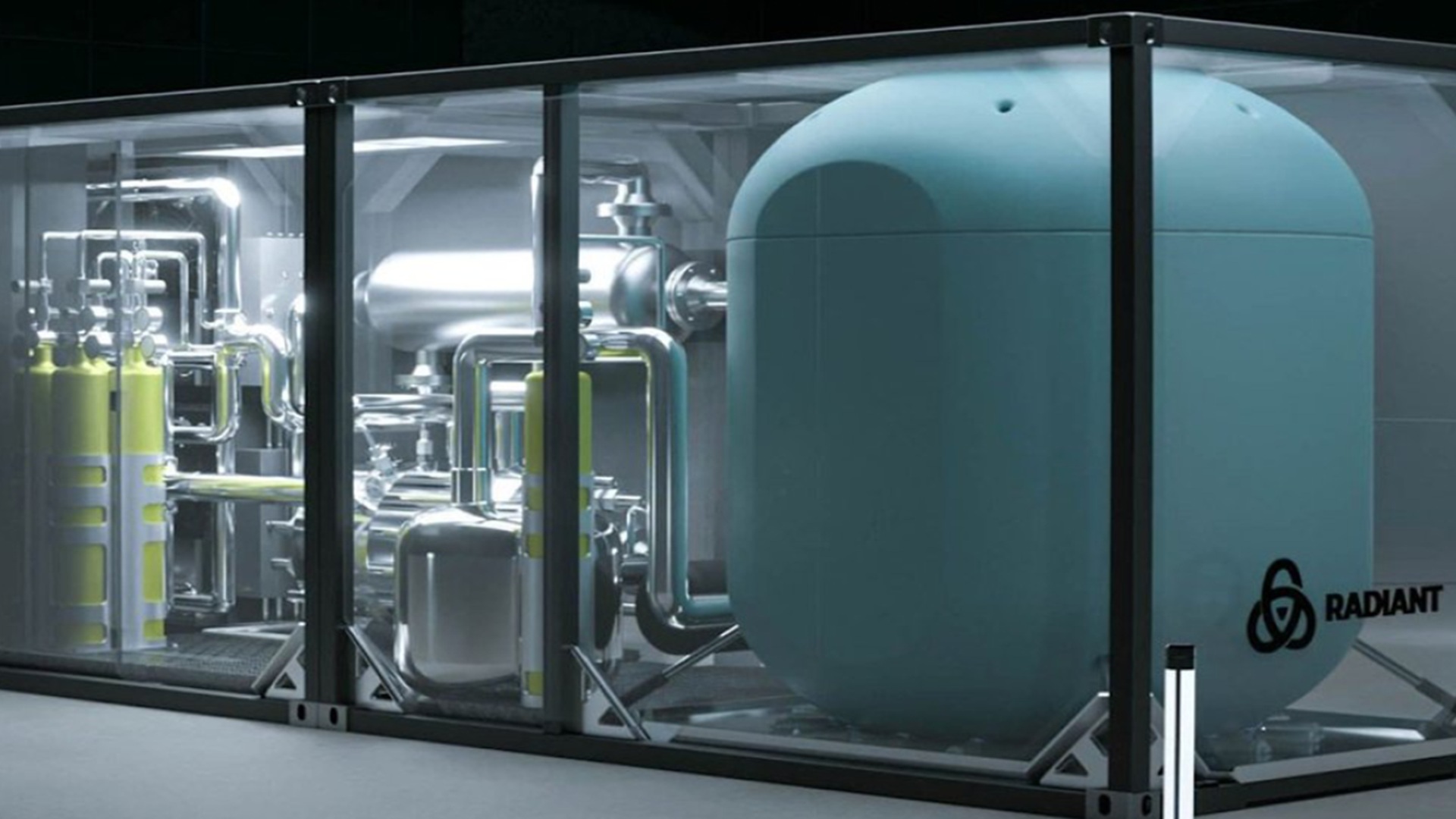
Centrus Energy has finalized an agreement to supply domestically produced High-Assay Low-Enriched Uranium to Radiant Nuclear for its Kaleidos microreactor project, establishing a critical supply pipeline for advanced nuclear technology spanning both civilian and military applications. The fuel commitment involves uranium enriched up to 20 percent, a specialized material profile known as HALEU that is essential for fueling high-density, compact reactors. According to reporting by Neetika Walter, the contract secures U.S.-origin fuel aimed at powering microreactors intended for commercial power generation and national defense deployments, marking a substantive step in the practical commercialization of next-generation nuclear energy systems.
Key facts
What happened
Under the terms of the agreement reported by Neetika Walter, Centrus Energy will provide High-Assay Low-Enriched Uranium (HALEU) sourced from within the United States to power the Kaleidos microreactor being developed by Radiant Nuclear. The uranium fuel will feature enrichment levels of up to 20 percent uranium-235, placing it at the highest threshold allowed for low-enriched nuclear materials under international non-proliferation safeguards.
The allocation of U.S.-origin fuel is tailored to support both civilian commercial uses and defense installations. Microreactors like Kaleidos require a compact physical footprint while delivering continuous power, a combination made possible by the higher energy concentration of HALEU compared to the conventional nuclear fuel used in traditional light-water power plants. By locking in a reliable domestic fuel supply, Radiant Nuclear secures a vital component necessary for advancing its Kaleidos system from design and prototype testing toward operational field deployments. For Centrus, the agreement represents another commercial outlet for its domestic enrichment capabilities as American advanced reactor developers seek to bypass reliance on foreign fuel imports.
Why it matters
The procurement of domestically enriched HALEU is a pivotal development for the commercialization of microreactors and the broader advanced nuclear energy industry. Traditional commercial nuclear reactors rely on low-enriched uranium enriched to between 3 and 5 percent uranium-235. While effective for massive baseload power plants generating hundreds of megawatts, this standard fuel density requires large core volumes and frequent refueling cycles that are unworkable for mobile or localized microreactors.
By utilizing fuel enriched up to 20 percent, microreactors can generate steady thermal and electrical output for several years within a transportable chassis small enough to fit on a standard flatbed trailer or inside a military cargo aircraft. This capability offers a zero-emission alternative to heavy diesel generators, which currently power remote mining operations, island communities, isolated research stations, and forward military bases. In defense settings, military units consume vast quantities of fuel to keep power generators running, creating long, vulnerable supply lines. A reliable microreactor fueled by domestic HALEU can eliminate thousands of fuel truck convoys, drastically reducing logistics burdens and operational risks in contested environments.
Furthermore, securing U.S.-origin fuel addresses critical energy security vulnerabilities. Historically, the global commercial market for HALEU was dominated by Russian state enterprises. Recent geopolitical shifts and trade restrictions have highlighted the urgent necessity of establishing a complete, sovereign nuclear fuel cycle within the United States. A secure domestic pipeline allows reactor developers to satisfy rigorous federal procurement standards, particularly those required for Department of Defense contracts and national security installations that mandate domestically sourced materials.
The background
Nuclear reactor fuel is categorized by the proportion of the fissile isotope uranium-235 present in the material. Natural uranium contained in mined ore consists of approximately 0.7 percent uranium-235, with the vast majority being non-fissile uranium-238. Standard commercial light-water reactors, which account for the majority of the world's nuclear power fleet, use fuel enriched to between 3 and 5 percent uranium-235. Highly Enriched Uranium (HEU), defined as material enriched to 20 percent or greater, is reserved for military submarines, research reactors, and nuclear weapons.
High-Assay Low-Enriched Uranium (HALEU) fills the crucial middle ground between 5 and 20 percent enrichment. Developed specifically for next-generation advanced reactors—including gas-cooled, molten-salt, and liquid-metal microreactors—HALEU enables smaller core designs, higher fuel burnup rates, and longer intervals between refueling stops. Despite its technical advantages, the commercial deployment of HALEU faced a severe bottleneck for years due to a lack of domestic enrichment infrastructure in Western nations.
Until recently, the Russian state nuclear corporation Rosatom, through its subsidiary TENEX, served as the primary commercial supplier of HALEU worldwide. Following Russia's invasion of Ukraine in February 2022 and subsequent legislative actions by the U.S. Congress—including the Prohibiting Russian Uranium Imports Act passed in May 2024—American policymakers prioritized the rapid creation of a domestic HALEU enrichment capacity. The U.S. Department of Energy (DOE) has injected billions of dollars into domestic enrichment initiatives, backing private sector partners to build and operate centrifuge cascades on American soil.
Centrus Energy Corp. operates the American Centrifuge Plant in Piketon, Ohio, which became the first licensed domestic facility to produce HALEU in late 2023 under contract with the DOE. Meanwhile, Radiant Nuclear, a California-based technology firm founded by former aerospace engineers, has been developing the Kaleidos microreactor—a portable, gas-cooled system designed to generate approximately 1 megawatt of electricity. Radiant's design focuses on factory-fabricated, rapidly deployable units capable of operating in extreme conditions, placing it among a handful of leading American ventures striving to commercialize microreactor technology for civilian and defense markets.
Reaction
While specific corporate statements regarding the contract terms were not detailed in the initial reporting, industry analysts and energy policy experts generally view fuel supply agreements between enrichers and reactor developers as crucial milestones for the advanced nuclear sector. Government agencies, including the Department of Energy and the Department of Defense, have consistently voiced support for domestic HALEU supply chains, emphasizing that technological innovation in reactor design cannot succeed without guaranteed access to fuel.
Regulatory oversight bodies, primarily the U.S. Nuclear Regulatory Commission (NRC), are expected to scrutinize the transportation, handling, and safeguards associated with HALEU enriched up to 20 percent. Because fuel near the 20 percent threshold requires heightened physical security measures compared to standard low-enriched uranium, non-proliferation advocates and safety monitors will closely follow the establishment of commercial transport protocols. Environmental groups and local authorities near potential deployment sites are also expected to request detailed safety data on the transportable reactor designs and their eventual decommission and waste disposal procedures.
What we don't know yet
Several critical operational and financial details of the agreement remain undisclosed in the reporting by Neetika Walter. The exact financial valuation of the supply agreement has not been made public, nor has the total volume of HALEU that Centrus has committed to deliver to Radiant Nuclear over the lifespan of the contract.
The specific timeline for the first physical delivery of fuel to Radiant also remains unknown. It is unclear whether the initial batches of HALEU will be dedicated to ground demonstration testing, regulatory prototype validation, or immediate commercial fabrication. Additionally, the regulatory status of the Kaleidos microreactor design before the Nuclear Regulatory Commission—including the expected dates for site licensing, operational approval, and initial field demonstrations for defense or commercial clients—has not been publicly clarified within the framework of this announcement.
What to watch
In the coming months, key benchmarks will determine how effectively this supply agreement translates into deployed nuclear hardware. A primary indicator will be Centrus Energy's production metrics at its Piketon, Ohio centrifuge facility, specifically its ability to scale annual HALEU production capacity beyond initial demonstration volumes to meet commercial order quantities.
Industry observers will also watch for regulatory filings submitted by Radiant Nuclear to the NRC, particularly progress regarding the safety evaluation and licensing of the Kaleidos microreactor system. On the defense front, monitoring procurement announcements from the Department of Defense—such as potential awards under military microreactor initiatives or remote base power programs—will reveal how rapidly federal agencies plan to integrate HALEU-fueled microreactors into military operations. Finally, potential announcements of initial commercial off-take agreements with mining companies, remote utilities, or industrial facilities will signal market readiness for transportable nuclear power units.
This report is based on original reporting by Neetika Walter.
How this story was produced
This report was written by The Global Wire newsroom from reporting first published by Neetika Walter. We verify the core facts against the original report, write our own account, and add the background and consequences a short wire item leaves out. Drafting is AI-assisted inside an editor-supervised pipeline, and every story is checked for accuracy of attribution, structure and duplication before it appears — full detail in our AI and funding disclosure.
Spotted an error? Tell us at corrections@horizonglobalnews.com and read our corrections policy or editorial standards.
Reader comments
Loading comments…