

California Island Seabirds Recover Decades After Rodent Eradication Project
A decade after invasive rats were removed from Anacapa Island, monitoring shows native seabird nests quadrupled and hatching success rose sharply.
By The Global Wire Newsroom · Reported from Muskan Singh; ET Science Desk
Link preview · horizonglobalnews.com
California Island Seabirds Recover Decades After Rodent Eradication Project
A decade after invasive rats were removed from Anacapa Island, monitoring shows native seabird nests quadrupled and hatching success rose sharply.
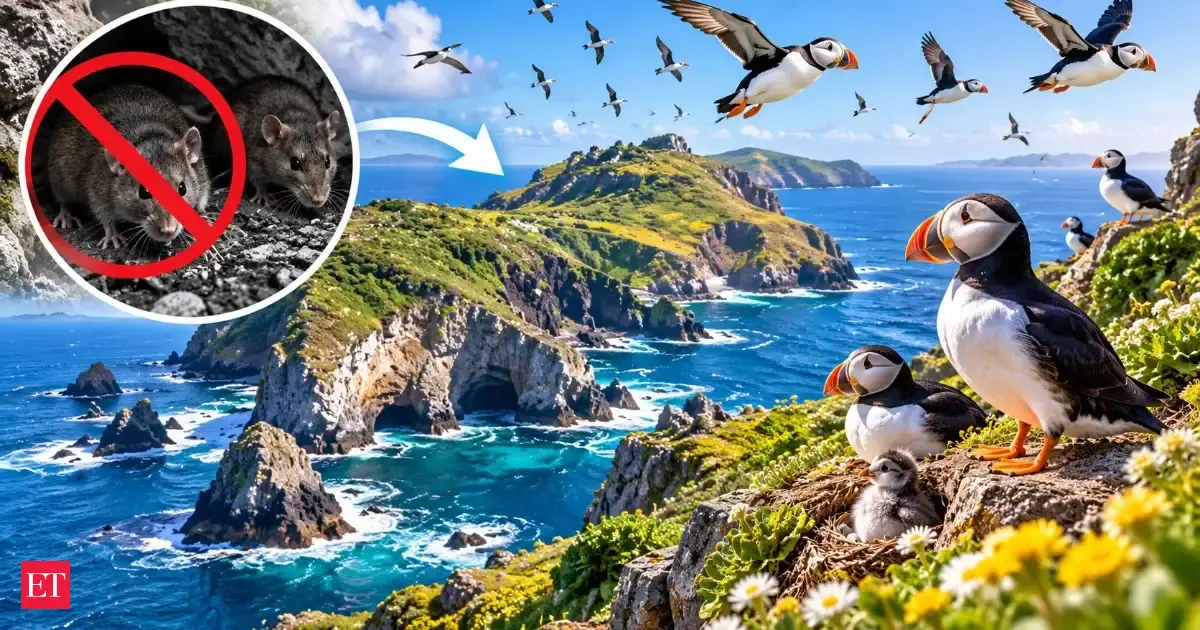
More than two decades after conservation authorities completed an ambitious invasive rodent removal program on Anacapa Island off the Southern California coast, long-term scientific monitoring has documented a dramatic biological recovery across sensitive native seabird populations. According to reporting by ET Science Desk, surveys conducted ten years following the 2002 eradication of invasive black rats revealed significant population gains for multiple rare bird species. Nest counts for the vulnerable Scripps's murrelet quadrupled compared to pre-eradication figures, accompanied by a 50 percent rise in successful egg hatching. Concurrently, rare Ashy storm-petrels re-established nesting colonies on the island, while Cassin's auklets expanded their territorial footprint, demonstrating the enduring positive impact of invasive predator removal on fragile island ecosystems.
Key facts
What happened
The ecological turnaround on Anacapa Island represents the culmination of a systematic biosecurity initiative designed to halt decades of biodiversity loss. Invasive black rats (*Rattus rattus*), which originally gained access to the island through historical shipwrecks and maritime vessel operations, had long preyed upon the eggs and chicks of surface-nesting and crevice-dwelling seabirds. Because island-adapted avian species evolved in environments without natural land predators, they lacked instinctual defensive behaviors to protect their broods against persistent rodent predation.
In 2002, conservation management teams executed a rodenticide distribution strategy across Anacapa's steep cliffs and broken terrain to eradicate the invasive rat population completely. To protect non-target native species during the intervention, biologists established temporary captive-breeding populations for endemic species, including the Anacapa deer mouse, before releasing them back into the wild once toxic compounds had fully broken down.
Subsequent monitoring over the following decade confirmed an unprecedented biological rebound, according to ET Science Desk. Scripps's murrelets (*Synthliboramphus scrippsi*), small ocean-dwelling birds that rely on natural rock crevices and deep cliff burrows for nesting, experienced a fourfold increase in active nest sites. The percentage of eggs that reached full hatching status grew by 50 percent, directly attributing the gain to the removal of invasive egg predators.
Monitoring personnel also recorded the re-emergence of breeding Ashy storm-petrels (*Hydrobates homochroa*), a nocturnal species whose fragile nest sites had suffered severe historic suppression. In tandem, Cassin's auklets (*Ptychoramphus aleuticus*) expanded their territorial range across island bluffs, reoccupying historical breeding zones where rodent disturbance had previously made reproduction impossible.
Why it matters
Islands cover under 6 percent of the land area on Earth, yet they host approximately 20 percent of all global bird, reptile, and plant diversity and account for more than 75 percent of recorded animal extinctions since the year 1500. Non-native mammals, particularly rats, are widely recognized as the single largest contributor to island species extinctions globally. The documented multi-decadal recovery on Anacapa Island provides solid empirical evidence that targeted predator eradication can successfully reverse biodiversity declines and restore self-sustaining wildlife habitats.
The quadrupling of Scripps's murrelet nest counts holds broad significance for North American marine conservation. The species is listed as threatened under California state legislation due to its highly restricted global breeding footprint, which is concentrated almost entirely within the Channel Islands archipelago and selected islands along the Baja California peninsula. Expanding the nesting output on Anacapa increases overall population resilience against systemic marine hazards, including commercial fishing interactions, fuel spills, and ocean warming events.
Beyond avian population numbers, the return of burrowing seabirds restores vital biogeochemical cycles across the island. Seabirds harvest nutrients from open ocean waters and transport them back to terrestrial breeding sites through guano deposits. This influx of ocean-derived nitrogen and phosphorus revitalizes soil chemistry, stimulates native plant regeneration, and supports indigenous insect and reptile populations across the entire terrestrial food web.
The background
Anacapa Island is situated approximately 14 miles off the coast of Ventura, California, and is the smallest of five islands governed by Channel Islands National Park. Comprising three narrow islets—East, Middle, and West Anacapa—that extend over five miles, the island features steep volcanic bluffs, sea caves, and rocky slopes that historically served as pristine nesting havens for Pacific seabirds.
Black rats were introduced to Anacapa during the late 19th or early 20th century. Historical accounts indicate the pests likely reached shore following the wreck of the steamship *Winfield Scott* in 1853 or arrived aboard supply tenders delivering equipment to local lightstation operations. Free from native predators, rat populations expanded rapidly, causing heavy loss among native birds, seeds, and endemic invertebrates.
By the late 1990s, federal park administrators and wildlife researchers determined that several endemic and rare species faced local extinction unless invasive rats were completely eradicated. Channel Islands National Park collaborated with private conservation non-profits and federal wildlife agencies to formulate the Anacapa Island Restoration Project. Planning required extensive environmental reviews, public consultation regarding pesticide application, and aerial distribution techniques capable of reaching remote sea cliffs.
The treatment phase was completed in 2002. Biologists safeguarded the island's unique endemic subspecies, the Anacapa deer mouse (*Peromyscus maniculatus anacapae*), by capturing hundreds of individuals prior to toxic baiting, holding them in temporary facilities, and returning them to the wild after environmental monitoring confirmed the eradication of rats and the decay of bait residues.
Reaction
The documented restoration of Anacapa Island has drawn high praise from marine ornithologists, park administrators, and international conservation organizations. The fourfold increase in Scripps's murrelet nest counts is frequently cited by restoration ecologists as a benchmark victory for island invasive species management.
Conservation scientists emphasize that the quantitative evidence gathered on Anacapa provides vital validation for island restoration techniques applied worldwide. Data from the project has helped shape subsequent invasive species management plans across remote archipelagos in the Pacific, South Atlantic, and Galápagos regions.
However, wildlife officials stress that initial eradication success requires ongoing operational discipline. Channel Islands National Park maintains strict biosecurity protocols for commercial vessel operators, scientific researchers, and recreational visitors. Mandatory inspection routines and gear checks are enforced to eliminate the risk of accidental re-introductions of invasive rodents, insects, or non-native seed stock.
What we don't know yet
While short- and medium-term seabird recovery metrics are clear, several long-term ecological questions remain unanswered. Available data does not fully clarify how broader shifts in Pacific oceanography—such as prolonged marine heatwaves and altered upwelling cycles—will affect prey availability for recovering bird populations on Anacapa. Species such as Scripps's murrelets rely on localized supplies of larval fish and krill, meaning oceanic disruptions could suppress breeding success regardless of predator status on land.
Additionally, available summaries provide limited detail on the full extent of recovery among non-avian native species, such as local reptiles, terrestrial invertebrates, and endemic flora. The long-term genetic diversity of the native deer mouse population, which passed through a managed population bottleneck during the 2002 capture-and-release program, also represents an area requiring further academic evaluation.
What to watch
Key developments to monitor regarding Anacapa Island include:
This report is based on reporting by ET Science Desk.
How this story was produced
This report was written by The Global Wire newsroom from reporting first published by Muskan Singh; ET Science Desk. We verify the core facts against the original report, write our own account, and add the background and consequences a short wire item leaves out. Drafting is AI-assisted inside an editor-supervised pipeline, and every story is checked for accuracy of attribution, structure and duplication before it appears — full detail in our AI and funding disclosure.
Spotted an error? Tell us at corrections@horizonglobalnews.com and read our corrections policy or editorial standards.





Reader comments
Loading comments…