

25th Anniversary of 9/11 Resurfaces Political Debates Over Muslim Leadership in New York
Political scrutiny facing New York City Mayor Zohran Mamdani ahead of the 25th anniversary of Sept. 11 echoes previous controversies over Islamic presence in Lower Manhattan.
By The Global Wire Newsroom · Reported from Samer Kalaf
Link preview · horizonglobalnews.com
25th Anniversary of 9/11 Resurfaces Political Debates Over Muslim Leadership in New York
Political scrutiny facing New York City Mayor Zohran Mamdani ahead of the 25th anniversary of Sept. 11 echoes previous controversies over Islamic presence in Lower Manhattan.
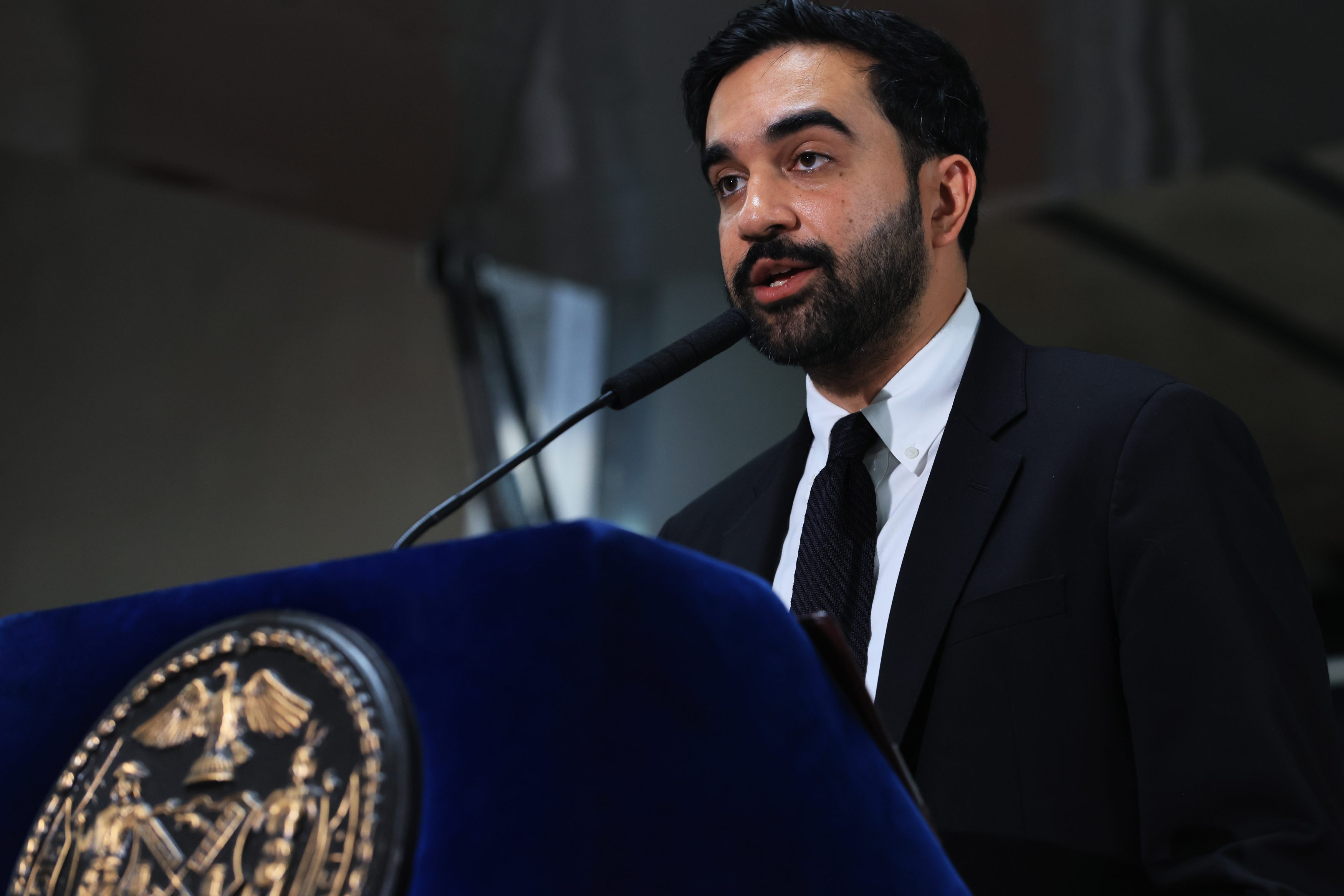
As the 25th anniversary of the September 11 terrorist attacks approaches, political discourse surrounding local governance in New York City has intensified, bringing renewed focus to Mayor Zohran Mamdani and his Islamic faith. According to reporting by Defector, political opposition and commentary directed at the mayor have drawn upon rhetoric reminiscent of past controversies in Lower Manhattan, utilizing his religious identity as a central point of political contention ahead of the milestone anniversary.
The emerging political strategy mirrors tactics deployed sixteen years earlier during national debates over Islamic institutions in New York City. As the city prepares to mark a quarter-century since the 2001 attacks, the intersection of faith, public office, and historical memory has once again become a prominent theme in municipal politics.
Political scrutiny ahead of anniversary
The quarter-century landmark of the September 11 attacks has prompted national reflection on the long-term societal, political, and cultural shifts in the United States since 2001. In New York City, this historical milestone has coincided with heightened political focus on municipal leadership.
According to Defector, criticism directed at Mayor Mamdani from conservative commentators and political opponents has repeatedly highlighted his background as a Muslim. The reporting indicates that public figures have framed Mamdani’s leadership through the lens of post-9/11 security and identity politics, drawing connections between his personal faith and his suitability to lead the city during solemn historical commemorations.
The focus on Mamdani’s identity comes as municipal officials finalize preparations for the upcoming 25th anniversary ceremonies at the National September 11 Memorial & Museum. The annual commemorations, which draw survivors, victims' families, and international dignitaries to Lower Manhattan, historically place the sitting mayor of New York City in a prominent public role.
Echoes of the 2010 controversy
The political dynamics surrounding Mamdani bear strong similarities to the 2010 national debate over Park51, a proposed Islamic community center in Lower Manhattan that critics labeled the "Ground Zero Mosque."
In 2010, plans to construct a 13-story community center and prayer space two blocks from the World Trade Center site became a central talking point in national political campaigns and cable news broadcasts. Opponents argued that locating an Islamic institution near the site of the 2001 attacks was insensitive, while supporters defended the project as an exercise of religious freedom and constitutional rights.
Defector reported that the current political rhetoric targeting Mamdani revived key elements of the 2010 strategy. During the Park51 controversy, political strategists used public opposition to the project to mobilize conservative voters nationwide in the months leading up to the 2010 midterm elections. The issue dominated headlines for months, transforming a local zoning decision into a major national debate on religious tolerance and national security.
Evolution of political rhetoric
In the quarter-century since 2001, the nature of political rhetoric regarding Muslim Americans in public life has undergone multiple transformations. In the immediate aftermath of the attacks, federal and local leaders emphasized national unity while simultaneously enacting expansive surveillance and security programs that disproportionately targeted Muslim communities in New York City and nationwide.
By 2010, political discourse had shifted toward debates over the physical presence of Islamic structures in urban spaces, exemplified by the Park51 debate and similar challenges to mosque construction across the United States. In subsequent years, rhetoric moved directly into electoral politics, with public figures debating the involvement of Muslim Americans in state and municipal governance.
As detailed by Defector, the current focus on Mayor Mamdani represents a continuation of these rhetorical frameworks. Rather than centering on a physical building project, current debates focus directly on the authority and legitimacy of an elected executive who is Muslim. Political analysts note that the deployment of identity-focused arguments around key anniversaries remains a repeating feature of New York political campaigns.
Impact on civic participation and representation
The ongoing focus on Mamdani’s background highlights broader trends regarding the civic participation of Muslim Americans over the past two decades. Following the 2001 attacks, Muslim civic organizations across the United States increased efforts to register voters, field political candidates, and engage in local government affairs.
In New York City, which is home to one of the largest and most diverse Muslim populations in the United States, Muslim Americans have increasingly sought public office at the district, citywide, and state levels. Supporters of Mayor Mamdani argue that his election reflects the demographic reality and political evolution of the city's electorate over the last 25 years.
However, as highlighted by reporting from Defector, elevated political visibility has also left Muslim elected officials vulnerable to targeted opposition strategies that leverage post-9/11 anxieties. Civil rights advocacy groups have consistently monitored how political campaigns utilize anti-Muslim tropes, noting that such arguments often resurface during major national security discussions or landmark anniversaries.
Looking toward September 11 commemorations
As September approaches, municipal officials face the task of managing both the official proceedings of the 25th anniversary and the surrounding political discourse. The ceremony at Ground Zero, which includes the reading of the names of the nearly 3,000 victims killed in the 2001 attacks, requires extensive coordination between local government agencies, the Port Authority of New York and New Jersey, and non-profit memorial foundations.
Mayor Mamdani’s role in leading the city through the commemoration remains a central duty of the executive office. Past mayoral administrations, including those of Michael Bloomberg and Bill de Blasio, similarly navigated complex political and social environments while overseeing 9/11 commemorations in Lower Manhattan.
According to Defector, the political strategy surrounding the anniversary underscores how events from 2001 continue to shape contemporary political battles in New York City, even twenty-five years after the attacks occurred.
This article relies on reporting originally published by Defector.
How this story was produced
This report was written by The Global Wire newsroom from reporting first published by Samer Kalaf. We verify the core facts against the original report, write our own account, and add the background and consequences a short wire item leaves out. Drafting is AI-assisted inside an editor-supervised pipeline, and every story is checked for accuracy of attribution, structure and duplication before it appears — full detail in our AI and funding disclosure.
Spotted an error? Tell us at corrections@horizonglobalnews.com and read our corrections policy or editorial standards.


Reader comments
Loading comments…