

Utah and Deployable Energy Partner to Explore Containerized 1 MW Nuclear Batteries
Utah has agreed to study siting 1-megawatt, shipping container-sized nuclear power units from Deployable Energy across the state for grid and off-grid use.
By The Global Wire Newsroom · Reported from Georgina Jedikovska
Link preview · horizonglobalnews.com
Utah and Deployable Energy Partner to Explore Containerized 1 MW Nuclear Batteries
Utah has agreed to study siting 1-megawatt, shipping container-sized nuclear power units from Deployable Energy across the state for grid and off-grid use.
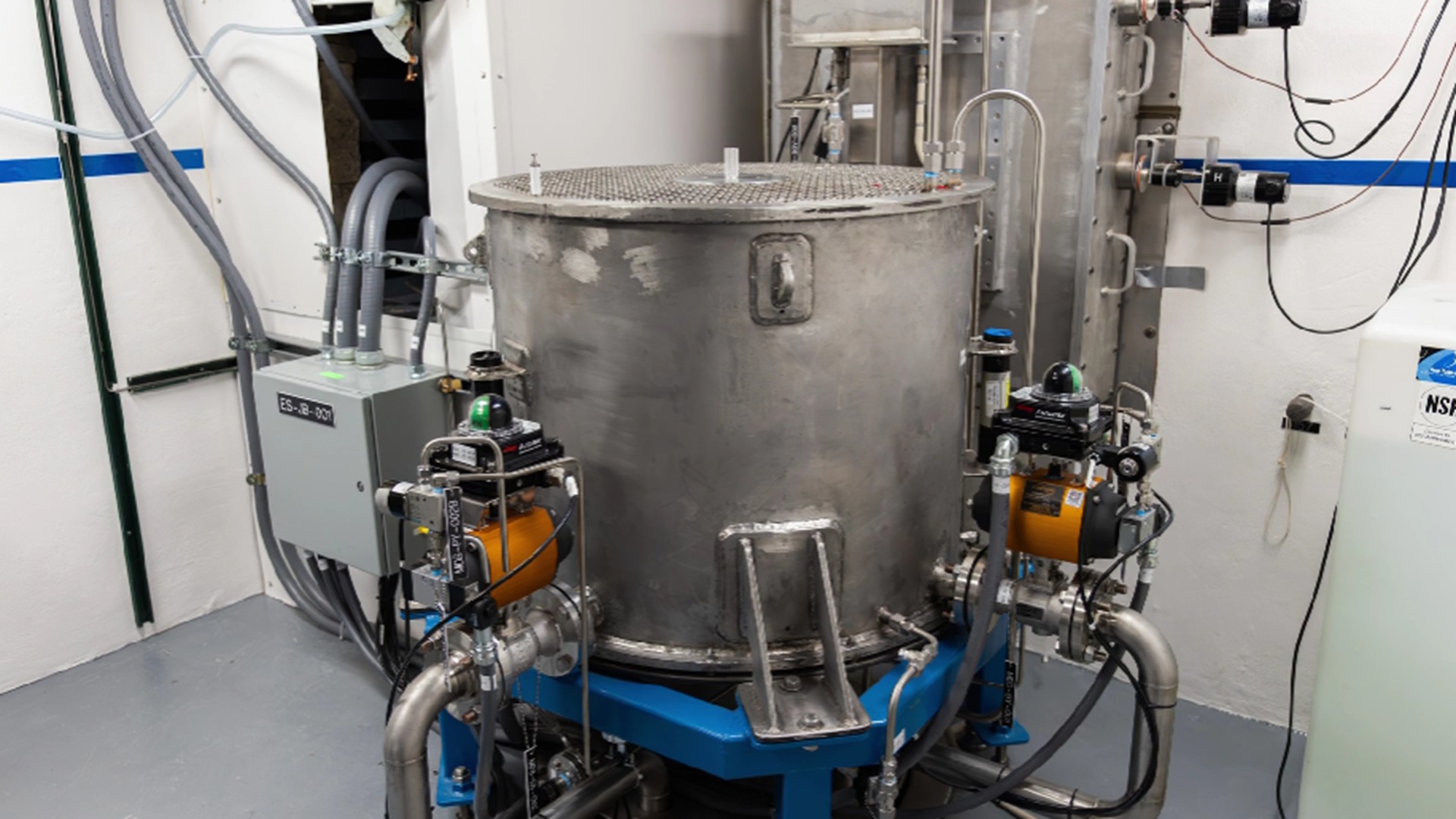
The state of Utah has entered into an agreement with energy technology firm Deployable Energy to evaluate the siting of transportable, one-megawatt nuclear batteries across the state, according to reporting published by Georgina Jedikovska on August 25, 2026. The collaborative agreement aims to investigate potential candidate locations for micro-scale nuclear power units contained within standard intermodal shipping containers, offering rapid-deployment electrical generation to bolster regional power grids, support remote industrial operations, and provide resilient energy for critical infrastructure. The initiative represents a formal state-level examination of containerized microreactor technology, which aims to shrink traditional nuclear energy infrastructure into self-contained, modular systems.
Key facts
What happened
Under the newly executed agreement, state energy planners in Utah and engineers from Deployable Energy will conduct joint feasibility assessments to determine how containerized nuclear power units can be integrated into the state's broader electrical ecosystem. According to reporting by Georgina Jedikovska, the core focus of the study centers on Deployable Energy's 1 MW generation modules, which are designed to be manufactured in factory settings, transported as single units, and rapidly deployed at designated locations.
The system architecture relies on a plug-and-play configuration, allowing each unit to be shipped by conventional flatbed truck or freight rail directly to a target site. Upon arrival, the modular systems are intended to connect directly to existing regional utility distribution lines or operate independently as localized microgrids. By eliminating the need for massive on-site concrete structures and specialized containment facilities, the design aims to bypass the multi-year civil construction timelines historically associated with nuclear power deployment.
The joint state-level evaluation will assess spatial topography, local electrical demand patterns, transmission capacities, proximity to industrial facilities, and regional energy resilience priorities. While specific candidate sites have not yet been designated, the project scope encompasses both grid-connected installations to alleviate localized capacity bottlenecks and off-grid applications for remote mining and industrial operations currently dependent on fossil fuel combustion.
Why it matters
The agreement between Utah and Deployable Energy highlights a growing movement across the energy sector toward ultra-modular nuclear power to address localized grid constraints, industrial decarbonization, and supply security. Although a 1 MW electrical capacity is modest compared to traditional gigawatt-scale power plants, it provides continuous, weather-independent baseload power capable of supplying roughly 750 to 1,000 standard American homes, or maintaining uninterrupted operations for essential facilities such as municipal water treatment plants, telecommunications infrastructure, emergency shelters, and isolated industrial operations.
For state energy planners, transportable microreactors represent a novel mechanism for mitigating localized grid congestion without requiring massive capital investment in transmission corridors. Utah has experienced rapid population growth and expanding commercial sectors, including energy-intensive data centers and advanced manufacturing, which place increasing demands on existing electricity networks. Building new high-voltage transmission lines across vast high-desert terrain often involves long permitting processes and high construction costs. Siting localized, transportable generation units directly at demand nodes offers an alternative model for grid management.
Furthermore, the plug-and-play capability presents clear applications for remote operations and emergency recovery. In mining sectors or off-grid agricultural processing zones that currently rely on liquid diesel generators, containerized microreactors could eliminate expensive fuel delivery chains and significantly lower operational carbon footprints. During natural disasters or major grid outages, mobile units could also be deployed to restore essential services to impacted communities.
The background
Microreactors are generally defined by energy regulators as nuclear systems producing less than 20 megawatts of thermal or electrical power. They represent a distinct class of advanced nuclear technology separate from Small Modular Reactors (SMRs), which typically range from 50 to 300 megawatts. While traditional nuclear plants require extensive custom civil engineering and dedicated access to major cooling water sources, microreactors are designed to be pre-assembled, pre-fueled, and sealed in central manufacturing facilities prior to shipment.
Utah has a notable history regarding advanced nuclear energy initiatives. The state previously participated heavily in efforts by the Utah Associated Municipal Power Systems (UAMPS) to develop a multi-module SMR plant in neighboring Idaho in partnership with NuScale Power. That project was formally terminated in late 2023 due to rising capital costs, supply chain inflation, and elevated interest rates. Despite that setback, state energy officials have continued to investigate small-scale, lower-capital nuclear technologies capable of providing firm, carbon-free power to complement Utah's expanding solar and wind generation assets.
From a regulatory standpoint, deploying microreactors in the United States requires approvals from the U.S. Nuclear Regulatory Commission (NRC), which enforces safety, environmental, and security standards under Title 10 of the Code of Federal Regulations. Federal licensing pathways under Part 50 and Part 52 were originally designed for large light-water reactors. The NRC has been working to adapt its regulatory oversight—including the development of streamlined frameworks under Part 53—to evaluate microreactors that incorporate passive safety systems, advanced coolants, and High-Assay Low-Enriched Uranium (HALEU). These inherently safe design parameters are intended to ensure that reactor cores shut down safely without operator intervention or external electric power, potentially allowing for smaller emergency planning zones and reduced buffer distances from surrounding populations.
Reaction
Following the announcement of the exploratory agreement, industry analysts and regional energy stakeholders are expected to closely monitor the state's technical and regulatory scoping process. While formal public statements from state legislative committees and local utility boards are anticipated in upcoming regulatory sessions, observers note that state agreements of this type generally establish initial criteria for land-use studies, inter-agency coordination, and environmental impact assessments.
Nuclear energy advocates have expressed strong interest in containerized microreactors, pointing to their potential to deliver clean baseload power with minimal land disturbance. Conversely, local environmental monitoring organizations, community advocacy groups, and regulatory policy experts are expected to raise questions regarding nuclear waste management, interim spent fuel storage, physical security protocols for mobile nuclear assets, and local public safety in the event of transportation accidents or severe weather events.
Regional electric utilities and distribution co-operatives will also need to examine how plug-and-play microreactors integrate into existing distribution grids, power purchase agreements, and regional transmission organization market rules.
What we don't know yet
Several fundamental operational, design, and regulatory details remain unverified in the public reporting. First, the specific primary coolant technology and reactor core physics used in Deployable Energy’s 1 MW nuclear battery have not been detailed. It is not currently known whether the unit utilizes solid-state heat pipes, gas cooling, liquid metal, or molten salt technology, each of which presents unique engineering dynamics and operational profiles.
Second, the current licensing status of Deployable Energy's containerized design with the U.S. Nuclear Regulatory Commission is unstated. It remains unclear whether the developer has submitted formal pre-application documents, a Design Certification Application, or a topical safety report to federal regulators, which directly affects potential deployment timelines.
Third, details regarding the nuclear fuel supply chain have not been clarified. If the reactor design requires High-Assay Low-Enriched Uranium (HALEU)—enriched between 5% and 20% Uranium-235—commercial supply availability within the United States remains highly constrained. Finally, the financial terms of the agreement, including state resource allocations, ownership models, and projected target operational dates for demonstration units, have not been publicly disclosed.
What to watch
Key developments that will indicate the progress of the Utah and Deployable Energy agreement include:
This report is based on original news reporting published by Georgina Jedikovska on August 25, 2026.
How this story was produced
This report was written by The Global Wire newsroom from reporting first published by Georgina Jedikovska. We verify the core facts against the original report, write our own account, and add the background and consequences a short wire item leaves out. Drafting is AI-assisted inside an editor-supervised pipeline, and every story is checked for accuracy of attribution, structure and duplication before it appears — full detail in our AI and funding disclosure.
Spotted an error? Tell us at corrections@horizonglobalnews.com and read our corrections policy or editorial standards.
Reader comments
Loading comments…