

UK-EU Re-entry Debate Focuses on European Readiness as Political Pressure Builds
As prominent British figures navigate post-Brexit relations, the primary hurdle to any potential UK return may rest on a reforming European Union's willingness to accept London back.
By The Global Wire Newsroom · Reported from Katherine Butler
Link preview · horizonglobalnews.com
UK-EU Re-entry Debate Focuses on European Readiness as Political Pressure Builds
As prominent British figures navigate post-Brexit relations, the primary hurdle to any potential UK return may rest on a reforming European Union's willingness to accept London back.
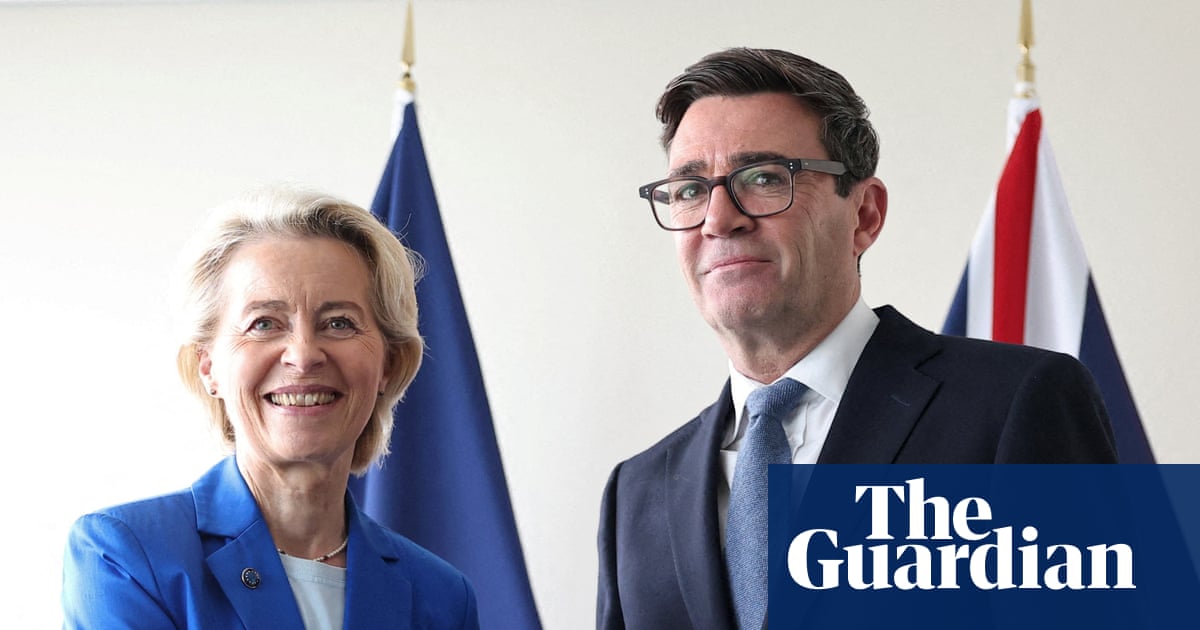
A renewed debate surrounding the long-term strategic trajectory of the United Kingdom’s relationship with the European Union has re-emerged within British political circles, shifting the focus from internal post-Brexit economic friction to whether a rapidly evolving continental bloc would welcome London back. Key figures within the UK political landscape, notably Mayor of Greater Manchester Andy Burnham, are confronting a political reality where domestic appetite for closer European ties faces an institutional framework in Brussels that has moved on. While critics of the UK's 2016 exit point to lingering trade friction, regulatory burdens, and diminished international standing, European leaders are increasingly focused on internal governance reforms, defense consolidation, and expansion into Eastern Europe. This shift raises fundamental questions about whether the preconditions for any potential UK re-entry have altered permanently.
Key facts
What happened
As reporting by Katherine Butler underscores, the fundamental question confronting British leaders such as Andy Burnham is no longer simply evaluating the financial and administrative damage caused by leaving the European Union, but assessing whether a structurally changing Europe would keep its doors open to a returning Britain. For years, domestic political battles in Westminster centered primarily on quantifying the economic losses associated with severing access to the EU single market and customs union. However, diplomatic realities across the English Channel have shifted the parameters of the discussion.
European policymakers are currently managing a complex set of internal priorities that differ markedly from those that defined the EU during Britain's 43-year tenure as a member state. The geopolitical landscape on the continent has driven the 27 member states toward deeper collective integration in defense procurement, joint debt mechanisms, energy security, and industrial strategy. Furthermore, the European Union is actively preparing for potential expansion to include candidate nations in the Western Balkans alongside Ukraine and Moldova, a process that requires substantial structural and financial overhaul of EU institutions.
In this context, British political figures who advocate for closer alignment with Europe face a dual challenge. Within domestic politics, any proposal to revisit the terms of Brexit remains fraught with political risk, as major political parties seek to balance the demands of pro-European voters against constituency bases wary of reopening constitutional debates. Abroad, EU leaders have signaled that any prospective negotiation would not grant the bespoke exemptions, budget rebates, or opt-outs that the UK historically enjoyed prior to 2020. Consequently, the central question has evolved from whether Britain wants to rejoin into whether Britain could meet the altered terms of European membership.
Why it matters
The shifting dynamics of the UK-EU debate carry profound economic, regulatory, and geopolitical consequences for businesses, investors, and citizens across both jurisdictions. From an economic standpoint, the implementation of border controls, non-tariff trade barriers, and divergent regulatory standards under the Trade and Cooperation Agreement has imposed sustained administrative burdens on cross-border supply chains. British exporters, particularly small and medium-sized enterprises, continue to navigate complex rules of origin, customs declarations, and sanitary and phytosanitary inspections that were absent during full single market participation. Re-establishing full or partial access to continental markets remains a central priority for UK commercial sectors seeking to improve long-term productivity and foreign direct investment.
For the European Union, the issue touches upon institutional cohesion and market integrity. The EU single market operates on the fundamental principle that the four freedoms—goods, services, capital, and labor—are indivisible. If the UK were ever to formally pursue re-entry or a significantly deeper association agreement, Brussels would be determined to defend the integrity of its legal order to prevent selective participation by external states. Moreover, European officials are wary of importing British political volatility back into EU decision-making processes. A UK return under terms requiring acceptance of the euro currency and Schengen border-free travel would require a radical shift in British public consensus, while a return under legacy opt-outs is viewed by many European capitals as non-viable.
The background
The historical arc of UK-EU relations has been marked by structural compromise, unique exemptions, and recurring political friction. The UK initially joined the European Economic Community (EEC) on January 1, 1973, under Prime Minister Edward Heath, a decision confirmed by a nationwide referendum in 1975 with a 67.2 percent majority. Over the subsequent four decades, Britain secured several high-profile opt-outs from core European integration initiatives. Notably, under the 1992 Maastricht Treaty, the UK opted out of joining the single currency, retaining the British pound sterling. London also opted out of the Schengen Agreement, maintaining independent national border controls, and secured a financial budget rebate negotiated by Prime Minister Margaret Thatcher in 1984.
The political trajectory changed decisively on June 23, 2016, when the UK electorate voted 51.9 percent to 48.1 percent to leave the EU. The formal notification under Article 50 was submitted in March 2017, initiating years of contentious negotiations over withdrawal terms, Northern Ireland's trade status, and future bilateral relations. The UK officially departed on January 31, 2020, entering a transition phase that concluded on December 31, 2020.
Following the general election of July 2024, which returned a Labour government led by Prime Minister Keir Starmer, official British policy established a stance of seeking pragmatic, targeted improvements to the Trade and Cooperation Agreement—such as a veterinary agreement or mutual recognition of professional qualifications—while explicitly ruling out a return to the single market, customs union, or freedom of movement. Meanwhile, regional leaders such as Andy Burnham, who was re-elected as Mayor of Greater Manchester in May 2024, have maintained that economic growth requires bold, constructive engagement with European partners, bringing regional industrial policy into dialogue with international trade realities.
Reaction
Reaction to the prospect of UK re-entry varies across political factions in Great Britain and among continental European governments. Within the UK Labour Party, leadership has consistently reiterated its commitment to remaining outside the EU single market and customs union, aiming to avoid reigniting constitutional disputes that divided the electorate over the past decade. Pro-European advocacy groups and business leadership organizations have welcomed discussions around reduced trade barriers, though many acknowledge that full re-accession is not currently on the immediate legislative agenda.
Opponents of rejoining, including members of the Conservative opposition and Reform UK, maintain that any move toward structural re-alignment would undermine national sovereignty, voter mandates, and independent regulatory authority over migration and trade policy. They argue that the UK should focus on leveraging bilateral trade pacts outside Europe, such as the Comprehensive and Progressive Agreement for Trans-Pacific Partnership (CPTPP).
In continental Europe, official statements from key capitals, including Paris and Berlin, reflect a measured stance. While European diplomats express interest in stable, cooperative security and trade relations with London, there is little appetite for reopening complex constitutional negotiations regarding UK membership. EU officials emphasize that any future candidate must follow the standard accession procedure outlined under Article 49, without the preferential terms that defined the UK's previous membership.
What we don't know yet
Significant uncertainties remain regarding the long-term political feasibility and practical terms of any potential UK-EU re-alignment:
What to watch
Key dates, decision points, and indicators will shape the future trajectory of UK-EU relations:
This report relies on original reporting and analysis conducted by Katherine Butler.
How this story was produced
This report was written by The Global Wire newsroom from reporting first published by Katherine Butler. We verify the core facts against the original report, write our own account, and add the background and consequences a short wire item leaves out. Drafting is AI-assisted inside an editor-supervised pipeline, and every story is checked for accuracy of attribution, structure and duplication before it appears — full detail in our AI and funding disclosure.
Spotted an error? Tell us at corrections@horizonglobalnews.com and read our corrections policy or editorial standards.



Reader comments
Loading comments…