

Protesters Rally at US Embassy in Tokyo Over Alleged Murder Involving Marine
Demonstrators gathered in Tokyo to demand military accountability and base reforms following the alleged murder of a local woman involving a U.S. Marine.
By The Global Wire Newsroom · Reported from Malay Mail
Link preview · horizonglobalnews.com
Protesters Rally at US Embassy in Tokyo Over Alleged Murder Involving Marine
Demonstrators gathered in Tokyo to demand military accountability and base reforms following the alleged murder of a local woman involving a U.S. Marine.
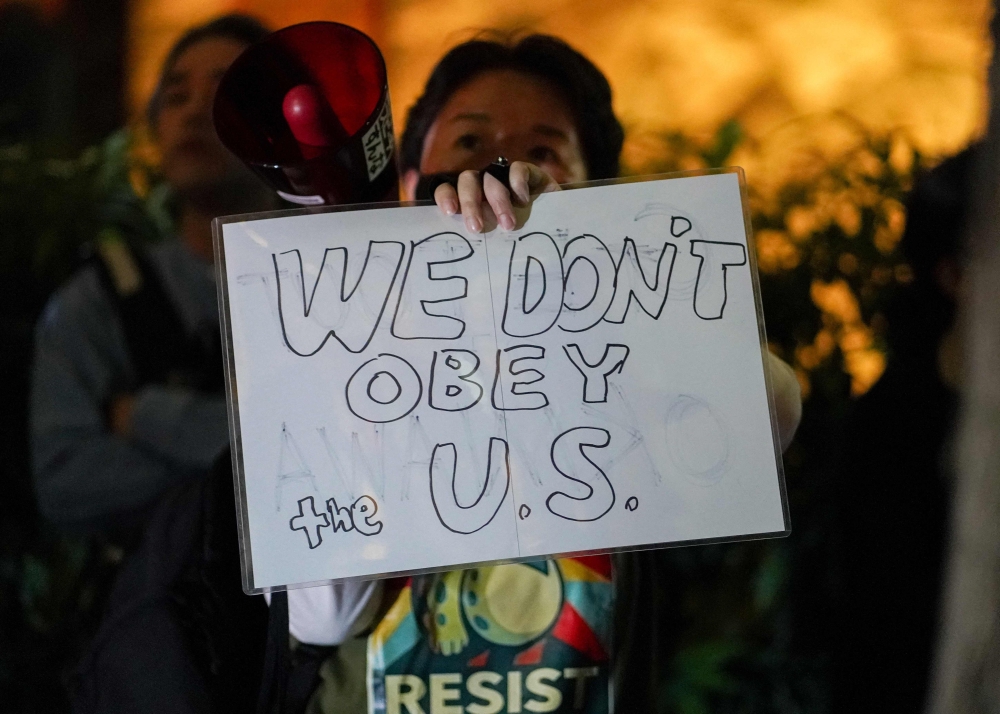
Demonstrators gathered outside the United States Embassy in Tokyo on Oct. 6, 2026, to denounce military violence and demand systemic reforms following the alleged murder of a local woman involving a U.S. Marine. Approximately 100 protesters convened in the Japanese capital, holding placards and chanting anti-base slogans aimed at the American diplomatic compound. The rally underscores long-standing public anger over the conduct of U.S. service members stationed across Japan, particularly on the southern island prefecture of Okinawa. According to reporting by Malay Mail, the demonstration served as a focal point for civic groups demanding greater accountability, custody adjustments under bilateral security treaties, and a reduction of the American military presence in the country.
Key facts
What happened
The demonstration outside the U.S. Embassy in Tokyo began on Oct. 6, 2026, drawing an estimated 100 civic activists, community representatives, and anti-war advocates. According to reporting by Malay Mail, participants gathered near the diplomatic compound carrying hand-painted banners and organized signs condemning military violence and calling for the protection of civilian lives.
The catalyst for the gathering was the reported murder of a local woman, an incident in which a U.S. Marine has been implicated. During the Tokyo rally, protesters chanted slogans criticizing the perceived atmosphere of impunity surrounding American troops operating in Japan. Prominent banners displayed messaging such as "Okinawa is not your amusement park," drawing a direct line between the high concentration of military bases on the southern island chain and recurring high-profile criminal offenses.
Law enforcement officers in Tokyo established perimeters around the diplomatic facility to manage the crowd. While the demonstration remained peaceful, participants used megaphones to deliver addresses calling on both the Japanese government and U.S. military command to overhaul the legal frameworks governing American personnel. Protesters specifically demanded immediate Japanese custody of suspects involved in serious offenses and called for transparent judicial proceedings. The protest concluded after several hours of speeches and organized chanting, with organizers pledging to continue public demonstrations in both Tokyo and Okinawa.
Why it matters
The renewed public outcry highlights persistent friction at the core of the U.S.-Japan security alliance. While Washington and Tokyo view their bilateral defense arrangement as a critical cornerstone for regional stability in the Indo-Pacific—particularly amid rising maritime tensions with China and missile tests by North Korea—domestic political acceptance of the U.S. military footprint relies heavily on public trust and local safety. High-profile violent crimes committed by military personnel severely strain this domestic consensus, complicating efforts by Japanese leaders to maintain base operations without alienating voters.
For the residents of Okinawa, the broader structural implications are profound. The disproportionate concentration of base infrastructure creates daily friction regarding noise pollution, environmental contamination, and safety risks. When violent crimes occur, it reinforces a widespread perception among Okinawans that their local community shoulders an unfair burden for national defense priorities established in Tokyo.
The incident also puts direct pressure on the Status of Forces Agreement (SOFA) framework. Under standard SOFA provisions, U.S. authorities retain primary custody of military personnel accused of crimes committed off-duty until formal indictment by Japanese prosecutors, unless U.S. officials exercise discretion to transfer custody earlier. Critics argue this setup impedes Japanese law enforcement investigations and fosters resentment over perceived double standards. Any escalation in public protests can force political leaders in Tokyo to seek modifications or administrative adjustments to SOFA protocols, potentially introducing diplomatic friction into defense negotiations between Washington and Tokyo.
The background
The presence of U.S. forces in Japan dates to the end of World War II and the subsequent Allied occupation from 1945 to 1952. Under the 1951 Treaty of San Francisco and the subsequent 1960 Treaty of Mutual Cooperation and Security, the United States assumed responsibility for Japan's defense in exchange for the right to maintain military bases across the Japanese archipelago. To govern the legal status of U.S. personnel, the two nations signed the Status of Forces Agreement (SOFA) in 1960.
Okinawa's historical context is particularly distinct. Following World War II, Okinawa remained under direct U.S. military administration until its formal reversion to Japanese sovereignty on May 15, 1972. Despite the handover, extensive military infrastructure remained intact. Today, Okinawa hosts major installations, including Kadena Air Base and the U.S. Marine Corps Air Station Futenma, encompassing roughly 70 percent of all U.S. military facilities in Japan despite Okinawa constituting just 0.6 percent of the nation's total land area.
Over the decades, serious criminal offenses by American military personnel have periodically ignited widespread mass protests and political crises:
Plans to relocate Marine Corps Air Station Futenma from the densely populated city of Ginowan to the Henoko coastal area in Nago have faced decades of legal challenges, local referendums, and public opposition, illustrating the deep-seated political divisions surrounding the U.S. military presence.
Reaction
Official responses to the Oct. 6 demonstration and the underlying criminal allegations are expected to unfold across multiple diplomatic and legal channels. In previous instances of severe crime involving military personnel, senior U.S. military commanders in Japan and the U.S. Ambassador have issued formal apologies, expressed condolences to victim families, and instituted temporary curfews or alcohol restrictions for off-duty service members.
The Japanese Ministry of Foreign Affairs and Ministry of Defense typically issue formal protests to the U.S. Embassy and U.S. Forces Japan, requesting full cooperation with law enforcement investigations and measures to prevent recurrence. Okinawa Prefectural Governor Denny Tamaki, a vocal advocate for reducing the U.S. military footprint, is expected to submit formal petitions to both the Japanese central government and U.S. military officials demanding structural reforms to SOFA and prompt custody transfers of suspects. Civil society organizations and local anti-base assemblies in Naha and Tokyo have signaled plans to host follow-up rallies and town hall discussions to maintain public pressure on lawmakers.
What we don't know yet
Several critical elements regarding the reported incident remain unconfirmed in the available initial reporting. The specific identity of the U.S. Marine involved, their unit assignment, and their current custodial status have not been disclosed in the provided wire summary. It is also unclear whether the alleged offense took place on or off a military installation, or whether it occurred within Okinawa Prefecture or another region of Japan before triggering the Tokyo embassy protest.
Furthermore, details regarding the formal legal charges brought by Japanese prosecutors remain pending. The exact timeline for potential custody transfer under SOFA procedures, as well as whether U.S. military authorities have instituted immediate policy changes—such as liberty restrictions or heightened training protocols—remains unconfirmed. The identity and background of the victim have likewise been withheld pending formal announcements by Japanese law enforcement agencies.
What to watch
In the coming days and weeks, key indicators will determine the political and legal trajectory of the case:
This report is based on original news coverage provided by Malay Mail.
How this story was produced
This report was written by The Global Wire newsroom from reporting first published by Malay Mail. We verify the core facts against the original report, write our own account, and add the background and consequences a short wire item leaves out. Drafting is AI-assisted inside an editor-supervised pipeline, and every story is checked for accuracy of attribution, structure and duplication before it appears — full detail in our AI and funding disclosure.
Spotted an error? Tell us at corrections@horizonglobalnews.com and read our corrections policy or editorial standards.





Reader comments
Loading comments…