

U.S. Navy Secures $76.6 Billion Submarine Contract to Modernize Undersea Fleet
The U.S. Navy has awarded a landmark $76.6 billion deal for next-generation Virginia and Columbia-class submarines to boost its long-term naval power.
By The Global Wire Newsroom · Reported from Sujita Sinha
Link preview · horizonglobalnews.com
U.S. Navy Secures $76.6 Billion Submarine Contract to Modernize Undersea Fleet
The U.S. Navy has awarded a landmark $76.6 billion deal for next-generation Virginia and Columbia-class submarines to boost its long-term naval power.
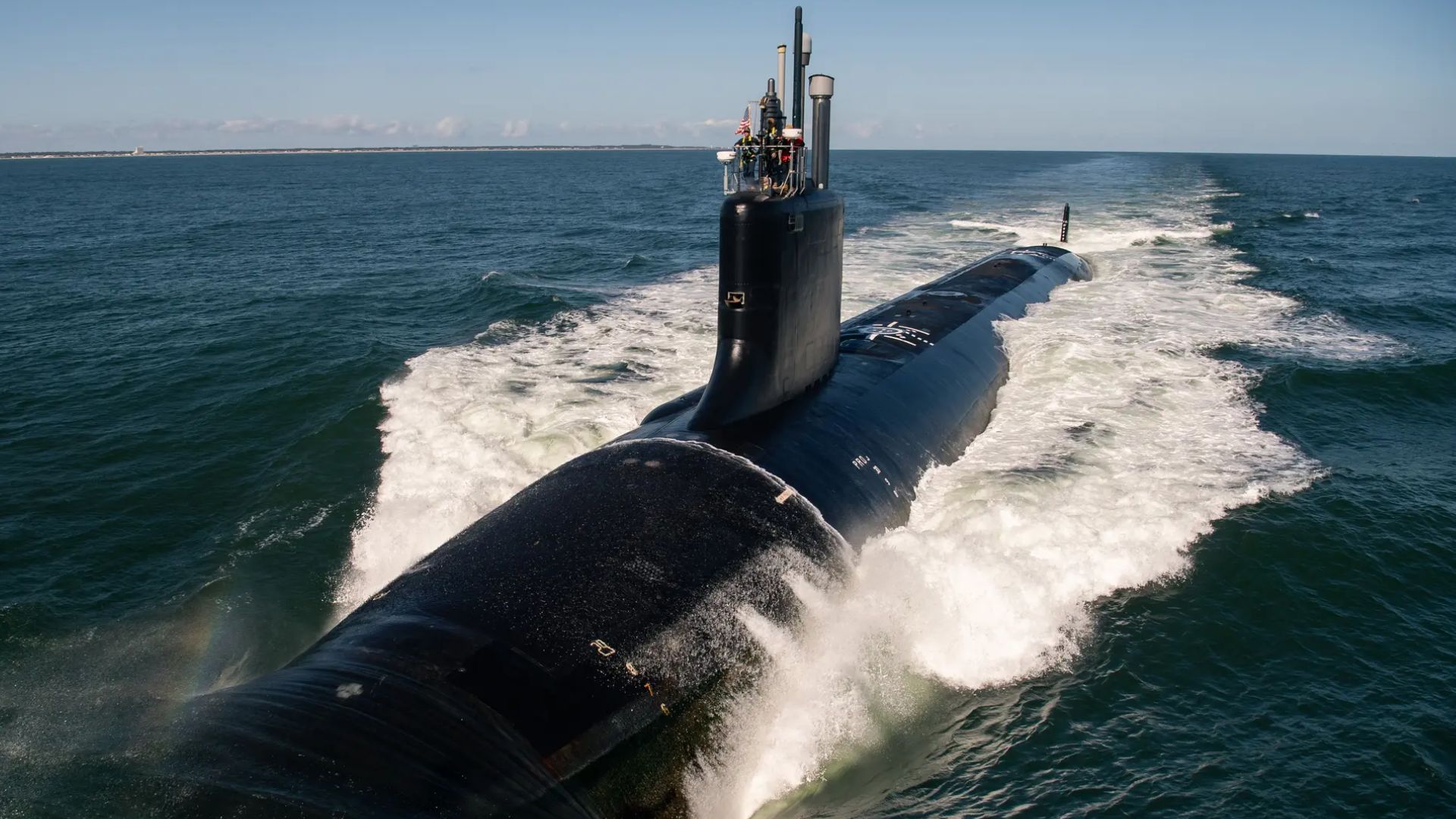
The United States Navy has committed to a sweeping expansion and modernization of its undersea fleet, finalizing a historic $76.6 billion contract aimed at producing the next generation of Virginia-class fast attack submarines and Columbia-class ballistic missile submarines. According to reporting by Sujita Sinha, the landmark procurement deal represents one of the largest single defense investments in modern naval history, signaling an assertive effort by American military planners to secure long-term superiority in undersea warfare amid intensifying global maritime competition.
A Historic Procurement Deal
The record-breaking $76.6 billion acquisition agreement marks a pivotal milestone for the Navy’s long-range force structuring. Under the terms of the massive contract, defense shipbuilders will accelerate the construction and delivery of both Virginia-class fast attack submarines and Columbia-class strategic deterrence vessels. The dual procurement package addresses two distinct yet complementary requirements of modern naval strategy: maintaining offensive multi-mission attack capabilities while simultaneously updating the sea-based leg of the nation's nuclear triad.
By combining requirements for both submarine programs into a unified, massive funding framework, military procurement authorities aim to streamline supply chains, stabilize industrial output, and secure predictable multi-year production schedules. Defense analysts view the deal as a clear signal of Washington's commitment to sustaining a heavy naval presence across key international waterways, ensuring that the fleet remains capable of responding to evolving security challenges across the globe.
The Roles of Virginia and Columbia-Class Vessels
The two submarine classes funded under the contract fulfill fundamentally different missions within the U.S. naval fleet structure. The Virginia-class fast attack submarines are multi-role nuclear-powered stealth vessels designed to operate in both deep ocean environments and shallow littoral waters. Equipped with advanced sonar systems, land-attack cruise missiles, torpedoes, and specialized payload modules, these attack submarines perform a wide variety of missions, including anti-submarine warfare, surface vessel targeting, intelligence gathering, special operations insertion, and precision strike operations.
Conversely, the Columbia-class represents the top priority for the Navy’s strategic force recapitalization. Designed to replace the aging Ohio-class nuclear submarines that have served as the backbone of sea-based nuclear deterrence for decades, Columbia-class vessels are stealthy, nuclear-powered ballistic missile platforms. Their primary operational mandate is continuous, undetected strategic deterrence. Given that ballistic missile submarines represent the most survivable component of the strategic nuclear triad, the seamless production and timely deployment of Columbia-class hulls are considered vital to long-term national security.
Strategic Undersea Superiority
The decision to commit $76.6 billion toward undersea assets underscores the growing strategic weight assigned to submarine operations in contemporary military planning. Over the past decade, advancements in surface detection technology, long-range anti-ship missiles, and satellite reconnaissance have rendered surface ships increasingly vulnerable in contested environments. Submarines, operating covertly beneath the ocean surface, offer military commanders unmatched stealth, endurance, and operational flexibility.
Naval commanders have consistently warned that maintaining an operational advantage beneath the waves requires continuous innovation and timely fleet replenishment. Competitor nations have invested heavily in expanding their own naval fleets and upgrading their quiet-running submarine technologies. By funding new iterations of the Virginia and Columbia classes, the U.S. Navy seeks to preserve its qualitative edge in acoustic quietening, sensor sophistication, and payload capacity, ensuring its forces can operate unhindered in contested maritime zones.
Industrial Base and Fleet Capacity
Executing a procurement effort of this magnitude presents significant operational demands for the domestic naval shipbuilding industrial base. Building nuclear-powered submarines requires specialized infrastructure, highly skilled defense labor, advanced material supply networks, and continuous quality control processes. Major submarine manufacturing facilities are expected to expand output and ramp up hiring to meet the aggressive delivery schedules mandated by the multi-billion-dollar contract.
In recent years, defense planners and industry leaders have focused on addressing manufacturing bottlenecks, supply chain vulnerabilities, and skilled labor shortages that have occasionally delayed ship construction. The multi-year funding commitment provided by the $76.6 billion agreement offers defense contractors the financial predictability needed to invest in facility expansions, workforce training programs, and technological upgrades across thousands of sub-tier suppliers nationwide.
Global Maritime Implications
The arrival of next-generation Virginia and Columbia-class submarines will reverberate throughout global security dynamics, particularly in key maritime theaters such as the Indo-Pacific and the North Atlantic. Power projection in these regions relies heavily on the ability to monitor vital sea lanes, protect commercial shipping corridors, and deter potential military aggression.
Allies and partner nations closely track U.S. naval force strength as an indicator of security commitments and regional stability. The expansion of the attack submarine fleet enhances joint operational capabilities with allied navies, while the timely deployment of Columbia-class strategic submarines maintains a credible deterrent shield that underpins international defense alliances. The contract emphasizes a shift toward long-term readiness, ensuring that global maritime forces remain capable of operating across high-threat, multi-domain battlefields.
Outlook and Future Operations
As construction efforts under the historic contract get underway, naval officials and industrial leaders will monitor key production benchmarks to ensure hulls are delivered on time and within budget parameters. The multi-decade lifecycle of nuclear submarines means that the vessels funded under this deal will form the core of American undersea power well into the mid-21st century.
The transition from legacy platforms to next-generation Virginia and Columbia-class vessels represents a comprehensive transformation of the fleet's undersea architecture. Beyond raw hull counts, the inclusion of modern propulsion, advanced quietening technology, and scalable payload systems will ensure the fleet remains adaptable to emerging threats and technological advancements for decades to come.
This report is based on original reporting by Sujita Sinha.
How this story was produced
This report was written by The Global Wire newsroom from reporting first published by Sujita Sinha. We verify the core facts against the original report, write our own account, and add the background and consequences a short wire item leaves out. Drafting is AI-assisted inside an editor-supervised pipeline, and every story is checked for accuracy of attribution, structure and duplication before it appears — full detail in our AI and funding disclosure.
Spotted an error? Tell us at corrections@horizonglobalnews.com and read our corrections policy or editorial standards.
Reader comments
Loading comments…