

U.S. Army Commits $51 Million to Expand Switchblade 600 Loitering Munition Inventory
The United States Army has allocated $51 million to procure additional Switchblade 600 loitering munitions, incorporating the upgraded Block 2 variant capable of striking targets beyond 70 miles.
By The Global Wire Newsroom · Reported from Aamir Khollam
Link preview · horizonglobalnews.com
U.S. Army Commits $51 Million to Expand Switchblade 600 Loitering Munition Inventory
The United States Army has allocated $51 million to procure additional Switchblade 600 loitering munitions, incorporating the upgraded Block 2 variant capable of striking targets beyond 70 miles.
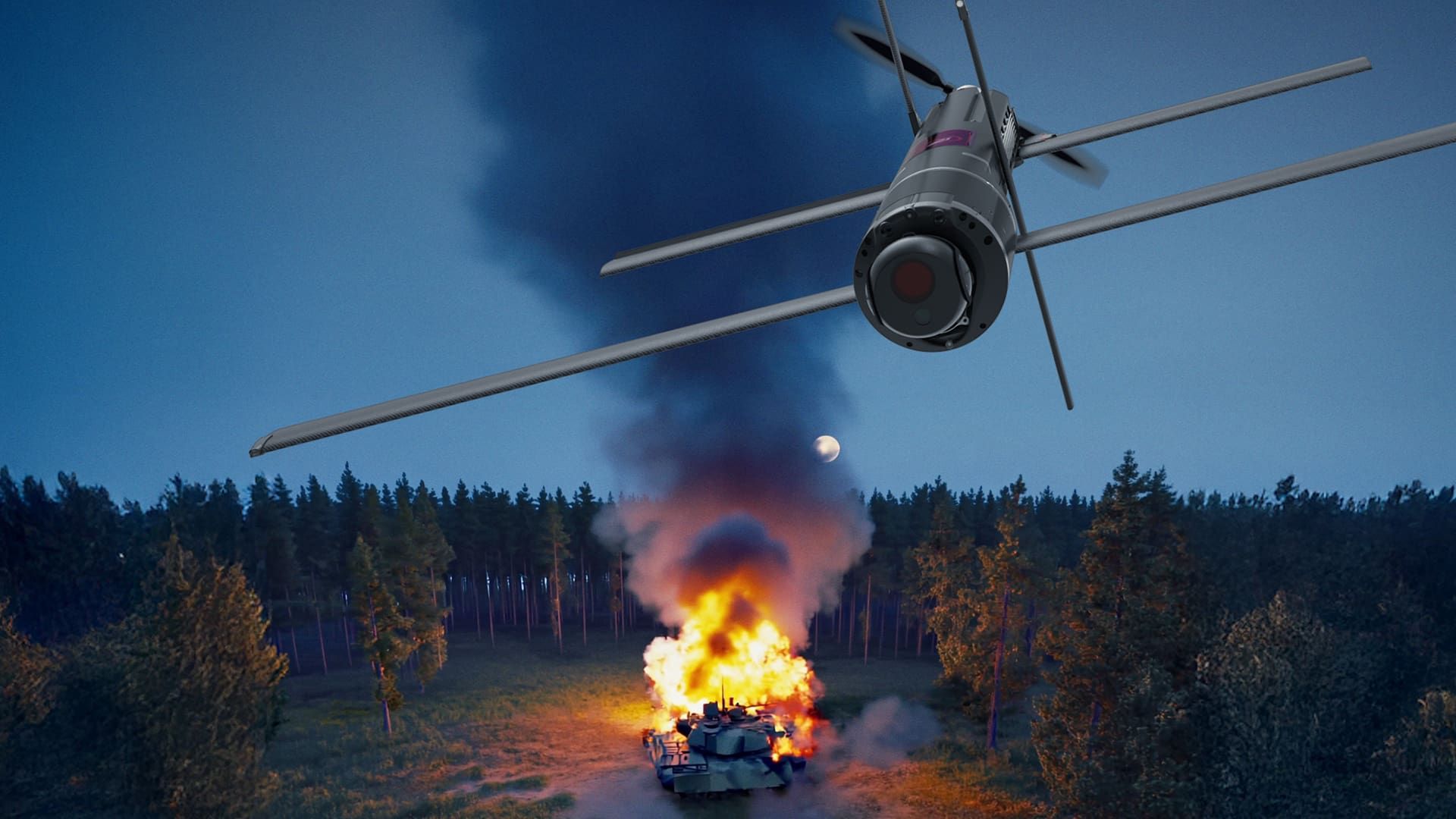
WASHINGTON — The United States Army has approved a $51 million contract modification to procure additional Switchblade 600 loitering munitions, an acquisition that incorporates the platform's upgraded Block 2 variant designed for long-range precision strikes exceeding 70 miles. According to reporting by Aamir Khollam published on August 26, 2026, the deal expands the military branch’s inventory of tube-launched, anti-armor suicide drones capable of loitering over contested combat zones before executing targeted strikes. The commitment highlights the defense establishment’s continued emphasis on autonomous and semi-autonomous loitering weapons systems capable of neutralizing heavy armor, air defense installations, and high-value command sites at stand-off distances without risking crewed aircraft.
Key facts
What happened
The United States Army committed $51 million toward expanding its stock of Switchblade 600 loitering munitions, according to reporting by Aamir Khollam on August 26, 2026. The contract addition covers both standard inventory replenishment and the integration of the system's enhanced Block 2 iteration.
The Switchblade 600 is a portable, operator-controlled loitering weapon system designed to destroy armored vehicles and fortified ground targets. Unlike traditional anti-tank guided missiles that follow a direct trajectory upon launch, the Switchblade 600 can be tube-launched into an area of operations, where it loiters while streaming high-resolution electro-optical and infrared video back to its ground control operator. The Block 2 iteration reported in the new deal incorporates design enhancements that allow the aircraft to reach operational strike distances of more than 70 miles (approximately 113 kilometers).
The procurement represents an incremental expansion of the U.S. military's commitment to loitering armaments, which bridge the operational gap between unguided indirect fire weapons and expensive manned aviation sorties. Under the contract terms highlighted by Aamir Khollam, the U.S. Army will integrate the upgraded munitions into tactical units, providing battalion-level commanders with organic, long-range precision strike assets capable of operating in GPS-degraded environments and heavily contested airspace.
Why it matters
The $51 million deal underscores a fundamental shift in land warfare tactics, where loitering munitions—often characterized as "kamikaze" or suicide drones—have transitioned from specialized special operations tools to core components of conventional ground force architecture.
For ground forces, a strike radius exceeding 70 miles provides operational commanders with deep-strike capabilities previously restricted to multi-million-dollar tactical cruise missiles or air-launched munitions requiring close air support from fixed-wing aircraft. By deploying a tube-launched system with extended range, ground formations can engage enemy artillery, command posts, radar sites, and heavy armor far behind front lines while remaining outside the effective range of counter-battery fire and tactical air defense systems.
From a defense economics and industrial standpoint, the contract expansion reflects growing demand for scalable precision munitions. Traditional anti-armor weapons like the FGM-148 Javelin are highly effective at line-of-sight ranges (typically up to 2.5 to 4 kilometers), but loitering systems offer both extended reach and the ability to abort strikes up to the final seconds before impact if non-combatants or changing tactical conditions dictate. The procurement of the Block 2 variant demonstrates that the defense industrial base is actively refining loitering munitions to feature enhanced endurance, upgraded electronic warfare resistance, and extended communications links.
Furthermore, the allocation of $51 million signals to defense suppliers that the U.S. Department of Defense views loitering munitions not merely as temporary emergency assistance for foreign partners, but as permanent inventory items requiring continuous modernization and stock building.
The background
To contextualize the U.S. Army’s $51 million investment, it is necessary to examine the evolution of the Switchblade platform and the broader context of loitering munition development over the past decade.
Developed primarily by Virginia-based defense contractor AeroVironment, the Switchblade family of loitering munitions first gained prominent operational use with U.S. armed forces during counter-insurgency operations in Afghanistan and Iraq. The original Switchblade 300, introduced into service in the early 2010s, was designed as a lightweight, backpackable weapon weighing under six pounds. Intended to provide infantry squads with immediate precision firepower against open personnel and light unarmored vehicles, the Switchblade 300 offered a modest operational range of roughly 10 kilometers and flight endurance of approximately 15 minutes.
However, modern near-peer peer competition and high-intensity ground conflicts revealed clear limitations in small, light-warhead loitering munitions. Heavy armor, reinforced command bunkers, and sophisticated electronic warfare systems required larger payloads, longer flight times, and hardened communications links. In response, AeroVironment developed the larger Switchblade 600, which entered field trials around 2020. Weighing approximately 120 pounds including its launch tube, the Switchblade 600 incorporates an anti-armor warhead derived from the Javelin missile system, allowing it to penetrate heavy armor via top-attack flight trajectories.
The strategic relevance of loitering munitions expanded dramatically following the Russian invasion of Ukraine in February 2022. The U.S. Department of Defense subsequently delivered hundreds of Switchblade 300 and 600 units to Ukrainian armed forces under Presidential Drawdown Authority packages and the Ukraine Security Assistance Initiative (USAI). Combat experience in Ukraine demonstrated both the extreme lethality of loitering munitions against armored columns and the challenges posed by aggressive electronic jamming and signal spoofing.
These operational lessons directly informed the development of the Block 2 variant. While baseline Switchblade 600 systems offered operational ranges of roughly 40 kilometers (25 miles) with 40-plus minutes of loiter time, the Block 2 version features improved battery density, refined aerodynamics, optimized secure data links, and counter-electronic warfare upgrades that enable strike distances exceeding 70 miles.
Within the U.S. Department of Defense, loitering munition acquisitions align with major strategic modernization drives, including the Pentagon's Replicator initiative announced in late 2023, aimed at fielding thousands of cheap, attritable, autonomous systems across multiple domains, as well as the Army's Low Altitude Stalking and Strike Ordnance (LASSO) program.
Reaction
Official commentary from public relations divisions following major defense allocations typically highlights readiness and technological adaptation. The U.S. Army's Program Executive Office (PEO) Missiles and Space and defense procurement officials frequently emphasize that incorporating upgraded loitering systems provides ground commanders with unprecedented tactical flexibility against peer adversaries.
Defense analysts and military operational specialists have noted that the inclusion of the Block 2 variant in the $51 million contract reflects direct tactical feedback from operational deployments and export training programs. Industry observers point out that extending loitering munition ranges past 70 miles transforms the weapon from a tactical front-line support tool into an operational-level asset capable of deep interdiction.
While specific formal statements regarding the August 26 announcement were not included in the initial reporting by Aamir Khollam, weapon manufacturer executives and congressional defense oversight committees typically frame such continuous contract modifications as vital to maintaining industrial production line stability and ensuring stockpiles remain robust against potential multi-theater contingencies in Europe and the Indo-Pacific region.
What we don't know yet
Despite the contract details reported by Aamir Khollam, several crucial operational and administrative specifics remain unverified in the public domain.
First, the exact unit count of Switchblade 600 Block 2 munitions purchased under the $51 million sum has not been disclosed. Because procurement figures often bundle ground launch tubes, operator control units, spare parts, training simulators, and logistical support alongside the actual flying airframes, calculating the precise per-unit cost of the Block 2 missile from the total dollar value is not possible based on public summaries alone.
Second, the delivery schedule and recipient allocations remain unspecified. It is not publicly detailed what proportion of the new Block 2 units will be assigned to operational U.S. Army divisions for active inventory, allocated to training commands, or directed to foreign military sales and security assistance packages for allied nations such as Ukraine or Taiwan.
Third, technical specifications regarding the Block 2’s guidance mechanisms under severe satellite navigation jamming remain restricted. While the headline capability indicates a 70-plus mile operational range, the extent to which the Block 2 relies on autonomous target recognition, optical navigation, or anti-jamming data links during its final terminal dive phase in hostile electronic warfare environments has not been fully articulated.
What to watch
In the coming months, several key indicators will reveal how the U.S. Army's $51 million Switchblade 600 procurement fits into broader military force structure and defense policy.
This report is based on original reporting by Aamir Khollam published on August 26, 2026.
How this story was produced
This report was written by The Global Wire newsroom from reporting first published by Aamir Khollam. We verify the core facts against the original report, write our own account, and add the background and consequences a short wire item leaves out. Drafting is AI-assisted inside an editor-supervised pipeline, and every story is checked for accuracy of attribution, structure and duplication before it appears — full detail in our AI and funding disclosure.
Spotted an error? Tell us at corrections@horizonglobalnews.com and read our corrections policy or editorial standards.
Reader comments
Loading comments…