

Southeast Asia Faces Heightened Storm Risks as Super El Niño Drives Extreme Weather
Meteorologists warn that an exceptionally strong El Niño cycle could trigger one of Southeast Asia's most severe tropical storm seasons in years.
By The Global Wire Newsroom · Reported from Patrick Fok; Emily Siu
Link preview · horizonglobalnews.com
Southeast Asia Faces Heightened Storm Risks as Super El Niño Drives Extreme Weather
Meteorologists warn that an exceptionally strong El Niño cycle could trigger one of Southeast Asia's most severe tropical storm seasons in years.
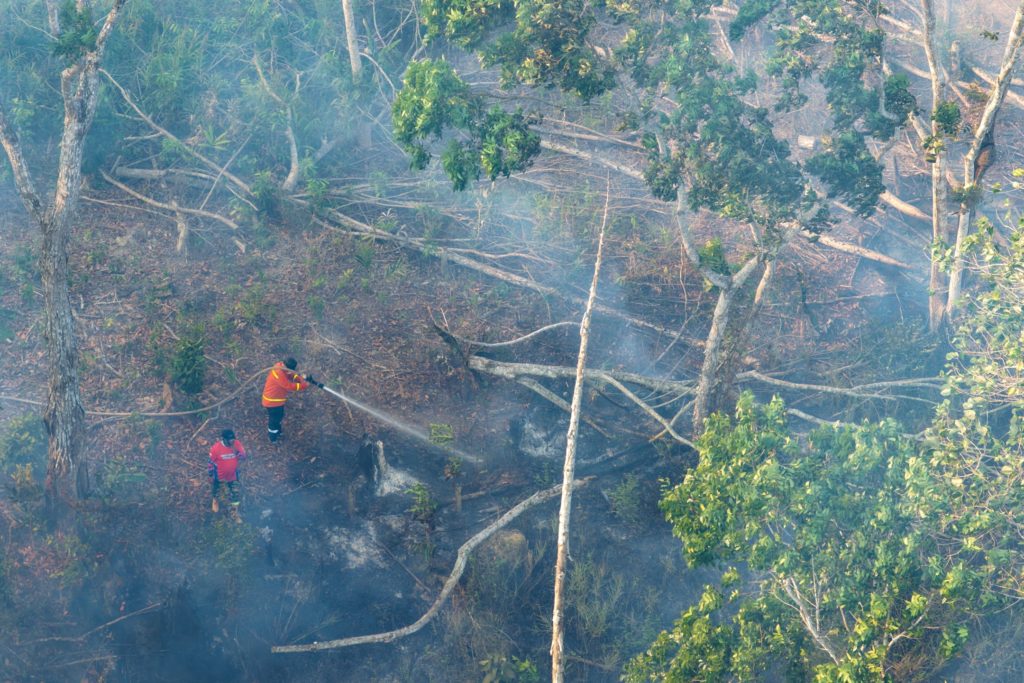
Countries across Southeast Asia are grappling with a year of intense and disruptive climate extremes, with meteorologists warning that the ongoing regional storm season could become one of the most severe recorded in recent years. According to reporting by Patrick Fok and Emily Siu, the regional weather landscape is being heavily influenced by a super El Niño climate pattern, a phenomenon capable of amplifying heatwaves, disrupting seasonal rainfall, and generating unusually potent storm systems across the Western Pacific and Southeast Asian landmasses. The convergence of elevated sea surface temperatures and altered atmospheric circulation patterns has elevated risks for millions of residents across the ten-nation Association of Southeast Asian Nations (ASEAN) block.
Key facts
What happened
Throughout 2026, Southeast Asia has experienced a series of severe climate shocks that have strained local infrastructure and emergency response capabilities. As reported by Patrick Fok and Emily Siu, climate experts monitoring the region from Singapore report that the primary driver behind these intensified weather conditions is the presence of a super El Niño event. This atmospheric phenomenon, characterized by significant warming of the central and eastern equatorial Pacific Ocean, alters global weather patterns and creates compound climate hazards across the tropics.
The manifestation of this super El Niño has contributed to complex meteorological dynamics across the region. In typical years, Southeast Asian weather is governed by the alternating Southwest and Northeast monsoons. However, under the influence of strong El Niño conditions, traditional rainfall cycles become highly volatile. Some sub-regions experience prolonged dry spells and elevated temperatures that increase the risk of agricultural drought and transboundary haze, while adjacent marine areas experience elevated sea surface temperatures that provide heat energy to fuel destructive tropical cyclones.
Atmospheric science laboratories and regional weather stations have observed unusual sea surface temperature anomalies throughout the equatorial Pacific. These warmer waters destabilize the lower atmosphere, creating convective currents that can intensify low-pressure systems into major storms. Meteorologists cited in the reporting note that as the regional storm season progresses, these ocean conditions are expected to fuel more extreme weather events in the coming months, posing persistent hazards to densely populated coastal cities, low-lying river deltas, and rural farming communities.
Why it matters
The physical hazards associated with a super El Niño carry severe socio-economic and public safety consequences for Southeast Asia, a region home to over 680 million people. The economic stability of ASEAN member states depends heavily on climate-sensitive sectors, including agriculture, aquaculture, logistics, and tourism.
In the agricultural domain, primary food staples such as rice, palm oil, coffee, and sugar cane are acutely vulnerable to weather volatility. When El Niño conditions cause extended droughts in agricultural belts like Thailand's Central Plains or Vietnam's Mekong Delta, crop yields fall sharply, driving up domestic food prices and disrupting international export markets. Conversely, when super El Niño conditions trigger intense tropical storms and torrential rain, flooding can inundate cropland, destroy irrigation networks, and ruin harvests. The United Nations Food and Agriculture Organization (FAO) has historically documented that major climate disruptions in Southeast Asia exacerbate regional food insecurity and inflate global commodity indices.
Severe storm activity also threatens critical maritime infrastructure and global shipping corridors. The Strait of Malacca and the South China Sea handle roughly one-third of global maritime trade. Heightened storm intensity elevates operational risks for commercial shipping, offshore energy platforms, and coastal port operations, potentially causing logistical delays that ripple through international supply chains.
Furthermore, urban centers across Southeast Asia face growing vulnerabilities. Rapid urbanization in coastal megacities such as Manila, Jakarta, Bangkok, and Ho Chi Minh City has outpaced stormwater drainage infrastructure. When super-charged storm systems make landfall, flash flooding and storm surges can displace urban populations, damage residential housing, destroy electrical grids, and disrupt municipal water supplies. The financial burden of repairing damaged public infrastructure and providing emergency relief strains national budgets, diverting resources away from long-term economic development programs.
The background
To fully grasp the magnitude of the ongoing crisis, it is essential to examine the mechanics of the El Niño-Southern Oscillation (ENSO) cycle and how it interacts with the climate geography of Southeast Asia. ENSO is a naturally occurring climate phenomenon involving fluctuations in ocean temperatures and atmospheric pressure across the equatorial Pacific Ocean. The cycle oscillates between three phases: Neutral, La Niña (cool phase), and El Niño (warm phase).
During a standard El Niño phase, trade winds blowing westward across the Pacific weaken or reverse, allowing warm surface waters to drift eastward toward the coast of South America. This shift deprives the Western Pacific of its usual warm water pool, often resulting in drier-than-average conditions across maritime Southeast Asia, including Indonesia, Malaysia, Singapore, and parts of the Philippines. However, when an El Niño reaches "super" intensity—defined historically by sea surface temperature anomalies exceeding 2.0 degrees Celsius above long-term averages in the Niño 3.4 region—the atmospheric feedback loops become far more erratic and severe.
Historically, super El Niño events have caused widespread devastation across Southeast Asia. The 1997–1998 and 2015–2016 super El Niños serve as primary historical touchstones. During the 1997–1998 event, severe drought triggered uncontrolled forest fires across Sumatra and Kalimantan, producing an unprecedented transboundary haze crisis that blanketed Singapore, Malaysia, and southern Thailand, causing billions of dollars in health and economic losses. Simultaneously, intense storm activity altered precipitation distribution across the Western Pacific, leading to catastrophic localized flooding in some coastal sectors.
In Southeast Asia, regional weather monitoring and coordination are overseen by institutions such as the ASEAN Specialised Meteorological Centre (ASMC), based in Singapore, alongside national agencies including the Philippine Atmospheric, Geophysical and Astronomical Services Administration (PAGASA), the Indonesian Meteorology, Climatology, and Geophysical Agency (BMKG), and the Thai Meteorological Department (TMD). These organizations work under the regional framework established by the ASEAN Agreement on Transboundary Haze Pollution and the ASEAN Coordinating Centre for Humanitarian Assistance on disaster management (AHA Centre). These frameworks rely on early warning systems to mitigate the impacts of extreme climate events across state borders.
Reaction
Following reports of the intensified weather outlook, climate scientists, disaster risk managers, and humanitarian agencies across Southeast Asia are urging regional governments to elevate emergency preparedness. Meteorologists emphasize that the combination of baseline global warming and a super El Niño creates unprecedented atmospheric dynamics that standard regional preparedness plans may not fully accommodate.
Regional emergency coordination bodies, including the AHA Centre, are expected to monitor high-risk zones and coordinate pre-positioning of relief supplies across vulnerable island chains and low-lying coastal regions. Governments in storm-prone nations such as the Philippines and Vietnam are routinely called upon by civil defense experts to reinforce urban flood defenses, update evacuation protocols, and secure emergency funding to support displaced communities.
Agricultural ministries across ASEAN are also under pressure to provide advisory support to farmers, advocating for drought-resistant crop varieties in areas facing rainfall deficits and improved drainage infrastructure in regions subject to intense precipitation. Environmental policy experts maintain that transboundary climate impacts highlight the urgent need for enhanced cross-border cooperation in weather data sharing and joint disaster response capabilities.
What we don't know yet
While the presence of a super El Niño pattern is confirmed, several critical variables remain uncertain, limiting the ability of forecasters to predict exact local impacts.
First, the precise trajectory, frequency, and landfall intensity of individual tropical cyclones during the remainder of the storm season cannot be pinpointed months in advance. While oceanographic conditions favor stronger storm development, local atmospheric wind shear and land interactions dictate where individual typhoons will strike and how much damage they will inflict.
Second, the total economic toll of the 2026 extreme weather season across Southeast Asia remains impossible to calculate until the cycle completes. It is currently unknown how severely agricultural yields will be affected across primary grain belts, or how much capital will be required for infrastructure reconstruction in impacted municipalities.
Finally, scientists are still evaluating the exact interaction between human-induced global climate change and the naturally occurring ENSO cycle. It remains an open research question whether rising baseline global temperatures are making super El Niño events more frequent, or if they are permanently altering the structural behavior of the tropical Pacific climate system.
What to watch
In the coming months, several key indicators and scheduled evaluations will determine the trajectory of Southeast Asia's weather emergency:
This report is based on original reporting by Patrick Fok and Emily Siu.
How this story was produced
This report was written by The Global Wire newsroom from reporting first published by Patrick Fok; Emily Siu. We verify the core facts against the original report, write our own account, and add the background and consequences a short wire item leaves out. Drafting is AI-assisted inside an editor-supervised pipeline, and every story is checked for accuracy of attribution, structure and duplication before it appears — full detail in our AI and funding disclosure.
Spotted an error? Tell us at corrections@horizonglobalnews.com and read our corrections policy or editorial standards.


Reader comments
Loading comments…